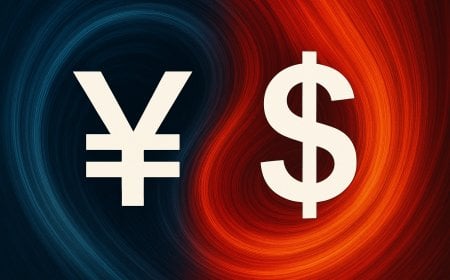
 Editor-written summary
The yen carry trade is the hidden leverage machine behind decades of global liquidity. Now, as Japan exits negative rates, up to $20 trillion in leveraged positions risk unwinding — triggering forced liquidations, global volatility, and a potential dollar spike driven by repatriation flows. This article explores how the unwind works, why it matters, and how dedollarization narratives collide with the coming dollar squeeze.
Inside this report
- Unwinding the Yen Carry Trade: What it means for the Dollar and Global Markets
- Are They Going to Raise Rates Again?
- Understanding the Yen Carry Trade
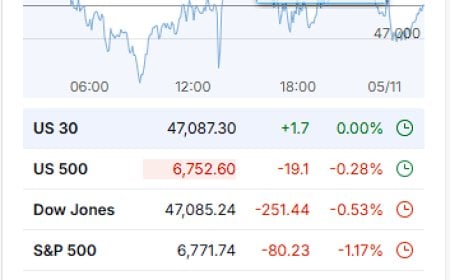 Editor-written summary
U.S. stocks sold off on Nov 4 2025 as top Wall Street CEOs warned of a market pullback, bonds rallied, gold struggled, and investors braced for a U.S. government shutdown that may cut food aid in December. Japan's rally drew fresh 1980s bubble comparisons; tech leadership narrowed as volatility ticked up.
Inside this report
- Markets Slide as Bank CEOs Warn of Pullback; Gold Slips; Shutdown Drags On – Nov 4, 2025
- U.S. Market Recap: Bank Warnings Send Stocks Tumbling
- Bonds Rally, Dollar Jumps, Gold Slips
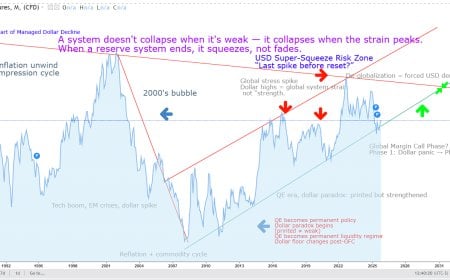 Editor-written summary
The dollar doesn’t collapse when it’s weak — it spikes under maximum strain. This is the final squeeze phase of the global monetary system before transition. When reserve systems end, they don’t fade — they compress, surge, and then reset. Inside: charts, cycle mechanics, and how this ties into gold, housing, QE, sovereign debt, and de-globalization.
Inside this report
- The Dollar’s Last Stand
- Thesis: The Dollar Doesn’t Die in Weakness
- The Chart: Structural Compression
 Editor-written summary
A manifesto for those who see the world shifting. The Pattern Nexus worldview defines the coming civilizational turning — sovereignty, systems thinking, technological acceleration, decentralized intelligence, and the rise of builders in an age of collapse and renewal.
Inside this report
- PATTERN NEXUS MANIFESTO
- I. Reality is not random — it is patterned
- II. Sovereignty begins with understanding
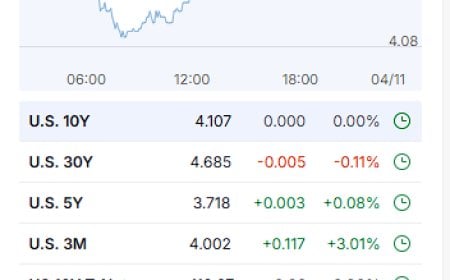 Editor-written summary
Markets enter November balancing AI-driven optimism, rising bond yields, and weak breadth. Japan’s Nikkei echoes 1980s bubble risks while the U.S. shutdown threatens SNAP food benefits for 41M+ Americans if funding lapses into December.
Inside this report
- Markets Strain as Shutdown Deepens, SNAP Crisis Emerges, and Japan’s Bubble Ghosts Return — Nov 2025
- Bond Market Still Calling the Bluff
- Japan’s Shadow Memory of the 1980s
 Editor-written summary
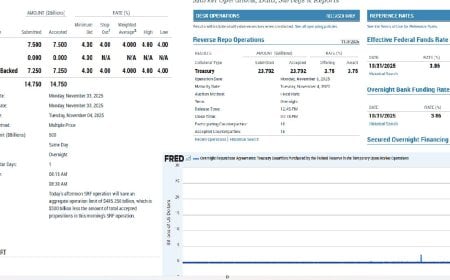
In three trading days, the Fed silently pushed nearly $45B through the repo window — including a $14.75B SRF tap and a ~$30B overnight repo spike. This wasn’t panic. It was collateral lubrication for America’s reindustrialization cycle — compute, power, copper, grid. The new liquidity regime is here.
Inside this report
- The Quiet Repo Surge — Collateral Stress, Industrial Liquidity, and the New Regime
- The Print: ~$30B in Repo Support
- Why It Matters
 Editor-written summary
The AI boom is not dot-com 2.0. It’s a monetary flywheel that turns equity into data centers, power infrastructure, collateral, and new credit — triggering a real-world industrial cycle unprecedented in modern finance.
Inside this report
- AI Isn’t a Bubble — It’s a Monetary-Industrial Engine
- Thesis
- The AI Industrial Flywheel
 Editor-written summary
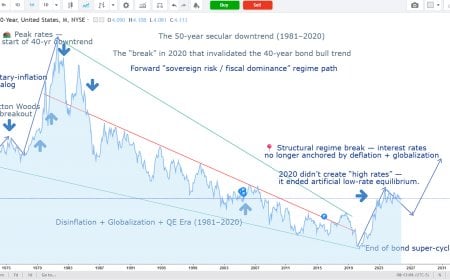
The U.S. 10-year yield didn’t “go up” — the 40-year bond bull ended. This analysis shows how 2020 broke the secular disinflation regime and launched a sovereign-credit repricing cycle mirroring the 1970s.
Inside this report
- The End of the 40-Year Bond Super-Cycle
- The Next Super-Cycle: A 1970s Rhyme, Not a Repeat
- We didn’t enter a high-rate era. We exited an artificial one.
 Editor-written summary
The U.S.–China relationship isn’t thawing — it’s entering the Blockade Age.
Rare-earth deals, naval posture, island-chain strategy, and Arctic corridors signal permanent parallel supply chains, maritime chokepoints, and regional security blocs shaping the next decade.
Taiwan becomes a fortified node. China remains boxed by geography. The U.S. builds a perimeter of sensors, subs, and allies.
Inside this report
- Blockades, Blocs, and the New Maritime Map: Why “Trade Deals” Are Just Tempo Management
- Why now
- The maritime geometry: chains, chokepoints, nets
 Editor-written summary
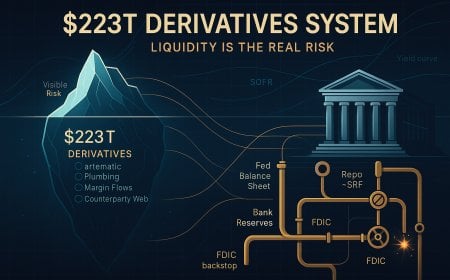
The U.S. banking system sits on top of $223 trillion in derivatives — but the real risk isn’t the notional value. It’s liquidity. This deep-dive breaks down how margin calls, collateral chains, FDIC limits, repo plumbing, and Federal Reserve backstops tie together — and why liquidity shocks, not headlines, trigger systemic stress. Includes beginner-friendly breakdowns, research links, historical case studies, and charts.
Inside this report
- $223 Trillion+ in U.S. Bank Derivatives: Why Liquidity, Not Notional, Determines Systemic Risk
- Overview
- Numbers & Trends (Q4 2024–Q2 2025)
 Editor-written summary
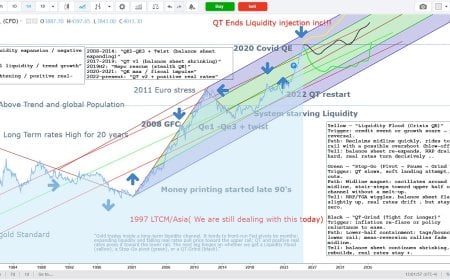
Gold didn’t spike randomly — it front-ran liquidity, real-rate pivots, and QT stress exactly like we’ve been discussing. Here’s the long-term channel, why it happened, and the three paths forward as the Fed hits its next liquidity decision point.
Inside this report
- Gold Front-Runs Liquidity: Channels, Fed Cycles, and the Three Paths from Here
- What This Is (and Isn’t)
- Quick Recap of Past Calls
 Editor-written summary
A deep dive into the Federal Reserve’s overnight reverse repo facility — why trillions parked at the Fed aren't “normal,” how it secretly tightens liquidity, affects Treasury auctions, impacts markets, and signals systemic fragility. Everyone sees the headlines — few see the plumbing.
Inside this report
- The Reverse Repo Trap: How a “Safety Valve” Quietly Rewired Global Liquidity
- Quick Nav
- Repo 101 (fast): the pawn-shop of high finance