
The Peace Premium: Geneva Talks, Sanctions Enforcement, and Why Oil Is Still a Weapon
U.S.-mediated Geneva talks put territory back at the center of the Russia–Ukraine negotiation, while sanctions enforcement tightens on Russian and Iranian oil. Markets are already trading the “peace premium”—and the unwind will be as political as it is financial.
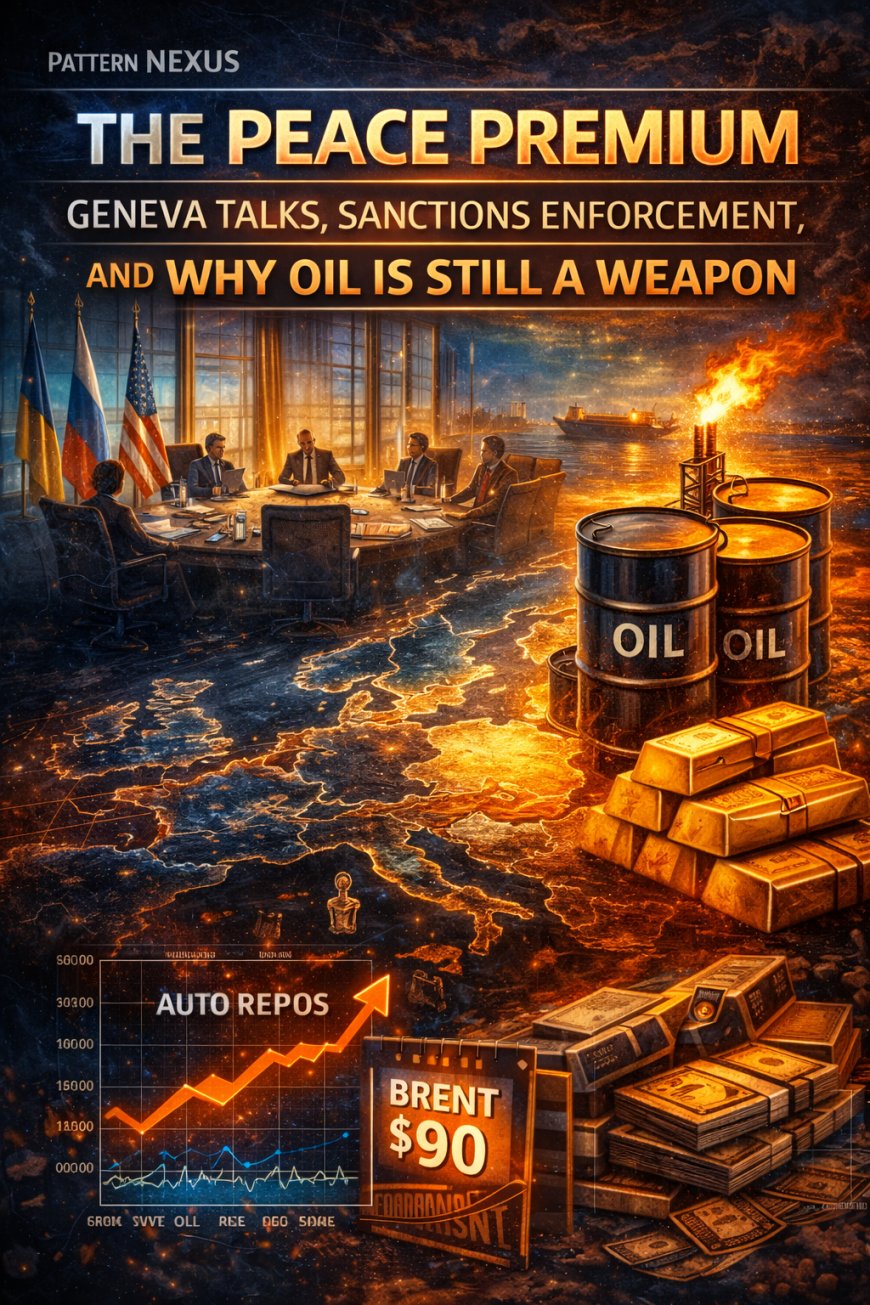
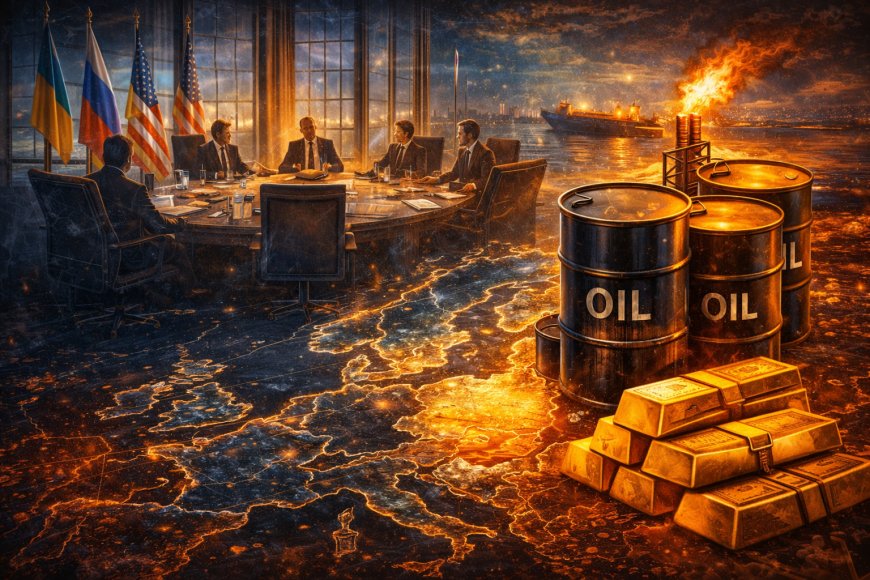

U.S.-mediated Russia–Ukraine talks in Geneva are reportedly focused on land—because land is the hard asset of war outcomes. That’s the real “sticking point,” and it’s why breakthroughs are rare and slow.
At the same time, the oil market is responding to tighter enforcement of sanctions and the possibility of peace deals. Citi explicitly framed peace as an “affordability channel” that could lower crude prices if Russia–Ukraine and Iran de-escalation happen later this year.
Russian crude exports appear to be under new pressure: Reuters reported a drop in seaborne exports and highlighted higher oil volumes held on ships, alongside EU actions and proposals that could further squeeze Russia’s seaborne trade.
Markets are already trading the regime shift: easing geopolitical tension headlines can pressure gold while supporting oil’s risk premium, depending on the day’s balance of “deal probability” versus “enforcement pressure.”
What the “Peace Premium” Really Is
Markets price war like they price insurance: not as a moral judgment, but as probability-weighted disruption. That disruption has layers—shipping, insurance, compliance, port access, buyer willingness, and the simple question of whether supply will be physically available next month at any price.
The “peace premium” is the inverse: the price support that exists because conflict and sanctions create friction and risk. When peace becomes plausible, the premium can compress, sometimes violently, because it is not built on slow fundamentals—it is built on risk perception and enforcement expectations.
Citi explicitly described a pathway where Russia–Ukraine and Iran deals could lower Brent later in the year, framing peace as a channel to improve affordability through cheaper crude and refined product margins. That’s not “an opinion.” That’s a major bank describing a policy-meets-market mechanism.
Geneva Talks: Land as the Non-Negotiable Variable
Reuters reporting on the Geneva round framed land as the main focus and the main sticking point. That’s exactly right—because land is the hard asset outcome of war, and war outcomes don’t settle until the hard asset questions settle.
The current reported demand is blunt: Russia wants Ukraine to cede remaining territory in Donetsk that Russia has not captured, and Kyiv refuses. That is not a negotiation over “policy.” It’s a negotiation over sovereignty and borders, which then cascades into security guarantees, enforcement mechanisms, and post-war troop presence.
In other words: even if Geneva produces a headline, the market should treat “deal probability” as a distribution, not a binary. That’s how you avoid getting trapped by one optimistic news cycle.
Sanctions as a Control System: Enforcement vs Evasion
Most people talk about sanctions like they’re a list of punishments. That’s the wrong framing. Sanctions are a routing protocol: they define where commodities can move, who can insure them, which ports can handle them, which banks can clear payments, and how much legal risk each intermediary is accepting.
That is why enforcement matters more than announcements. You can have strict sanctions on paper and weak enforcement in practice. Or you can have “the same rules” and suddenly tighten the screws through port restrictions, shipping scrutiny, and legal pressure on third-party facilitators.
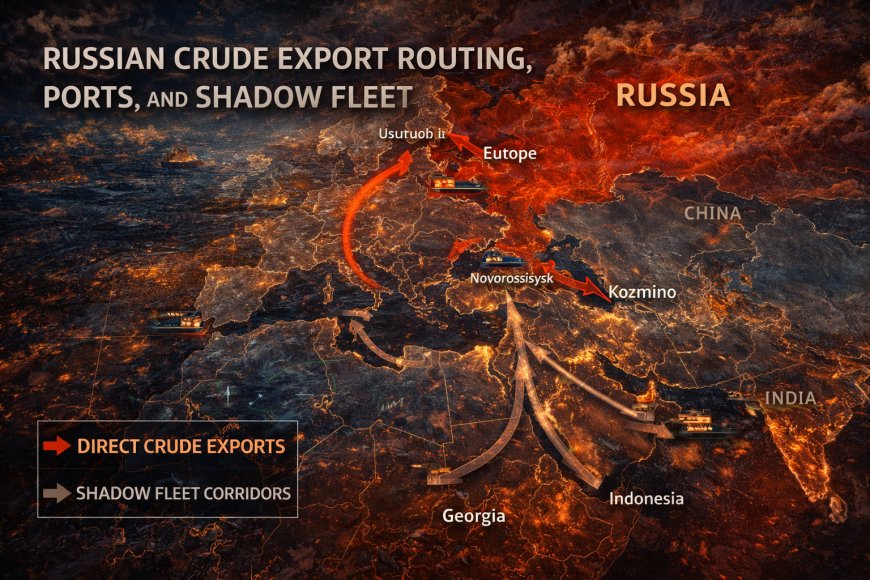
Russian Oil Under Pressure: Exports, “Oil on Water,” and the Shadow Fleet
Reuters reported that Russian crude exports remained resilient for years by rerouting seaborne volumes to China, India, and Turkey, often relying on a shadow fleet of aging, lightly insured tankers and steep discounts. That’s the evasion layer. But Reuters also described the new pressure layer: exports slowing in recent months after U.S. enforcement tightened and India faced tariffs tied to Russian oil purchases.
The reported numbers matter because they signal friction in physical flow, not just “market sentiment.” Reuters cited Kpler estimates showing Russian seaborne crude exports falling to 3.4 mbpd in January from 3.8 mbpd in December, tracking around 2.8 mbpd in February. That is not a small move in a market that often lives and dies by marginal barrels.
The EU layer is also evolving. Reuters reported the EU proposed extending sanctions to include third-country ports (Georgia and Indonesia) that handle Russian oil, and separately described European Commission proposals that could prohibit business support for Russia’s seaborne exports more broadly. That’s not symbolic. That’s a direct attack on the service layer that makes exports possible.
This is the real control-system structure: not “can Russia pump oil,” but “can Russia move oil reliably, clear payment risk, secure insurance, and keep buyers willing.” Sanctions target the middle—the connective tissue.
Iran Talks and the “Risk-Off Bid” in Gold
On days where deal probability rises, the market often unwinds safety trades. Reuters market coverage noted attention on U.S.–Iran nuclear talks scheduled in Geneva and described gold falling while oil moved higher as geopolitical risk perceptions shifted.
Separate Reuters reporting on Feb 17 described gold dropping more than 2% amid a stronger dollar, thin liquidity due to holidays, and easing geopolitical tensions. That’s a classic template: when the market believes tail risks are receding—even temporarily—the geopolitical bid can compress.
But here’s the nuance: de-escalation headlines can push gold down while oil stays supported if enforcement tightens supply at the same time. That’s the split-screen risk: “peace probability up” versus “barrels constrained now.” Markets can price both simultaneously.
OPEC+ and the Spare Capacity Chessboard
OPEC+ sits in the middle of this because it is the only actor with meaningful spare capacity that can respond quickly to disruption without building new infrastructure. Citi’s note (as reported by Reuters) described a condition where if disruptions keep Brent in the $65–$70 range, OPEC+ could respond with increased output, and Reuters also reported OPEC+ sources leaning toward resuming output increases from April.
This creates a reflexive loop. Higher prices can mean: higher enforcement pressure, tighter barrels, more geopolitical risk premium. But higher prices also create incentives and political cover for more supply—either through OPEC+ adjustments or through sanction carve-outs and “authorized pathways.”
Translation: a peace deal can compress the premium, but the floor is still set by physical constraints, weather, outages, and the pace of supply growth versus demand. Politics changes the routing rules; physics changes the available barrels.
Scenario Map: Three Paths to $60, $70, or $90
Instead of pretending we know the outcome, map the states. Here are three simplified regimes that cover most of the distribution. The point is not the exact number. The point is which control layer dominates.
What to Watch: A Peace Premium Dashboard
If you want to track this like a control system instead of a headline feed, watch the levers that actually move flows and pricing. Here’s a practical dashboard.
- Negotiation geometry: any explicit movement on territorial terms, enforcement guarantees, and post-war security arrangements.
- Sanctions enforcement signals: expansion to third-country ports, service-layer prohibitions, insurance and shipping compliance actions.
- Russian “oil on water” / floating storage: rising inventories afloat and slower tanker speeds (flow friction indicator).
- Seaborne export estimates: Kpler-type tracking for Russia/Iran volumes and changes in destination routing.
- OPEC+ guidance: language around resuming output increases and willingness to defend price bands.
- Gold + USD behavior: whether geopolitical easing headlines compress gold’s bid, especially in thin liquidity windows.
- Refined product cracks: diesel/gasoline margins as the consumer-facing “affordability” transmission channel.
Pattern Nexus Lens
FAQ
Sources
- Reuters: Land focus at Geneva peace talks between Russia and Ukraine (Feb 17, 2026)
- Reuters: Western pressure may force Russian oil output cuts; exports slow; “oil on water” rises (Feb 16, 2026)
- Reuters: Citi says geopolitics supports oil near term; peace deals could lower prices (Feb 16, 2026)
- Reuters: Markets watch Iran talks; oil higher, gold lower (Feb 17, 2026)
- Reuters: Gold slides on stronger dollar, thin liquidity, easing geopolitical tensions (Feb 17, 2026)
- IEA: Oil Market Report (February 2026)
- OPEC: Monthly Oil Market Report landing page (for baseline market framework)
Qual é a sua reação?
 Curtir
0
Curtir
0
 Não Gostar
0
Não Gostar
0
 Amor
0
Amor
0
 Engraçado
0
Engraçado
0
 Uau
0
Uau
0
 Triste
0
Triste
0
 Bravo
0
Bravo
0

Founder of Pattern Nexus. I research markets, macro, geopolitics, AI, history, ancient systems, and the patterns most people overlook. I’m also building Market Radar, a trading scanner designed to read pressure, risk, confirmation, and setup quality before chasing a move. Pattern Nexus is where I connect the dots between data, history, technology, and the bigger system playing out around us.










Comentários (0)