
The Architecture of Resilience: Building What Can’t Be Taken
True legacy isn’t built from success — it’s built from reconstruction. This essay explores what happens when life dismantles everything you thought was secure, and how rebuilding from the ground up creates not just wealth, but internal architecture. It’s about the psychology of endurance, the discipline behind creation, and the systems that transform pain into permanence.
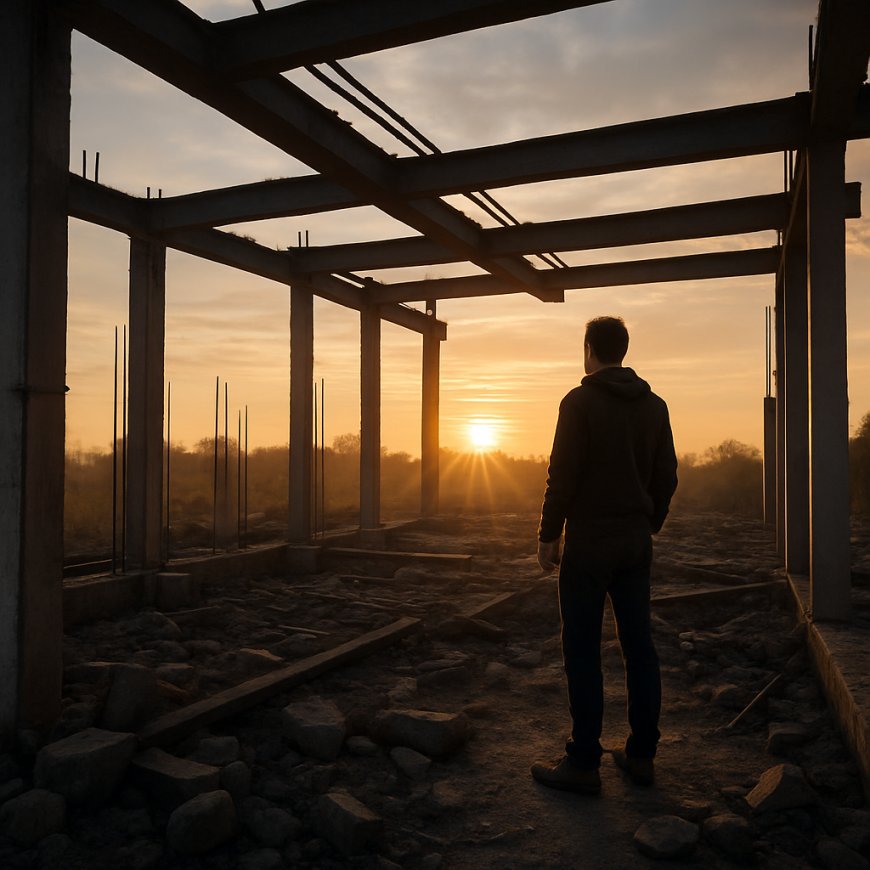
The Architecture of Resilience
Most people think legacy is something you build once you’ve “made it.” In reality, it’s something you start building the moment everything falls apart. You don’t understand structure until you’ve lived through collapse. You don’t understand endurance until you’ve been forced to rebuild. What makes a legacy isn’t what you accumulate — it’s what still stands when the noise is gone.
We all live through cycles — expansion and contraction, progress and destruction, belief and doubt. The system works the same way in markets, in relationships, and in the human mind. The first time it collapses, you think it’s the end. The fifth time, you realize it’s a pattern. What separates those who stay down from those who rise is the ability to treat failure as raw material.
That’s the hidden law of resilience: it’s not strength; it’s structure. It’s not emotion; it’s engineering.
When you lose everything — money, stability, relationships, or direction — you discover what was never really yours to begin with. You see how much of what we call “security” is just leverage borrowed from circumstance. You also learn that most people don’t rebuild because they don’t want to face the blueprint of their own mistakes. But those who do — those who sit in the rubble and sketch new plans — are the ones who build foundations that last.
Because at that point, it’s no longer about the structure. It’s about *ownership of the process itself.*
The Rebuilding Phase
Rebuilding is quiet. It’s lonely. It’s slow. It doesn’t have the applause of growth; it has the silence of recalibration. The world measures success in outcomes, but the mind of a builder measures it in progress — in inches gained after years of erosion.
In that silence, you start to hear the system for what it is. You stop chasing opportunity and start engineering stability. You stop waiting for approval and start building things that don’t require permission. That’s when the shift happens — when your effort stops serving others’ expectations and begins serving your own design.
Resilience, in that sense, is the human version of compound interest. Every time you adapt, you build invisible equity in yourself. You may not see it for years, but when the next collapse comes, it shows. You absorb the impact differently. You stop breaking — you start flexing.
The same principle that governs markets governs people: what bends survives; what refuses to bend breaks.
The System Within
If you look closely at anyone who’s rebuilt their life, you’ll find a hidden system beneath it — a framework of thought that keeps emotion from interfering with function. Systems thinkers understand that life is never random; it’s recursive. Every failure is feedback. Every setback is data. Every collapse is an opportunity to audit your code.
Most people avoid this work because it’s uncomfortable. They want motivation, not diagnosis. But the truth is, you can’t scale dysfunction. If your internal architecture is off, no amount of effort will make the structure stable. That’s why rebuilding is as much about self-awareness as it is about discipline.
At some point, you realize you’re not rebuilding what was lost — you’re designing something entirely new. That’s what makes the second structure stronger: it’s built consciously. The first one was an accident of momentum; the second is a decision of will.
The Legacy Phase
Legacy isn’t about what you leave behind. It’s about what can’t be erased while you’re still here. It’s the operating manual others can learn from, even if they never know your name.
We live in a time where people confuse attention with impact. They measure influence by visibility. But visibility is a currency of ego — not legacy. Real legacy doesn’t need to be seen; it needs to function.
Every business, idea, or piece of wisdom that survives beyond you carries part of your system forward. The way you solved problems becomes a pattern that others can follow. That’s what legacy really is — a recursive pattern of resilience, built into the code of whatever you create.
And it starts with a choice: to live systemically instead of reactively. To respond to chaos with design. To turn pain into blueprint.
When Systems Replace Stories
The modern world sells narrative — stories of instant transformation, quick success, and redemption without the process. But that’s not how reality works. Progress isn’t cinematic; it’s incremental. The people who build real legacies don’t chase inspiration — they chase iteration.
You learn that motivation fades, but design endures. You start treating your mind like an operating system — running updates, patching weaknesses, refining logic. Each version of you is a release candidate for the next.
That’s how legacy evolves: by constantly refactoring your own code.
The collapse becomes your test environment. The rebuild becomes your deployment. And resilience — that’s the runtime.
The Philosophy of Permanence
You can’t control cycles. You can’t stop entropy. But you can control how you interact with them. Systems built with awareness outlast chaos. They don’t fight change; they incorporate it. That’s how ecosystems, economies, and even civilizations survive: through design that anticipates disorder.
Legacy, then, isn’t permanence in the physical sense — it’s permanence in logic. It’s knowing that even if the structure burns, the design remains.
That’s what it means to build what can’t be taken: not walls, but wisdom. Not assets, but architecture.
In the end, every empire falls, every market corrects, every system resets. But those who learn how to rebuild — and who leave behind the map of how they did it — they don’t disappear. They just change form.
That’s what endurance really is. It’s not survival of the strongest; it’s survival of the most *adaptable pattern.*
Legacy isn’t about conquering the world. It’s about designing one inside yourself that no collapse can erase.
Qual é a sua reação?
 Curtir
0
Curtir
0
 Não Gostar
0
Não Gostar
0
 Amor
0
Amor
0
 Engraçado
0
Engraçado
0
 Uau
0
Uau
0
 Triste
0
Triste
0
 Bravo
0
Bravo
0

Founder of Pattern Nexus. I research markets, macro, geopolitics, AI, history, ancient systems, and the patterns most people overlook. I’m also building Market Radar, a trading scanner designed to read pressure, risk, confirmation, and setup quality before chasing a move. Pattern Nexus is where I connect the dots between data, history, technology, and the bigger system playing out around us.














Comentários (0)