

consumer
Automatically indexed from the existing article tag.
Theses, forecasts, models, and paths
No published research objects yet
This topic is ready for editors to connect a thesis, forecast, model, or research path.
Latest articles
 Article · related
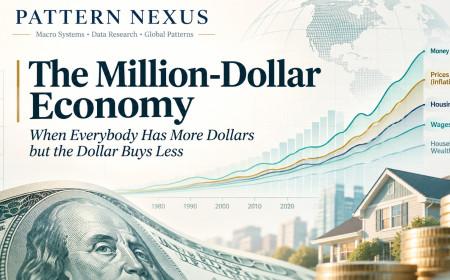
The Million-Dollar Economy: When Everybody Has More Dollars but the Dollar Buys Less
The U.S. money supply has expanded nearly fifteenfold since 1980, while consumer prices have quadrupled. Household wealth, wages, housing, and everyday expenses have followed very different trajectories. Using historical Federal Reserve, BLS, and Census data, I examine the expansion of nominal wealth and purchasing power, with an interactive dashboard modeling possible outcomes through 2037.
Published Nov 1, 2026 Article · related
The Real Reason They Are Building Humanoid Robots: The End of Human Labor as the Foundation of the Economy
Humanoid robotics is not simply about building machines that walk, talk, and perform household chores. It is about creating a scalable physical labor force that can operate alongside artificial intelligence, transforming production, ownership, wages, consumer demand, and the monetary system. This analysis connects the robotics revolution to the wider Pattern Nexus framework: structural deflation, expanding liquidity, concentrated ownership, universal intelligence, programmable money, and the transition toward a post-labor economy.
Published Sep 21, 2026 Article · related
Meta Youth Trial Turns Social Feeds Into a Product-Liability Test
Jury selection began on August 12, 2026, in federal court in Oakland for a Meta youth-harms trial involving claims that Facebook and Instagram damaged youth mental health and unlawfully collected data from children under 13. Court records had scheduled jury selection for August 12, with openings and evidence no earlier than August 18. The case matters beyond Meta because it frames algorithmic feeds as engineered control systems that states may try to regulate through consumer-protection, privacy, and product-safety logic.
Published Aug 12, 2026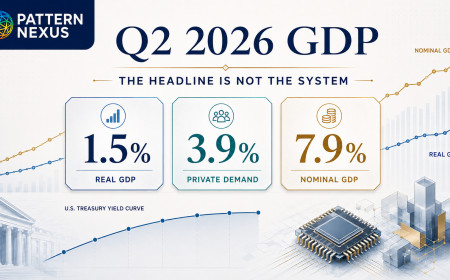 Article · related
GDP Slowed to 1.5%—But the U.S. Economy Did Not Weaken the Way the Headline Implies
Real GDP slowed to a 1.5% annual rate in Q2 2026, but the private domestic economy accelerated to 3.9% while nominal GDP grew 7.9%. This Pattern Nexus analysis separates the headline from the internal economy and explains what consumer spending, business investment, capital-goods imports, inflation, government accounting, Federal Reserve policy, and the 10-year Treasury signal actually mean.
Published Aug 4, 2026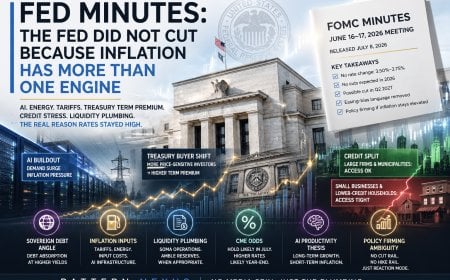 Article · related
Fed Minutes: The Cut Trade Broke Because Inflation Has More Than One Engine
The June 16–17 FOMC minutes, released July 8, show a Fed that held rates steady but removed the easy easing bias. The deeper signal is that inflation pressure is now coming from multiple rails at once: tariffs, Middle East energy shock risk, AI infrastructure demand, Treasury term premium, and uneven consumer credit stress.
Published Jul 8, 2026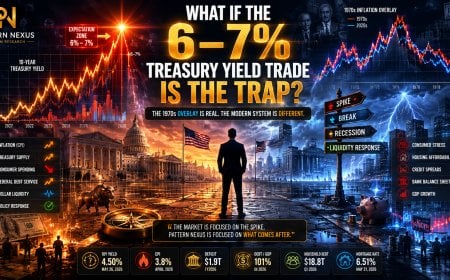 Article · related
What If the 6–7% Treasury Yield Trade Is the Trap?
A lot of smart money is starting to position for a 1970s-style inflation repeat where the 10-year Treasury yield spikes toward 6% or 7%. The chart overlay looks convincing. Inflation today can be lined up against the 1970s if the data is shifted and framed the right way. But Pattern Nexus looks at the system constraint, not just the chart. The question is not whether yields can spike. They can. The question is whether the modern economy, the federal refinancing structure, the consumer balance sheet, and the dollar-based global liquidity system can actually survive a sustained 6–7% long-rate environment. This article argues that the more dangerous trade may be the obvious one: expecting the 1970s to repeat cleanly when the system may instead force a spike, break, recession, emergency response, and renewed liquidity cycle.
Published May 27, 2026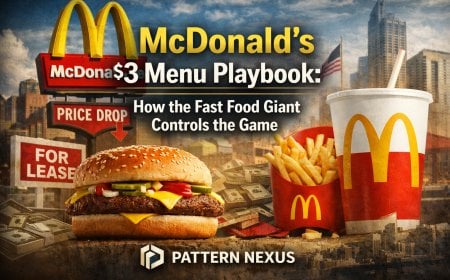 Article · related
McDonald’s Did Not Bring Back Value Because It Felt Nostalgic. It Did It Because the System Sees Demand Breaking.
A Pattern Nexus analysis of McDonald’s new under-$3 menu as a signal on consumer stress, franchise economics, real-estate control, fast-casual pressure, and the broader architecture of demand destruction.
Published Apr 4, 2026 Article · related
The Debt-Free Illusion: How Personal Finance Cults Preserve the Consumer Class and Block Mobility
“Debt-free” is sold as freedom, but in a financialized economy it often functions as compliance: a behavioral cage that blocks asset ownership, leverage literacy, and class mobility.
Published Jan 24, 2026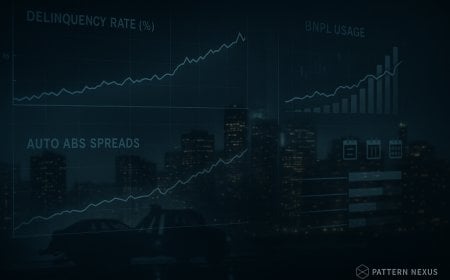 Article · related
Subprime Autos, Buy-Now-Pay-Later, and Bank Stress: Cracks at the Edge of the Consumer Balance Sheet
As of December 4, 2025, subprime auto borrowers and Buy-Now-Pay-Later users are showing rising strain. This Pattern Nexus deep dive maps where the real risk sits, how much of it flows back into banks, and whether these “buy more, pay more later” rails are the real source of bank stress.
Published Dec 4, 2025 Article · related
Record Holidays, Fragile Foundation: Black Friday 2025 vs the ADP Labor Shock
Black Friday and Cyber Week 2025 set new spending records, but the November ADP report showing a surprise 32,000-job loss reveals a fragile labor market underneath. Pattern Nexus connects the consumer sugar high to the small-business labor squeeze.
Published Dec 3, 2025