

Germany
Automatically indexed from the existing article tag.
Theses, forecasts, models, and paths
No published research objects yet
This topic is ready for editors to connect a thesis, forecast, model, or research path.
Latest articles
 Article · related
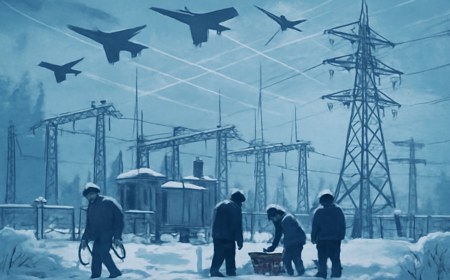
Berlin Turns €1.3B Ukraine Aid Into a Drone-and-Winter-Energy Deterrence Stack
German Chancellor Friedrich Merz used an Oct. 4, 2026 visit to Kyiv to announce more than €1.3 billion in new support for Ukraine. The package includes roughly €1 billion in military aid and about €350 million for energy-sector repairs ahead of winter, while German and Ukrainian actors expand cooperation on drones, interceptors, air defense, radar and weapons production. The strategic read is that Berlin is shifting from episodic aid toward a combined military-industrial and infrastructure-resilience stack.
Published Oct 4, 2026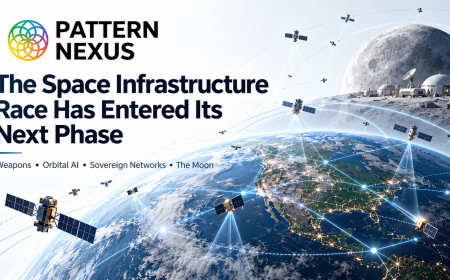 Article · related
The Space Infrastructure Race Has Entered Its Next Phase: Weapons, Orbital AI, Sovereign Networks, and the Moon
From September 4–23, space infrastructure accelerated on almost every front. Isar Aerospace reached orbit from continental Europe. India positioned EOS-05 for geosynchronous imaging. Stoke raised $1 billion toward fully reusable launch. China launched four rockets in roughly 45 hours and put a spacecraft with 5G, AI, and planned 100-Gbps optical communications into orbit. Europe allocated major IRIS² and OneWeb production contracts while Planet expanded satellite manufacturing in Germany. The U.S. acknowledged on-orbit space-control weapons, practiced multi-orbit maneuver operations, and funded new target-tracking architectures; Britain created a space-effects squadron. NASA and ESA delivered new lunar, planetary, and Earth-observation science while commercial downmass and crew-transport contracts extended the orbital logistics chain. The Pattern Nexus conclusion: space is becoming an industrial, computational, and contested operating system, and continuity is its critical threshold.
Published Sep 23, 2026