

physics
Automatically indexed from the existing article tag.
Theses, forecasts, models, and paths
No published research objects yet
This topic is ready for editors to connect a thesis, forecast, model, or research path.
Latest articles
 Article · related
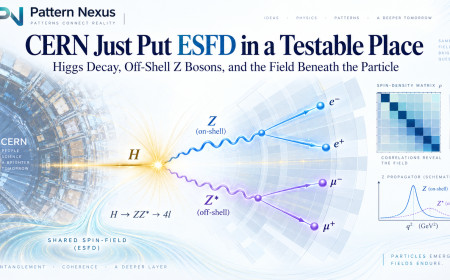
CERN Just Put ESFD in a Testable Place: Higgs Decay, Off-Shell Z Bosons, and the Field Beneath the Particle
CERN’s ATLAS and CMS experiments have found strong evidence for entanglement in the spin structure of Higgs → ZZ* → 4ℓ decays. The result is real, but the off-shell Z* changes the way the process should be understood: the detectors measure four leptons and reconstruct the intermediate quantum-field state rather than directly watching two ordinary Z particles become entangled. This article converts the 6-3 Electromagnetic Spin-Field Dynamics framework into a Pattern Nexus analysis, separates established collider physics from ESFD hypotheses, corrects the Bell-locality overclaim, and defines the measurement ESFD now needs to calculate: the q²-dependent ZZ* spin-density matrix.
Published Sep 17, 2026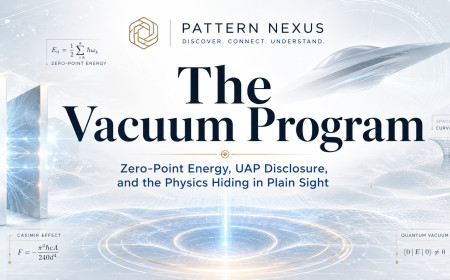 Article · related
The Vacuum Program: Zero-Point Energy, UAP Disclosure, and the Physics Hiding in Plain Sight
NASA studied quantum-vacuum propulsion. DIA commissioned papers on vacuum-energy extraction, negative energy, wormholes, and spacetime engineering. DARPA explicitly asked whether vacuum energy or momentum could be transduced into usable form. Congress then entered a DIA vacuum-propulsion paper into the UAP hearing record. This Pattern Nexus investigation separates established physics from government research, current engineering claims, and speculation—then asks whether the UAP disclosure story and the vacuum-engineering story may be two views of the same technological frontier.
Published Aug 15, 2026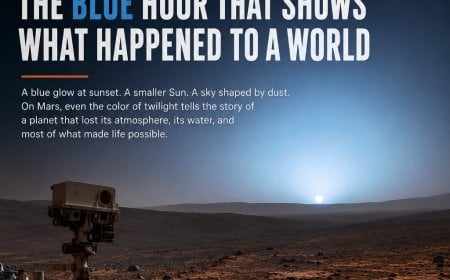 Article · related
Sunset on Mars: The Blue Hour That Shows What Happened to a World
A sunset on Mars is not just a beautiful image from another planet. It is a physics lesson, an atmospheric fossil, and a reminder that Mars is not simply “the Red Planet.” Martian sunsets often appear blue because fine dust in the thin atmosphere scatters light differently than Earth’s atmosphere does. The blue glow around the Sun is not just scenery. It is the visible signature of a planet that lost most of its atmosphere, dried out, and became a cold, exposed world where light itself tells the story of planetary failure.
Published May 21, 2026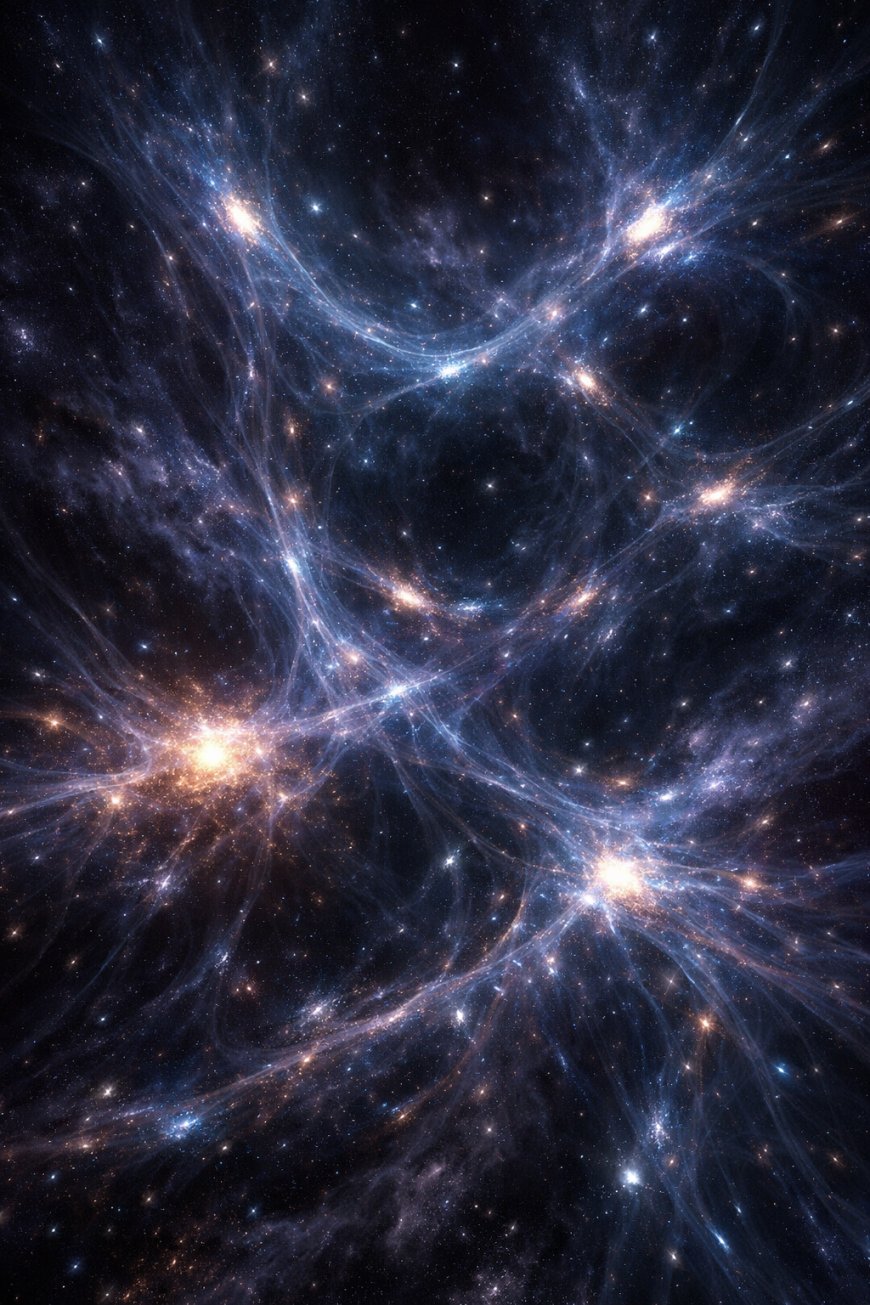 Article · related
Mapping the Invisible: JWST’s Cosmic Web Shows Dark Matter as the Universe’s Control Grid
A January 2026 JWST survey mapped more than 800,000 galaxies and revealed dark matter filaments twice as sharply as before, showing how the invisible framework of the cosmos shapes visible structure.
Published Mar 3, 2026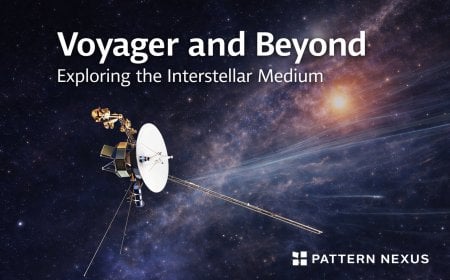 Article · related
Voyager at the Helopause: Mapping the True Edge of the Solar System
Voyager 1 and 2 did more than visit the outer planets. By crossing the heliopause, they turned the edge of the solar system from a theoretical line into a measured magnetic boundary, revealing how our Sun’s protective bubble interacts with the Milky Way.
Published Jan 14, 2026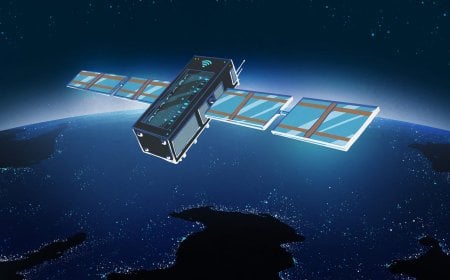 Article · related
Google’s Space-Based AI Data Center Gambit: Project Suncatcher and the New Compute Frontier
Google just revealed plans to build the first space-based AI data-center constellation — a solar-powered orbital compute cluster designed to escape Earth’s power limits. This breakdown explores the engineering, physics, grid implications, and how this fits directly into the AI-Industrial Flywheel.
Published Nov 16, 2025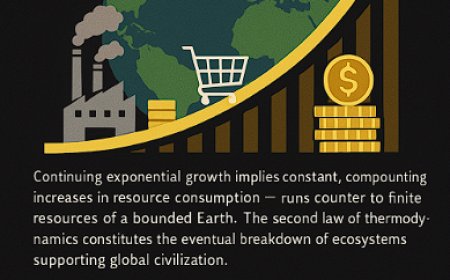 Article · related
⚛️ Big Tech’s Fusion Bet: How AI’s Energy Demand Is Rewriting Physics
The AI revolution isn’t just changing software — it’s rewriting the energy equation of civilization. As machine intelligence accelerates, Big Tech’s investment in nuclear fusion reveals an unspoken truth: the race for artificial intelligence is ultimately a race for power — in the most literal sense.
Published Oct 18, 2025