
Venezuela on the Brink — From Quiet War to Open Confrontation
Escalation between the U.S. and Venezuela has moved from covert operations to direct confrontation. Strikes, intelligence activities, and regional shifts point toward a hybrid war developing in Latin America — with global implications.
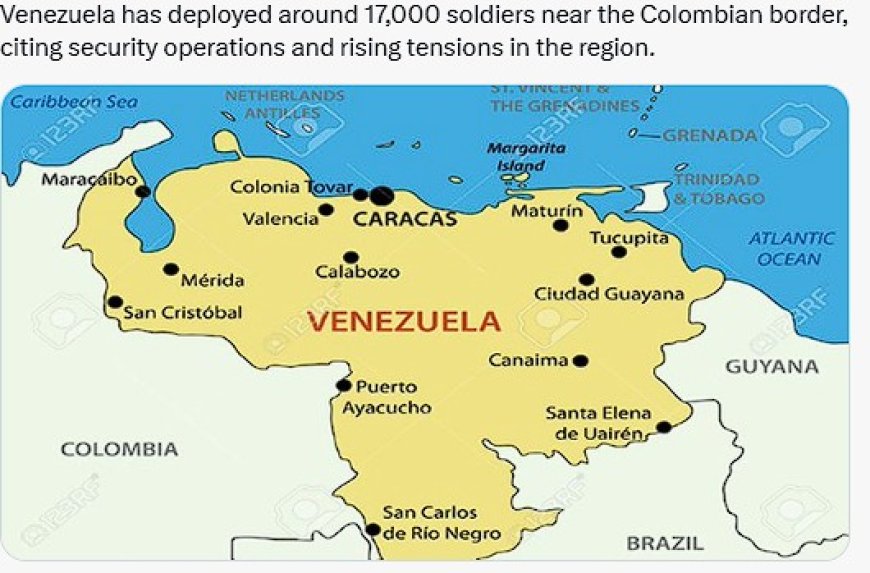
Venezuela on the Brink — From Quiet War to Open Confrontation
October 2025 | By Chris Grenke
The confrontation between the United States and Venezuela has entered a new phase. What began as clandestine “anti-narcotics” operations is giving way to open kinetic strikes, service detentions, and an escalating legal and political theater. The lines between law enforcement, covert action, and military aggression are blurring.
1. Timeline: Strikes, Authorizations, & Escalation
Since early September 2025, the U.S. has carried out at least six strikes against vessels near Venezuela, citing alleged narcotics trafficking. These attacks, often in international waters, have reportedly caused at least 27 deaths — though in the most recent strike (October 16), survivors were captured and detained aboard a U.S. Navy ship.
President Trump confirmed that he had “authorized the CIA” to conduct covert operations inside Venezuela and defended the latest strike, calling the vessel a “narco-submarine.” On October 1, the administration informed Congress that it considers itself engaged in a “non-international armed conflict” with “unlawful combatants” in the Caribbean — a legal framing central to its justification for military action beyond conventional law enforcement limits.
2. The Naval Buildup & Force Posturing
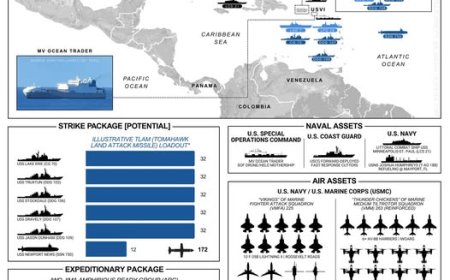
By late August 2025, U.S. naval assets were already massing in the southern Caribbean. Drones, patrol craft, and surveillance networks have been operating in tandem, projecting dominance in the region. Analysts argue the mission serves a dual purpose: targeting smuggling routes and exerting strategic pressure on the Maduro regime — disrupting revenue channels, command structures, and logistical networks critical to Venezuela’s stability.
3. Command Changes & Political Turbulence
In a surprising move, Admiral Alvin Holsey, head of U.S. SOUTHCOM, announced an early retirement just as operations escalated. The timing has fueled speculation of internal friction, disagreement over policy direction, or a deliberate realignment before further escalation. It’s a symbolic shift: leadership changes during active operations often hint at deeper strategic recalibration or dissent.
Simultaneously, reports suggest expanded intelligence infiltration and special operations activity within Venezuelan territory. While not officially confirmed, these actions point to a hybrid campaign—overt military projection paired with covert destabilization. Modern conflicts often begin this way: quietly, through deniable acts, until escalation becomes normalized.
4. Venezuela’s Response & Internal Fault Lines
The Maduro government denounced the strikes as “illegal acts of war,” calling on the U.N. Security Council to declare the actions unlawful. Venezuelan officials claim civilian casualties and accuse Washington of laying the groundwork for regime change. Meanwhile, rumors of internal divisions among Venezuela’s generals are spreading — some allegedly under pressure or eyeing defection. These unconfirmed fissures are precisely the kinds of cracks a pressure campaign seeks to widen.
Economically and socially, Venezuela remains fragile: hyperinflation, mass migration, and institutional decay persist. The government’s reliance on militia networks and patronage systems may not withstand sustained external pressure. Complicating matters, the nation’s porous borders with Colombia and Brazil shelter armed factions like the ELN and Tren de Aragua, blurring lines between criminal, insurgent, and state actors.
5. Legal, Normative & Strategic Hazards
Legality & International Law
- Striking vessels in non-hostile maritime zones without imminent threat raises serious questions under maritime law and customary international norms.
- Classifying traffickers as “unlawful combatants” is legally unprecedented in this context and may dangerously expand executive authority for lethal action.
- The detained survivors’ legal status remains unclear — neither standard criminal defendants nor protected prisoners of war.
- Domestically, the administration risks breaching the War Powers Resolution by undertaking military operations without explicit congressional approval.
Strategic & Political Risks
- Civilian casualties or misidentifications could trigger international backlash; victims from Trinidad and nearby islands are already being memorialized amid accusations of extrajudicial killings.
- Venezuela could retaliate asymmetrically — via coastal defense systems, cyberattacks, or proxy operations.
- Regional allies may distance themselves from the U.S., wary of renewed “gunboat diplomacy.”
- If Washington normalizes cross-border strikes under the anti-narcotics banner, it sets a global precedent that other powers might exploit.
6. Speculative Vectors & Possible Futures
Where this goes next depends on how each side calibrates escalation. Possibilities include:
- Expansion to mainland Venezuela: Targeted strikes on coastal facilities or airfields.
- Special forces insertion: Precision missions aimed at high-value regime figures.
- Blockade or exclusion zones: Maritime choke points to cripple trade and logistics.
- Information & cyber warfare: Disruptive campaigns targeting government control and public sentiment.
- Support to opposition factions: Covert assistance to dissidents or ex-military networks.
- Negotiated internal coup: Encouraging internal shifts rather than full invasion.
7. Connecting the Dots: Patterns, Parallels & Warning Signs
- This mirrors the hybrid warfare playbook: covert ops → plausible deniability → kinetic escalation → regime destabilization → normalization of force.
- The anti-narcotics narrative has become a convenient justification for broader geopolitical goals.
- Admiral Holsey’s departure hints at deeper military-political friction.
- Venezuela’s economic collapse and illicit networks have turned it into a live testing ground for hybrid statecraft.
Conclusion
We are well past the era of whispers. The “quiet war” is no longer quiet. The U.S. and Venezuela are now locked in a multidomain contest — legal, economic, informational, and military. The next moves will test the world’s tolerance for proxy conflict and preemptive force. One misstep could ignite a chain reaction across Latin America — and beyond.
Sources & Further Reading
- Reuters — How many US strikes on boats near Venezuela have there been?
- AP News — U.S. has seized survivors after strike
- Washington Post — U.S. detains survivors of Caribbean strike
- Wikipedia — 2025 U.S. strikes on Venezuelan boats
- War on the Rocks — Why U.S. Strikes Against Drug Boats Matter
- Reuters — Venezuela appeals to U.N. over strike legality
- AP News — Trump confirms CIA operations in Venezuela
- Reuters — SOUTHCOM leader to step down early
- The Guardian — “Trump is killing poor people”: Caribbean village mourns victims
#Venezuela #HybridWarfare #CIA #USMilitary #Caribbean #Maduro #SOUTHCOM #RegimeChange #InternationalLaw #Geopolitics
Hvad er din reaktion?
 Synes godt om
0
Synes godt om
0
 Dislike
0
Dislike
0
 Kærlighed
0
Kærlighed
0
 Sjov
0
Sjov
0
 Wow
0
Wow
0
 Trist
0
Trist
0
 Vred
0
Vred
0

Founder of Pattern Nexus. I research markets, macro, geopolitics, AI, history, ancient systems, and the patterns most people overlook. I’m also building Market Radar, a trading scanner designed to read pressure, risk, confirmation, and setup quality before chasing a move. Pattern Nexus is where I connect the dots between data, history, technology, and the bigger system playing out around us.











Kommentarer (0)