

plumbing
Automatically indexed from the existing article tag.
Theses, forecasts, models, and paths
No published research objects yet
This topic is ready for editors to connect a thesis, forecast, model, or research path.
Latest articles
 Article · related
CFTC Turns Tokenized Collateral Into a 24/7 Treasury-Market Plumbing Test
CFTC Chairman Michael S. Selig told the 2026 U.S. Treasury Market Conference that U.S. markets need to prepare for mass tokenization, onchain finance, AI adoption and potential 24/7 trading. The official conference agenda also put stablecoins, tokenized deposits and short-term funding directly inside the Treasury-market-functioning debate. The signal is less about crypto speculation than about the next collateral, margin and settlement layer for the dollar system.
Published Sep 24, 2026 Article · relatedFed Just Hiked Into a 5% 10-Year: Why the Next Liquidity Cycle May Arrive Faster
The Federal Reserve just raised the federal-funds target to 3.75%–4.00% while the 10-year Treasury closed at 5.01%, the 30-year at 5.35%, and the real 30-year at 3.09%. Pattern Nexus correctly identified the September hike risk and the developing QE/liquidity cycle, but underestimated the Fed’s willingness to raise rates against an already enormous debt and refinancing burden. This report asks the question almost nobody asks after a rate decision: what does the hike eventually break? It connects the September decision to the $40-trillion-plus federal debt structure, more than $1 trillion of annual federal net interest expense, Treasury issuance, long-end buybacks, Federal Reserve reserve-management purchases, hedge-fund leverage, the Treasury basis trade, private credit, housing, commercial real estate, household cashflow and the 2019 repo-market precedent. The conclusion is not that the Fed has deliberately chosen to create a crash. It is that monetary architecture now allows the Fed to tighten the price of credit while separately protecting reserves and market plumbing. The hike therefore does not invalidate the Pattern Nexus QE thesis. If long rates remain near current levels, it accelerates the transmission mechanism that can eventually force the next phase of liquidity support.
Published Sep 17, 2026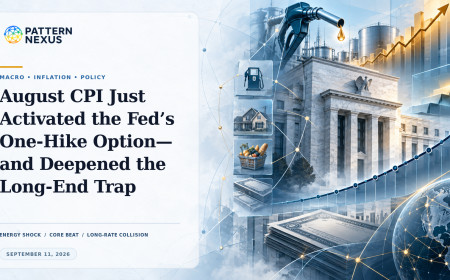 Article · related
August CPI Just Activated the Fed’s One-Hike Option—and Deepened the Long-End Trap
August CPI rose 0.4% on the month and 3.4% from a year earlier, while core CPI rose a hotter-than-expected 0.3% even as its annual rate eased to 2.4%. Pattern Nexus decomposes the report into an energy shock, a narrow communications-and-travel core impulse, and still-slow rent inflation. The result activates the Fed’s one-hike option for September, but it does not yet prove that a broad new inflation cycle has begun. This premium report maps the policy decision, the 80% PN September-hike probability, the long-end trap near 5%, the household cashflow squeeze, the rate-policy-versus-liquidity-plumbing contradiction, and the exact data that would confirm or invalidate the call.
Published Sep 11, 2026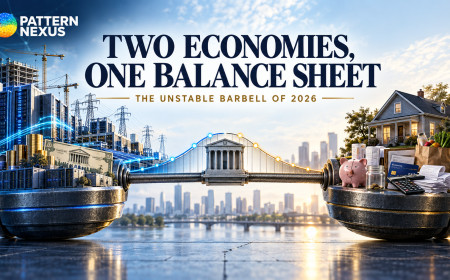 Article · related
Two Economies, One Balance Sheet: The Unstable Barbell of 2026
Reserve support has returned, but real long rates, fiscal supply, and an AI-energy capital wave are splitting the U.S. economy between capital strength and household fragility. This data-rich Pattern Nexus report maps the four feedback loops connecting Federal Reserve plumbing, Treasury duration, fiscal interest, housing lock-in, household credit, labor churn, AI infrastructure, power demand, dollar rails, and gold. It closes with four scenarios, a public-call audit, and a 90-day trigger dashboard.
Published Sep 9, 2026 Article · related
Treasury Turns Long-Bond Buybacks Into a Yield-Control Test
Treasury said it will raise maximum liquidity-support buybacks in the 10-to-20-year and 20-to-30-year nominal coupon sectors from $2 billion to at least $4 billion per operation beginning September 9, 2026. Follow-up reporting from AP, Reuters and Axios shows the market treated the move as an attempted long-end yield intervention, but the initial relief faded quickly. The Pattern Nexus read: this is not formal yield-curve control, but it is a live test of whether Treasury plumbing can absorb stress that monetary policy credibility and fiscal math are failing to contain.
Published Aug 22, 2026 Article · related
Hong Kong Starts Building the Tokenized Bond Rulebook
The Hong Kong Monetary Authority announced on June 5, 2026 that it has convened a Tokenised Bond Expert Group to support wider adoption and scalability of tokenized bonds. The group’s membership spans banks, law firms, industry associations, market infrastructure and technology providers, with first discussions focused on how Hong Kong’s legal and regulatory regime applies to tokenized bond issuance and transactions. The system signal is that Hong Kong is treating tokenized bonds as future fixed-income plumbing, not a crypto side project.
Published Jun 7, 2026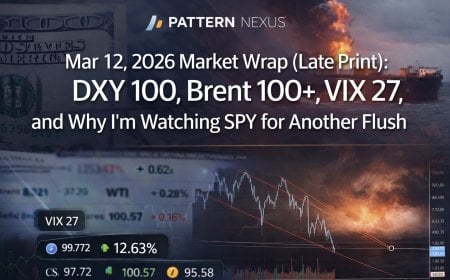 Article · related
Mar 12, 2026 Market Wrap (Late Print): DXY 100, Brent 100+, VIX 27, and Why I’m Watching SPY for Another Flush
The “index optics” crowd can keep coping. Today the plumbing talked: VIX +12%, Brent back over $100, DXY camped at 100, and yields still elevated. Add a war-risk premium plus private credit stress and you get a tape that’s not done. Here’s the full systems read using my screenshots + the Mar 12 news flow.
Published Mar 12, 2026 Article · related
Israel Strikes Iran: Escalation Ladder
Israel says it launched a “pre-emptive” strike on Iran as explosions hit Tehran. Here’s the escalation ladder, the oil chokepoint risk, and the market plumbing
Published Feb 28, 2026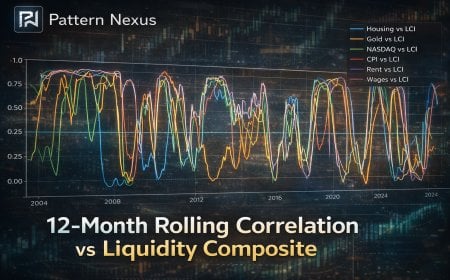 Article · related
The Plumbing Update (2003–2025) Q4 2025 + Jan 26
A full rebuild of the Pattern Nexus liquidity framework using end-of-month data, z-scores, and a PCA composite (WALCL, TGA, RRP, M2). If you want to understand housing, gold, and tech, stop arguing CPI and start watching the pipes.
Published Feb 27, 2026 Article · related
Selling U.S. Assets” Won’t Collapse the Dollar — It Collapses Europe’s Dollar Plumbing
Viral claims say Europe could dump U.S. assets to trigger a dollar collapse. In the eurodollar system, that move is closer to setting your own house on fire: Europe is structurally tied to offshore dollar funding, collateral, and Fed backstops via swap lines.
Published Jan 20, 2026 Article · related
Housing Is the Target: The 2026 Mortgage-Rate Compression Play
Trump’s directive for Fannie and Freddie to buy $200B in mortgage bonds, alongside a still-easing rate backdrop, signals an explicit attempt to compress mortgage spreads and support housing. This framework maps the plumbing, the limits, and what would have to break for home prices to stop grinding higher.
Published Jan 8, 2026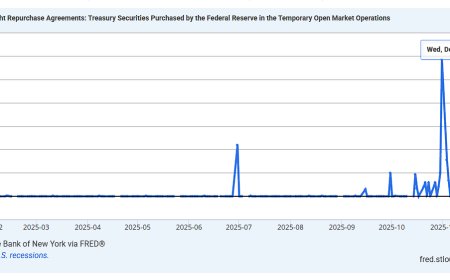 Article · related
Repo Usage Is Expanding Again
Overnight repo operations have shifted from dormant to persistent over the past several weeks. This article documents the expansion in repo usage, what it signals about short-term funding conditions, and what to watch next — without overinterpretation.
Published Jan 2, 2026 Article · related
Stablecoins Are the New Treasury Bid: The Quiet Construction of a Private CBDC Rail
Stablecoins are not a crypto sideshow. They are being shaped into regulated dollar settlement instruments backed by U.S. Treasuries, creating a private-sector CBDC rail without calling it a CBDC. This Pattern Nexus framework explains the mechanics, laws, flows, and endgame.
Published Jan 1, 2026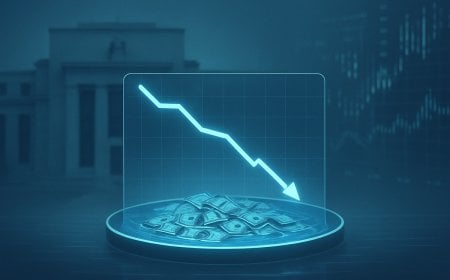 Article · related
QT Ends, Liquidity Returns: Why 2026 Is Almost Certainly the Next Balance-Sheet Expansion Cycle
Quantitative Tightening ends December 1st, and the plumbing shows reserves are already near scarcity. This article explains why 2026 is shaping up to be the next major liquidity-injection cycle, driven by heavy Treasury issuance, reserve demand, and Fed policy shifts.
Published Nov 25, 2025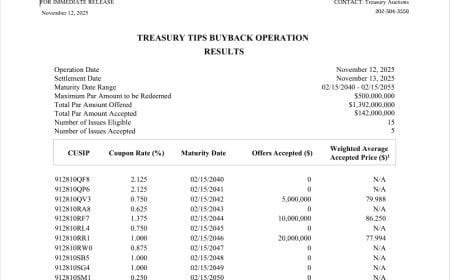 Article · related
Treasury Retires $142 Million in TIPS — Quiet Confirmation of the Buyback Era
The U.S. Treasury retired $142 million in TIPS on Nov 12, 2025 — a direct confirmation of the buyback-driven liquidity cycle we've been tracking. Here’s what the operation reveals about collateral stress, pre-QE interventions, and the evolving monetary plumbing.
Published Nov 12, 2025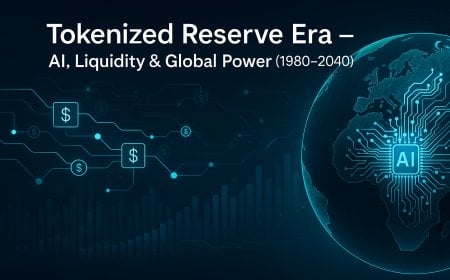 Article · related
Tokenized Reserve Era: AI Industrial Dominance and the New Operating System of the World Economy (1980–2040)
IMF baselines through 2024 combined with S-curve tokenization, AI industrial concentration, demographic drag, and reserve plumbing reveal the most realistic map of global power through 2040 — a world where programmable dollars and compute-shielded AI industry become the new operating system of the global economy.
Published Nov 8, 2025