

power demand
Automatically indexed from the existing article tag.
Theses, forecasts, models, and paths
No published research objects yet
This topic is ready for editors to connect a thesis, forecast, model, or research path.
Latest articles
 Article · related
EPA Turns AI Power Demand Into a Fossil-Baseload Deregulation Test
EPA Administrator Lee Zeldin signed a final partial repeal of the 2024 Carbon Pollution Standards for fossil-fuel power plants and paired it with a proposal to rescind remaining greenhouse-gas standards for the sector under Clean Air Act Section 111. EPA frames the action as an energy-abundance and cost-saving measure worth more than $300 billion, while major news reports say environmental groups expect legal challenges. The AI angle is not that EPA regulated AI directly, but that rising data-center and industrial load is becoming a justification for fossil-basaload deregulation.
Published Sep 15, 2026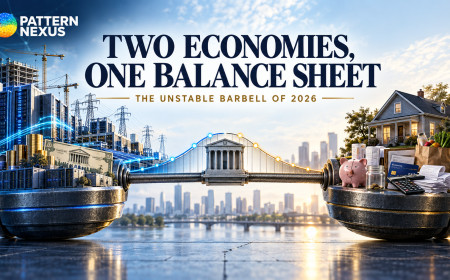 Article · related
Two Economies, One Balance Sheet: The Unstable Barbell of 2026
Reserve support has returned, but real long rates, fiscal supply, and an AI-energy capital wave are splitting the U.S. economy between capital strength and household fragility. This data-rich Pattern Nexus report maps the four feedback loops connecting Federal Reserve plumbing, Treasury duration, fiscal interest, housing lock-in, household credit, labor churn, AI infrastructure, power demand, dollar rails, and gold. It closes with four scenarios, a public-call audit, and a 90-day trigger dashboard.
Published Sep 9, 2026 Article · related
PJM Turns AI Data Centers Into Interruptible Grid Load
PJM’s proposed Interim Resource Adequacy Service framework would treat some new 50 MW-plus data centers and other large loads as curtailable unless they secure qualifying capacity. The move follows a 6,831 MW capacity shortfall for the 2028/2029 delivery year and rising forecasts for large-load demand across PJM’s footprint. The system read: AI compute is being recast from passive load growth into a reliability obligation.
Published Aug 19, 2026 Article · related
Texas Turns AI Data Centers Into a Grid-Admission Audit
Texas Gov. Greg Abbott directed PUCT and ERCOT on August 3, 2026 to conduct a comprehensive verification and audit of data centers advancing through ERCOT’s interconnection process before those projects move forward. The order lands amid roughly 474 gigawatts of large-load requests to connect to the Texas grid, with the governor’s office saying about 90% of new power requests are data centers. The move reframes AI-era data centers as strategic infrastructure applicants rather than ordinary load growth.
Published Aug 7, 2026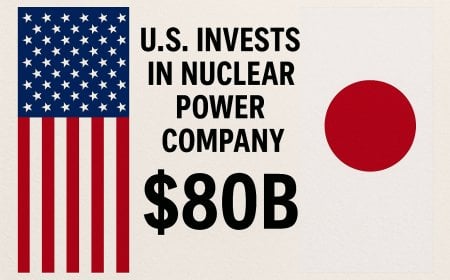 Article · related
U.S. Administration Investments in Nuclear Companies (2025)
In 2025, the U.S. administration under President Donald Trump announced an $80 billion nuclear partnership with Westinghouse, Cameco, and Brookfield to rebuild America’s nuclear capacity and meet soaring AI-driven power demand. Complementary projects by Amazon, X-energy, Google, Microsoft, and the Department of Defense mark a new era of public-private collaboration in nuclear energy, reshaping U.S. energy strategy and global competitiveness.
Published Oct 28, 2025