

Artemis II (2026): The Reboot of the Deep-Space Logistics Chain
2026 marks humanity’s first return to the Moon’s vicinity in 54 years. Artemis II reopens cislunar space, restoring deep-space logistics and marking the end of Earth-only civilization.
2026 marks humanity’s first return to the Moon’s vicinity in 54 years. Artemis II reopens cislunar space, restoring deep-space logistics and marking the end of Earth-only civilization.
Jump to a section
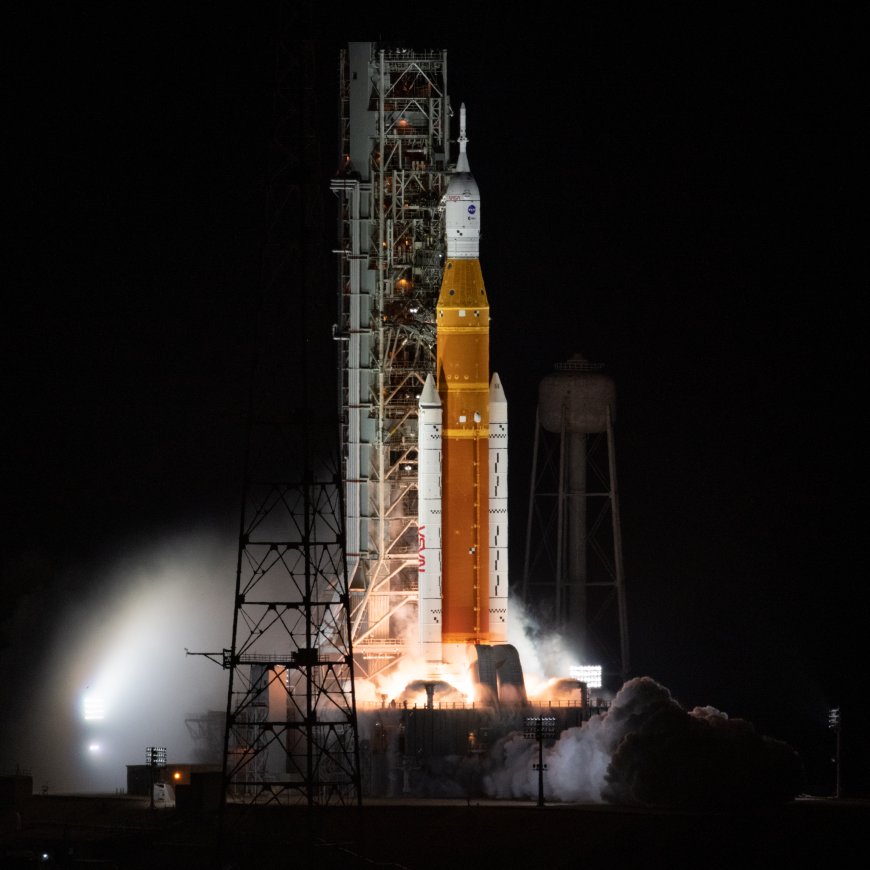

Landing is not the reopening. Reopening is restoring the logistics chain beyond LEO and proving you can operate there repeatedly.
The Moon is forward terrain. The winner is whoever maintains presence + comms + navigation + energy access, not whoever wins a single headline.
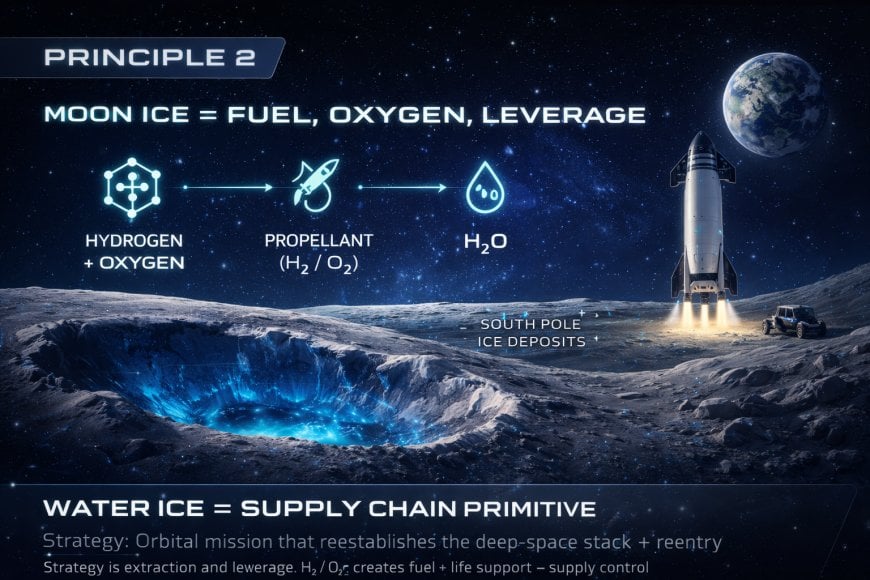
South Pole ice is not a science trophy. It’s fuel, oxygen, and leverage—the supply-chain primitive for anything that comes after.
Thesis
In 2026, humans return to the Moon’s vicinity for the first time since Apollo. Not with a landing mission—yet. With a crewed deep-space flight that reopens cislunar space as an operational domain.
That is the real milestone: reconstituting a capability that has been dormant for 54 years. Everything else—surface operations, permanent infrastructure, the off-world supply chain—depends on this layer being real, repeatable, and survivable.
2026 is the reboot of the deep-space logistics chain, and that is what turns “the Moon” from history into forward infrastructure.
Artemis II: What Happens in 2026
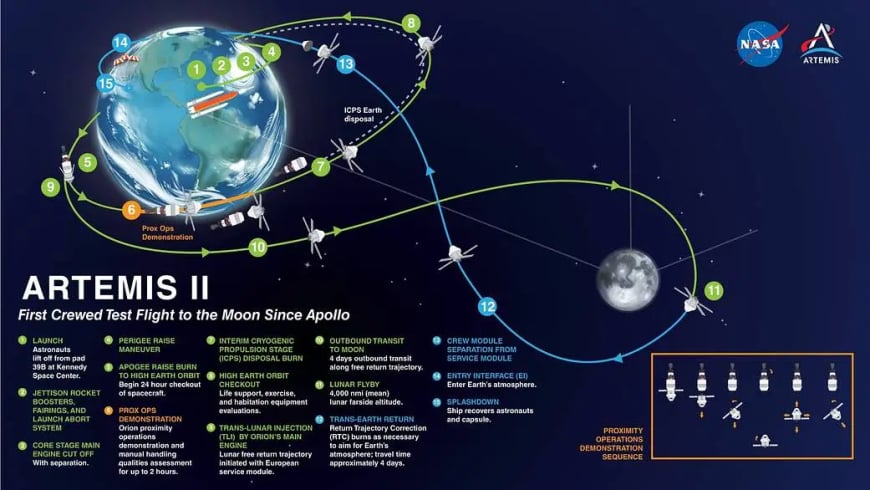
Artemis II is designed to do one thing exceptionally well: prove that humans can leave low-Earth orbit, operate in deep space, navigate to the Moon, and return safely under modern constraints.
Mission profile (operationally relevant)
Crewed lunar flyby mission aboard SLS and Orion, targeted for a 2026 window (NASA lists “no later than April 2026,” with public-facing notes that earlier opportunities exist in February depending on readiness and integration).
- Crew: 4 astronauts (Reid Wiseman, Victor Glover, Christina Koch, Jeremy Hansen)
- Vehicle stack: Space Launch System (SLS) + Orion spacecraft
- Type: Crewed lunar flyby
- Duration: ~10 days
- Geometry: A far-side loop that sends the crew roughly 4,600 miles (7,400 km) beyond the Moon’s far side (program materials frequently cite this figure)
The point is not “how close” they get. The point is operating beyond Earth’s protective envelope, validating comms, life support, navigation, and the return corridor. Deep space is where systems either work or fail.
The Stack: SLS + Orion Is Capability, Not Symbolism
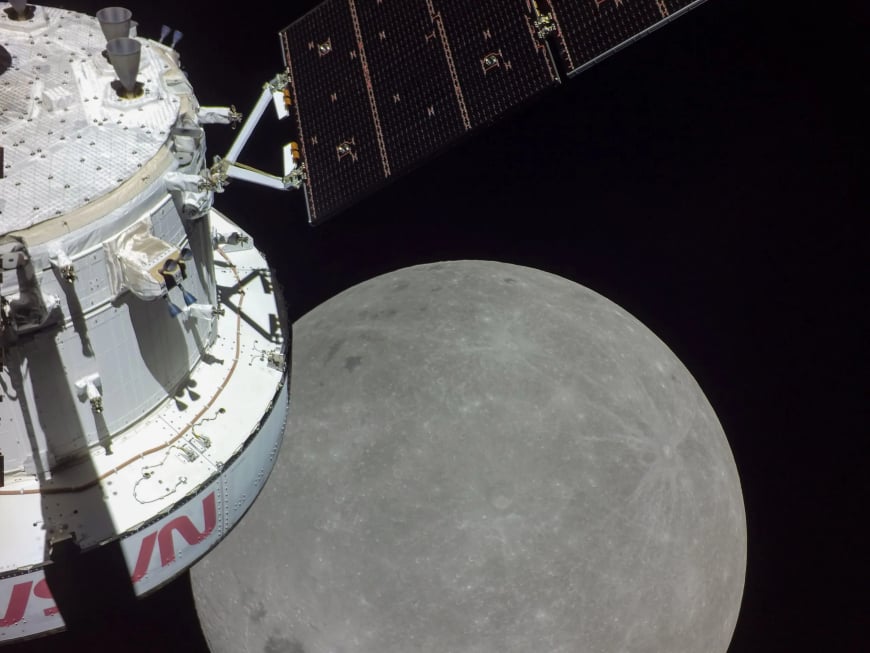
Orion: the deep-space capsule layer
Orion exists for one job: crew survivability in deep space plus high-energy Earth reentry. If you can’t do reentry reliably from lunar velocities, you don’t have a lunar program—you have a press release.
- Deep-space rated life support and avionics
- European Service Module providing propulsion, power, oxygen, and water
- Thermal protection designed for lunar-class reentry
SLS: the lift layer
SLS Block 1 is commonly referenced at roughly 8.8 million pounds of thrust at liftoff. That matters because it is the lift layer for Orion on a lunar trajectory, fully provisioned.
- Block 1 thrust: ~8.8 million pounds
- Evolution path: Block upgrades for heavier cargo and deep-space logistics
This is infrastructure reconstitution. The industrial stack is the real “return.” Missions are the proof that the stack is live.
“But It’s Not a Landing” Is a Category Error
The critique misunderstands what actually reopens a frontier. A single landing can be a flag-plant. A frontier is reopened when the logistics chain is restored and repeat operations become possible.
Artemis II is the layer that validates:
- Human deep-space operations beyond LEO
- Navigation and comms at lunar distances
- Life support durability across mission duration
- High-energy return as a reliable closing loop
If you cannot exit Earth’s neighborhood safely and return on demand, you cannot build anything beyond it. Artemis II is the permission slip for everything that follows.
Pattern Nexus Lens: Cislunar Space Is the Next Control Layer
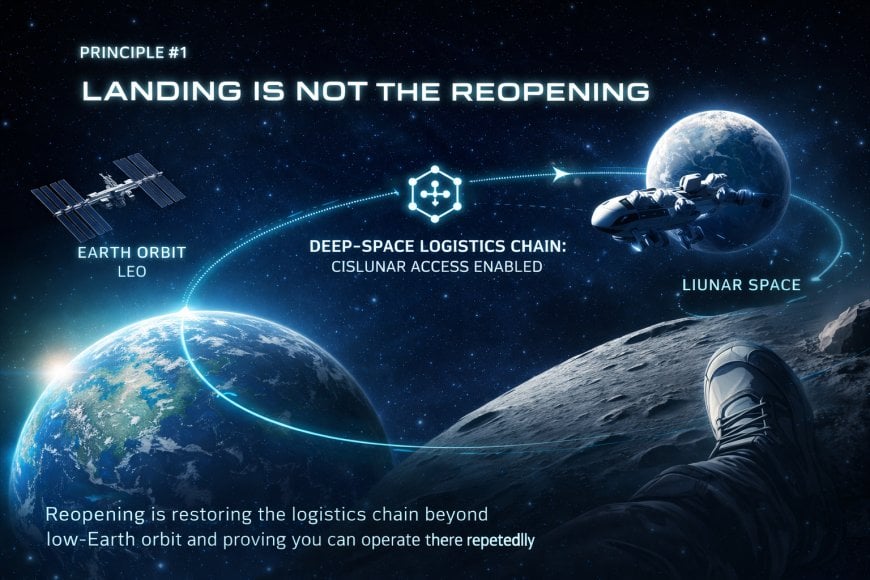
The Moon’s importance is not romance. It is positioning. Cislunar space is where you stage, relay, navigate, and refuel. Once that becomes persistent, Earth is no longer the only node—it becomes one node in a larger system.
Why the Moon matters in systems terms
- Logistics node: staging for deep-space missions
- Energy access: water ice enables oxygen and propellant production
- Navigation and comms dominance: the relay layer becomes strategic
- Industrial expansion: the first off-world supply-chain primitives
Whoever controls the chokepoints of the next domain sets the rules inside that domain. Persistent cislunar infrastructure is a chokepoint.
What Comes Next
Artemis II is not the end. It is the proving layer. The follow-on objectives are straightforward: extend time, extend capability, then build persistence.
- Artemis III and beyond: enabling surface missions and sustained operations
- South Pole focus: because ice is the supply-chain primitive
- Gateway and staging concepts: orbital infrastructure as the repeatability layer
2026 is the year the Moon stops being a historical story and becomes a live operational domain again.
FAQ
Why does a flyby matter if it’s not a landing?
Because the landing is downstream. The gating item is demonstrating repeatable human deep-space operations and reliable lunar-class reentry. If the loop doesn’t close, the program doesn’t scale.
Is this just symbolism?
No. Symbolism is a single event. Capability is a stack you can run repeatedly under constraints. Artemis II exists to prove the stack is live.
What makes the Moon strategic instead of romantic?
Logistics and control. Comms relay, navigation architecture, energy access, and fuel primitives determine who can operate persistently. Persistent presence becomes policy by default.
Sources
Primary and reference sources used for mission facts, crew roster, schedule language, distance figures, and SLS performance.
- NASA: Artemis II mission page
- NASA: Our Artemis Crew (Artemis II roster)
- NASA: Launch timing language (“no later than April 2026,” potential earlier opportunities)
- NASA: Space Launch System reference (Block thrust figures)
- Artemis Plan PDF (7,400 km / 4,600 miles beyond far side figure)
The World is Changing faster each day
מה התגובה שלך?
 אהבתי
0
אהבתי
0
 לא אוהב
0
לא אוהב
0
 אהבה
0
אהבה
0
 מצחיק
0
מצחיק
0
 וואו
0
וואו
0
 עצוב
0
עצוב
0
 כועס
0
כועס
0

Nexus (Christopher)
Founder of Pattern Nexus. I research markets, macro, geopolitics, AI, history, ancient systems, and the patterns most people overlook. I’m also building Market Radar, a trading scanner designed to read pressure, risk, confirmation, and setup quality before ch…
Related research
The Space Infrastructure Race Just Escalated: PALLAS-1, Orbital Warfare, and NASA’s Mars Network
Three developments in the first days of September 2026 pushed the space-infrastructure thesis forward again. China’s Galactic Energy succes…
5 shared topics, same research avenue.
Artemis II Launches: Reopening the Deep-Space Stack
Artemis II has launched, but the real story is bigger than a lunar flyby. This Pattern Nexus analysis breaks down why the first crewed SLS-…
6 shared topics, same research avenue.
NASA’s Moon Base, MoonFall, Nuclear Missions, and the Drone Layer of Mars
A Pattern Nexus analysis of NASA’s 2026 surface-first lunar architecture, MoonFall hopper drones, lunar nuclear power, nuclear-electric Mar…
6 shared topics, same research avenue.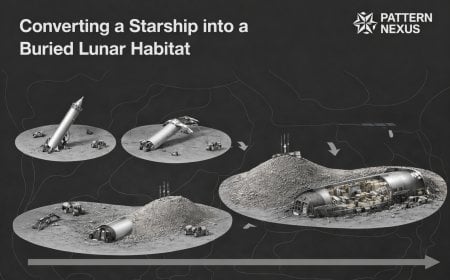
Moon Base Alpha: Why the Moon Is Becoming Infrastructure
Moon Base Alpha isn’t sci-fi anymore. Starship, Artemis, power constraints, and south-pole logistics are converging into real lunar infrast…
6 shared topics, same research avenue.
Space Is Becoming Infrastructure: The Two Weeks That Exposed the New Orbital Operating System
Roman launched, Falcon 9 hit 100 flights, China landed Zhuque-3, NASA expanded the Deep Space Network and autonomous spacecraft navigation,…
4 shared topics, same research avenue.
The Moon Is Not Just a Rock: The Lunar Anomaly Stack, Apollo UAP Files, and the Far-Side Base Question
The Moon has been normalized because it is always there, but the actual anomaly stack is hard to ignore: its strange proportion to Earth, i…
4 shared topics, same research avenue.
Parking Full in Orbit: The Day the ISS Used All Eight Docking Ports
For the first time in history, the International Space Station reached full capacity with eight spacecraft docked simultaneously. A milesto…
4 shared topics, same research avenue.
New Glenn 9×4: Blue Origin’s Super-Heavy Engine for the Coming AI Space Economy
Blue Origin’s New Glenn 9×4 upgrades heavy-lift launch, space logistics, and habitats—laying the foundation for the first AI-driven industr…
4 shared topics, same research avenue.
תגובות (0)
Security Check
Please complete the captcha to verify you are human.