
Pattern Nexus Framework: How to See the Hidden Architecture of the Modern World

Pattern Nexus is not just a news site, market blog, or opinion page. It is a framework for reading the modern world as a layered system of liquidity, energy, infrastructure, incentives, control rails, technology, markets, and human behavior. This article explains the Pattern Nexus lens, why it matters, how to use it, and where to begin if you are new to the site.

מאי 29, 2026 - 20:52
עודכן: 2 חודשים לפני
0
Support Independent Pattern Nexus Research
Deep macro plumbing, liquidity mechanics, and system analysis. No sponsors. No paywalls.
Support Pattern Nexus
Independent macro research and system-level analysis. No sponsors. No paywalls.
Start Here After the Video

Pattern Nexus is not built around isolated topics. It is built around layers. A market article, an AI article, a housing article, a geopolitical article, and a social-behavior article may look separate on the surface, but underneath they are often describing the same system from different angles.

That is the point of the framework. The world is not divided into clean categories. The world runs through connected rails: money rails, energy rails, information rails, political rails, digital rails, logistics rails, and human behavior rails. Pattern Nexus is the attempt to map those rails before the headline admits they matter.

Choose Your Reading Level

Pick the version that matches how deep you want to go

The same framework is explained three ways: simple, advanced without heavy jargon, and technical.

Reader-Friendly Version

What Pattern Nexus is

Pattern Nexus is a way of looking at the world that tries to see the structure underneath the noise. Most people watch the surface: the headline, the politician, the stock price, the crisis, the outrage, the viral clip, the one event that everyone is arguing about that day.

Pattern Nexus looks underneath that and asks a different question: what system produced this outcome?

That means looking at incentives, money flows, bottlenecks, energy constraints, policy reactions, technology shifts, emotional behavior, and the hidden rails that decide what can move and what gets blocked.

For example, inflation is not just a number. It is food, fuel, housing, labor, supply chains, interest rates, credit, war risk, shipping cost, political pressure, and household stress all interacting at once. A housing market is not just home prices. It is mortgage rates, inventory, insurance, property taxes, wages, credit availability, investor behavior, zoning, demographics, and government policy. AI is not just software. It is data centers, power plants, chips, water, copper, capital spending, labor displacement, and geopolitical competition.

That is the Pattern Nexus lens. It refuses to treat complex systems as single-topic stories.

The main idea

The main idea is simple: the visible world is downstream from hidden architecture.

People usually see the final effect. They see prices move. They see layoffs. They see wars. They see social anger. They see elections. They see bubbles. They see crashes. But those are often late-stage symptoms. Before the symptom shows up, something deeper changed in the system.

A liquidity rail changed. An energy bottleneck tightened. A supply chain shifted. A policy backstop appeared. A narrative was deployed. A technology reached escape velocity. A government or corporation changed the permission layer. A market began repricing collateral before the public knew why.

Pattern Nexus is about catching those deeper shifts earlier.

Why it matters

Most public debate is trapped inside labels. Left versus right. Bull versus bear. Collapse versus boom. Freedom versus control. Inflation versus deflation. AI utopia versus AI doom. Those debates sometimes matter, but they are usually too small.

The real world does not move because people pick a label. It moves because systems adapt under pressure.

When debt gets too high, the system does not usually choose a clean collapse. It creates new liquidity tools, new accounting layers, new policy language, new collateral structures, and new ways to stretch the timeline. When energy demand rises, the system does not pause and ask permission. It builds, subsidizes, reroutes, restricts, reprices, and competes. When AI becomes important, it does not stay in a software category. It pulls in chips, energy, defense, labor, capital markets, education, identity, and governance.

That is why Pattern Nexus keeps connecting topics that look unrelated. They are not unrelated. They are connected through the same underlying rails.

How to use the framework

When you read a Pattern Nexus article, do not just ask whether the headline is good or bad. Ask what layer is being exposed.

Is this a liquidity story? An energy story? A control-system story? A narrative-management story? A technology-adoption story? A human-behavior story? A collateral story? A geopolitical-routing story?

Once you start doing that, the world becomes less random. Not simple. Not perfectly predictable. But less random.

You begin to see why the same pattern shows up in completely different areas: finance, housing, AI, war, media, education, social behavior, infrastructure, and even personal decision-making. Different surfaces. Same system logic.

The Pattern Nexus Lens

The lens is not about being right on every detail. It is about building a better map.

A bad map makes every event feel like a surprise. A better map shows where pressure is building, where incentives are misaligned, where the public narrative is late, where control is being centralized, where liquidity is moving, and where the system is likely to adapt next.

That is what Pattern Nexus is trying to do: map the hidden architecture before it becomes obvious.

Non-Technical Advanced Version

The framework is structural, not ideological

Pattern Nexus begins from the assumption that most modern outcomes are not explained by one villain, one party, one chart, one company, one technology, or one moral frame. Those things matter, but they are usually downstream from structure.

Structure means the arrangement of incentives, constraints, feedback loops, permission systems, bottlenecks, and enforcement layers that shape behavior at scale.

This is why Pattern Nexus does not treat markets, politics, AI, housing, energy, and human behavior as separate categories. They are separate interfaces on top of the same machine. The public interacts with the interface. The actual movement happens in the machine underneath.

The world runs on rails

A rail is any channel that allows something to move, settle, authenticate, clear, price, or scale. Money moves through payment rails. Goods move through logistics rails. Energy moves through grid and pipeline rails. Information moves through media, search, platform, and algorithmic rails. Identity moves through legal and digital verification rails. Capital moves through credit, collateral, equity, debt, and policy rails.

Most people argue about what should happen. Pattern Nexus asks what the rails allow to happen.

That distinction matters because the modern world is increasingly governed by infrastructure that is invisible to the average person. A political promise means very little if the funding rails cannot support it. A technology breakthrough means very little if the energy rails cannot scale it. A market narrative means very little if collateral is tightening underneath it. A social ideal means very little if the platform rails reward the opposite behavior.

Control systems are not always conspiracies

One of the biggest misunderstandings around the word “control” is that people immediately hear conspiracy. That is not the Pattern Nexus meaning.

A control system is simply the structure that pushes behavior in one direction instead of another. Traffic lights are a control system. Credit scores are a control system. Interest rates are a control system. App-store rules are a control system. Insurance underwriting is a control system. Mortgage qualification is a control system. Search rankings are a control system. Military chokepoints are control systems. Energy grids are control systems. Central-bank facilities are control systems.

The modern world is full of control systems because complex societies cannot operate without coordination. The real question is not whether control exists. It obviously does. The real question is who controls the rail, what incentives shape the rail, what failures the rail hides, and who gets access when stress arrives.

Liquidity is the bloodstream

Liquidity is more than money printing. It is the ability of the system to keep settling obligations without freezing. It is the bloodstream of the financial layer. When liquidity is abundant, risk can spread, credit can expand, assets can reprice upward, and weak structures can survive longer than critics expect. When liquidity tightens, small stresses can cascade because every actor suddenly wants the same thing at the same time: cash, collateral, safety, settlement, and time.

That is why Pattern Nexus keeps returning to liquidity. It is not because liquidity explains everything by itself. It is because almost every major modern system has become liquidity-sensitive. Housing is liquidity-sensitive. Banks are liquidity-sensitive. governments are liquidity-sensitive. AI infrastructure is liquidity-sensitive. Commodities are liquidity-sensitive. Geopolitics is liquidity-sensitive because energy and dollar settlement still anchor the global order.

AI is the new acceleration layer

AI is not just another tech cycle. It is an acceleration layer placed on top of every other system. It accelerates software, finance, content, science, surveillance, labor substitution, logistics, weapons, persuasion, market analysis, fraud, defense, education, and governance.

But AI is not weightless. It requires chips, power, cooling, land, water, transformers, capital markets, supply chains, and political protection. This is why Pattern Nexus treats AI as both digital and physical. The intelligence layer is digital. The bottleneck layer is industrial.

That is the mistake in most AI commentary. One side treats AI like magic software. The other side treats it like a bubble. Pattern Nexus treats it as an industrial monetary engine: equity valuations and capital markets fund real-world infrastructure, that infrastructure becomes collateral, collateral supports credit, credit supports wages and supply chains, and the buildout loops back into markets.

Narrative is a system signal

Public narratives often intensify when the underlying system becomes too complex for the public to understand directly. When people cannot see the rails, they argue over symbols. When systems stretch, narratives multiply. When incentives break, moral language gets louder. When liquidity is hidden, people mistake delayed consequences for stability.

This does not mean narratives are fake or irrelevant. It means they are signals. A narrative can reveal what the system needs people to believe, what stress is being hidden, what behavior is being encouraged, or what policy move requires public cover.

That is why Pattern Nexus watches narrative, but does not stop at narrative.

The framework in one sentence

Pattern Nexus studies how hidden rails, constraints, incentives, and feedback loops shape visible outcomes across money, markets, energy, AI, geopolitics, housing, and human behavior.

Technical Advanced Version

Pattern Nexus as a layered systems model

The Pattern Nexus framework treats modern civilization as a layered, adaptive control system operating across physical, financial, technological, institutional, and behavioral domains. The model rejects single-cause explanations because large-scale outcomes usually emerge from interdependent constraints rather than isolated intent.

At the highest level, the framework maps the system through seven interacting layers: physical throughput, energy availability, production and logistics, monetary/liquidity architecture, institutional control rails, technology acceleration, and human behavioral response.

Each layer generates its own signals. Energy produces cost and capacity signals. Liquidity produces stress and expansion signals. Markets produce repricing signals. Institutions produce policy and permission signals. Technology produces adoption and displacement signals. Human behavior produces narrative, panic, backlash, and imitation signals.

The analytical task is to separate surface noise from system propagation.

Layer 1: physical throughput

Every system begins with physical reality. Food, fuel, steel, copper, concrete, land, water, chips, transformers, labor, transport corridors, ports, pipelines, refineries, substations, and housing units impose hard limits on the abstract layers above them.

Modern commentary often treats finance and technology as if they float above the physical world. Pattern Nexus does not. Capital markets can pull demand forward, but they cannot eliminate bottlenecks. AI can optimize allocation, but it cannot run without energy. Monetary policy can change the cost of credit, but it cannot instantly produce housing supply, grid capacity, transformer inventory, refinery throughput, or skilled labor.

The physical layer is where abstraction eventually has to settle.

Layer 2: liquidity and collateral architecture

The financial system is not simply money supply. It is a collateralized settlement architecture. Credit creation depends on trust, balance sheets, collateral quality, duration, haircuts, counterparty confidence, policy backstops, and market depth.

Pattern Nexus watches liquidity because liquidity determines whether stress becomes contained, delayed, transferred, or systemic. A system with deep liquidity can absorb shocks that would otherwise become collapse events. A system with thin liquidity can turn a small repricing into a cascade.

This is why repo, Treasury issuance, gold, dollar rails, stablecoins, collateral scarcity, reserve floors, and central-bank facilities matter. They are not isolated technical details. They are the plumbing of the operating system.

Layer 3: permission and control rails

As systems scale, access becomes mediated. Access to capital, housing, platforms, banking, payments, insurance, identity, education, logistics, health care, energy, and speech increasingly depends on permission rails.

Permission rails are not always explicit. They may appear as compliance rules, risk scoring, underwriting models, platform terms, identity verification, licensing, insurance requirements, algorithmic ranking, capital standards, export controls, ESG filters, sanction lists, or settlement restrictions.

Pattern Nexus studies these rails because control often moves from visible law into administrative, technical, financial, and platform-based systems. The public debates rights at the surface while access is increasingly shaped by infrastructure underneath.

Layer 4: technological acceleration

AI introduces a recursive acceleration mechanism. It improves productivity in software, analysis, design, surveillance, content, logistics, modeling, coding, and decision support. Those gains increase demand for compute. Compute increases demand for chips, energy, cooling, land, and capital. The physical buildout then becomes an industrial cycle. The industrial cycle becomes collateral. Collateral supports credit. Credit supports further buildout.

This is the AI industrial flywheel inside the broader Pattern Nexus model.

The key analytical shift is that AI should not be measured only as a software margin story. It should be measured as a capital formation, energy demand, infrastructure scarcity, geopolitical leverage, and labor-displacement story.

Layer 5: narrative and behavioral feedback

Human behavior is not outside the system. It is part of the system. Belief, fear, anger, imitation, trust, exhaustion, social proof, tribal identity, and attention scarcity all shape outcomes.

Markets are behavioral systems. Politics is a behavioral system. Credit is a trust system. Platforms are incentive systems. Housing is both a financial asset and a psychological anchor. Money is both a settlement instrument and a confidence structure.

Pattern Nexus treats narrative as a signal layer. When a narrative becomes unusually intense, synchronized, moralized, or repetitive, the question becomes: what structural pressure is the narrative managing?

Layer 6: adaptation before collapse

Most systems do not simply break. They adapt, patch, reroute, relabel, subsidize, extend, refinance, reclassify, and hybridize before they fail. This is why collapse narratives often miss the timeline. They see the stress but underestimate adaptive capacity.

Pattern Nexus does not assume stability. It also does not assume immediate collapse. It asks how the system will attempt to preserve function, who pays the cost, which layer absorbs the stress, and which new rail gets built in response.

That is why the framework can look at the same event from multiple angles: inflation as household stress, rate policy as control, gold as liquidity signal, AI as industrial demand, war as corridor risk, housing as collateral, and social anger as behavioral feedback.

Operational use

The operational value of the framework is not perfect prediction. It is reduced surprise.

Pattern Nexus is designed to identify pressure points before the headline catches up: where liquidity is tightening, where energy constraints are emerging, where control rails are forming, where narratives are providing cover, where assets are repricing in relative terms, where AI is pulling physical infrastructure forward, and where human behavior is signaling stress.

The framework does not claim omniscience. It claims structure. And structure is the only way to analyze a world that is becoming too interconnected for single-topic thinking.

Pattern Nexus Lens

The world is not divided into topics. It is divided into layers.

The public sees categories. Pattern Nexus sees interfaces. A housing story can be a liquidity story. An AI story can be an energy story. A war story can be an inflation story. A market story can be a collateral story. A social-media story can be a control-system story.

That is why this framework matters. It gives readers a way to move past isolated headlines and start seeing the hidden architecture underneath them.

Sources and Internal Reference Path

Pattern Nexus Note: This framework is not about predicting every headline. It is about building a better map. The modern world is too connected for single-topic thinking. Liquidity, energy, AI, geopolitics, housing, markets, and human behavior are already operating as one system. Pattern Nexus exists to map that system before the official narrative catches up.

Frequently Asked Questions

The Pattern Nexus Framework is a systems-level way of understanding the modern world through hidden rails, incentives, bottlenecks, liquidity, energy, technology, geopolitics, markets, and human behavior. It looks beneath headlines and asks what structure produced the outcome.

No. Pattern Nexus covers markets, but it is broader than a market blog. It connects macro, liquidity, AI, energy, housing, geopolitics, social behavior, and control systems into one framework.

Because many topics that look unrelated on the surface are connected underneath. A housing story can be a liquidity story. An AI story can be an energy story. A war story can be an inflation story. A social behavior story can be a control-system story.

A control system is any structure that shapes behavior at scale. That can include interest rates, credit scores, insurance rules, platform algorithms, identity verification, mortgage underwriting, payment rails, energy grids, policy rules, or logistics chokepoints.

The framework is not built around party politics. It treats politics as one layer inside a larger system. The goal is to understand structure, not defend a political identity.

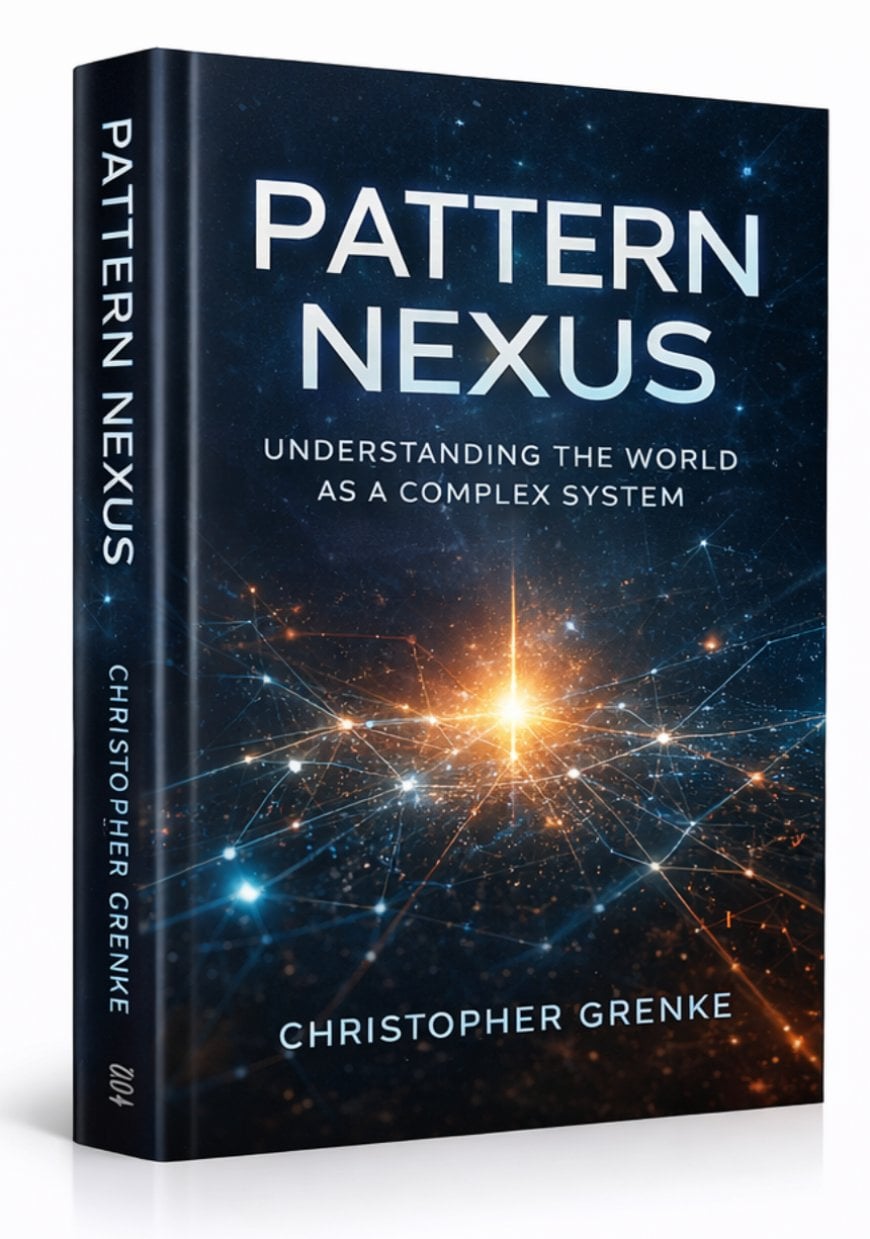
Start with the Pattern Nexus Framework article, then read the Start Here guide, the Pattern Nexus Worldview Book, Tokenized Reserve Era, Humanity’s Next Operating System, AI Industrial Flywheel, and Macro Cosmogony Map.

מה התגובה שלך?

אהבתי אהבתי 0
לא אוהב לא אוהב 0
אהבה אהבה 0
מצחיק מצחיק 0
וואו וואו 0
עצוב עצוב 0
כועס כועס 0
Nexus (Christopher)

Founder of Pattern Nexus. I research markets, macro, geopolitics, AI, history, ancient systems, and the patterns most people overlook. I’m also building Market Radar, a trading scanner designed to read pressure, risk, confirmation, and setup quality before chasing a move. Pattern Nexus is where I connect the dots between data, history, technology, and the bigger system playing out around us.

תגובות (0)

User