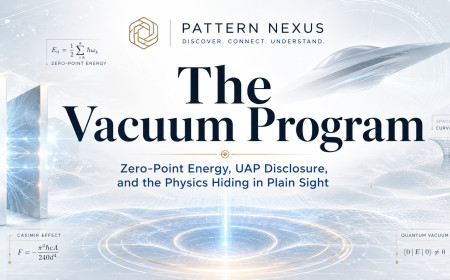
 Editor-written summary
NASA studied quantum-vacuum propulsion. DIA commissioned papers on vacuum-energy extraction, negative energy, wormholes, and spacetime engineering. DARPA explicitly asked whether vacuum energy or momentum could be transduced into usable form. Congress then entered a DIA vacuum-propulsion paper into the UAP hearing record. This Pattern Nexus investigation separates established physics from government research, current engineering claims, and speculation—then asks whether the UAP disclosure story and the vacuum-engineering story may be two views of the same technological frontier.
Inside this report
- The Vacuum Program: Zero-Point Energy, UAP Disclosure, and the Physics Hiding in Plain Sight
- The Documents Are Real. The Connection Is the Question.
- The Real Story May Be the Convergence, Not Any Single Claim
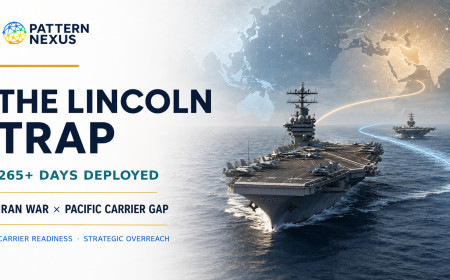 Editor-written summary
USS Abraham Lincoln was supposed to return home in May. More than 265 deployment days later, the Navy is pulling USS George Washington—the only forward-deployed U.S. carrier in the Pacific—west to relieve it. The rotation exposes the real limit of American carrier readiness: eleven hulls do not equal eleven available carriers, and an open-ended Iran mission is transferring the readiness gap from the Middle East to the Pacific.
Inside this report
- The Lincoln Trap: 265+ Days Deployed, an Indefinite Iran War, and a Carrier Gap in the Pacific
- The Relief Plan Does Not Create Capacity. It Moves the Shortage.
- Washington is not filling an empty slot. It is moving the empty slot.
 Editor-written summary
Pattern Nexus is researched, written, coded, and operated by one person for more than 80,000 monthly readers. This guide explains free registration, Premium access, the Pattern Nexus Worldview book, direct donations, and where to begin with the strongest public and Premium research.
Inside this report
- How to Support Pattern Nexus—and Keep the Public Research Record Growing
- Pattern Nexus is not a faceless media company
- There is no single “right” way to support Pattern Nexus
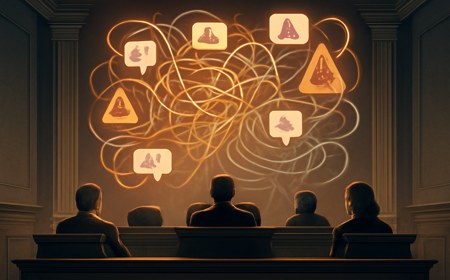 Editor-written summary
Jury selection began on August 12, 2026, in federal court in Oakland for a Meta youth-harms trial involving claims that Facebook and Instagram damaged youth mental health and unlawfully collected data from children under 13. Court records had scheduled jury selection for August 12, with openings and evidence no earlier than August 18. The case matters beyond Meta because it frames algorithmic feeds as engineered control systems that states may try to regulate through consumer-protection, privacy, and product-safety logic.
Inside this report
- Meta Youth Trial Turns Social Feeds Into a Product-Liability Test
- Quick Read
- Table of Contents
 Editor-written summary
Nvidia announced on August 10, 2026 that it had signed memorandums of understanding with Apollo, BlackRock, Blackstone, Brookfield, Goldman Sachs and KKR to establish AI compute infrastructure financing platforms designed to mobilize more than $500 billion of third-party capital over time. Axios reported that the effort could move through GPU securitizations, spreading exposure to AI compute across insurers, pensions, sovereign wealth funds and other long-duration capital pools. The verified fact is the financing push; the system read is that Nvidia is helping turn compute from purchased hardware into financeable collateral.
Inside this report
- Nvidia Turns AI Compute Into a Wall Street Collateral Machine
- Quick Read
- Table of Contents
 Editor-written summary
The OCC comment period closes Aug. 11, 2026 for proposed GENIUS Act reporting forms covering OCC-supervised permitted payment stablecoin issuers and foreign payment stablecoin issuers. The proposal would create confidential weekly coin-level reporting and quarterly financial-condition reporting, moving stablecoins closer to bank-style supervisory data collection. The important shift is not only what reserves stablecoins may hold, but how often issuers would have to turn their payment systems into regulator-readable reports.
Inside this report
- Washington Turns Stablecoins Into a Weekly Call-Report System
- Quick Read
- Table of Contents
 Editor-written summary
AI companies are assembling a cognitive-and-physical labor system designed to outscale human work. This forecast maps the 6–18 month robotics crossover, three displacement paths, the break in wage-based demand, and the monetary architecture required if machine output replaces labor income.
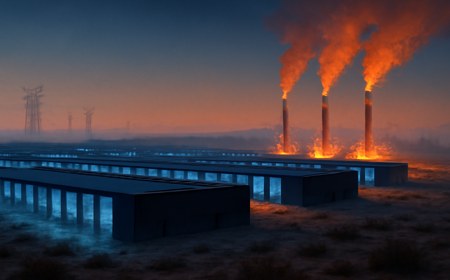 Editor-written summary
Amazon has confirmed that its planned Pecos County, Texas data center will use new on-site generation, while reporting and project documents point to a 7.65 GW gas-fired power platform with major permitted emissions. The larger signal is that hyperscalers are moving beyond power-purchase agreements into vertically integrated energy, permitting and behind-the-meter generation. That may accelerate AI compute deployment, but it also creates a parallel industrial power system with unresolved emissions, accountability and public-cost questions.
Inside this report
- Amazon Turns AI Compute Into a Private Gas-Grid Emissions Test
- Quick Read
- Table of Contents
A corrected Pattern Nexus analysis of solar cycles, liquidity, recessions, and financial tops from January 1987 through July 2026. The first monthly regression rejected a short-horizon trading signal. The properly specified regime test found that all four U.S. recession onsets in the sample occurred within twelve months of an official solar maximum or minimum, recession months were sharply concentrated around those extrema, and M2 growth was faster on official solar rising legs.
Inside this report
- The regression did not kill the thesis. It exposed the correct horizon.
- Yes, the correlation is visible. It was hiding in the turning points.
- “As the sun rises in power, so does liquidity” is a regime hypothesis.
 Editor-written summary
OpenAI says ChatGPT Atlas is scheduled to stop working on August 9, 2026, and tells users to export bookmarks and save tabs or history because those assets will not automatically transfer. Independent reports from TechRadar, The Register and MacRumors describe the move as a sunset of the standalone AI browser while OpenAI folds browser-based agentic work into ChatGPT, ChatGPT Work and Codex. The shift suggests the control point for AI web automation is moving from standalone browsers to embedded workspace agents.
Inside this report
- OpenAI Turns Atlas Shutdown Into an Embedded-Agent Browser Strategy
- Quick Read
- Table of Contents
Perseverance sealed the strongest potential Martian biosignature yet inside Sample 25. Viking's 1976 results are being re-litigated. NASA's return architecture lost funding as the evidence strengthened. This report reconstructs the science, the institutional bottleneck, the 2028 propulsion test, and the larger possibility that Mars sits upstream of Earth's biology.
Inside this report
- Did Life on Earth Begin on Mars? Sample 25, Viking, and the Evidence We Left Behind
- Mars is no longer a dead-world story. It is an evidence-return problem.
- The evidence stack is strengthening faster than the return rail
 Editor-written summary
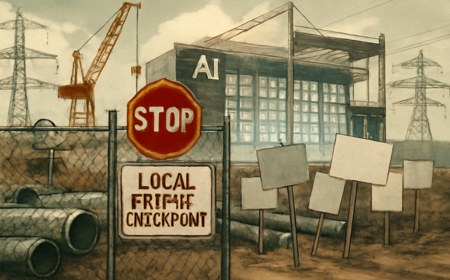
AI data-center buildout is moving from a power-and-capex story into a political-consent story. Local opposition has delayed or blocked projects, New York has imposed a statewide pause on large facilities, and developers now face a fourth bottleneck: permission to operate. The Pattern Nexus read is that ratepayer protection, water use, zoning legitimacy and community benefits are becoming financial variables in the AI industrial flywheel.
Inside this report
- AI Data Centers Hit the Consent Bottleneck
- Quick Read
- Table of Contents

