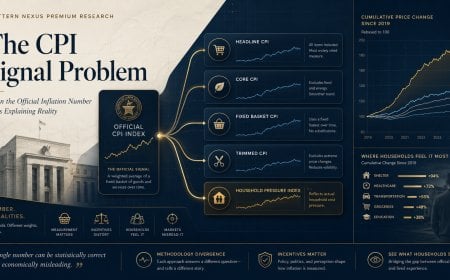
 Editor-written summary
A Pattern Nexus data analysis audit using official BLS CPI data from 1960 through April 2026 to compare headline inflation against fixed-basket, current-method, and trimmed-basket frameworks.
Inside this report
- The CPI Signal Problem: When the Official Inflation Number Stops Explaining Reality
- Pick the version that matches how deep you want to go.
- Level 1 — Reader-Friendly: The Number Is Official. That Does Not Mean It Explains Reality.
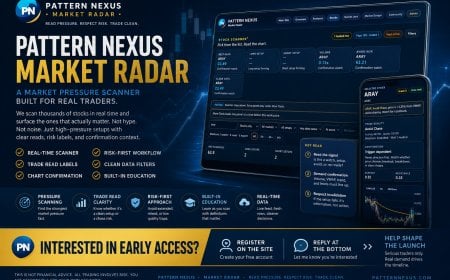 Editor-written summary
Pattern Nexus Market Radar is being built as a scanner-first trading dashboard that helps users read market pressure before chasing a move. It does not promise magic signals. It organizes live market data, chart context, risk labels, confirmation checks, and watchlist logic into one guided workflow.
Inside this report
- Interested in early access?
- Step 1
- Step 2
 Editor-written summary
Surging data-center demand is pushing PJM from a reliability problem into a governance problem. Bloomberg reporting carried by the Los Angeles Times says American Electric Power has threatened to leave PJM and federal officials are discussing structural changes, while Reuters reports PJM is weighing market reforms as data centers outstrip available energy supplies. FERC filings and market-monitor materials show data-center load has already added billions of dollars to PJM capacity-market costs.
Inside this report
- AI Load Starts Breaking the Grid Operator, Not Just the Grid
- Quick Read
- Table of Contents
 Editor-written summary
Antioch High School shooting survivor Antonyous Henin has sued Omnilert and System Integrations, alleging an AI-powered gun-detection system was installed and operating but failed to detect the shooter’s handgun before shots were fired. Local reports and the complaint say the system had been marketed around early firearm detection, while Ars Technica framed the case as a national tech-policy test of how accurate AI public-safety systems must be when deployed in schools. The verified facts are still allegations at this stage; the broader signal is that AI safety tools are moving from procurement promises into courtroom accountability.
Inside this report
- AI Security Theater Gets Its Liability Test in Nashville
- Quick Read
- Table of Contents
 Editor-written summary
OpenAI has made Lockdown Mode available as an opt-in advanced security setting for ChatGPT, with rollout details varying by account type and workspace. The feature limits or disables network-enabled capabilities such as live browsing, deep research, agent mode, file downloads, some web-derived image support, and certain connector actions to reduce prompt-injection-based data exfiltration risk. The Pattern Nexus read: the AI economy is shifting from model intelligence alone toward controlled runtime architecture, where egress, permissions, and side effects become core security primitives.
Inside this report
- OpenAI Builds the Blast Door Into the Agent Stack
- Quick Read
- Table of Contents
 Editor-written summary
Nvidia and SK hynix announced a multiyear technology partnership to co-develop next-generation memory for Nvidia’s AI factory roadmap. The deal comes as Jensen Huang warned that shortages across memory and the broader semiconductor supply chain could last several years. The partnership ties SK hynix to Nvidia’s infrastructure, personal AI and physical AI platforms while adding AI-driven chip design and fab digital twins to the collaboration.
Inside this report
- Nvidia Turns the Memory Wall Into an AI Factory Pact With SK Hynix
- Quick Read
- Table of Contents
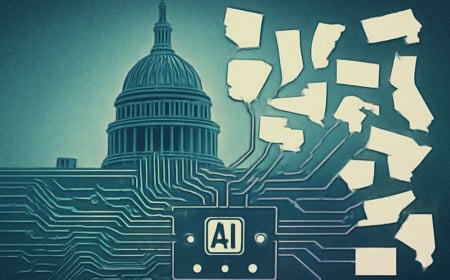 Editor-written summary
Reps. Jay Obernolte and Lori Trahan released a discussion draft of the Great American Artificial Intelligence Act of 2026 on June 4, 2026. The draft creates a federal framework for frontier AI governance, audits, whistleblower protections, cybersecurity, workforce measures, and CAISI oversight, while preempting state laws that specifically regulate AI model development. The fight is no longer only about how powerful models should be tested; it is about who gets to write the rules.
Inside this report
- Congress Moves to Preempt the AI Patchwork
- Quick Read
- Table of Contents
 Editor-written summary
Google and Intersect Power announced construction of the Meitner Energy Center in Gray and Roberts Counties, Texas, pairing a new Google data center with dedicated new energy generation. Independent reporting says the project includes more than 1 gigawatt of wind, solar, and battery storage, with some on-site gas for firming and air cooling to limit water use. The strategic read: the AI bottleneck is shifting from chips alone to controllable energy access.
Inside this report
- Google Builds the Power Plant Into the AI Factory
- Quick Read
- Table of Contents
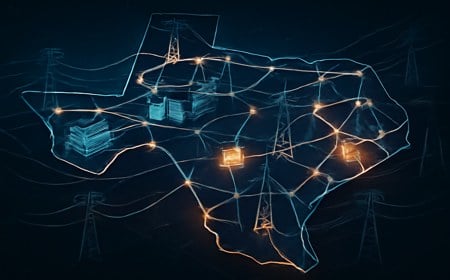 Editor-written summary
Reuters reported on June 5, 2026 that several large data centers and crypto facilities seeking to connect to the Texas grid failed key voltage reliability tests. ERCOT’s May 21 assessment found eight planned large loads totaling about 3.9 GW, modeled within roughly 20 GW of large-load representation, and identified four trip groups that could exceed the 3,200 MW threshold while not meeting NOGRR282 voltage ride-through requirements. The signal is that AI-era power risk is no longer only about finding enough megawatts; it is also about whether those megawatts stay connected through ordinary grid faults.
Inside this report
- AI Loads Fail the Texas Grid’s Ride-Through Test
- Quick Read
- Table of Contents
 Editor-written summary
The Hong Kong Monetary Authority announced on June 5, 2026 that it has convened a Tokenised Bond Expert Group to support wider adoption and scalability of tokenized bonds. The group’s membership spans banks, law firms, industry associations, market infrastructure and technology providers, with first discussions focused on how Hong Kong’s legal and regulatory regime applies to tokenized bond issuance and transactions. The system signal is that Hong Kong is treating tokenized bonds as future fixed-income plumbing, not a crypto side project.
Inside this report
- Hong Kong Starts Building the Tokenized Bond Rulebook
- Quick Read
- Table of Contents
 Editor-written summary
SpaceX disclosed a Google cloud service agreement covering approximately 110,000 Nvidia GPUs, CPUs, memory, and related components. Google is set to pay $920 million per month from October 2026 through June 2029, after a reduced-fee ramp period. The deal shows how scarce AI compute is being packaged as infrastructure revenue and valuation support as SpaceX advances its IPO process.
Inside this report
- Google Rents the AI Factory: SpaceX Turns GPU Capacity Into IPO-Ready Infrastructure Revenue
- Quick Read
- Table of Contents
 Editor-written summary
President Trump said on June 5, 2026, that his team would look into the idea of AI companies giving the American public a stake in their firms. NOTUS, Reuters, AP, Axios and The Washington Post all reported versions of the emerging debate, including Sam Altman’s outreach to Bernie Sanders and Washington’s broader interest in public participation in AI upside. The Pattern Nexus read: frontier AI is being reframed as strategic infrastructure that may sit on the national balance sheet, not just inside private cap tables.
Inside this report
- The State Wants a Piece of AI
- Quick Read
- Table of Contents

