 Editor-written summary
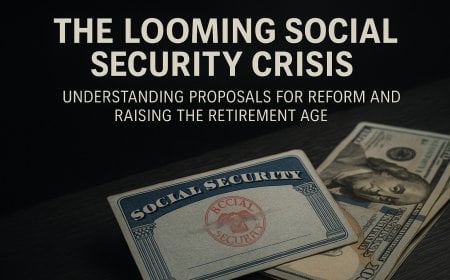
Social Security reform is essential but often misunderstood. This comprehensive analysis explores the mechanics of the program's solvency problem, the range of policy proposals, the impacts on various age cohorts, and the likelihood of meaningful reform. We debunk political framing, emphasize structural issues, and offer a data-driven view of what needs to be done.
Inside this report
- The Core Constraint That Forces Reform
- What the Trust Fund Actually Represents
- Why the System Was Allowed to Drift
 Editor-written summary
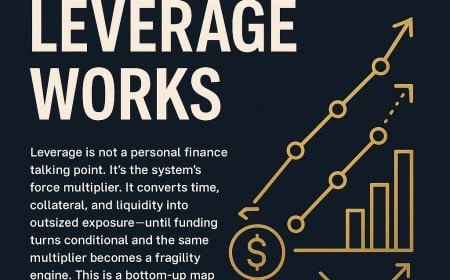
A Pattern Nexus system map of leverage from households to the Fed. How collateral, funding, maturity, and liquidity couple together across consumers, business, corporations, housing, markets, government, and the shadow system—why leverage is power, and why liquidity is the constraint (2008–2030).
Inside this report
- Executive Summary
- What you should watch in real time
- The Leverage Primitive
 Editor-written summary
An in-depth systems analysis of how modern power shifted from laws, borders, and coercion to invisible control systems—payment rails, standards bodies, energy flows, compliance regimes, and algorithmic authority—and why sovereignty now operates downstream of infrastructure.
Inside this report
- Power Without Permission
- Executive Summary
- Core Thesis
 Editor-written summary
Donate to
Pattern Nexus
Inside this report
 Editor-written summary
A rough session for risk assets as AI-linked leaders sold off, volatility jumped, and the long end refused to rally. With the dollar steady and gold higher, the tape reads like duration repricing and liquidity-fragility, not a simple “risk-off headline.”
Inside this report
- Today’s Tape (Snapshot)
- Primary Drivers
- Broadcom’s margin signal hit the entire AI complex
 Editor-written summary
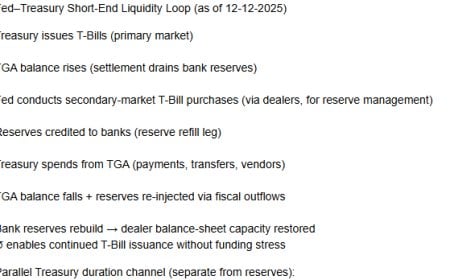
A step-by-step, plumbing-accurate explanation of the Fed–Treasury–dealer short-end liquidity loop: T-bill issuance, secondary-market bill purchases, the TGA reserve drain and fiscal re-injection, and why this regime has no credible end state.
Inside this report
- Executive Summary
- Current Policy Context (As of 12-12-2025)
- 1. Fed rate cuts
 Editor-written summary
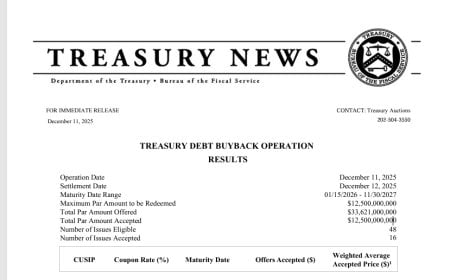
Treasury retires $12.5B in debt in a single buyback operation, confirming the shift into a post-QT, Treasury-driven liquidity regime.
Inside this report
- Summary
- Official Buyback Results
- What This Operation Actually Does
 Editor-written summary
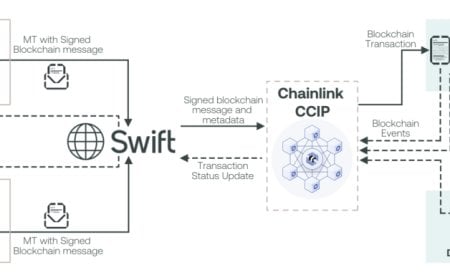
The SEC has approved DTCC’s groundbreaking plan to tokenize U.S. stocks, bonds, ETFs, and Treasuries, launching a regulated digital-asset framework that modernizes the core plumbing of American markets. This decision marks a major step toward the Tokenized Reserve Era, enabling programmable settlement, 24/7 collateral mobility, and blockchain-based market infrastructure.
Inside this report
- SEC Approves DTCC Plan to Tokenize U.S. Stocks, Bonds, and Treasuries
- Executive Summary
- What the SEC Actually Approved
 Editor-written summary
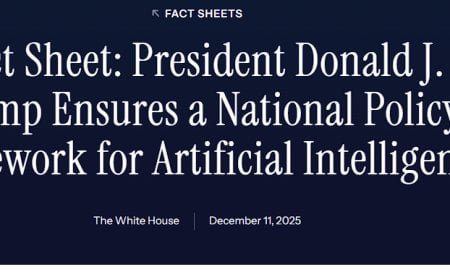
President Trump signs a sweeping AI Executive Order targeting state-level regulation, creating DOJ litigation mechanisms, conditioning federal funding, and setting the stage for a unified national AI framework. Pattern Nexus breaks down what it actually does—and why it matters.
Inside this report
- Executive Summary
- Why This Order Exists
- The Enforcement Architecture
 Editor-written summary
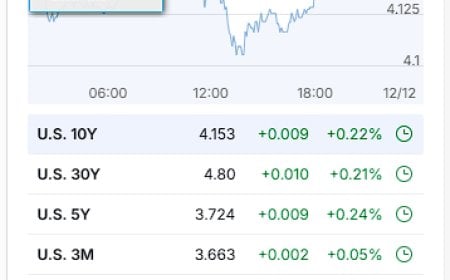
Daily Pattern Nexus market wrap for December 11, 2025: index melt-up after the Fed’s first asset-purchase move, Oracle’s AI-spend shock, rate-curve tension, gold weakness, and mostly-sideways crypto.
Inside this report
- Article Navigation
- Session Overview
- Equity Indices: Dow Melt-Up, S&P Records, Nasdaq Lag
 Editor-written summary
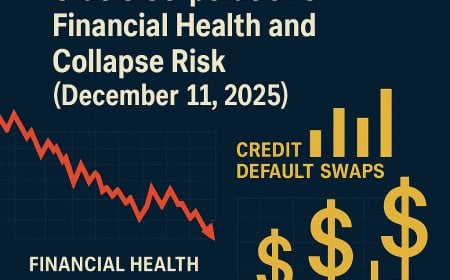
Detailed analysis of Oracle’s financial stress as of December 2025, including stock performance, debt risk, CDS surge, AI spending, and expert warnings.
Inside this report
- Oracle Financial Health & Collapse Risk – December 2025
- Soaring CapEx, Collapsing Cash Flow, and the Sharpest CDS Spike Since 2008
- Stock Performance and Market Reaction
 Editor-written summary
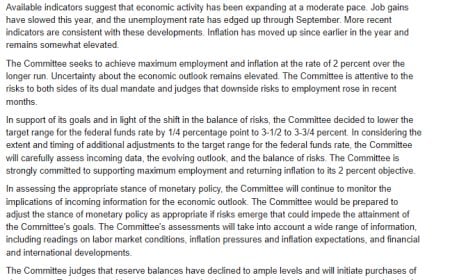
The Fed cut rates by 25 bps, acknowledged rising downside risks to employment, and quietly ended QT by initiating short-term Treasury purchases to maintain reserves, marking the start of a new liquidity regime.
Inside this report
- Quick overview
- What the Fed actually decided and said
- What changed vs the last FOMC meeting

