 Editor-written summary
The 2025 National Security Strategy marks the most dramatic U.S. strategic pivot in decades—re-centering the Western Hemisphere, reviving a modern Monroe Doctrine, accelerating digital-dollar rails, and redefining global power competition around AI, liquidity systems, and stablecoin-backed economic dominance. This Pattern Nexus master-framework integrates geopolitics, macro liquidity, digital assets, and statecraft into a unified thesis.
Inside this report
- The New Monroe Doctrine: How the 2025 National Security Strategy Locks In a Western Hemisphere Pivot, Digital Dollar Rails, and a New Phase of Great Power Competition
- Overview: What Just Quietly Changed
- From Global Firefighter to Hemispheric Power
 Editor-written summary
After the 2008 crisis, the global system didn’t deleverage — it migrated. Between 2008 and 2019, QE, ZIRP, swap lines, and new regulations turned central banks into the core liquidity engine, inflated asset prices, hollowed out safe yields, and quietly laid the foundations for the digital dollar, stablecoins, and the AI–energy megacycle to come.
Inside this report
- In This Article
- The Breakpoint: From Private Collateral to Public Balance Sheets
- QE and ZIRP: How the New Liquidity Engine Actually Works
 Editor-written summary
A fully sourced investigation into whether the Federal Reserve planned a $45B monthly Treasury-bill purchase program in December 2025. This Pattern Nexus breakdown differentiates analyst forecasts from official policy, clarifies what Reserve Management Purchases are, and examines whether this amounts to QE in function.
Inside this report
- Context: Where the $45B Claim Came From
- Mainstream Evidence and Analyst Estimates
- 1. MarketWatch / Morningstar (Dec 6, 2025)
 Editor-written summary
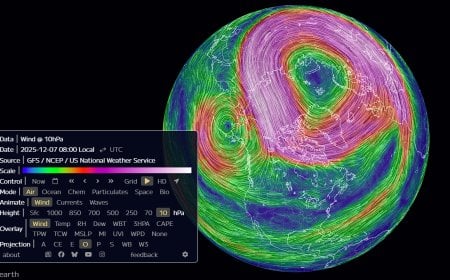
The polar vortex is undergoing rapid deformation between December 7–11, 2025, with stratospheric winds elongating into a classic pre-collapse pattern. This Pattern Nexus deep dive explains what the vortex evolution means, how the cold propagates downward, and why North America may be the bullseye for a severe late-December cold outbreak.
Inside this report
- Today’s Update (Dec 7 Live Data + Dec 9 & Dec 12 Projections)
- The Live State (Dec 7): The Vortex Is Already Breaking Symmetry
- The December 9 Projection: Split-Like Geometry Starts Emerging
 Editor-written summary
After the dot-com crash, the world didn’t deleverage — it rewired. Between 2001 and 2008, China’s WTO entry, Asian reserve accumulation, low Fed rates, and an explosive securitization boom turned U.S. housing into the core collateral engine of the global dollar system. When that engine failed, shadow banking imploded and central banks crossed the Rubicon into unlimited liquidity.
Inside this report
- In This Article
- The Setup: After Dot-Com, Before Disaster
- China’s WTO Moment and the Inflation Mirage
 Editor-written summary
The Trump administration’s 50-year mortgage proposal, paired with viral rumors of 15-year car loans, is being sold as “affordability.” In reality, ultra-long debt structures double the interest burden, trap low-income households in lifetime payments, and weaponize credit against an already fragile workforce.
Inside this report
- What the Administration Is Actually Proposing
- How a 50-Year Mortgage Really Works
- What the numbers actually look like
 Editor-written summary
From the Dartmouth AI workshop and the invention of the integrated circuit to ARPA, SAGE, and Fairchild Semiconductor, the late 1950s and 1960s quietly birthed the first compute–military–industry complex. This chapter tracks how information itself became a strategic asset — and why the AI boom of 2025–2035 is its direct descendant.
Inside this report
- In This Article
- The Setup: From Dollar Fortress to Information Arms Race
- Dartmouth 1956: Naming Artificial Intelligence
 Editor-written summary
Between 1994 and 2001, the world entered a new liquidity regime driven by capital account liberalization, dollar-denominated borrowing, export surpluses, and the explosive rise of technology markets. From the Tequila Crisis and Asian Financial Crisis to the dot-com bubble, this era created the modern global liquidity supercycle — and exposed its fault lines.
Inside this report
- In This Article
- The Setup: From Leverage Machine to Global Liquidity Wave
- The Tequila Crisis: First Warning Shot
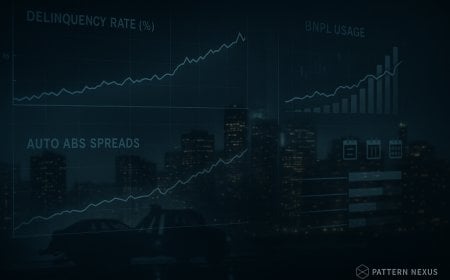 Editor-written summary
As of December 4, 2025, subprime auto borrowers and Buy-Now-Pay-Later users are showing rising strain. This Pattern Nexus deep dive maps where the real risk sits, how much of it flows back into banks, and whether these “buy more, pay more later” rails are the real source of bank stress.
Inside this report
- Executive overview
- How the subprime auto market is actually structured
- Delinquencies, repossessions, and who is breaking first
 Editor-written summary
Black Friday and Cyber Week 2025 set new spending records, but the November ADP report showing a surprise 32,000-job loss reveals a fragile labor market underneath. Pattern Nexus connects the consumer sugar high to the small-business labor squeeze.
Inside this report
- Black Friday and Cyber Week 2025: What Actually Happened
- Traffic vs. Sales: The Brick-and-Mortar Drag
- How Consumers Are Spending: Discounts, BNPL, and Intentional Buying
 Editor-written summary
After the 1970s inflation and the end of Bretton Woods, the global system didn’t normalize — it hardened and then financialized. Between 1979 and 1994, Volcker’s shock therapy, Reagan–Thatcher deregulation, junk bonds, LBOs, and market-based credit built a new regime where leverage, not wages, became the main growth engine.
Inside this report
- In This Article
- The Setup: From Monetary Break to Discipline by Pain
- Volcker’s Shock: Killing Inflation, Pricing Everything
 Editor-written summary
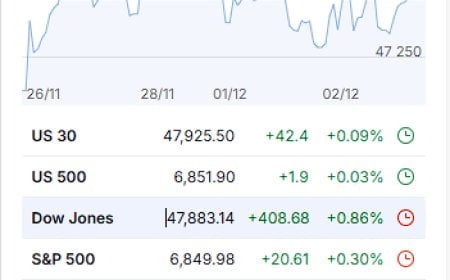
Markets rallied on December 3, 2025 as yields softened and risk sentiment returned. Equities rose, crypto surged, commodities stayed mixed, and the dollar weakened. Here is the full Pattern Nexus breakdown with charts, news, and deep liquidity analysis.
Inside this report

