 Editor-written summary
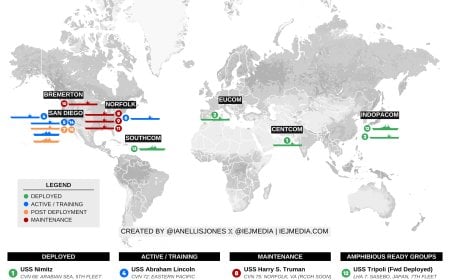
U.S. carrier strike groups are on the move — from the Ford in the Mediterranean to the Iwo Jima Amphibious Ready Group now under SOUTHCOM in the Caribbean. The pattern points to global force consolidation and strategic readiness for simultaneous regional pressure events — not mere exercises. Consolidating Power, Carrier Strike Groups, U.S. Navy, SOUTHCOM, Iwo Jima ARG, Venezuela, Trump, Amphibious Assault, Global Deployment, Deterrence Strategy, Geopolitics, Military Buildup, U.S. Defense Posture, Pattern Nexus, Foreign Policy
Inside this report
- Consolidating Power: Carrier Movements, SOUTHCOM Surge, and the Pattern Behind It
- The Re-Positioning
- Why the Caribbean Matters
 Editor-written summary
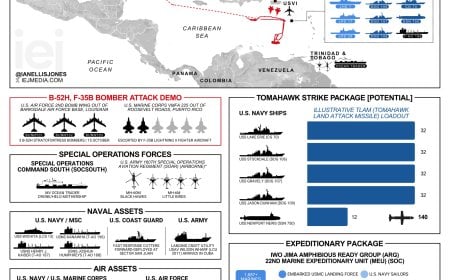
As U.S. Southern Command ramps up its Caribbean deployment, amphibious ships, Tomahawk destroyers, and special operations units signal a shift from maritime interdiction to potential land-based action. Trump’s comments confirm the transition: the sea is “under control” — now land targets are next .Caribbean Surge, U.S. Southern Command, SOUTHCOM, Venezuela, Amphibious Assault, Tomahawk Missiles, Trump, Regime Change, U.S. Military Build-Up, Latin America, Foreign Policy, Military Strategy, Defense Watch, Pattern Nexus
Inside this report
- Caribbean Surge: From Sea-Strikes to Land Options — What the U.S. Is Building
- The Asset Stack
- Why the Shift from Sea to Land?
 Editor-written summary
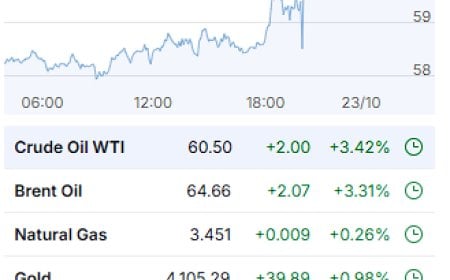
Markets wavered as the Fed faces a data blackout, gold and tech cooled off, and the Trump administration tightened sanctions on Russia while juggling crises abroad. markets, gold, 10-year yield, Fed rate cut, data vacuum, government shutdown, Trump, sanctions, Russia, Ukraine, Vance, Israel, Middle East, Nasdaq, Tesla, Netflix
 Editor-written summary
AI Feedback Loops Are Rewriting Power – Systems & Patterns (2025) From predictive policing to trading algorithms and social platforms, AI-driven feedback loops are shaping behavior and concentrating control. What happens when the system trains itself—and we can’t see how?
Inside this report
- AI Feedback Loops and the Quiet Reshaping of Power
- Predictive Policing: When Data Becomes Destiny
- Algorithmic Markets: Trading at the Speed of AI
 Editor-written summary
Trump says he will notify Congress before launching U.S. military strikes on foreign soil targeting drug traffickers — a move signaling a shift from maritime operations to potential land-based engagements. The statement blurs the line between counter-narcotics missions and warfare, raising major legal and geopolitical implications. Trump announced plans to notify Congress before authorizing U.S. military strikes against drug traffickers on foreign soil — a move that could escalate the war on drugs into new territory and test the limits of presidential war powers.
Inside this report
- Trump Signals Possible Military Strikes on Drug Cartels Beyond U.S. Borders
- From Sea to Soil
- Legal and Strategic Implications
 Editor-written summary
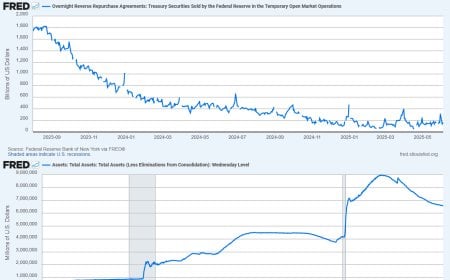
Central banks are pulling back trillions in liquidity after years of easy money. We examine how this liquidity drain – in the US and globally – impacts stocks, the economy, and what it signals for the future.
Inside this report
- Liquidity Squeeze: How Falling Global Liquidity Impacts U.S. Markets
- What Do We Mean by “Liquidity”?
- From Flood to Drought: The Great Liquidity Reversal
 Editor-written summary
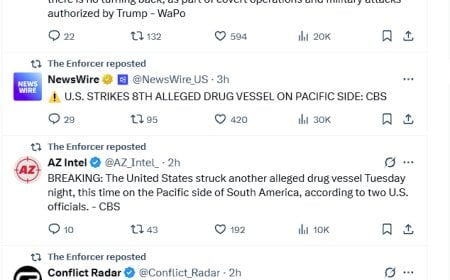
Despite a string of U.S. naval strikes and CIA authorizations inside Venezuela, no public confirmation has been made that the U.S. formally decided to remove Nicolás Maduro from power. The pattern suggests escalating covert pressure—but official denials leave the line between regime change and counter-narcotics blurred.
Inside this report
- From the Caribbean to the Pacific: The U.S. Narco-Strike Campaign Just Crossed a Line
- What’s actually happening
- Why the Pacific strike is a big tell
 Editor-written summary
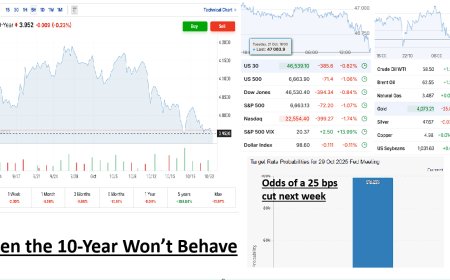
Stocks and gold pulled back even with a widely expected Fed rate cut days away. Here’s how the 10-year, earnings headlines, dollar strength, and profit-taking all intersected to drive today’s tape.
 Editor-written summary
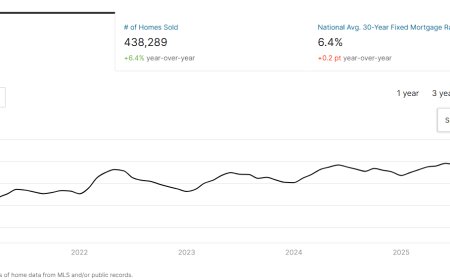
Housing Affordability and Wealth Trends – October 2025, An in-depth look at how falling interest rates, easing inflation, and a shifting rental market are impacting real estate and wealth distribution in October 2025.
Inside this report
- October 2025: Macroeconomic Signals Reshaping Real Estate and Wealth
- Interest Rates Pivot and Inflation Eases
- Housing Affordability Stretched, but Past the Worst
 Editor-written summary
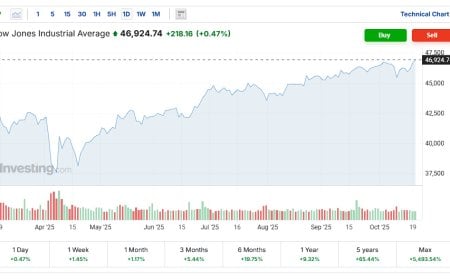
On October 21, 2025, the Dow closed at a record high while gold pulled back sharply from all-time highs. Japan’s Nikkei surged on optimism around new leadership, but China’s property market slump and Argentina’s peso crisis highlight diverging global forces. Here’s the full market wrap.
Inside this report
- Dow Sets Record High as Gold Plunges; Nikkei Surges Amid Diverging Global Forces – Oct 21, 2025 Market Wrap
- U.S. Markets: Dow Climbs to Record as S&P Near High and Nasdaq Eases
- Gold: Sharp Correction After Record Highs
 Editor-written summary
AI is reshaping industries, economies, and everyday life faster than humans can comprehend — creating a world of dazzling innovation and dangerous complexity. AI’s explosive growth is transforming everything — work, money, creativity, and identity — at a pace humanity can barely follow. This in-depth analysis explores how automation, virtual life, and systemic complexity are outpacing our ability to adapt.
Inside this report
- High-Tech, High Complexity: How AI’s Rapid Rise Is Leaving Society Behind
- AI’s Exponential Growth and Disruption
- Finance and Digital Money: Algorithms Take Over
 Editor-written summary
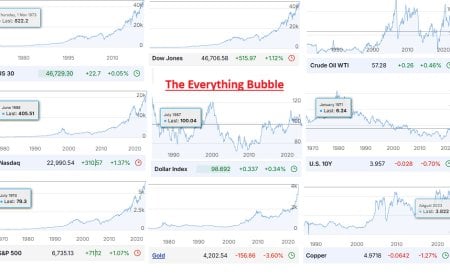
Since the 2000s, nearly every major asset has inflated together — stocks, commodities, yields, and metals. As money supply outruns real production, prices rise despite rising productivity. The “Everything Bubble” isn’t about growth — it’s about distortion.
Inside this report
- The Everything Bubble: When Money Outruns Production
- The core imbalance: money vs. product
- “Eggs should be cheaper” (and why they aren’t)

