

Energy
Automatically indexed from the existing article tag.
Theses, forecasts, models, and paths
No published research objects yet
This topic is ready for editors to connect a thesis, forecast, model, or research path.
Latest articles
Ankara Turns Renewable Finance Into an AI Data-Center Sovereignty Rail
The Asian Development Bank said on October 22, 2026 that it signed a $75 million loan with Rönesans Holding to support renewable energy, battery storage by 2029 and a hybrid-renewable hyperscale data center in Türkiye. The financing follows Rönesans and Digital Realty’s Ankara data-center push, with the first phase planned for more than 22 MW of IT capacity by 2028. The pattern is larger than one campus: Türkiye is trying to convert geography, clean power and state incentives into sovereign AI and cloud infrastructure.
Published Oct 24, 2026 Article · related
Washington Turns Russia Sanctions Into an Energy-Price Waiver Fight
President Trump signed an executive order on October 16 waiving major sanctions, restrictions, and duties under the Lindsey O. Graham Sanctioning Russia and Iran Act of 2026, just before implementation was due. The move drew congressional criticism and a public appeal from Ukrainian President Volodymyr Zelenskyy, while independent reports connected the pause to a broader energy-price and Russia-Ukraine posture fight. The strategic question is whether secondary sanctions remain a coercive tool or become a discretionary valve for managing fuel-market pressure.
Published Oct 17, 2026 Video · related
The Convergence — Audio-Video Edition
The finale of the Pattern Nexus Cycles of Power audio-video series connects 150 years of industrial, monetary, computing, energy, and liquidity history to the emerging convergence of AI infrastructure, fiscal dominance, programmable dollars, hard-asset politics, and competing paths from 2030 to 2045.
Published Oct 12, 2026 Article · related
Trump Turns a Claimed Russia-Ukraine Energy Ceasefire Into a Winter-Power Verification Test
Trump announced on October 11, 2026, that Russia and Ukraine had agreed to an immediate “energy ceasefire,” but AP and Reuters reported that he gave no operational details and that there was no immediate confirmation from Moscow. Ukraine’s presidency said Kyiv supports the step but needs Russia’s response, while also reporting Russian strikes on Ukrainian energy facilities after Trump’s statement. The signal now becomes a verification test for winter power security, Russian refining pressure, and U.S. fuel-market politics.
Published Oct 11, 2026 Article · related
The World I’ve Been Mapping Is Taking Shape
I connect the developments now taking shape across AI infrastructure, private power, critical minerals, the Iran energy shock, digital dollars, machine commerce, robotics and productive ownership. The article explains the mechanisms for readers joining the discussion now, carries the research into September and October, and connects the later housing, Greenland, space, neural-computing and polar-vortex work. Includes links to 46 earlier Pattern Nexus articles, 53 numbered external sources, a practical watch list and six reader questions.
Published Oct 5, 2026 Article · related
Berlin Turns €1.3B Ukraine Aid Into a Drone-and-Winter-Energy Deterrence Stack
German Chancellor Friedrich Merz used an Oct. 4, 2026 visit to Kyiv to announce more than €1.3 billion in new support for Ukraine. The package includes roughly €1 billion in military aid and about €350 million for energy-sector repairs ahead of winter, while German and Ukrainian actors expand cooperation on drones, interceptors, air defense, radar and weapons production. The strategic read is that Berlin is shifting from episodic aid toward a combined military-industrial and infrastructure-resilience stack.
Published Oct 4, 2026 Article · related
G7 Turns Emergency Diesel Stocks Into a No-Export-Ban Bargain
G7 leaders agreed on October 2, 2026 to coordinate an IEA-linked release of 100 million barrels of diesel and crude over four months, with a substantial diesel release in the first 20 days. The package followed U.S. pressure on Europe over emergency diesel inventories and included a pledge not to impose energy-export restrictions among G7 members. The move turns strategic stocks into a market-stabilization tool and an alliance-management mechanism.
Published Oct 3, 2026 Article · related
Amazon Turns Data-Center Backlash Into a $1B Community-Permit Rail
Amazon Web Services announced Built Together, a U.S. data-center community framework backed by more than $1 billion over five years, alongside a Data Center Commitment that includes ending NDAs with government agencies and publishing annual energy and water metrics. The verified facts point to a broader AI-infrastructure shift: local consent is becoming as important as chips, power contracts, and land. The Pattern Nexus read is that Amazon is trying to industrialize permission before moratoriums and transparency fights harden into a national brake on the AI buildout.
Published Oct 3, 2026 Article · related
Washington Turns a Third Carrier Into an Iran-War Escalation Option
The United States is dispatching the USS Theodore Roosevelt carrier strike group and the Makin Island amphibious ready group toward the Middle East, according to multiple reports citing U.S. officials. The deployment could briefly put three U.S. aircraft carriers in the region, depending on timing, as President Donald Trump weighs further pressure or renewed strikes against Iran. The strategic signal is not just military: it lands in an energy system already strained by Hormuz disruption, low distillate inventories, and elevated oil-price risk.
Published Oct 2, 2026 Article · related
Senate Turns Permitting Reform Into an AI-Grid Cost Allocation Deal
Senate energy and environment leaders introduced the Bipartisan American Affordability and Jobs Act on September 30, 2026, a permitting package aimed at faster federal reviews for energy, transmission, and infrastructure projects. The bill would strengthen FERC transmission-siting authority and require data centers to pay associated transmission costs instead of shifting those costs to households and smaller businesses. A Senate vote is not expected until after the November 3 midterm elections.
Published Oct 1, 2026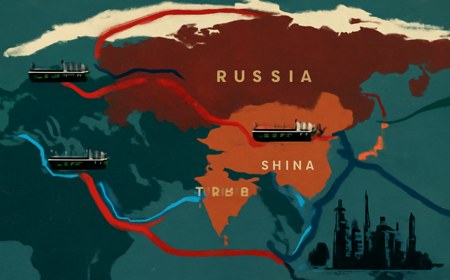 Article · related
Beijing Turns Russian Crude Into an India Energy-Security Squeeze
Indian refiners expect Russian crude supply to tighten further in October and November as reduced Russian exports and stronger Chinese demand force them toward costlier substitutes. Kpler-cited September data show Russian crude still led India’s slate at about 1.74 million to 1.75 million barrels per day, but that was the lowest since April, while Iraq and Saudi Arabia volumes rose to offset part of the drop.
Published Sep 28, 2026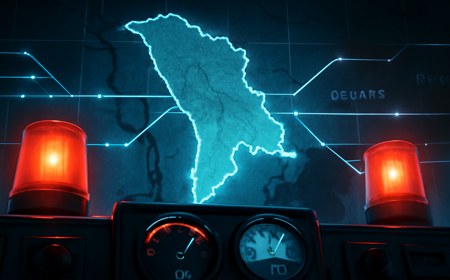 Article · related
Moldova Turns a 60-Day Emergency Into a Winter Energy-Security Firewall
Moldova’s parliament approved a nationwide 60-day state of emergency in the energy and hydrological sectors beginning September 26, 2026. The government says the measure is preventive, aimed at giving authorities faster tools before winter as drought, electricity-import dependence, fuel-market stress and regional-war risks overlap. The system signal is that Moldova is treating water, electricity, fuel and cross-border grid access as one integrated resilience stack.
Published Sep 27, 2026 Video · relatedThe QE Decade — Audio-Video Edition
Episode 8 of the weekly Pattern Nexus audio-video series turns Part 8 of Cycles of Power into a shorter story about how quantitative easing, zero interest rates, dollar swap lines, Basel III, safe-asset scarcity, and repeated central-bank intervention replaced private mortgage collateral with public balance sheets between 2008 and 2019—and laid the foundations for stablecoins, tokenized Treasuries, and the AI–energy buildout.
Published Sep 26, 2026 Article · related
Tehran Turns Hormuz Reopening Into a Seven-Day Energy-Security Bargain
Iranian Foreign Minister Abbas Araghchi says Tehran has sent Washington a seven-day roadmap through Qatar that would reopen the Strait of Hormuz and restart nuclear talks if U.S. conditions are met. AP, Al Jazeera, Reuters and The National reporting indicate the offer is tightly conditional, contains no near-term Iranian nuclear concession and is now colliding with Western efforts to build parallel maritime-security pressure at the UN.
Published Sep 26, 2026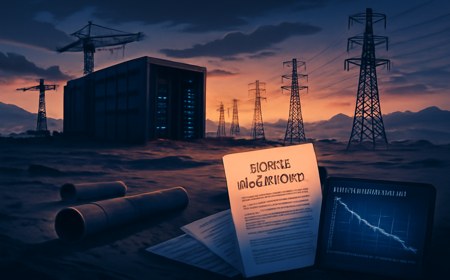 Article · related
Oracle Turns Project Jupiter Into an AI-Infrastructure Force-Majeure Test
Oracle issued a force-majeure notice tied to Project Jupiter, a New Mexico AI data-center campus being developed by Blue Owl-owned STACK Infrastructure to support OpenAI. Reuters reported the notice is reverberating through AI-infrastructure financing discussions, while other reports point to power delivery, gas-pipeline permitting, community opposition and energy-supply timing as the pressure points. The system read is that AI infrastructure risk is moving downstream from GPUs to enforceable megawatts, permits and project-finance documents.
Published Sep 25, 2026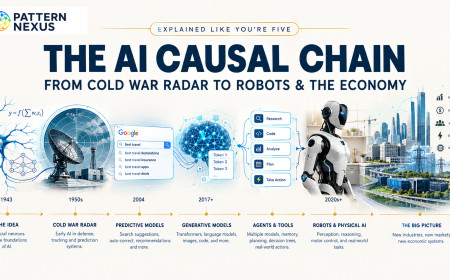 Article · related
The AI Causal Chain Explained Like You're Five: From Cold War Radar to Robots and the Economy
AI did not begin with ChatGPT. This accessible, fully sourced Pattern Nexus research map follows the 1943 artificial-neuron paper, Cold War radar computers, predictive internet systems, transformer models, agents, embodied AI and humanoid robots into the real questions about jobs, energy, productive ownership, wages and the economy.
Published Sep 23, 2026 Article · related
London Turns RAF Tankers Into a Red Sea Energy-Security Backstop
British Prime Minister Andy Burnham has approved limited defensive air-to-air refueling support for Saudi Arabia after Riyadh requested help countering intensified Houthi attacks. Reporting from AP, Reuters, The Guardian and Bloomberg says the mission is expected to involve one RAF Voyager for a time-limited deployment measured in weeks. The move links Yemen’s renewed escalation directly to oil-route security, allied burden-sharing and the cost-of-living politics of keeping maritime chokepoints open.
Published Sep 22, 2026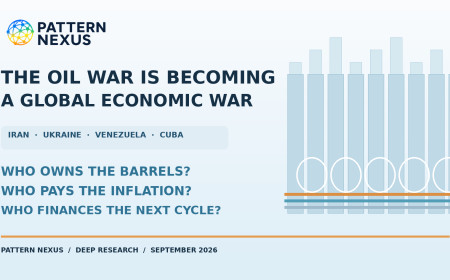 Article · related
The Oil War Is Becoming a Global Economic War
An extensive Pattern Nexus reconstruction linking the Iran/Hormuz disruption with Ukrainian refinery attacks, diesel shortages, Saudi pipeline damage, U.S. and Venezuelan supply, Cuba’s grid, the dollar system, Treasury financing, Fed tightening, public energy-stock disclosures and the next conditional liquidity cycle. Includes an auditable Pattern Nexus article timeline, four sourced charts and 36 primary/reporting references.
Published Sep 21, 2026 Article · related
They Put Human Neurons in a Data Center. Now the Servers Have to Be Fed.
Singapore now has a 20-unit computing rack built around living human neurons growing on electrode-fitted silicon. The cells receive software-defined electrical inputs, return spikes that can control a simulated environment, and require nutrient medium, gas balance, temperature control and waste filtration to remain alive. This Pattern Nexus investigation separates the real NUS–DayOne–Cortical Labs prototype from the viral version, explains the closed-loop mechanism from first principles, tests the energy and learning claims, examines the ethics, and connects the living rack to the fly-brain mind-uploading pipeline.
Published Sep 19, 2026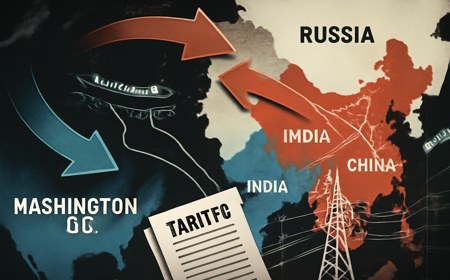 Article · related
Washington Turns Russian Oil Sanctions Into an India-China Tariff Lever
The U.S. House passed a sweeping Russia sanctions package in a 262-159 vote and sent it to President Donald Trump. The bill targets Russian officials, banks, sanctions-evasion networks and the shadow fleet, while authorizing duties on countries that buy Russian-origin crude oil or natural gas or facilitate evasion. India responded on September 17 that it would protect energy security, diversified sourcing, trade interests and the bilateral relationship.
Published Sep 17, 2026 Article · related
Google and Nvidia Turn Flexible Load Into an AI-Data-Center Fast Lane
Google, Nvidia and Emerald AI have launched the AI Energy Management Alliance to promote flexible AI data centers that can adjust electricity demand in response to grid conditions. The coalition is pushing utilities, grid operators and regulators to treat verifiable flexibility as a reason to accelerate large-load interconnection. The Pattern Nexus read: AI compute demand is being converted from a fixed grid burden into a dispatchable power-market asset.
Published Sep 16, 2026 Article · related
EPA Turns AI Power Demand Into a Fossil-Baseload Deregulation Test
EPA Administrator Lee Zeldin signed a final partial repeal of the 2024 Carbon Pollution Standards for fossil-fuel power plants and paired it with a proposal to rescind remaining greenhouse-gas standards for the sector under Clean Air Act Section 111. EPA frames the action as an energy-abundance and cost-saving measure worth more than $300 billion, while major news reports say environmental groups expect legal challenges. The AI angle is not that EPA regulated AI directly, but that rising data-center and industrial load is becoming a justification for fossil-basaload deregulation.
Published Sep 15, 2026 Article · related
Trump Converts AI Safety Warnings Into a China-Race Doctrine
Trump dismissed AI catastrophe warnings as a hoax and framed pressure for AI guardrails as hostile to U.S. leadership, AI companies and data centers. The clash follows calls from Anthropic’s Dario Amodei, OpenAI’s Sam Altman and Elon Musk to pace frontier-model development and expand safety oversight. The bigger pattern is a political operating system that treats AI safety, permitting, energy demand and China competition as one acceleration problem.
Published Sep 14, 2026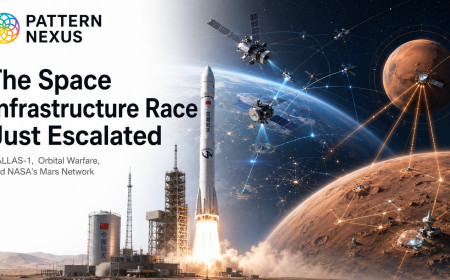 Article · related
The Space Infrastructure Race Just Escalated: PALLAS-1, Orbital Warfare, and NASA’s Mars Network
Three developments in the first days of September 2026 pushed the space-infrastructure thesis forward again. China’s Galactic Energy successfully launched PALLAS-1, a reusable medium-lift rocket designed for repeated flights and constellation deployment. Reuters documented a rapidly advancing U.S.-China contest around maneuverable satellites, autonomous pursuit, refueling, jamming, and spacecraft capable of approaching or interfering with other satellites. At the same time, NASA awarded Blue Origin up to roughly $700 million to build a dedicated Mars Telecommunications Network intended to provide high-bandwidth communications and navigation services at Mars by 2030. These are not separate stories. They show the space economy dividing into three increasingly mature layers: cheaper access, contested orbital control, and permanent interplanetary infrastructure.
Published Sep 3, 2026 Article · related
Larak Strike Turns Hormuz Into a Mine-War Energy Shock
U.S. forces struck two Iranian launchers on Larak Island near the Strait of Hormuz on August 30 after U.S. officials said IRGC personnel were preparing rockets carrying sea mines for the waterway. Iran claimed retaliatory strikes on bases hosting U.S. forces in Jordan, the UAE reported dealing with a drone from Iran over its territorial waters, and Brent crude moved back above $90 as traders repriced disruption risk. The immediate question is whether this remains a limited counter-mining action or becomes a broader contest over who can keep Hormuz usable.
Published Aug 31, 2026 Article · related
California’s AI Data Center Fight Moves to the Utility Bill
California lawmakers reached a late-August compromise on data-center energy legislation as AI infrastructure growth collides with utility-bill politics. Official Aug. 28 amendments to SB 886 and AB 2383 show the core mechanism: CPUC tariffs and updated electric rules for large participating data-center customers, with cost-shift protections for nonparticipating ratepayers. The bills remain active, not enacted, and the next fight is how the CPUC would translate legislative guardrails into actual interconnection, generation, and demand-response rules.
Published Aug 30, 2026 Article · related
One System, Many Flags: Ukraine, Iran, North Korea and the Illusion of Separate Wars
The United States can arm Ukraine while temporarily easing pressure on Russian oil, convert stockpile transfers into new procurement, court North Korea while Pyongyang supplies Russia, and fight Iran while Russia and China-linked systems help Tehran. The contradictions resolve when the wars are mapped as one connected system of energy, munitions, intelligence, shipping, sanctions and leverage.
Published Aug 22, 2026 Article · related
Washington Turns Iran Sanctions Into a China Oil-Flow Loyalty Test
The U.S. and Iran traded warnings before a planned Monday sanctions announcement by Treasury Secretary Scott Bessent. Reuters, AP and Bloomberg report that Washington is preparing a wider secondary-sanctions push that could reach Iran’s remaining trading partners, including China, while Strait of Hormuz oil flows remain heavily constrained. The Pattern Nexus read: this is no longer just Iran policy; it is a wartime test of U.S. financial enforcement against energy flows that Asia still needs.
Published Aug 22, 2026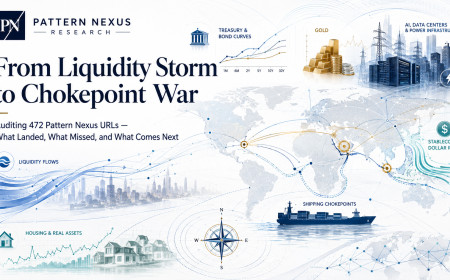 Article · related
From Liquidity Storm to Chokepoint War: Auditing 472 Pattern Nexus URLs — What Landed, What Missed, and What Comes Next
I audited the public Pattern Nexus record across 472 unique URLs and the saved full-text article export, then rebuilt the major calls from the original wording. This long-form report scores the liquidity/QT pivot, gold, the sub-3% 10-year miss, housing, stablecoin/Treasury rails, Venezuela, Iran/Hormuz, China/Taiwan, Greenland, AI power, robotics and the war economy, and finishes with a falsifiable map of what comes next.
Published Aug 20, 2026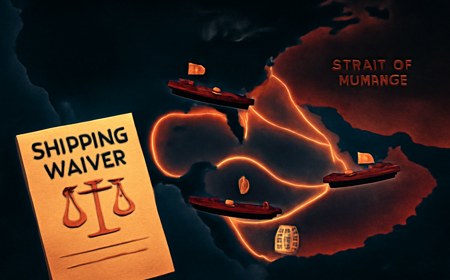 Article · related
Washington Turns the Jones Act Waiver Into an Iran-War Fuel Bypass
President Trump extended a Jones Act waiver for another 90 days, with the new window taking effect on August 17, 2026, after the prior waiver period expired on August 16. The waiver allows foreign-flagged vessels to move covered energy and agricultural commodities between U.S. ports as the Iran war and Strait of Hormuz disruption keep pressure on fuel logistics. The policy is now a live energy-security workaround, but maritime-state lawmakers and domestic shipping advocates warn it could weaken the U.S.-flag fleet and shipbuilding base.
Published Aug 17, 2026