

grid
Automatically indexed from the existing article tag.
Theses, forecasts, models, and paths
No published research objects yet
This topic is ready for editors to connect a thesis, forecast, model, or research path.
Latest articles
 Article · related
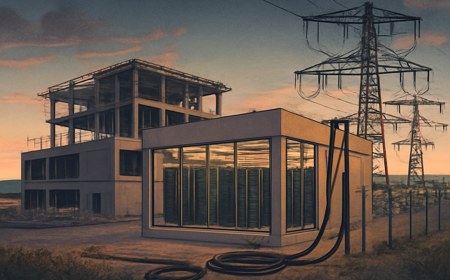
Microsoft Turns Nscale’s Essex AI Campus Into a Grid-Delay Stress Test
Microsoft has pulled out of its planned role at Nscale’s Loughton, Essex AI data-center project, according to Reuters, the Guardian and BBC-backed reporting. The project had been announced in 2025 as a major UK AI supercomputer site for Azure services, with 50MW of initial AI capacity, scalability to 90MW and 23,040 Nvidia GB300 GPUs. Reports tie the reversal to power-supply delays that could push adequate grid connection into the 2030s, while Nscale says it remains committed to the site and that other Microsoft work is unaffected.
Published Oct 19, 2026 Article · related
National Compute Turns Idle GPUs Into an AI-Access Grid
National Compute launched the National Compute Grid on October 7, 2026, with a plan to pool AI compute across clouds, labs, providers and chip architectures through a shared scheduler. Vultr says it has joined as a founding consortium member and will contribute capacity to the Grid Exchange, while the network is targeting 2 GW of pooled capacity by 2030. The key caveat: early capacity figures mix resources already connected with capacity still only “in sight,” so the operational scale remains to be proven.
Published Oct 7, 2026 Article · related
Google Turns PJM Nuclear Uprates Into a 3.6-Gigawatt AI-Grid Power Rail
Google and Constellation announced a long-term PJM power package on October 6, 2026, centered on 890 MW of new nuclear capacity from uprates at existing reactors and 2,700 MW of additional supply. The structure matters because it links AI data-center growth to new firm capacity, demand flexibility, and AI-assisted grid operations rather than treating clean power as a certificate-only procurement exercise.
Published Oct 7, 2026 Article · related
Senate Turns Permitting Reform Into an AI-Grid Cost Allocation Deal
Senate energy and environment leaders introduced the Bipartisan American Affordability and Jobs Act on September 30, 2026, a permitting package aimed at faster federal reviews for energy, transmission, and infrastructure projects. The bill would strengthen FERC transmission-siting authority and require data centers to pay associated transmission costs instead of shifting those costs to households and smaller businesses. A Senate vote is not expected until after the November 3 midterm elections.
Published Oct 1, 2026 Article · related
Moldova Turns a 60-Day Emergency Into a Winter Energy-Security Firewall
Moldova’s parliament approved a nationwide 60-day state of emergency in the energy and hydrological sectors beginning September 26, 2026. The government says the measure is preventive, aimed at giving authorities faster tools before winter as drought, electricity-import dependence, fuel-market stress and regional-war risks overlap. The system signal is that Moldova is treating water, electricity, fuel and cross-border grid access as one integrated resilience stack.
Published Sep 27, 2026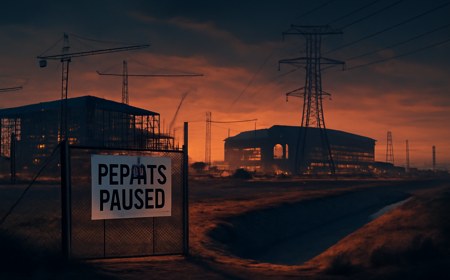 Article · related
Texas Turns Data-Center Permits Into a Grid-Audit Gate
On September 21, 2026, Governor Greg Abbott directed the Texas Commission on Environmental Quality to halt permits sought by data centers until ERCOT completes its audit. The order broadens Texas’s data-center slowdown from grid connections into environmental and water approvals, making AI infrastructure growth conditional on state findings about reliability, water use, local impacts, ownership, tax incentives, and who pays for supporting infrastructure.
Published Sep 22, 2026 Article · related
The Oil War Is Becoming a Global Economic War
An extensive Pattern Nexus reconstruction linking the Iran/Hormuz disruption with Ukrainian refinery attacks, diesel shortages, Saudi pipeline damage, U.S. and Venezuelan supply, Cuba’s grid, the dollar system, Treasury financing, Fed tightening, public energy-stock disclosures and the next conditional liquidity cycle. Includes an auditable Pattern Nexus article timeline, four sourced charts and 36 primary/reporting references.
Published Sep 21, 2026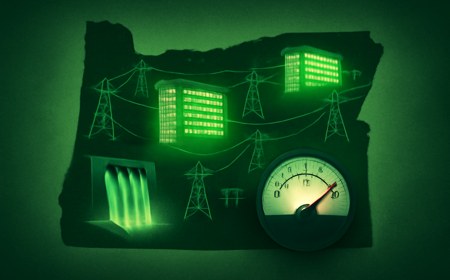 Article · related
Oregon Turns Data Centers Into a Quarter-Grid AI Infrastructure Test
A new ECOnorthwest and University of Virginia assessment, reported by Oregon outlets and presented to state advisers, puts Oregon data centers at about 23% of statewide retail electricity sales in 2025. The state is now treating the sector as a systemic planning challenge, with a Data Center Advisory Committee taking public comment through October 24, 2026 and POWER Act implementation shifting large-load grid costs toward data centers.
Published Sep 20, 2026 Article · related
Google and Nvidia Turn Flexible Load Into an AI-Data-Center Fast Lane
Google, Nvidia and Emerald AI have launched the AI Energy Management Alliance to promote flexible AI data centers that can adjust electricity demand in response to grid conditions. The coalition is pushing utilities, grid operators and regulators to treat verifiable flexibility as a reason to accelerate large-load interconnection. The Pattern Nexus read: AI compute demand is being converted from a fixed grid burden into a dispatchable power-market asset.
Published Sep 16, 2026 Article · related
OpenAI Turns Effingham County Into a 3.2-Gigawatt Ratepayer-Firewall Test
Residents protested outside an August 29 Effingham County work session as officials fielded questions about OpenAI’s Project Camellia. The dispute now centers on whether Georgia’s large-load framework can truly keep AI megacampus costs off ordinary ratepayers while managing water, grid-reliability and public-transparency concerns.
Published Aug 30, 2026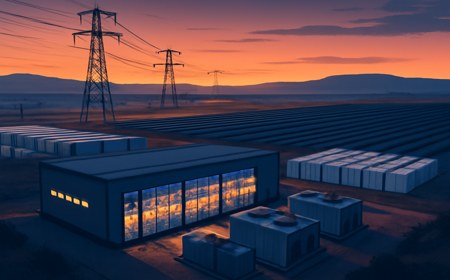 Article · related
Nvidia Turns Powered Land Into a Grid-Responsive AI Factory Pipeline
Lancium announced a strategic collaboration with Nvidia on August 24, 2026, including an undisclosed Nvidia investment and planned deployment of Nvidia’s full-stack AI factory platform across Lancium campuses. The portfolio includes 4 GW of leased capacity and a development pipeline exceeding 15 GW of powered land. The Pattern Nexus signal is that Nvidia is attaching its platform and capital to power-ready sites while DSX MaxLPS and DSX Flex position power utilization and grid responsiveness as part of the AI factory stack.
Published Aug 25, 2026 Article · related
PJM Turns AI Data Centers Into Interruptible Grid Load
PJM’s proposed Interim Resource Adequacy Service framework would treat some new 50 MW-plus data centers and other large loads as curtailable unless they secure qualifying capacity. The move follows a 6,831 MW capacity shortfall for the 2028/2029 delivery year and rising forecasts for large-load demand across PJM’s footprint. The system read: AI compute is being recast from passive load growth into a reliability obligation.
Published Aug 19, 2026 Article · related
Amazon Turns AI Compute Into a Private Gas-Grid Emissions Test
Amazon has confirmed that its planned Pecos County, Texas data center will use new on-site generation, while reporting and project documents point to a 7.65 GW gas-fired power platform with major permitted emissions. The larger signal is that hyperscalers are moving beyond power-purchase agreements into vertically integrated energy, permitting and behind-the-meter generation. That may accelerate AI compute deployment, but it also creates a parallel industrial power system with unresolved emissions, accountability and public-cost questions.
Published Aug 10, 2026 Article · related
Virginia Turns AI Data-Center Power Lines Into a User-Pays Tariff
Virginia’s State Corporation Commission ordered Dominion Energy to develop a tariff framework that assigns more transmission costs directly to data centers and other large-load customers when upgrades are built for them. The move follows Gov. Abigail Spanberger’s push for a cost-causation, or “but-for,” approach and is being framed by state officials as a ratepayer-protection measure. The deeper signal is that AI infrastructure is entering a new regulated-cost phase, where grid access, tariff design, and political tolerance may matter as much as GPUs and land.
Published Aug 7, 2026 Article · related
Texas Turns AI Data Centers Into a Grid-Admission Audit
Texas Gov. Greg Abbott directed PUCT and ERCOT on August 3, 2026 to conduct a comprehensive verification and audit of data centers advancing through ERCOT’s interconnection process before those projects move forward. The order lands amid roughly 474 gigawatts of large-load requests to connect to the Texas grid, with the governor’s office saying about 90% of new power requests are data centers. The move reframes AI-era data centers as strategic infrastructure applicants rather than ordinary load growth.
Published Aug 7, 2026 Article · related
AI Data Centers Move the Power Plant Behind the Fence
Reuters reported that at least 57 off-grid U.S. power plants are proposed or under construction to serve individual data centers, totaling about 73,000 MW. Cleanview, The Washington Post and industry reporting show the same direction of travel: AI data-center developers are increasingly using behind-the-meter power to bypass grid queues. The result is a new fight over siting, emissions, reliability, public notice and who controls the next layer of AI infrastructure.
Published Jun 17, 2026 Article · related
AI Load Starts Breaking the Grid Operator, Not Just the Grid
Surging data-center demand is pushing PJM from a reliability problem into a governance problem. Bloomberg reporting carried by the Los Angeles Times says American Electric Power has threatened to leave PJM and federal officials are discussing structural changes, while Reuters reports PJM is weighing market reforms as data centers outstrip available energy supplies. FERC filings and market-monitor materials show data-center load has already added billions of dollars to PJM capacity-market costs.
Published Jun 7, 2026 Article · related
AI Loads Fail the Texas Grid’s Ride-Through Test
Reuters reported on June 5, 2026 that several large data centers and crypto facilities seeking to connect to the Texas grid failed key voltage reliability tests. ERCOT’s May 21 assessment found eight planned large loads totaling about 3.9 GW, modeled within roughly 20 GW of large-load representation, and identified four trip groups that could exceed the 3,200 MW threshold while not meeting NOGRR282 voltage ride-through requirements. The signal is that AI-era power risk is no longer only about finding enough megawatts; it is also about whether those megawatts stay connected through ordinary grid faults.
Published Jun 7, 2026 Article · related
The Nuclear Renaissance: 2026’s Drive for a 400 GW Grid and the Control Layers of Energy
In 2026 the United States announced plans to quadruple its nuclear power capacity to 400 GW by 2050, investing billions in domestic enrichment and small modular reactors. This article explores how the nuclear renaissance reshapes energy, geopolitics and control systems.
Published Mar 3, 2026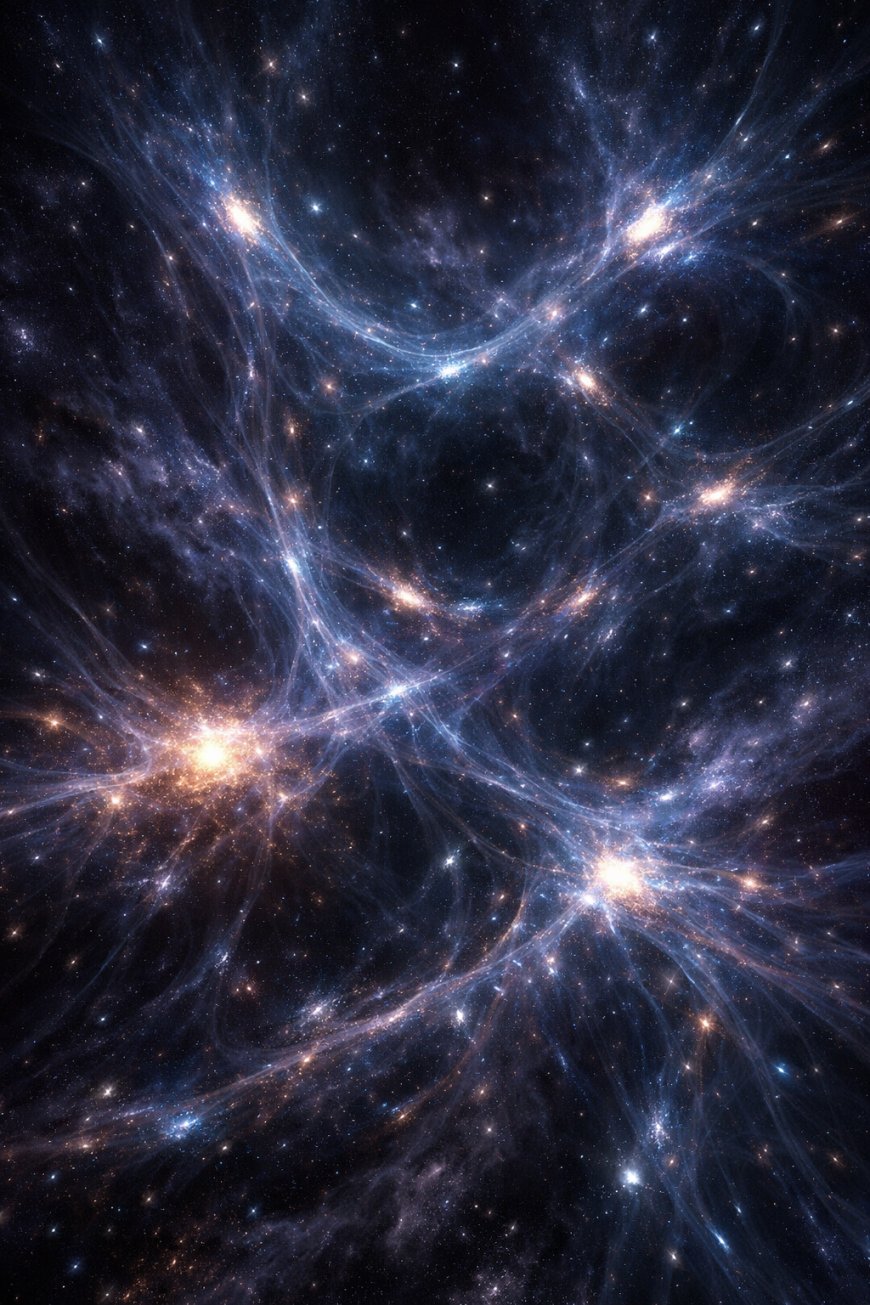 Article · related
Mapping the Invisible: JWST’s Cosmic Web Shows Dark Matter as the Universe’s Control Grid
A January 2026 JWST survey mapped more than 800,000 galaxies and revealed dark matter filaments twice as sharply as before, showing how the invisible framework of the cosmos shapes visible structure.
Published Mar 3, 2026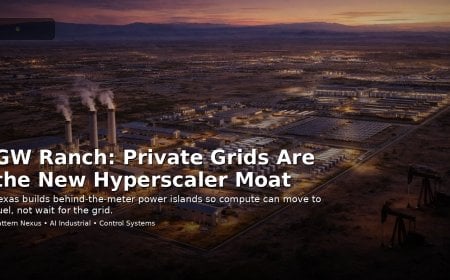 Article · related
GW Ranch: Texas Builds Private Grids for the AI Flywheel
Pacifico Energy’s 7.65 GW permitted GW Ranch marks the shift to off-grid hyperscale power islands in West Texas. In the Pattern Nexus framework, this is permission-stack infrastructure: fuel optionality → electrons → compute → governance leverage. A deep dive into ERCOT’s large-load queue, emissions politics, and what to watch through 2031.
Published Jan 31, 2026 Article · related
Google’s CO2 Battery Bet: Why AI Data Centers Are Pulling Long-Duration Storage Out of the Lab and Onto the Grid
Google and Energy Dome are scaling 10-hour CO2-based long-duration energy storage (20MW/200MWh-class) to close the renewables-to-AI reliability gap. Here’s the thermodynamics, the grid role, the economics, and what “LDES as infrastructure” really means.
Published Dec 31, 2025 Article · related
Energy Control- Grid Interdependence, Fuel Corridors, and Blackout Leverage
Energy is the original control system. Grid synchronization, fuel corridors, dispatch priority, and failure modes now function as continuous enforcement mechanisms, determining what stays online, what shuts down, and where sovereignty becomes conditional.
Published Dec 21, 2025 Article · related
Copper in the AI-Industrial Era: Why the World Is Running Out of the Metal That Powers Everything
Copper has entered a new macro-industrial regime. AI data centers, global grid expansion, renewable infrastructure, collapsing ore grades, and a decade of underinvestment have fused into a structural deficit that will define the next decade. This is the deep technical and strategic picture as of November 2025.
Published Dec 3, 2025 Article · related
Google’s Space-Based AI Data Center Gambit: Project Suncatcher and the New Compute Frontier
Google just revealed plans to build the first space-based AI data-center constellation — a solar-powered orbital compute cluster designed to escape Earth’s power limits. This breakdown explores the engineering, physics, grid implications, and how this fits directly into the AI-Industrial Flywheel.
Published Nov 16, 2025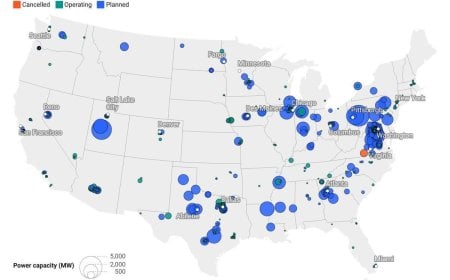 Article · related
America’s New Map of Power: Data Centers, Grid Shortfall, and the AI Industrial Build-Out
A single map of U.S. data centers reveals the real AI-industrial build-out: clustered power demand, a 40–50 GW grid shortfall, forced nuclear restarts, and a new liquidity regime that makes QE-style support inevitable.
Published Nov 13, 2025 Article · related
AI Compute and Power Infrastructure in 2025 — The New Industrial Backbone
A deep Pattern Nexus investigation into the 2025 AI industrial build-out — tracking every major compute deal, hyperscaler expansion, and the rebirth of nuclear power as the energy backbone for machine intelligence. Covers global capacity timelines, regional grid stress, economic spillovers, and the new “AI industrial complex” forming across tech and energy.
Published Nov 12, 2025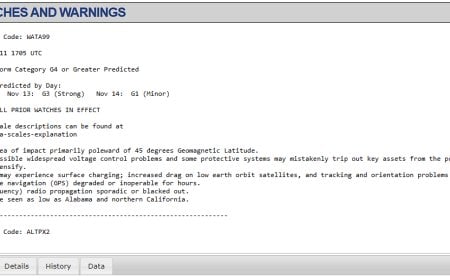 Article · related
G4 Geomagnetic Storm Threatens the U.S. Power Grid — And Exposes a 20-Year Infrastructure Problem
A rare G4 geomagnetic storm is forecast to hit the U.S., risking grid instability across northern states just as AI demand and aging infrastructure push the system to its limits.
Published Nov 11, 2025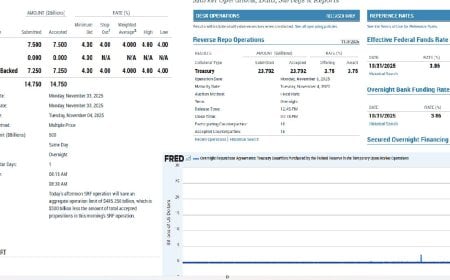 Article · related
The Quiet Repo Surge: $14.75B SRF Tap + $30B Liquidity Pulse Signals the New Regime
In three trading days, the Fed silently pushed nearly $45B through the repo window — including a $14.75B SRF tap and a ~$30B overnight repo spike. This wasn’t panic. It was collateral lubrication for America’s reindustrialization cycle — compute, power, copper, grid. The new liquidity regime is here.
Published Nov 3, 2025