

Infrastructure
Automatically indexed from the existing article tag.
Theses, forecasts, models, and paths
No published research objects yet
This topic is ready for editors to connect a thesis, forecast, model, or research path.
Latest articles
Ankara Turns Renewable Finance Into an AI Data-Center Sovereignty Rail
The Asian Development Bank said on October 22, 2026 that it signed a $75 million loan with Rönesans Holding to support renewable energy, battery storage by 2029 and a hybrid-renewable hyperscale data center in Türkiye. The financing follows Rönesans and Digital Realty’s Ankara data-center push, with the first phase planned for more than 22 MW of IT capacity by 2028. The pattern is larger than one campus: Türkiye is trying to convert geography, clean power and state incentives into sovereign AI and cloud infrastructure.
Published Oct 24, 2026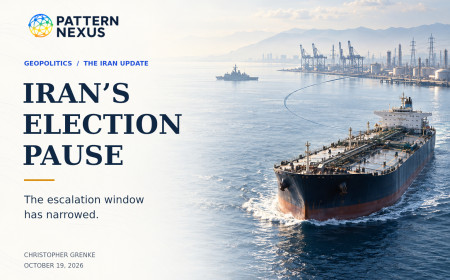 Article · related
Iran’s Election Pause: The Escalation Window Has Narrowed
The first follow-up to the October 8 Iran forecast confronts Trump’s election pause, checks actual naval posture, and follows the conflict through shipping, infrastructure, fuel and financing. The November 5 endpoint stays fixed. Four original figures, dated source notes and reproducible data are included.
Published Oct 20, 2026 Article · related
CoreWeave Turns AI Data-Center Debt Into a Credit-Market Stress Test
CoreWeave shares and bonds came under pressure this week as investors repriced the leveraged neocloud model behind the AI data-center buildout. Axios reported CoreWeave bond yields above 15%, while Bloomberg reported credit-default pricing implying more than 60% odds of default within five years. The company’s own June 30, 2026 filing shows $35.6 billion of total indebtedness and $103.7 billion of remaining performance obligations, making CoreWeave a live test of whether AI demand can convert into enough cash flow to finance depreciation-heavy infrastructure.
Published Oct 16, 2026 Article · related
Adani and Jabil Turn AI Data-Center Hardware Into a Made-in-India Supply Rail
Adani Enterprises and Jabil signed a non-binding MoU on October 13, 2026, setting out a proposed 50:50 joint venture to manufacture and assemble AI and data-center equipment in India. The companies describe a multi-gigawatt AI-rack manufacturing platform aimed at hyperscalers, neoclouds, data-center operators and enterprises. The deal still requires definitive agreements, approvals and customary conditions, but it signals how the AI buildout is shifting from chip access alone toward localized full-stack infrastructure supply chains.
Published Oct 13, 2026 Video · related
The Convergence — Audio-Video Edition
The finale of the Pattern Nexus Cycles of Power audio-video series connects 150 years of industrial, monetary, computing, energy, and liquidity history to the emerging convergence of AI infrastructure, fiscal dominance, programmable dollars, hard-asset politics, and competing paths from 2030 to 2045.
Published Oct 12, 2026 Article · related
Super Micro Contractor Turns Nvidia AI Servers Into a China Export-Control Guilty Plea
Ting-Wei “Willy” Sun, a contractor linked to Super Micro Computer, pleaded guilty on October 8, 2026, to four counts tied to an alleged scheme to illegally route AI servers containing advanced Nvidia chips to China. The Justice Department had previously alleged that the broader conspiracy involved about $2.5 billion worth of U.S. AI server technology. The plea is an enforcement signal for the U.S.-China compute-control regime: advanced AI servers are now being treated as traceable strategic infrastructure, not just commercial hardware.
Published Oct 11, 2026 Article · related
Washington Turns Tech Compute Credits Into a Federal AI-Science Operating System
On October 8, 2026, the White House announced $2.4 billion in super-intelligence science tools and compute credits from 11 industry partners for the Genesis Mission Consortium. Nvidia, Anthropic and AWS separately detailed commitments that turn private AI infrastructure into usable research capacity for federal agencies, national laboratories and partner institutions. The system read: Washington is not merely buying compute; it is organizing a quasi-public AI-science operating layer around private infrastructure.
Published Oct 9, 2026 Article · related
Iran: Escalation Ladder — Reactivation Enabled
The Iran escalation ladder is active again. I examine the October strike risk, the infrastructure-war danger, rising tanker attacks alongside recovering exports, the Gulf defense response, financial isolation, current oil inventories and the Federal Reserve’s position. My working window is October 22–November 5. The article connects the latest evidence to the Pattern Nexus research trail from January through October.
Published Oct 8, 2026 Article · related
The World I’ve Been Mapping Is Taking Shape
I connect the developments now taking shape across AI infrastructure, private power, critical minerals, the Iran energy shock, digital dollars, machine commerce, robotics and productive ownership. The article explains the mechanisms for readers joining the discussion now, carries the research into September and October, and connects the later housing, Greenland, space, neural-computing and polar-vortex work. Includes links to 46 earlier Pattern Nexus articles, 53 numbered external sources, a practical watch list and six reader questions.
Published Oct 5, 2026 Video · related
The Fiscal-Monetary Fusion — Audio-Video Edition
Episode 9 of the weekly Pattern Nexus audio-video series turns Part 9 of Cycles of Power into a shorter story about how pandemic stimulus fused fiscal and monetary policy, inflation forced a violent rate reversal, bank stress produced a new collateral-protection template, and sanctions, AI infrastructure, stablecoins, and tokenized Treasuries transformed liquidity into both operating system and geopolitical weapon between 2020 and 2025.
Published Oct 5, 2026 Article · related
Huawei Turns Qualcomm Patents Into a Sanctions-Resilient AI-IP Rail
Huawei and Qualcomm announced a broad multi-year patent license agreement on October 5, 2026, covering 5G, compute, AI and networking technologies. The deal includes cross-licenses and Qualcomm’s planned purchase of certain Huawei U.S. patents, subject to regulatory approvals. The bigger signal is that technology control is shifting from devices and chips toward standards-essential patents, licensing flows and ownership of foundational AI-era infrastructure IP.
Published Oct 5, 2026 Article · related
Berlin Turns €1.3B Ukraine Aid Into a Drone-and-Winter-Energy Deterrence Stack
German Chancellor Friedrich Merz used an Oct. 4, 2026 visit to Kyiv to announce more than €1.3 billion in new support for Ukraine. The package includes roughly €1 billion in military aid and about €350 million for energy-sector repairs ahead of winter, while German and Ukrainian actors expand cooperation on drones, interceptors, air defense, radar and weapons production. The strategic read is that Berlin is shifting from episodic aid toward a combined military-industrial and infrastructure-resilience stack.
Published Oct 4, 2026 Article · related
Amazon Turns Data-Center Backlash Into a $1B Community-Permit Rail
Amazon Web Services announced Built Together, a U.S. data-center community framework backed by more than $1 billion over five years, alongside a Data Center Commitment that includes ending NDAs with government agencies and publishing annual energy and water metrics. The verified facts point to a broader AI-infrastructure shift: local consent is becoming as important as chips, power contracts, and land. The Pattern Nexus read is that Amazon is trying to industrialize permission before moratoriums and transparency fights harden into a national brake on the AI buildout.
Published Oct 3, 2026 Article · related
DeepSeek Turns Huawei Ascend Tools Into a CUDA-Bypass Stack
DeepSeek said on September 30, 2026 that it partnered with Huawei to build programming infrastructure for Huawei Ascend chips, including open-source compute and communication libraries. The release includes DeepGEMM-Ascend, DeepEP-Ascend, and Ascend support around TileLang, with DeepGEMM-Ascend listing initial Ascend 950 support. The strategic signal is clear: China’s AI hardware bottleneck is becoming a software ecosystem contest against Nvidia’s CUDA-centered moat.
Published Oct 2, 2026 Article · related
Google Turns Orbital TPUs Into an AI-Infrastructure Escape Hatch
SpaceX is targeting October 1, 2026, for the Transporter-18 rideshare from Vandenberg, with Project Suncatcher M1 listed in the deployment sequence as a Planet Labs-manifested payload. Google says the mission will gather in-orbit data on TPU behavior under launch stress, radiation, and thermal extremes. The larger signal is that AI infrastructure bottlenecks are beginning to push hyperscalers beyond terrestrial data-center assumptions and into space-power, launch-cadence, and orbital-network experiments.
Published Oct 1, 2026 Article · related
Senate Turns Permitting Reform Into an AI-Grid Cost Allocation Deal
Senate energy and environment leaders introduced the Bipartisan American Affordability and Jobs Act on September 30, 2026, a permitting package aimed at faster federal reviews for energy, transmission, and infrastructure projects. The bill would strengthen FERC transmission-siting authority and require data centers to pay associated transmission costs instead of shifting those costs to households and smaller businesses. A Senate vote is not expected until after the November 3 midterm elections.
Published Oct 1, 2026 Article · related
Nvidia Turns Rogue AI Agents Into a Hardware-Safety Control Layer
Nvidia launched the Open Agent Safety Platform on September 28, 2026, combining OpenShell secure runtime software with Sentry monitoring on BlueField-4 DPUs. The move pushes agent governance down into CPUs, DPUs, sandboxes, audit trails, and enterprise AI factory infrastructure. Independent coverage from AP and Axios framed the release as Nvidia’s answer to the rogue-agent safety debate, while HPE said it will integrate the platform into private, regulated, and sovereign AI deployments.
Published Sep 29, 2026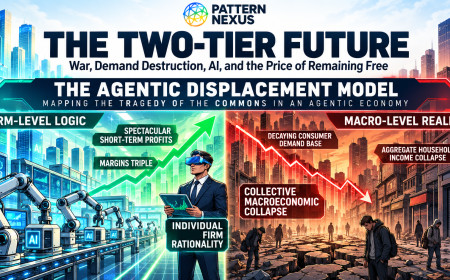 Article · related
The Two-Tier Future: War, Demand Destruction, AI, and the Price of Remaining Free
For years, I followed pieces of a possible two-tier economic future, then moved away from believing they would come together. In September 2026, the Iran oil shock, Ukraine refinery attacks, demand destruction, long-rate pressure, AI, robotics and the ownership of physical infrastructure have forced me to put the entire argument into one place: who retains access to the real world if an increasingly automated economy makes ordinary people dependent on the systems they do not own?
Published Sep 25, 2026 Article · related
Oracle Turns Project Jupiter Into an AI-Infrastructure Force-Majeure Test
Oracle issued a force-majeure notice tied to Project Jupiter, a New Mexico AI data-center campus being developed by Blue Owl-owned STACK Infrastructure to support OpenAI. Reuters reported the notice is reverberating through AI-infrastructure financing discussions, while other reports point to power delivery, gas-pipeline permitting, community opposition and energy-supply timing as the pressure points. The system read is that AI infrastructure risk is moving downstream from GPUs to enforceable megawatts, permits and project-finance documents.
Published Sep 25, 2026 Article · related
Alibaba Turns Zhenwu V900 Into a 20-Gigawatt AI-Sovereignty Map
Alibaba announced a full-stack AI roadmap at its Apsara Conference on September 22, 2026, including the Zhenwu V900 AI processor, Qwen 4 training, future Qwen models planned at 5 trillion to 10 trillion parameters, and a target for Alibaba Cloud global data-center capacity to exceed 20GW by 2032. The verified facts point to a vertically integrated strategy spanning chips, cloud infrastructure, models and agents. The system read is that Alibaba is turning compute sovereignty into an operating layer for China’s AI industrial flywheel.
Published Sep 23, 2026 Article · related
Seoul Turns Texas Gas Power Into an AI-Compute Alliance Rail
South Korea has identified a Texas gas-fired power project as the first investment under its $350 billion U.S. package, according to Yonhap, KBS, Kyunghyang and Reuters reporting. The project is tied to rising Texas electricity demand from AI data centers and semiconductor facilities, while Seoul is also discussing U.S. nuclear and Alaska LNG follow-ons. The system read: tariff diplomacy is being converted into firm-power infrastructure for the AI industrial stack.
Published Sep 23, 2026 Article · related
Texas Turns Data-Center Permits Into a Grid-Audit Gate
On September 21, 2026, Governor Greg Abbott directed the Texas Commission on Environmental Quality to halt permits sought by data centers until ERCOT completes its audit. The order broadens Texas’s data-center slowdown from grid connections into environmental and water approvals, making AI infrastructure growth conditional on state findings about reliability, water use, local impacts, ownership, tax incentives, and who pays for supporting infrastructure.
Published Sep 22, 2026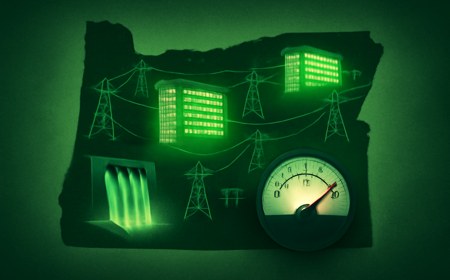 Article · related
Oregon Turns Data Centers Into a Quarter-Grid AI Infrastructure Test
A new ECOnorthwest and University of Virginia assessment, reported by Oregon outlets and presented to state advisers, puts Oregon data centers at about 23% of statewide retail electricity sales in 2025. The state is now treating the sector as a systemic planning challenge, with a Data Center Advisory Committee taking public comment through October 24, 2026 and POWER Act implementation shifting large-load grid costs toward data centers.
Published Sep 20, 2026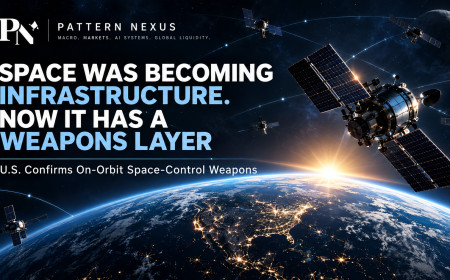 Article · related
Space Was Becoming Infrastructure. Now It Has a Weapons Layer: The U.S. Confirms On-Orbit Space-Control Weapons
For the first time, the United States has publicly acknowledged that it operates "on-orbit space control weapons." The hardware remains classified, but the surrounding architecture is not: Space Force doctrine already defines orbital warfare, electromagnetic warfare, cyber operations, reversible denial, degradation and destruction as parts of space control; ground-based counterspace systems are already operational; and China, Russia and other states are developing the same wider capability stack. This Pattern Nexus report separates what is confirmed from what remains unknown, explains the Outer Space Treaty, maps the counterspace technology families, and ties the disclosure directly into earlier Pattern Nexus work on space infrastructure, "Launch. Control. Network.", cislunar logistics, and Control Stack 2.0. The central thesis: space becoming infrastructure was phase one; infrastructure becoming an explicitly armed control layer is phase two.
Published Sep 15, 2026 Article · related
Texas Turns Data-Center Water Reporting Into a Permit-Blocking AI Infrastructure Test
Texas is ordering the Texas Water Development Board to pursue penalties and legal consequences against major water users, including data centers, that fail to complete required water-use surveys. Abbott’s directive also links water reporting to TCEQ permitting and ERCOT coordination, making resource disclosure a practical gate for AI data-center expansion in the state.
Published Sep 15, 2026 Article · related
OpenAI Turns Critical Infrastructure Into a Frontier-AI Cyber-Defense Rail
OpenAI has launched Daybreak for Frontline Defenders, a $1 billion initiative to subsidize access, training, technical support and partnerships for cyber defenders protecting essential services. Verified partner announcements from Cloudflare, Proofpoint, Elastic and Check Point show the program becoming a distribution layer for vulnerability discovery, SOC investigation, detection engineering and remediation workflows. The system-level question is whether frontier AI cyber capability becomes a governed defensive utility before attackers industrialize the same class of tools.
Published Sep 4, 2026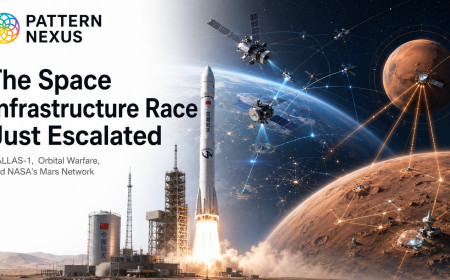 Article · related
The Space Infrastructure Race Just Escalated: PALLAS-1, Orbital Warfare, and NASA’s Mars Network
Three developments in the first days of September 2026 pushed the space-infrastructure thesis forward again. China’s Galactic Energy successfully launched PALLAS-1, a reusable medium-lift rocket designed for repeated flights and constellation deployment. Reuters documented a rapidly advancing U.S.-China contest around maneuverable satellites, autonomous pursuit, refueling, jamming, and spacecraft capable of approaching or interfering with other satellites. At the same time, NASA awarded Blue Origin up to roughly $700 million to build a dedicated Mars Telecommunications Network intended to provide high-bandwidth communications and navigation services at Mars by 2030. These are not separate stories. They show the space economy dividing into three increasingly mature layers: cheaper access, contested orbital control, and permanent interplanetary infrastructure.
Published Sep 3, 2026 Article · related
Vertiv Turns Microgrids Into an AI-Data-Center Time-to-Power Stack
Vertiv agreed to acquire UtilityInnovation Group for about $1.45 billion in cash at closing, with up to $1.15 billion more tied to EBITDA targets over 12- and 24-month periods. The deal adds microgrid controls, onsite generation and storage orchestration, microgrid switchgear and behind-the-meter design to Vertiv’s AI data-center infrastructure stack. The system signal is that time to power is becoming a strategic control point in the AI industrial buildout, not just a utility-procurement issue.
Published Sep 2, 2026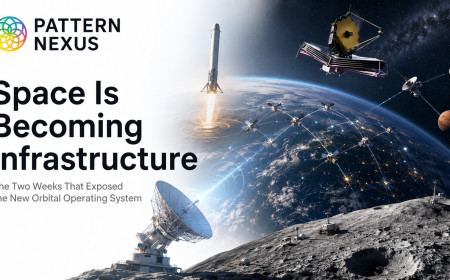 Article · related
Space Is Becoming Infrastructure: The Two Weeks That Exposed the New Orbital Operating System
Roman launched, Falcon 9 hit 100 flights, China landed Zhuque-3, NASA expanded the Deep Space Network and autonomous spacecraft navigation, and orbital infrastructure accelerated.
Published Aug 31, 2026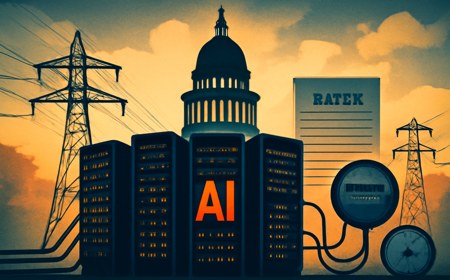 Article · related
California’s AI Data Center Fight Moves to the Utility Bill
California lawmakers reached a late-August compromise on data-center energy legislation as AI infrastructure growth collides with utility-bill politics. Official Aug. 28 amendments to SB 886 and AB 2383 show the core mechanism: CPUC tariffs and updated electric rules for large participating data-center customers, with cost-shift protections for nonparticipating ratepayers. The bills remain active, not enacted, and the next fight is how the CPUC would translate legislative guardrails into actual interconnection, generation, and demand-response rules.
Published Aug 30, 2026