

issuance
Automatically indexed from the existing article tag.
Theses, forecasts, models, and paths
No published research objects yet
This topic is ready for editors to connect a thesis, forecast, model, or research path.
Latest articles
 Article · related
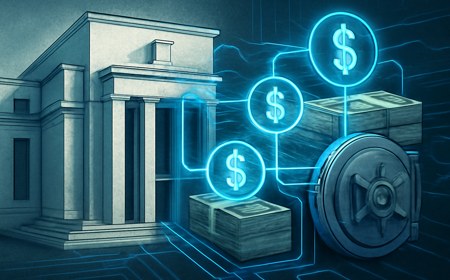
Fed Turns Stablecoin Issuance Into a Treasury-Backed Bank Rulebook
The Federal Reserve requested public comment on two GENIUS Act proposals that would establish a regulatory framework for Board-supervised payment stablecoin issuers. The package would require full backing with permissible reserve assets such as short-term Treasury bills and other high-quality liquid assets, add capital and risk-management standards, set reserve-custody rules, and create an application process for banks seeking to issue stablecoins through subsidiaries.
Published Sep 25, 2026 Article · relatedFed Just Hiked Into a 5% 10-Year: Why the Next Liquidity Cycle May Arrive Faster
The Federal Reserve just raised the federal-funds target to 3.75%–4.00% while the 10-year Treasury closed at 5.01%, the 30-year at 5.35%, and the real 30-year at 3.09%. Pattern Nexus correctly identified the September hike risk and the developing QE/liquidity cycle, but underestimated the Fed’s willingness to raise rates against an already enormous debt and refinancing burden. This report asks the question almost nobody asks after a rate decision: what does the hike eventually break? It connects the September decision to the $40-trillion-plus federal debt structure, more than $1 trillion of annual federal net interest expense, Treasury issuance, long-end buybacks, Federal Reserve reserve-management purchases, hedge-fund leverage, the Treasury basis trade, private credit, housing, commercial real estate, household cashflow and the 2019 repo-market precedent. The conclusion is not that the Fed has deliberately chosen to create a crash. It is that monetary architecture now allows the Fed to tighten the price of credit while separately protecting reserves and market plumbing. The hike therefore does not invalidate the Pattern Nexus QE thesis. If long rates remain near current levels, it accelerates the transmission mechanism that can eventually force the next phase of liquidity support.
Published Sep 17, 2026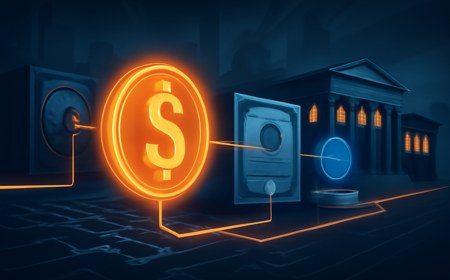 Article · related
Wall Street Turns Stablecoins Into a Bank-Owned Dollar Rail
Twenty-one international financial institutions announced on September 1, 2026 that they plan to establish a new company in the second half of 2026 to support a stablecoin solution. The effort is expected to begin with a U.S. dollar-denominated token targeted for market launch in the first half of 2027, with stated ambitions to comply with the GENIUS Act and MiCA where applicable. The pattern is not simply banks adopting crypto rails; it is incumbent finance trying to control the issuance layer before crypto-native stablecoin issuers harden the default dollar network.
Published Sep 1, 2026 Article · related
Hong Kong Starts Building the Tokenized Bond Rulebook
The Hong Kong Monetary Authority announced on June 5, 2026 that it has convened a Tokenised Bond Expert Group to support wider adoption and scalability of tokenized bonds. The group’s membership spans banks, law firms, industry associations, market infrastructure and technology providers, with first discussions focused on how Hong Kong’s legal and regulatory regime applies to tokenized bond issuance and transactions. The system signal is that Hong Kong is treating tokenized bonds as future fixed-income plumbing, not a crypto side project.
Published Jun 7, 2026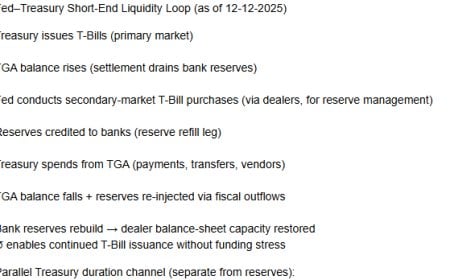 Article · related
The Short-End Liquidity Loop: How T-Bills Became a Permanent Monetary Conveyor Belt
A step-by-step, plumbing-accurate explanation of the Fed–Treasury–dealer short-end liquidity loop: T-bill issuance, secondary-market bill purchases, the TGA reserve drain and fiscal re-injection, and why this regime has no credible end state.
Published Dec 12, 2025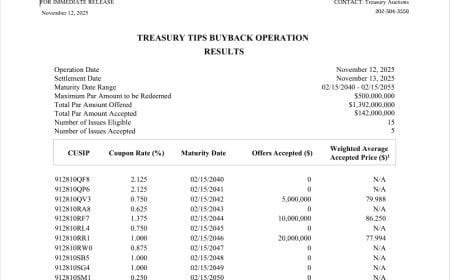 Article · related
Treasury Retires $142 Million in TIPS — Quiet Confirmation of the Buyback Era
The U.S. Treasury retired $142 million in TIPS on Nov 12, 2025 — a direct confirmation of the buyback-driven liquidity cycle we've been tracking. Here’s what the operation reveals about collateral stress, pre-QE interventions, and the evolving monetary plumbing.
Published Nov 12, 2025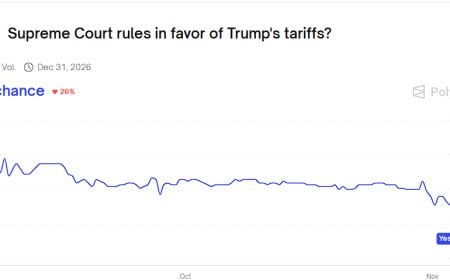 Article · related
The Supreme Court’s tariff case is an underpriced macro tail risk. A loss could trigger refunds, disrupt trade policy, and force a rapid White House pivot.
The Supreme Court’s challenge to the administration’s IEEPA tariffs is one of the most underpriced macro risks in markets right now. With prediction markets assigning barely a 25% chance of a pro-administration ruling, traders and policymakers are ignoring the possibility that billions in duties could be invalidated—or even refunded. This piece breaks down the legal stakes, the economic shock potential, the emergency fallback tools the White House could activate, and why this ruling could reshape pricing, Treasury issuance, and corporate planning over the next 1–2 quarters.
Published Nov 6, 2025