

Maritime
Automatically indexed from the existing article tag.
Theses, forecasts, models, and paths
No published research objects yet
This topic is ready for editors to connect a thesis, forecast, model, or research path.
Latest articles
 Article · related
Tehran Turns Hormuz Reopening Into a Seven-Day Energy-Security Bargain
Iranian Foreign Minister Abbas Araghchi says Tehran has sent Washington a seven-day roadmap through Qatar that would reopen the Strait of Hormuz and restart nuclear talks if U.S. conditions are met. AP, Al Jazeera, Reuters and The National reporting indicate the offer is tightly conditional, contains no near-term Iranian nuclear concession and is now colliding with Western efforts to build parallel maritime-security pressure at the UN.
Published Sep 26, 2026 Article · related
London Turns RAF Tankers Into a Red Sea Energy-Security Backstop
British Prime Minister Andy Burnham has approved limited defensive air-to-air refueling support for Saudi Arabia after Riyadh requested help countering intensified Houthi attacks. Reporting from AP, Reuters, The Guardian and Bloomberg says the mission is expected to involve one RAF Voyager for a time-limited deployment measured in weeks. The move links Yemen’s renewed escalation directly to oil-route security, allied burden-sharing and the cost-of-living politics of keeping maritime chokepoints open.
Published Sep 22, 2026 Article · related
Washington Turns the Hormuz Deadline Into an Oman Strike Threat
AP reported on August 17, 2026, that Trump again threatened Oman while Iran said it had reached an understanding with Muscat over a Strait of Hormuz transit route. A separate AP analysis said the 60-day U.S.-Iran deadline expired the same day with the sides still far apart over reopening Hormuz, lifting the U.S. blockade and defining Iran’s role. Reuters reported that Iran was threatening a more offensive posture in the strait if diplomacy failed, making the escalation a live maritime-control crisis rather than a routine diplomatic delay.
Published Aug 17, 2026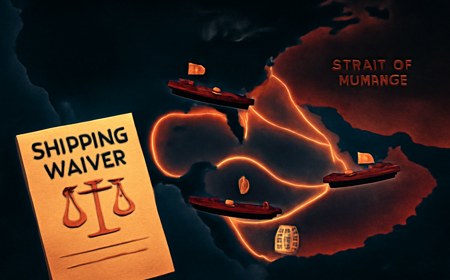 Article · related
Washington Turns the Jones Act Waiver Into an Iran-War Fuel Bypass
President Trump extended a Jones Act waiver for another 90 days, with the new window taking effect on August 17, 2026, after the prior waiver period expired on August 16. The waiver allows foreign-flagged vessels to move covered energy and agricultural commodities between U.S. ports as the Iran war and Strait of Hormuz disruption keep pressure on fuel logistics. The policy is now a live energy-security workaround, but maritime-state lawmakers and domestic shipping advocates warn it could weaken the U.S.-flag fleet and shipbuilding base.
Published Aug 17, 2026 Article · related
Hormuz Ceasefire Breaks Into Direct U.S.-Iran Strike Cycle
The United States launched strikes on Iranian targets near the Strait of Hormuz after the loss of a U.S. Army Apache helicopter, while Iran reported retaliatory attacks against U.S.-linked targets in Jordan and the Gulf. AP reported that the exchange again tested a two-month ceasefire, and Reuters-linked oil coverage showed crude rising as the flare-up renewed supply-risk concerns. The strategic signal is a maritime-energy choke point turning into a repeat escalation loop.
Published Jun 10, 2026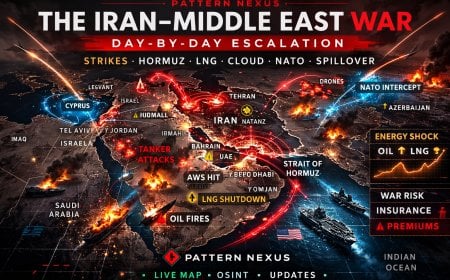 Article · related
The Iran–Middle East War, Day by Day (Feb 28–Mar 5, 2026)
A Pattern Nexus day-by-day control-systems breakdown of the Iran–Middle East war: strikes, maritime hits, Hormuz disruption, energy shutdowns, cloud infrastructure attacks, evacuations, and NATO/EU posture shifts.
Published Mar 5, 2026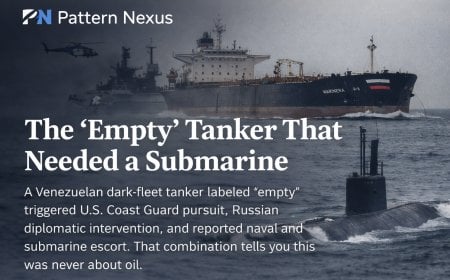 Article · related
The “Empty” Tanker That Needed a Submarine
An “empty” Venezuelan tanker drew U.S. Coast Guard pursuit, Russian diplomatic pressure, and reported naval and submarine escort. Pattern Nexus breaks down what’s confirmed, what’s claimed, and why this isn’t about oil.
Published Jan 6, 2026 Article · related
Venezuela, December 2025: The Quarantine, the Blockade Word Game, and the Resource Prize
The U.S. escalation around Venezuela in December 2025 is not a single event. It is a coercion stack: maritime interdictions, sanctions enforcement by force, airspace signaling, Congressional war-powers friction, internal administration messaging conflict, and a resource prize sitting underneath it all. This report maps the timeline, actors, legal thresholds, and the “stable point” the system keeps snapping back to.
Published Dec 28, 2025 Article · related
Blockade Age: Why U.S.–China “Trade Deals” Are Just Tempo Management in a Maritime Power War
The U.S.–China relationship isn’t thawing — it’s entering the Blockade Age. Rare-earth deals, naval posture, island-chain strategy, and Arctic corridors signal permanent parallel supply chains, maritime chokepoints, and regional security blocs shaping the next decade. Taiwan becomes a fortified node. China remains boxed by geography. The U.S. builds a perimeter of sensors, subs, and allies.
Published Nov 2, 2025 Article · related
Imminent Escalation Watch: Venezuela — Markets, Signals, and the Playbook (Pattern Nexus Situation Update)
description" content="Pattern Nexus Situation Update: Carrier posture, bomber signaling, maritime strikes, and GPS interference point to elevated near-term risk of U.S. action inside Venezuela. Full indicator stack, timeline window, and market read-throughs.
Published Oct 31, 2025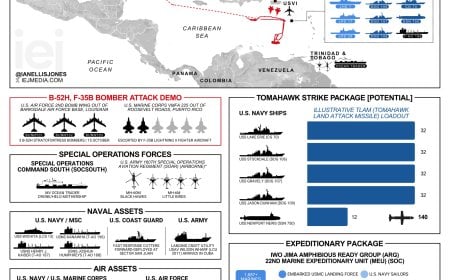 Article · related
Caribbean Surge: From Sea-Strikes to Land Options — What the U.S. Is Building
As U.S. Southern Command ramps up its Caribbean deployment, amphibious ships, Tomahawk destroyers, and special operations units signal a shift from maritime interdiction to potential land-based action. Trump’s comments confirm the transition: the sea is “under control” — now land targets are next .Caribbean Surge, U.S. Southern Command, SOUTHCOM, Venezuela, Amphibious Assault, Tomahawk Missiles, Trump, Regime Change, U.S. Military Build-Up, Latin America, Foreign Policy, Military Strategy, Defense Watch, Pattern Nexus
Published Oct 23, 2025 Article · related
Trump Signals Possible Military Strikes on Drug Cartels Beyond U.S. Borders
Trump says he will notify Congress before launching U.S. military strikes on foreign soil targeting drug traffickers — a move signaling a shift from maritime operations to potential land-based engagements. The statement blurs the line between counter-narcotics missions and warfare, raising major legal and geopolitical implications. Trump announced plans to notify Congress before authorizing U.S. military strikes against drug traffickers on foreign soil — a move that could escalate the war on drugs into new territory and test the limits of presidential war powers.
Published Oct 22, 2025