

trade
Automatically indexed from the existing article tag.
Theses, forecasts, models, and paths
No published research objects yet
This topic is ready for editors to connect a thesis, forecast, model, or research path.
Latest articles
 Article · related
Bessent Turns AI Safety Into a U.S.-China Summit Control Channel
Treasury Secretary Scott Bessent told Axios that the U.S. is open to discussing shared AI risks with China ahead of the planned September 24 Trump-Xi summit. AP, Reuters, the Los Angeles Times, and Semafor all report that AI governance and safety are now expected to sit inside a broader U.S.-China negotiation frame that also includes trade, rare earths, advanced technology access, Taiwan, Iran, and defense ties. The likely outcome is not a binding AI treaty, but a new control channel for managing frontier-model risk inside strategic competition.
Published Sep 18, 2026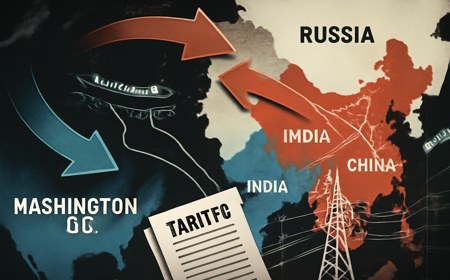 Article · related
Washington Turns Russian Oil Sanctions Into an India-China Tariff Lever
The U.S. House passed a sweeping Russia sanctions package in a 262-159 vote and sent it to President Donald Trump. The bill targets Russian officials, banks, sanctions-evasion networks and the shadow fleet, while authorizing duties on countries that buy Russian-origin crude oil or natural gas or facilitate evasion. India responded on September 17 that it would protect energy security, diversified sourcing, trade interests and the bilateral relationship.
Published Sep 17, 2026 Article · relatedFed Just Hiked Into a 5% 10-Year: Why the Next Liquidity Cycle May Arrive Faster
The Federal Reserve just raised the federal-funds target to 3.75%–4.00% while the 10-year Treasury closed at 5.01%, the 30-year at 5.35%, and the real 30-year at 3.09%. Pattern Nexus correctly identified the September hike risk and the developing QE/liquidity cycle, but underestimated the Fed’s willingness to raise rates against an already enormous debt and refinancing burden. This report asks the question almost nobody asks after a rate decision: what does the hike eventually break? It connects the September decision to the $40-trillion-plus federal debt structure, more than $1 trillion of annual federal net interest expense, Treasury issuance, long-end buybacks, Federal Reserve reserve-management purchases, hedge-fund leverage, the Treasury basis trade, private credit, housing, commercial real estate, household cashflow and the 2019 repo-market precedent. The conclusion is not that the Fed has deliberately chosen to create a crash. It is that monetary architecture now allows the Fed to tighten the price of credit while separately protecting reserves and market plumbing. The hike therefore does not invalidate the Pattern Nexus QE thesis. If long rates remain near current levels, it accelerates the transmission mechanism that can eventually force the next phase of liquidity support.
Published Sep 17, 2026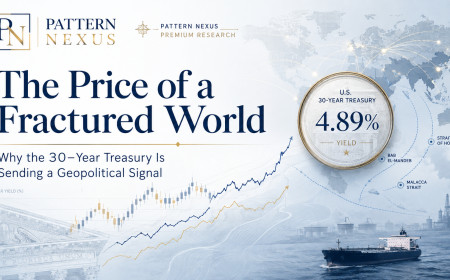 Article · related
The Price of a Fractured World: Why the 30-Year Treasury Is Sending a Geopolitical Signal
Something about the global system feels uncomfortable, and the last month of data suggests that feeling has a measurable foundation. The U.S. 30-year Treasury has pushed above 5.3%, real long-term yields are above 3%, the Strait of Hormuz remains severely constrained, U.S. missile inventories are being consumed across multiple theaters, Russia and Ukraine are attacking the commercial infrastructure of the Black Sea, China continues pressure around Taiwan and the South China Sea, new regional defense blocs are forming, tariffs are fragmenting trade, and governments and AI companies are simultaneously competing for enormous amounts of capital. This Pattern Nexus investigation asks whether the long end of the Treasury market is becoming one of the cleanest aggregate prices of a more fragmented world—and separates that thesis from the much weaker claim that the Treasury market itself is failing.
Published Aug 18, 2026 Article · related
The Yen Line Broke: The Intervention That Changed the Global Liquidity Map
yen-line-broke-us-japan-intervention-global-liquidity-map Meta description: Pattern Nexus reconstructs the yen’s plunge to a 40-year low, the reported first U.S.–Japan joint intervention since 2011, the BOJ’s 1% policy trap, and the next carry-trade shock.
Published Aug 2, 2026 Article · related
Pattern Nexus Macro Archive: 328 Timestamped Articles, October 2025–July 2026
A guided public index of 328 timestamped Pattern Nexus articles covering Federal Reserve liquidity, interest rates, the dollar, gold and silver, housing, real estate, markets, debt, banking, energy, trade, industrial buildout, and geopolitical transmission. Each section explains what readers will find, what they will learn, and where to begin.
Published Jul 30, 2026 Article · related
Weeks Where Decades Happen: January 2026 Acceleration Log
January 2026 did not ease into the decade; it detonated into it. From Venezuela’s regime shock and the Greenland tariff crisis to Iran’s crackdown, Syria’s realignment, the UN High Seas Treaty, demographic shifts, IMF revisions, and industrial pivots, this is a log of weeks where decades happen.
Published Jan 19, 2026 Article · related
The Middle East Fragmentation Regime: Red Sea Chokepoints, Iran Stress, and the Multi-Front Escalation Machine
Over the last month, the Middle East has shifted into a fragmentation regime: Red Sea disruption remains a global trade lever, Iran is under acute internal stress, Israel’s conflict geometry stays multi-front, and Gulf alignment is no longer bloc-discipline. This Pattern Nexus framework maps the interacting theaters, the country-specific incentives, and the next 30–90 day escalation triggers.
Published Jan 2, 2026 Article · related
Market Wrap-Up 12/30/2025: Metal Whiplash, Quiet Index Drift, and the Year-End Liquidity Tell
Stocks drifted lower in holiday-thin trade while commodities stayed unstable: gold and silver rebounded after margin-driven turbulence, oil stayed pinned, yields held near 4.13%, and crypto remained resilient. Full Pattern Nexus breakdown with charts, news, and liquidity lens.
Published Dec 30, 2025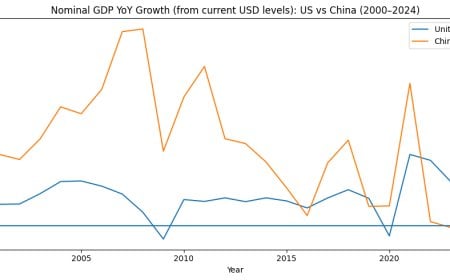 Article · related
Scale Is Destiny: Why China Didn’t Pass the U.S. — and Why That Matters
A data-driven breakdown of U.S. versus China economic growth from 2000–2024, showing why China failed to overtake the United States despite years of projections. Using GDP levels, growth rates, and scale mathematics, this report explains how demographics, housing collapse, trade regimes, and financial infrastructure reshaped the outcome — and why marginal U.S. growth now moves the global system.
Published Dec 24, 2025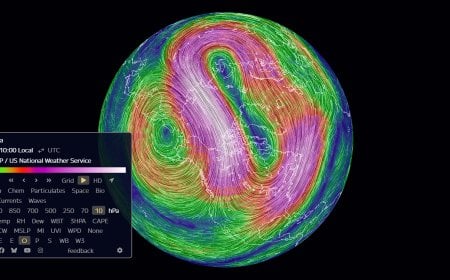 Article · related
Polar Vortex Watch, Part II: Early-Season 10 hPa Deformation and the Nat Gas Risk Trade
An unusually early 10 hPa polar-vortex deformation is unfolding over the Arctic, raising the odds of late-December cold across North America and setting up a higher-volatility trade in natural gas, power demand, and the real economy.
Published Dec 9, 2025 Article · related
The Hidden Boom: The U.S. Is Quietly Building the Largest Industrial Expansion Since WWII — And It’s Creating $100K+ Careers Overnight
America is entering the largest industrial construction boom since WWII — LNG, data centers, chip fabs, tunnels — creating massive $100K+ trade opportunities.
Published Nov 30, 2025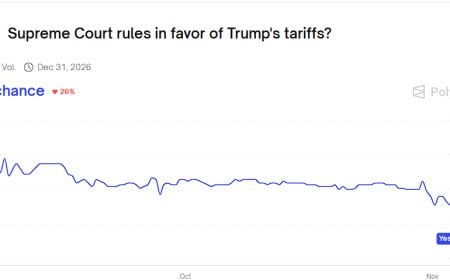 Article · related
The Supreme Court’s tariff case is an underpriced macro tail risk. A loss could trigger refunds, disrupt trade policy, and force a rapid White House pivot.
The Supreme Court’s challenge to the administration’s IEEPA tariffs is one of the most underpriced macro risks in markets right now. With prediction markets assigning barely a 25% chance of a pro-administration ruling, traders and policymakers are ignoring the possibility that billions in duties could be invalidated—or even refunded. This piece breaks down the legal stakes, the economic shock potential, the emergency fallback tools the White House could activate, and why this ruling could reshape pricing, Treasury issuance, and corporate planning over the next 1–2 quarters.
Published Nov 6, 2025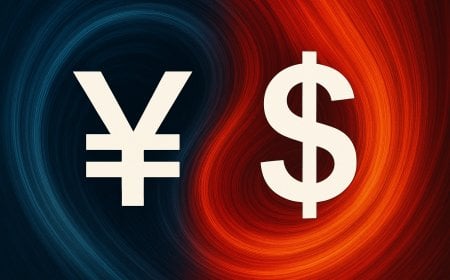 Article · related
Unwinding the Yen Carry Trade: The $20 Trillion Question and the Coming Dollar Shockwave
The yen carry trade is the hidden leverage machine behind decades of global liquidity. Now, as Japan exits negative rates, up to $20 trillion in leveraged positions risk unwinding — triggering forced liquidations, global volatility, and a potential dollar spike driven by repatriation flows. This article explores how the unwind works, why it matters, and how dedollarization narratives collide with the coming dollar squeeze.
Published Nov 5, 2025 Article · related
Blockade Age: Why U.S.–China “Trade Deals” Are Just Tempo Management in a Maritime Power War
The U.S.–China relationship isn’t thawing — it’s entering the Blockade Age. Rare-earth deals, naval posture, island-chain strategy, and Arctic corridors signal permanent parallel supply chains, maritime chokepoints, and regional security blocs shaping the next decade. Taiwan becomes a fortified node. China remains boxed by geography. The U.S. builds a perimeter of sensors, subs, and allies.
Published Nov 2, 2025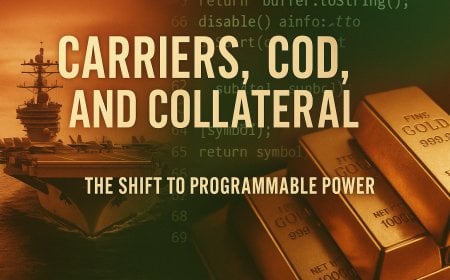 Article · related
The Pattern Nexus Master Brief: CBDCs, BRICS, Energy Corridors, and the Next Security Era
A Pattern Nexus master brief on the new security era: CBDCs, tokenized treasuries, BRICS trade, carrier posture, GPS warfare, and why money, energy, and narrative now move as one system.
Published Oct 31, 2025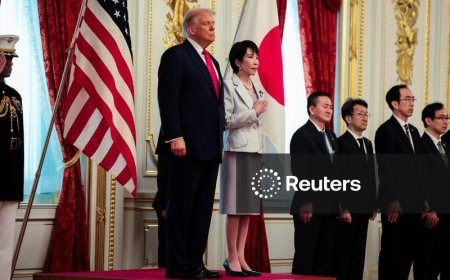 Article · related
The $550 Billion Pivot: How the U.S.–Japan Alliance Is Re-Wiring Global Power
The U.S. and Japan have unveiled a historic $550 billion trade and investment framework linking critical minerals, nuclear energy, and AI infrastructure — a deal that redefines global economic and geopolitical balance as the Pacific alliance enters a “new golden age.
Published Oct 28, 2025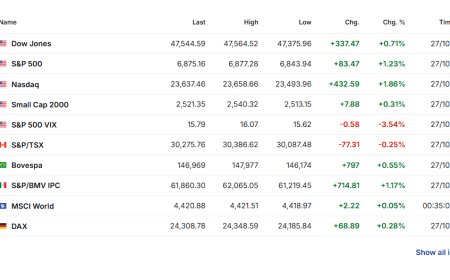 Article · related
Markets Hit Record Highs as Gold Slips; Nikkei Pauses – Oct 27, 2025 Roundup
U.S. stocks surged to record highs on trade optimism and tech strength while gold fell below $4,000. Japan's Nikkei paused, and Argentina's assets soared after Milei's midterm win.
Published Oct 27, 2025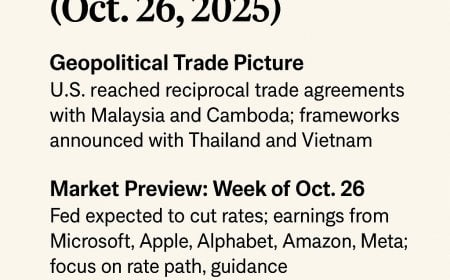 Article · related
Trade Signal: Southeast Asia Deals, U.S.–China Talks, and the Week Ahead (Oct 26, 2025)
Geopolitics meets markets: new U.S. reciprocal trade deals in Southeast Asia, U.S.–China negotiations, a Fed preview, and what futures are signaling for the week of Oct 26, 2025.
Published Oct 26, 2025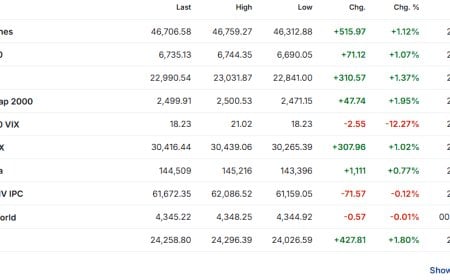 Article · related
Stocks Rally, Gold Surges and Global Signals Diverge: A Comprehensive Look at October 20 2025
A surge on Wall Street pushed major stock indexes close to record territory while tech giants grabbed headlines. Apple shares jumped on strong iPhone 17 demand, gold prices continued their record run amid talk of a “debasement trade,” and global markets diverged as India rallied and China posted slower growth. This article unpacks the key financial stories of October 20 2025 — including market performance, tech developments, commodity trends and macro‑economic signals — and explains what they mean for investors.
Published Oct 20, 2025