

war
Automatically indexed from the existing article tag.
Theses, forecasts, models, and paths
No published research objects yet
This topic is ready for editors to connect a thesis, forecast, model, or research path.
Latest articles
 Article · related
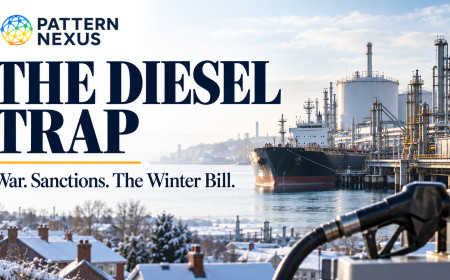
The Diesel Trap: Why the Oil War Is Bending Sanctions Before Winter
The October Russia-sanctions waiver adds a new policy chapter to the Pattern Nexus oil-war thesis. I connect the diesel bottleneck to emergency fuel commitments, uneven winter heating costs, the original Iran escalation window, household purchasing power and the next Fed financing test. Includes four dated figures and reproducible data.
Published Oct 20, 2026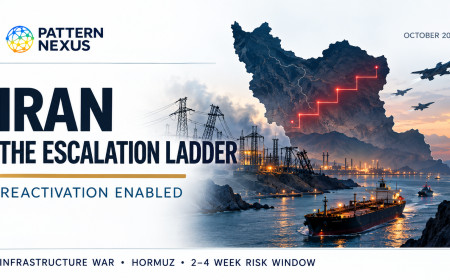 Article · related
Iran: Escalation Ladder — Reactivation Enabled
The Iran escalation ladder is active again. I examine the October strike risk, the infrastructure-war danger, rising tanker attacks alongside recovering exports, the Gulf defense response, financial isolation, current oil inventories and the Federal Reserve’s position. My working window is October 22–November 5. The article connects the latest evidence to the Pattern Nexus research trail from January through October.
Published Oct 8, 2026 Article · related
Washington Turns a Third Carrier Into an Iran-War Escalation Option
The United States is dispatching the USS Theodore Roosevelt carrier strike group and the Makin Island amphibious ready group toward the Middle East, according to multiple reports citing U.S. officials. The deployment could briefly put three U.S. aircraft carriers in the region, depending on timing, as President Donald Trump weighs further pressure or renewed strikes against Iran. The strategic signal is not just military: it lands in an energy system already strained by Hormuz disruption, low distillate inventories, and elevated oil-price risk.
Published Oct 2, 2026 Article · related
Moldova Turns a 60-Day Emergency Into a Winter Energy-Security Firewall
Moldova’s parliament approved a nationwide 60-day state of emergency in the energy and hydrological sectors beginning September 26, 2026. The government says the measure is preventive, aimed at giving authorities faster tools before winter as drought, electricity-import dependence, fuel-market stress and regional-war risks overlap. The system signal is that Moldova is treating water, electricity, fuel and cross-border grid access as one integrated resilience stack.
Published Sep 27, 2026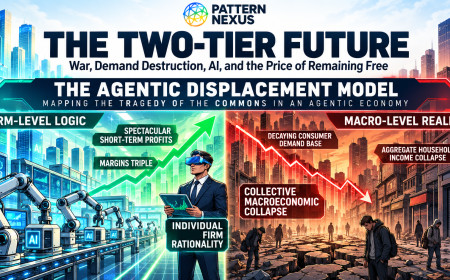 Article · related
The Two-Tier Future: War, Demand Destruction, AI, and the Price of Remaining Free
For years, I followed pieces of a possible two-tier economic future, then moved away from believing they would come together. In September 2026, the Iran oil shock, Ukraine refinery attacks, demand destruction, long-rate pressure, AI, robotics and the ownership of physical infrastructure have forced me to put the entire argument into one place: who retains access to the real world if an increasingly automated economy makes ordinary people dependent on the systems they do not own?
Published Sep 25, 2026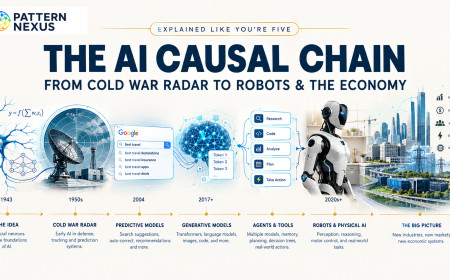 Article · related
The AI Causal Chain Explained Like You're Five: From Cold War Radar to Robots and the Economy
AI did not begin with ChatGPT. This accessible, fully sourced Pattern Nexus research map follows the 1943 artificial-neuron paper, Cold War radar computers, predictive internet systems, transformer models, agents, embodied AI and humanoid robots into the real questions about jobs, energy, productive ownership, wages and the economy.
Published Sep 23, 2026 Article · related
The Oil War Is Becoming a Global Economic War
An extensive Pattern Nexus reconstruction linking the Iran/Hormuz disruption with Ukrainian refinery attacks, diesel shortages, Saudi pipeline damage, U.S. and Venezuelan supply, Cuba’s grid, the dollar system, Treasury financing, Fed tightening, public energy-stock disclosures and the next conditional liquidity cycle. Includes an auditable Pattern Nexus article timeline, four sourced charts and 36 primary/reporting references.
Published Sep 21, 2026 Article · related
Larak Strike Turns Hormuz Into a Mine-War Energy Shock
U.S. forces struck two Iranian launchers on Larak Island near the Strait of Hormuz on August 30 after U.S. officials said IRGC personnel were preparing rockets carrying sea mines for the waterway. Iran claimed retaliatory strikes on bases hosting U.S. forces in Jordan, the UAE reported dealing with a drone from Iran over its territorial waters, and Brent crude moved back above $90 as traders repriced disruption risk. The immediate question is whether this remains a limited counter-mining action or becomes a broader contest over who can keep Hormuz usable.
Published Aug 31, 2026 Article · related
Federal Court Turns Anthropic’s Pentagon Blacklist Into an AI-War Powers Test
A U.S. District Court judge ruled for Anthropic after the Pentagon labeled the company a supply-chain risk over its refusal to permit unrestricted military uses of Claude. The decision found the government’s actions unlawful and framed the dispute as a constitutional, procurement, and AI-safety fight. The Pattern Nexus read: the ruling does not settle whether the military may demand more permissive AI systems, but it limits how national-security procurement tools can be used against vendors that publicly resist those demands.
Published Aug 28, 2026 Article · related
Alibaba Turns Hong Kong Equity Into an AI-Compute War Chest
Alibaba announced the pricing of a HK$80 billion placement of 710 million new ordinary shares at HK$112.70 each, with closing expected on August 26, 2026, subject to customary conditions. The company said 100% of net proceeds will go toward full-stack AI capabilities, including expansion and enhancement of AI infrastructure. Reuters, Bloomberg and South China Morning Post reported the deal as roughly US$10.2 billion and tied it to Alibaba’s broader push across chips, cloud infrastructure, AI models and applications.
Published Aug 23, 2026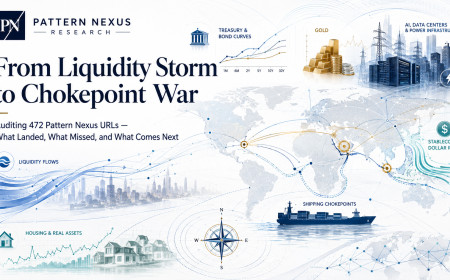 Article · related
From Liquidity Storm to Chokepoint War: Auditing 472 Pattern Nexus URLs — What Landed, What Missed, and What Comes Next
I audited the public Pattern Nexus record across 472 unique URLs and the saved full-text article export, then rebuilt the major calls from the original wording. This long-form report scores the liquidity/QT pivot, gold, the sub-3% 10-year miss, housing, stablecoin/Treasury rails, Venezuela, Iran/Hormuz, China/Taiwan, Greenland, AI power, robotics and the war economy, and finishes with a falsifiable map of what comes next.
Published Aug 20, 2026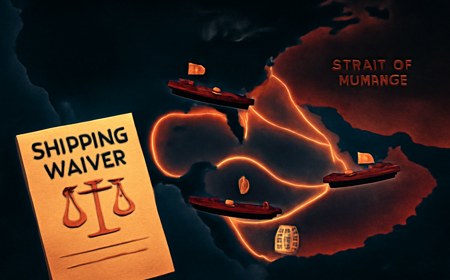 Article · related
Washington Turns the Jones Act Waiver Into an Iran-War Fuel Bypass
President Trump extended a Jones Act waiver for another 90 days, with the new window taking effect on August 17, 2026, after the prior waiver period expired on August 16. The waiver allows foreign-flagged vessels to move covered energy and agricultural commodities between U.S. ports as the Iran war and Strait of Hormuz disruption keep pressure on fuel logistics. The policy is now a live energy-security workaround, but maritime-state lawmakers and domestic shipping advocates warn it could weaken the U.S.-flag fleet and shipbuilding base.
Published Aug 17, 2026 Article · related
Iran Turns America’s Missile Stockpile Into a Two-Theater Deterrence Gap
Fresh reporting and defense analysis point to a widening U.S. magazine-depth problem. The Iran war has drawn heavily on long-range strike weapons and missile-defense interceptors, while replacement timelines for Tomahawk, THAAD and Patriot stocks are measured in years, not weeks. The strategic risk is that Russia and China do not need classified inventory data if they can observe which theaters are being stripped and how slowly the U.S. reloads.
Published Aug 8, 2026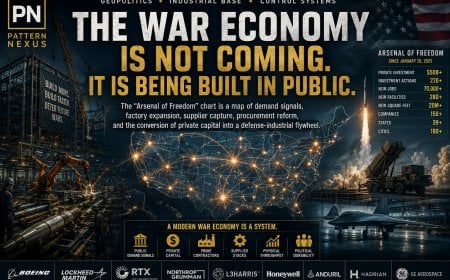 Article · related
The War Economy Is Not Coming. It Is Being Built in Public.
The Arsenal of Freedom chart is not just a defense graphic. It shows the United States shifting from peacetime procurement into a public-private war economy built around factories, missiles, suppliers, and long-term demand signals.
Published May 14, 2026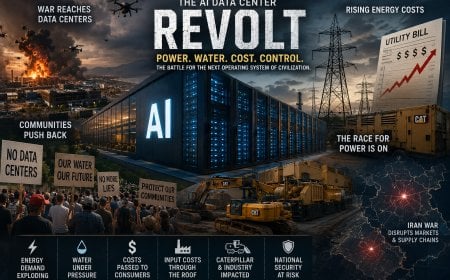 Article · related
War, Backlash and Build‑Out: The 2026 AI Data Center Report
The year 2026 has been unprecedented for AI infrastructure. A global conflict disrupted supply chains and even targeted data centers; nearly 40 % of U.S. projects faced delays. Communities across America escalated their pushback with ballot measures, moratoria and protests. Tech firms responded with new power strategies, cooling innovations, community agreements and even nuclear plans. This report synthesizes the year’s events, from war‑zone drone strikes to closed‑loop cooling, large‑load tariffs, behind‑the‑meter power and the economic ripple effects on suppliers like Caterpillar.
Published May 11, 2026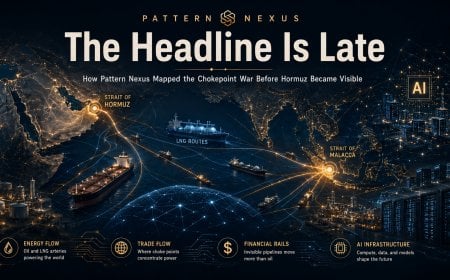 Article · related
The Headline Is Late: How Pattern Nexus Mapped the Chokepoint War Before Hormuz Became Visible
The Iran-Hormuz crisis did not create the Pattern Nexus framework. It exposed it. For months, Pattern Nexus had already been mapping the deeper system beneath the headlines: liquidity plumbing, QT, reverse repo, QE 2026, AI power demand, stablecoin rails, Treasury collateral, Western Hemisphere force posture, energy chokepoints, China’s routing vulnerability, and the shift from globalization to permission. This long-form analysis uses the video transcript as an alignment test, then ties it back into the Pattern Nexus archive to show the real timeline: the headline arrived late because the structure moved first.
Published May 7, 2026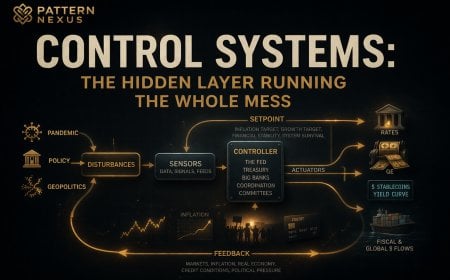 Article · related
Liquidity Needs a Cover: War, Control Systems, and the False Stability of the Modern Economy
Open the published research article.
Published Mar 28, 2026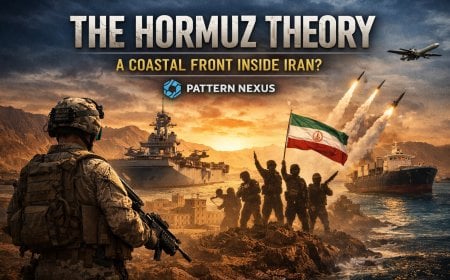 Article · related
The Hormuz Theory: Could a Coastal Safe Zone Become the Front Edge of a Long War in Iran? -->
A Pattern Nexus scenario analysis on whether a fight to reopen the Strait of Hormuz could expand into a coastal safe-zone strategy, proxy warfare, and a much longer regime-pressure campaign inside Iran.
Published Mar 26, 2026 Article · related
Week Ahead (Mar 16–20, 2026): Central Bank Cluster, War-Risk Premium, and a Market Trading Constraints
Week Ahead (Mar 16–20, 2026): This is a constraint week. Oil risk premium is back, DXY is parked near 100, yields are still restrictive, and central banks have to react without pretending energy isn’t inflationary. Here’s the Pattern X map: what matters, what breaks what, and the if/then triggers for the next 5 sessions.
Published Mar 16, 2026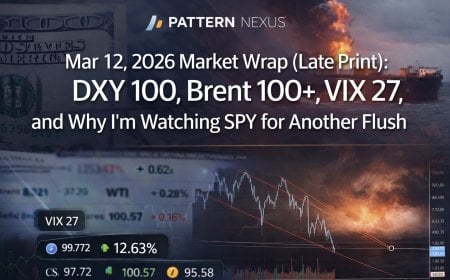 Article · related
Mar 12, 2026 Market Wrap (Late Print): DXY 100, Brent 100+, VIX 27, and Why I’m Watching SPY for Another Flush
The “index optics” crowd can keep coping. Today the plumbing talked: VIX +12%, Brent back over $100, DXY camped at 100, and yields still elevated. Add a war-risk premium plus private credit stress and you get a tape that’s not done. Here’s the full systems read using my screenshots + the Mar 12 news flow.
Published Mar 12, 2026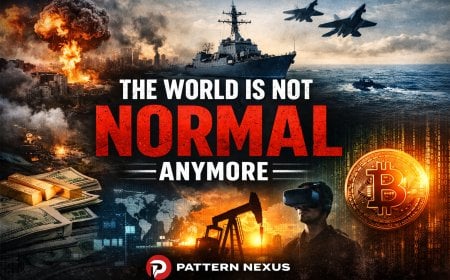 Article · related
The World Is Not Normal Anymore
A broad system-level look at the Middle East war, markets, money, Bitcoin, AI, control systems, and why the world order now appears to be shifting in ways that are bigger than most people realize.
Published Mar 8, 2026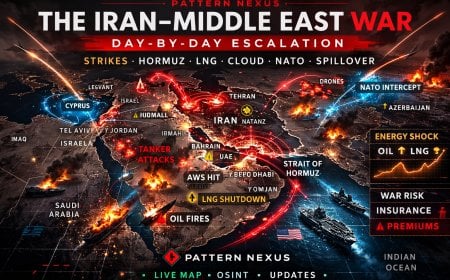 Article · related
The Iran–Middle East War, Day by Day (Feb 28–Mar 5, 2026)
A Pattern Nexus day-by-day control-systems breakdown of the Iran–Middle East war: strikes, maritime hits, Hormuz disruption, energy shutdowns, cloud infrastructure attacks, evacuations, and NATO/EU posture shifts.
Published Mar 5, 2026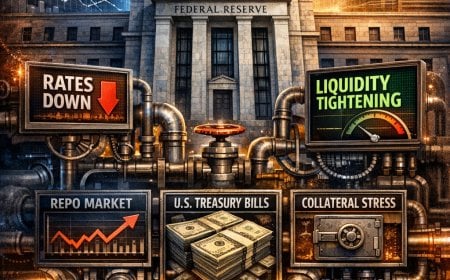 Article · related
Warsh’s Fed and the Balance-Sheet War: Why “Rates Down” Can Still Mean “Liquidity Tight”
A Pattern Nexus systems read on the incoming Fed regime debate: floor vs corridor, repo backstops, Treasury supply, and why the balance sheet is the real rate.
Published Feb 17, 2026 Article · related
From Pearl Harbor to Petrodollar: Surrender Calculus, Cold War Plumbing, and the Energy Enforcement Era
Part Two continues from Pearl Harbor to Japan’s surrender and beyond. It challenges the simplified “bombs ended the war” narrative by centering Japan’s surrender calculus under multi-pressure collapse and the decisive Soviet Manchuria shock, then tracks how that transition hardens into the Cold War, Vietnam, the post-1971 monetary pivot, and the energy-settlement enforcement patterns that run through the modern era into 2026.
Published Jan 22, 2026 Article · related
WWII Was a Resource War Built on Credit: Oil, Steel, Sanctions, and the Narrative Layer
WWII wasn’t a cartoon morality play. It was a systems collision built on oil, steel, credit loops, and diplomatic valves that closed. This piece follows the official record from interwar financing to Japan’s war talks, sanctions, the Hull Note, and the Pearl Harbor timing strike.
Published Jan 15, 2026 Article · related
The Silent Currency War: Containment, Collateral, and the 2030 Regime Window
The United States and China have entered a silent currency war layered on top of maritime containment, commodity dependencies, and financial plumbing. The next phase will determine whether the dollar system evolves, resets, or fragments into parallel rails.
Published Jan 13, 2026 Article · related
The Maduro Raid and the Rise of Non-Kinetic War
The Caracas raid that captured Maduro triggered a second battle: a fast-spreading claim that the U.S. used a “mystery” sonic or directed-energy device to incapacitate defenders. Confirmed or not, the narrative signals where warfare and state power are heading.
Published Jan 10, 2026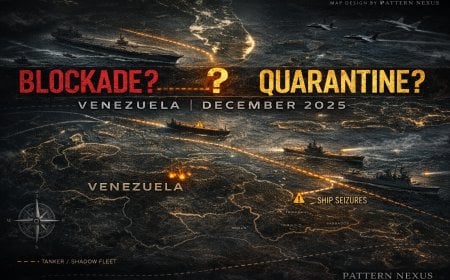 Article · related
Venezuela, December 2025: The Quarantine, the Blockade Word Game, and the Resource Prize
The U.S. escalation around Venezuela in December 2025 is not a single event. It is a coercion stack: maritime interdictions, sanctions enforcement by force, airspace signaling, Congressional war-powers friction, internal administration messaging conflict, and a resource prize sitting underneath it all. This report maps the timeline, actors, legal thresholds, and the “stable point” the system keeps snapping back to.
Published Dec 28, 2025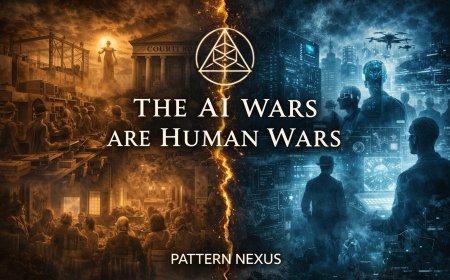 Article · related
The AI Wars Are Human Wars
The coming AI wars will not be machines versus humans. They will be humans versus humans—futurists who adapt and integrate AI versus pastists who resist and demand reversal. This Pattern Nexus framework maps the fault lines, escalation pathways, and why a future “shooting war” is plausible, fast, and structurally asymmetric.
Published Dec 21, 2025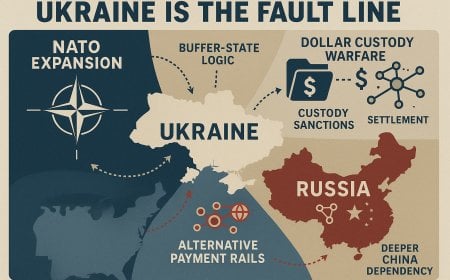 Article · related
Ukraine Is the Fault Line: NATO Expansion, Dollar Custody Warfare, and Russia’s Forced Pivot to China
Ukraine is not a regional war. It is the convergence point where NATO’s post-1991 security architecture, the U.S.-led financial control stack (custody, sanctions, settlement), and Russia’s failed integration into the Western order collided. This deep-dive traces the chain from 1990 assurances and NATO expansion through 2008 Bucharest, 2014–2021 freeze failures, the 2022 system shift, and today’s locked endgame. The core mechanism is precedent: territory, security guarantees, sanctions sequencing, and reserve legitimacy must all unwind together or nothing settles. This is the war behind the headlines: buffers, balance sheets, payment rails, collateral, energy, and credibility.
Published Dec 15, 2025