

You’re offline. Open downloads
Shipping
Automatically indexed from the existing article tag.
Theses, forecasts, models, and paths
No published research objects yet
This topic is ready for editors to connect a thesis, forecast, model, or research path.
Latest articles
 Article · related
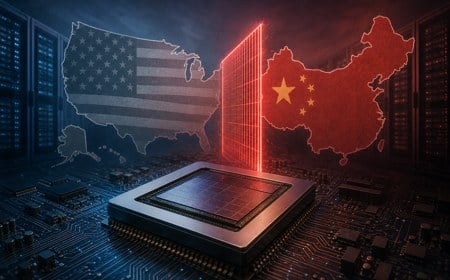
Santa Clara Turns Nvidia’s China Shipment Halt Into an AI-Chip Decoupling Test
Nvidia said it sold $2.4 billion of licensed Hopper data-center products to China in its fiscal third quarter but is no longer shipping those products there. The company’s SEC-filed outlook for the fourth quarter assumes no Data Center compute revenue from China, making the prior licensing pathway look less like a stable compromise and more like a narrowing corridor. The signal is not just a China revenue issue; it is a live stress test for U.S. chip controls, allied supply chains and the geography of advanced AI compute.
Published Nov 18, 2026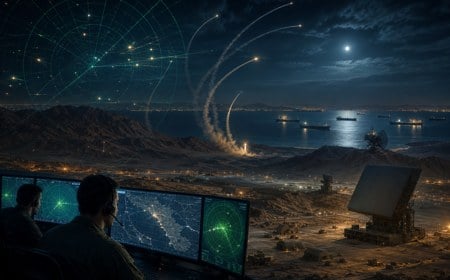 Article · related
Kuwait Turns Iran’s Gulf Strikes Into a U.S. Base-Resilience Test
Iran said it targeted U.S. drone and missile installations at Kuwait’s Ali Al Salem air base on November 18, while Bahrain reported another round of intercepted Iranian aerial attacks. The incidents followed a U.S. strike on a missile launch site on Iran’s Qeshm Island, near the Strait of Hormuz. The operational signal is that the confrontation is no longer a Bahrain-only harassment cycle; it is becoming a distributed Gulf base-resilience test with direct implications for shipping, oil flows, and U.S. regional posture.
Published Nov 18, 2026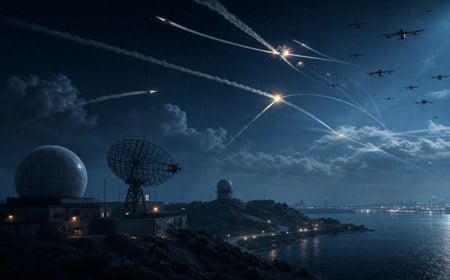 Article · related
Bahrain Turns Iran’s Third Drone Strike Into a Gulf Base-Resilience Test
Iran fired drones toward a U.S. military radar system in Bahrain on November 17, while Bahrain said its air defenses intercepted the attacks and U.S. reporting indicated no damage or American casualties. The IRGC claimed the operation targeted a radar system at Sheikh Isa Air Base, framing it as retaliation for U.S. activity. The repeated attacks shift attention from single-event escalation to whether U.S.-Gulf defenses can absorb low-cost drone pressure while shipping risk and diplomacy remain under strain.
Published Nov 17, 2026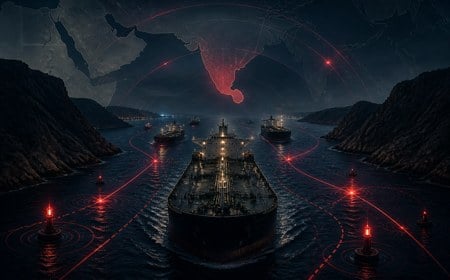 Article · related
UN Turns Hormuz Seafarer Deaths Into an Energy-Chokepoint Stress Signal
UN Assistant Secretary-General Khaled Khiari told the Security Council that at least 25 seafarers have been killed in and around the Strait of Hormuz since the war on Iran began in February. Reports differ slightly on the incident count, with Al Jazeera citing 136 IMO-tracked vessel-security incidents through November 11 and The National citing 134 confirmed incidents. The hard signal is not one mine claim, but the conversion of regional conflict into shipping risk, energy-market stress and supply-chain cost pressure.
Published Nov 15, 2026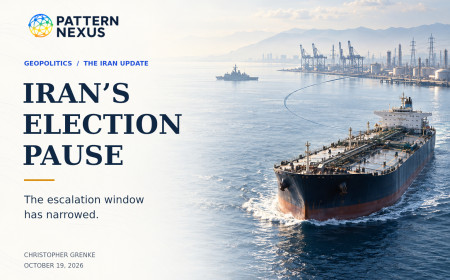 Article · related
Iran’s Election Pause: The Escalation Window Has Narrowed
The first follow-up to the October 8 Iran forecast confronts Trump’s election pause, checks actual naval posture, and follows the conflict through shipping, infrastructure, fuel and financing. The November 5 endpoint stays fixed. Four original figures, dated source notes and reproducible data are included.
Published Oct 20, 2026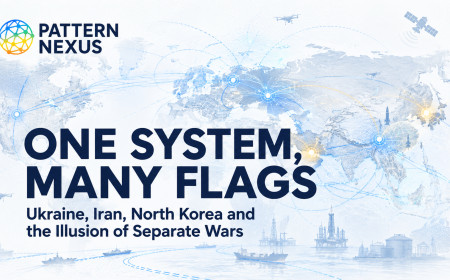 Article · related
One System, Many Flags: Ukraine, Iran, North Korea and the Illusion of Separate Wars
The United States can arm Ukraine while temporarily easing pressure on Russian oil, convert stockpile transfers into new procurement, court North Korea while Pyongyang supplies Russia, and fight Iran while Russia and China-linked systems help Tehran. The contradictions resolve when the wars are mapped as one connected system of energy, munitions, intelligence, shipping, sanctions and leverage.
Published Aug 22, 2026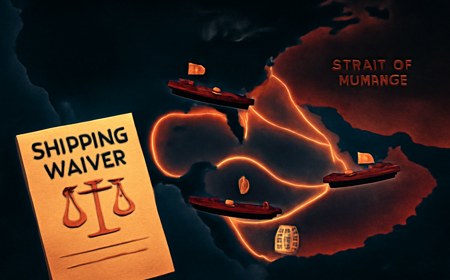 Article · related
Washington Turns the Jones Act Waiver Into an Iran-War Fuel Bypass
President Trump extended a Jones Act waiver for another 90 days, with the new window taking effect on August 17, 2026, after the prior waiver period expired on August 16. The waiver allows foreign-flagged vessels to move covered energy and agricultural commodities between U.S. ports as the Iran war and Strait of Hormuz disruption keep pressure on fuel logistics. The policy is now a live energy-security workaround, but maritime-state lawmakers and domestic shipping advocates warn it could weaken the U.S.-flag fleet and shipbuilding base.
Published Aug 17, 2026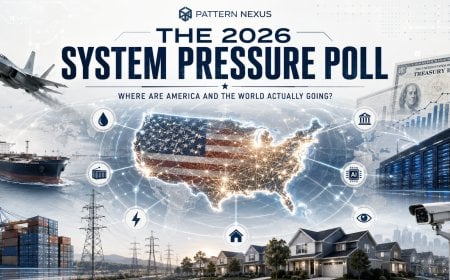 Poll · related
The 2026 System Pressure Poll: Where Are America and the World Actually Going?
This is not another left-versus-right approval poll. The Pattern Nexus System Pressure Poll examines the deeper structures shaping current events: war, energy, shipping corridors, debt, interest rates, tariffs, artificial intelligence, surveillance, housing, automation, institutional trust, and the emerging global order. The daily headlines are downstream. The objective is to identify which systems people believe are actually driving events—and where those systems are taking the United States and the rest of the world.
Published Jul 24, 2026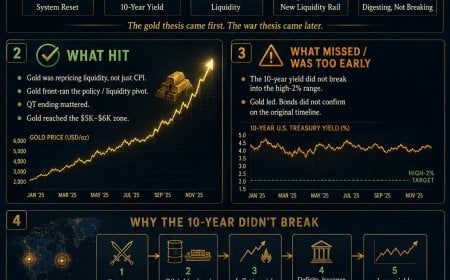 Article · related
Gold Was Right. The 10-Year Was Early. The War Premium Changed the Rate Path.
The original Pattern Nexus gold call hit the structural move: gold was not just trading inflation, it was repricing liquidity, policy failure, and the collateral stack. The miss was the 10-year yield. It did not break into the high-2% range because two wars changed the inflation, oil, shipping, deficit, and term-premium path after the gold call was already made.
Published Jun 14, 2026 Article · related
Hormuz Ceasefire Frays Again as U.S. Downs Iranian Drones Near Shipping Lanes
U.S. forces shot down two Iranian drones near the Strait of Hormuz after CENTCOM said they threatened international maritime traffic, according to EFE, AFP via Arab News, AP and Xinhua. The incident followed a prior exchange in which U.S. forces downed Iranian drones, intercepted missiles aimed toward Gulf allies and struck Iranian coastal surveillance radar sites. The pattern keeps the world’s most important oil-shipping chokepoint under active military stress even if cargoes continue moving.
Published Jun 7, 2026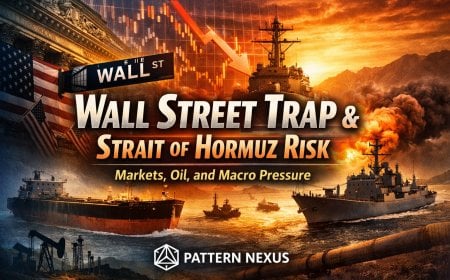 Article · related
Wall Street Trap and Strait of Hormuz Risk: Markets, Oil, and Macro Pressure
Three videos breaking down Wall Street stress, Strait of Hormuz risk, oil shock pressure, shipping disruption, and the broader macro consequences for markets and supply chains.
Published Mar 16, 2026 Article · related
Mar 5, 2026 Market Wrap (8:40 PM): VIX Won’t Relax, Gold Leads, and the Hormuz “Control Valve” Stays Partially Closed
Indexes tried to hold together, but the hedges kept talking: VIX stayed bid, gold/silver stayed firm, and the Gulf shipping/insurance layer remains the real constraint. My read: markets are still trying to price “normal” while paying up for tail risk.
Published Mar 5, 2026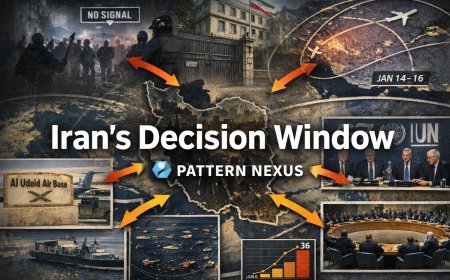 Article · related
Iran’s Decision Window: Blackout, Embassy Pullbacks, Airspace Closures, and the Retaliation Math (Jan 14, 2026)
Iran’s crackdown under an information blackout is colliding with U.S. strategic ambiguity and regional force-protection moves. Embassy pullbacks, base posture shifts, airspace restrictions, and maritime behavior reveal a decision window: this is now a control-systems contest across bandwidth, basing, shipping, and deterrence signaling.
Published Jan 14, 2026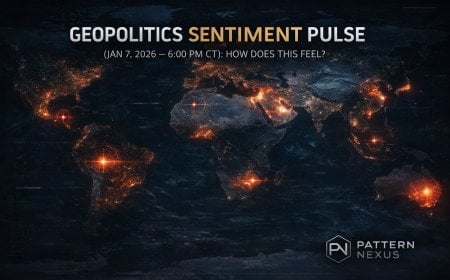 Poll · related
Geopolitics Pulse Poll (Jan 7, 2026 — 6:00 PM CT)
As of 6:00 PM CT on Jan 7, 2026, the risk tape is being shaped by Venezuela/Caribbean control claims, Middle East fragmentation and Iran stress, Arctic basing and Greenland leverage, and the China–Taiwan drill spiral. This poll captures where readers think escalation risk is concentrating, how it impacts markets and energy routes, and what signals matter next.
Published Jan 7, 2026Join Pattern Nexus for premium research, the archive, and ad-free reading.