

The Myth of Collapse — Audio-Video Edition
Episode 3 of The Next Normal explains why a connected digital civilization is more likely to reorganize through pressure, fracture, adaptation, and reintegration than follow one clean historical coll…
About this episode
- Information velocity changes failure. Prediction, behavior, price, and policy now interact inside the same live control loop.
- Crises fragment into distributed pulses. Margin calls, repricing, hedging, capital movement, emergency facilities, and political response can amplify damage or absorb it.
- Money changes substrate. Gold, fiat, electronic ledgers, tokenized collateral, digital identity, and programmable settlement preserve monetary functions in different forms.
- Integration creates a new risk. The same connectivity that accelerates correction can synchronize mistakes and transmit shocks through energy, rates, fiscal policy, technology, and legitimacy.
Episode 1 mapped the emerging civilizational operating system. Episode 2 built the internal architecture required to survive its transition. Episode 3 examines disruption as one of the processes through which the system learns, reallocates power, and changes substrate.
Start with Episode 1: Watch or listen to “Humanity's Next Operating System — Audio-Video Edition” →
Continue with Episode 2: Watch or listen to “The Architecture of Resilience — Audio-Video Edition” →
The audio-video is the condensed narrative. The original article contains the complete Pattern Nexus framework, timeline, arguments, and sources.
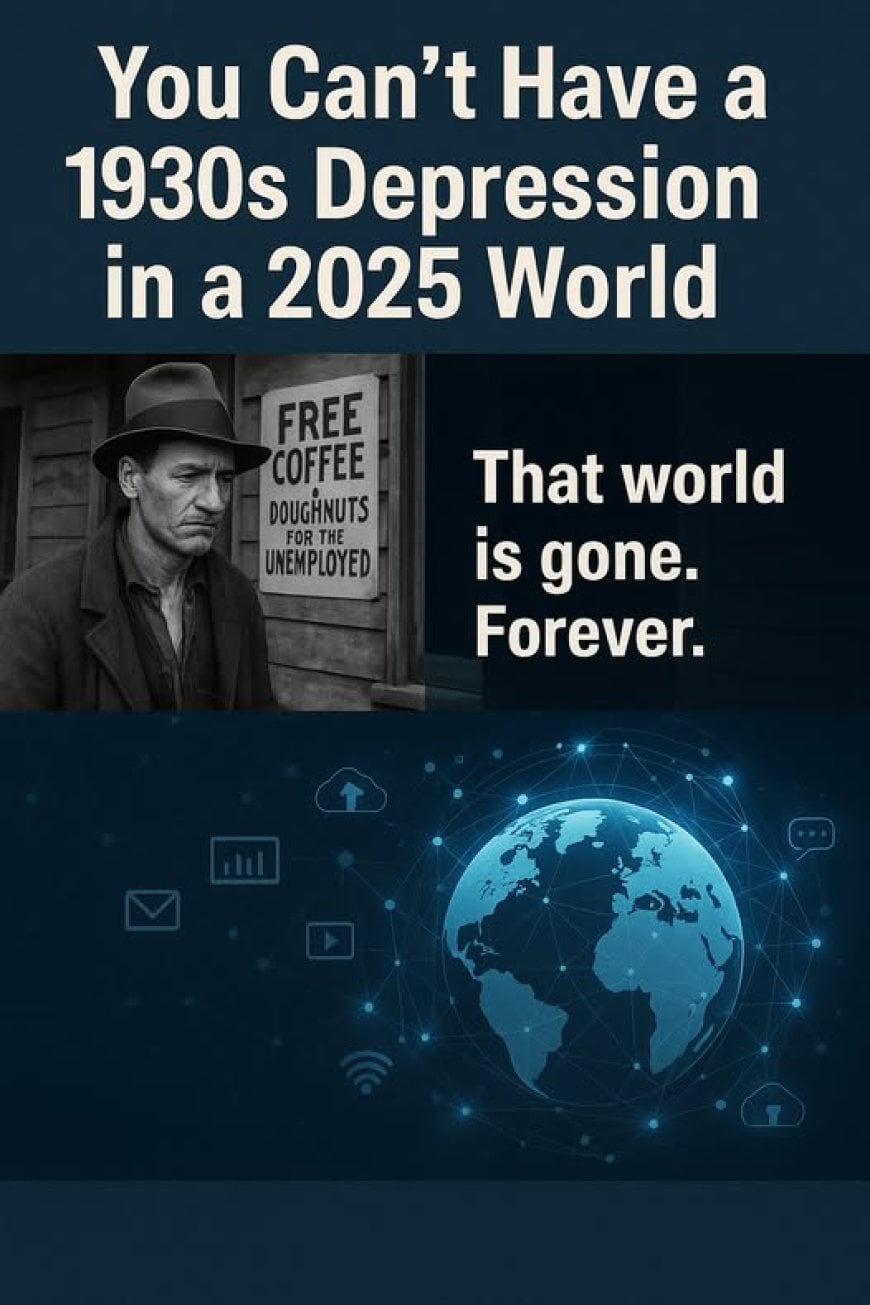
The future reorganizes faster than historical collapse models expect
Debt cycles, institutional failure, and monetary stress remain real. What changes is the transmission environment: information, capital, sentiment, collateral, and policy now move through connected networks that observe and react to failure while it is still unfolding.
The result is not permanent stability. It is rolling fracture and redesign—a contest between contagion and correction in which useful functions migrate from failing structures into new monetary, technological, and institutional rails.
Read the full original article
The audio-video is the condensed narrative. The original article contains the complete Pattern Nexus argument about information velocity, monetary physics, programmable finance, system integration, and collapse as adaptive phase transition.
Preview, subscribe, or get the book
The book expands the framework behind this story. Start with the free preview, unlock the complete digital edition directly from Pattern Nexus, choose a subscription, or buy the ebook or hardcover from Lulu.
Free Preview
Direct Digital Edition
Direct Hardcover
Subscriptions
Lulu Ebook
Lulu Hardcover
Pattern Nexus publishes independent research and commentary for informational and educational purposes.
Article overview
Episode 3 of The Next Normal explains why a connected digital civilization is more likely to reorganize through pressure, fracture, adaptation, and reintegration than follow one clean historical collapse script.
Qual è la tua reazione?
 Mi piace
0
 Non mi piace
0
 Amore
0
 Divertente
0
 Wow
0
 Triste
0
 Arrabbiato
0

Nexus (Christopher)
Founder of Pattern Nexus. I research markets, macro, geopolitics, AI, history, ancient systems, and the patterns most people overlook. I’m also building Market Radar, a trading scanner designed to read pressure, risk, confirmation, and setup quality before ch…
Related research
QT Is Over: The System Just Crossed Its Reserve Floor
The liquidity cycle has flipped. QT exhausted the reserve buffer, pushing the system into structural limits the Fed can’t ignore. This isn’…
2 shared assets.
Hard Assets, Liquidity and the Cost of Leverage
Where the historical relationship holds, where it breaks, and what the evidence says about housing. This November update extends the Patter…
1 shared topic, 1 shared asset, same research avenue.
The Recession Path: How Income, Investment and Credit Can Turn a Technology Boom Into an Economic Reset
A forward model links income, spending, investment and credit, then tests its forecasts against modern U.S. data and 150 years of macrohist…
1 shared topic, 1 shared asset, same research avenue.
The World I’ve Been Mapping Is Taking Shape
I connect the developments now taking shape across AI infrastructure, private power, critical minerals, the Iran energy shock, digital doll…
1 shared topic, 1 shared asset, same research avenue.The QE Decade — Audio-Video Edition
Episode 8 of the weekly Pattern Nexus audio-video series turns Part 8 of Cycles of Power into a shorter story about how quantitative easing…
1 shared topic, 1 shared asset, same research avenue.
The Oil War Is Becoming a Global Economic War
An extensive Pattern Nexus reconstruction linking the Iran/Hormuz disruption with Ukrainian refinery attacks, diesel shortages, Saudi pipe…
1 shared topic, 1 shared asset, same research avenue.
The Housing Collateral Engine — Audio-Video Edition
Episode 7 of the weekly Pattern Nexus audio-video series turns Part 7 of Cycles of Power into a shorter story about how China's WTO entry, …
1 shared topic, 1 shared asset, same research avenue.
The Asian Liquidity Supercycle — Audio-Video Edition
Episode 6 of the weekly Pattern Nexus audio-video series turns Part 6 of Cycles of Power into a shorter story about how liberalized capital…
1 shared topic, 1 shared asset, same research avenue.
Commenti (0)
Security Check
Please complete the captcha to verify you are human.