
The Quartz Chokepoint: Silica, Semiconductors, Solar, and the Quiet Resource That Runs the Modern Machine
A Pattern Nexus systems read on silica and quartz: why “sand” is abundant but ultra-high purity quartz is a strategic chokepoint for chips, solar, fiber, and the AI-industrial buildout.
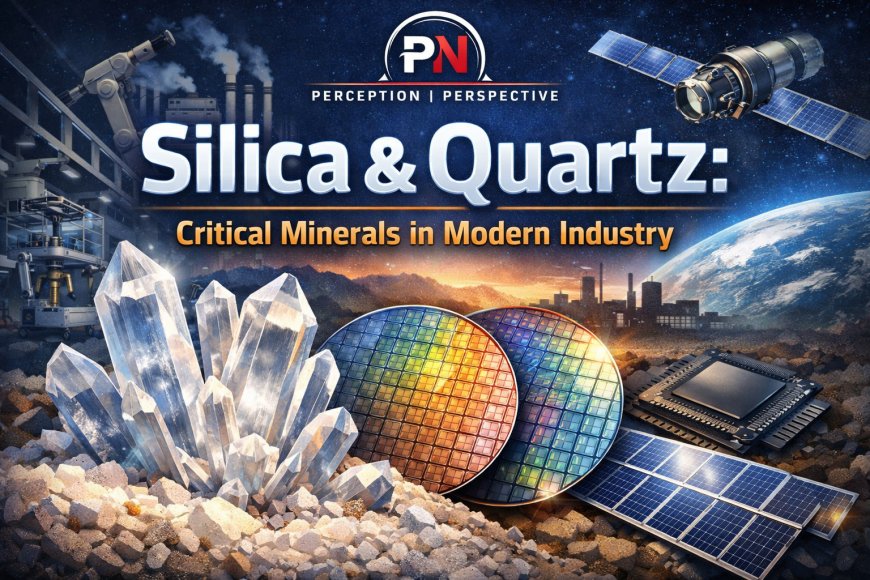

The strategic layer is different: ultra-high purity quartz that becomes fused silica crucibles — the container that holds molten silicon while single-crystal ingots are pulled for wafers. If compute, electrification, and solar scale together, geology becomes an input to national strategy.
Pattern Nexus translation: this is a classic “boring input” bottleneck. A huge system is gated by a small upstream constraint that almost nobody tracks until it breaks. And because the highest-grade natural deposits are concentrated, chokepoints behave like power.
Silica vs Quartz: Same Element, Different Reality
Silica is silicon dioxide: SiO₂. Quartz is a mineral form of silica — crystalline, common, and (in bulk terms) basically everywhere. In casual conversation, people use “silica” and “quartz” like they’re interchangeable. For glass, concrete, and frack sand, the system mostly treats them that way.
In high-tech manufacturing, they stop being interchangeable in the only way that matters: impurities, thermal behavior, and consistency at scale.
Once you see that, a lot of “geopolitics” becomes simpler: power is often upstream. Not because upstream is glamorous — because upstream is where throughput is decided first.
Two Supply Chains: Bulk Silica and Hyper-Pure Quartz
Start by splitting the universe into two silica economies. They share chemistry but not constraints.
This is the Pattern Nexus pattern in plain English: a “common” commodity becomes strategic when a rare grade becomes the container, the substrate, or the enabling part for the thing everyone actually cares about.
The Crucible: Where Purity Becomes Industrial Policy
If you want the simplest mental model: the semiconductor world isn’t only lithography machines and EUV mirrors. It’s also a brutally physical step: making the silicon crystal itself.
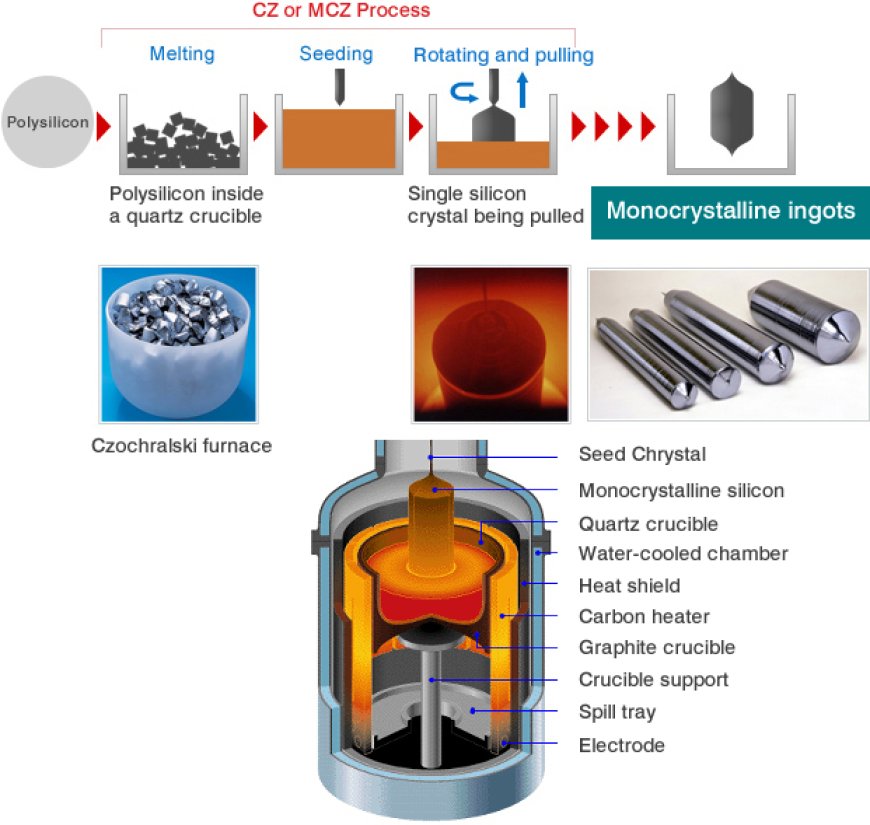
The dominant industrial method for producing single-crystal silicon ingots is the Czochralski (CZ) process. You melt silicon feedstock, dip a seed crystal, and pull a single crystal ingot out of a bath of molten silicon. Molten silicon sits around ~1,425°C and it does not forgive contamination.
Here’s the part that matters for macro: CZ is a batch process. One crucible doesn’t feed infinite output. It’s consumed as throughput happens. So demand doesn’t just rise in chips and solar — demand rises in crucibles, and crucible demand rises upstream into high-purity quartz.
Spruce Pine: The Quiet Upstream Lever
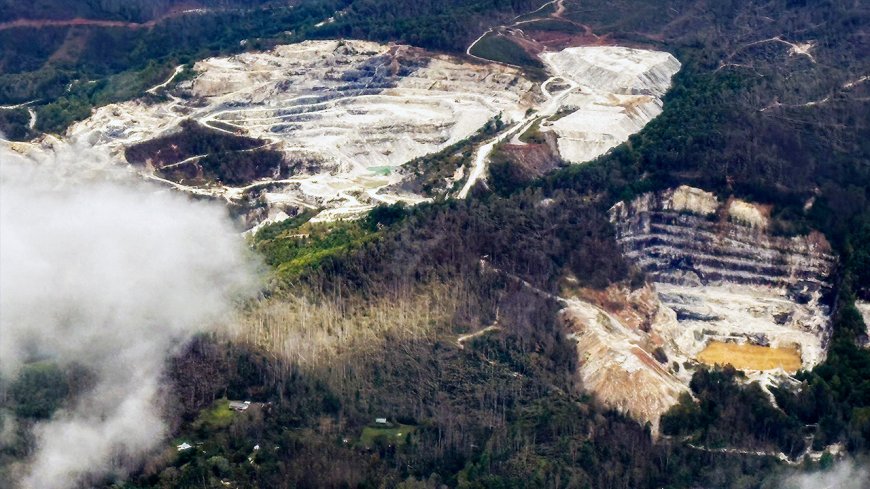
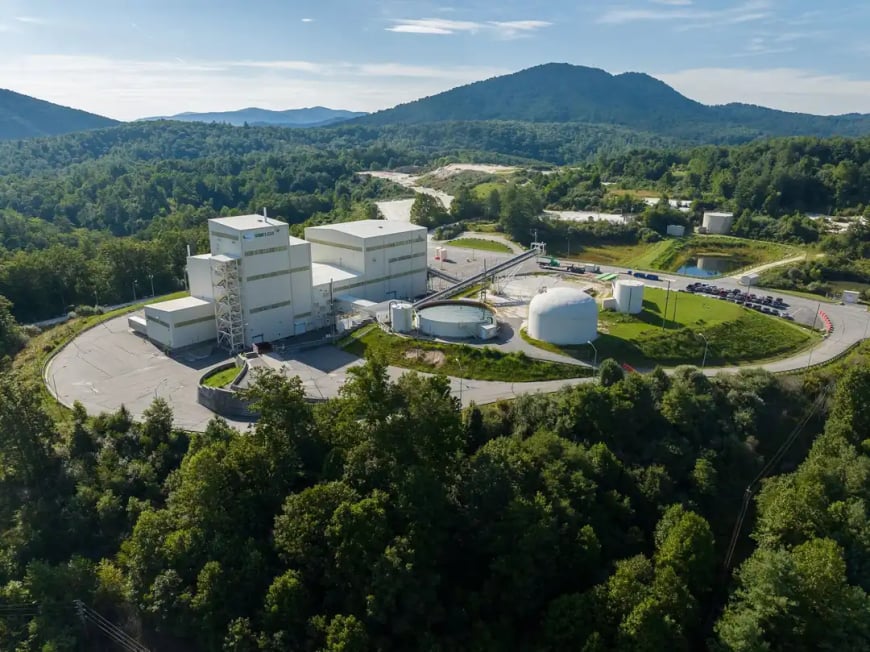
A lot of people learned the phrase “Spruce Pine” in 2024 for the same reason they learn any upstream term: disruption. When Hurricane Helene hit western North Carolina, it temporarily paused operations at the two major high-purity quartz producers in the area — and suddenly the world remembered that “chips” start as rocks.
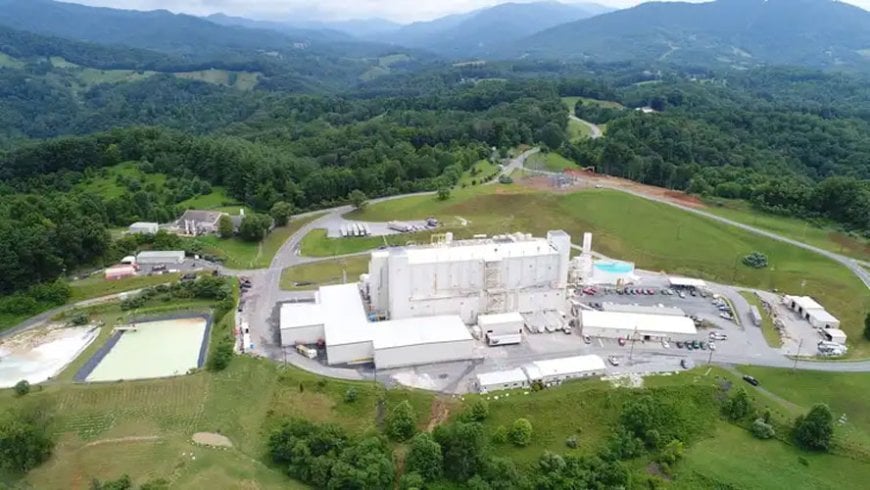
USGS has repeatedly noted that high-purity quartz (HPQ) has specialized uses including electronics, fiber optic cables, and fused quartz crucibles used to manufacture silicon metal ingots that are later processed into silicon wafers for photovoltaic cells and semiconductors — and that the U.S. HPQ production base is centered around Spruce Pine, North Carolina.
- Purity isn’t just “high percentage.” It’s trace contaminants, inclusions, and consistency across lots.
- Qualification is slow. End users don’t casually swap sources when defects and contamination are existential.
- Scale is brittle. A global industry can become dependent on a small number of qualified suppliers.
- Disruption isn’t theoretical. Weather, power, roads, and processing bottlenecks are enough to create risk.
During Helene, multiple reports emphasized that Spruce Pine quartz is used for a large share of crucibles globally (some estimates cited in reporting ran as high as ~70–90% of crucibles), which is why a regional disruption registered as a global supply chain event rather than a local story.
“America Has This”: Why This Maps to U.S. Dominance
The embedded video’s framing is the right provocation: “Saudi Arabia has oil, America has this.” Strip the slogan down to mechanism and it becomes a familiar U.S. pattern: own the enabling layer.
For roughly a century, U.S. power hasn’t been only “we make the most stuff.” It has been: standards, finance, shipping lanes, industrial tooling, IP regimes, and upstream inputs — the layers that determine who can scale and who can’t.
Even If China Took Taiwan: The Upstream Still Bites
The Taiwan scenario is usually discussed as if “control of fabs” equals “control of chips.” It doesn’t. Fabs are one node in a stacked system: materials → ingots → wafers → tools → process gases/chemicals → design software → fabrication → packaging → systems.
In a severe geopolitical break, the question becomes: what can be denied, at scale, fast? High-purity quartz and fused silica crucibles are a denial-capable layer because qualification is slow and scaling substitutes is expensive.
Substitutes, Workarounds, and the “Just Make It” Illusion
Every time a chokepoint gets attention, the same reflex shows up: “We can just refine lower grade material,” “we can just synthesize it,” “we can just substitute.”
In principle, yes. In practice, the constraint is not chemistry. It’s industrial economics plus time: capex, yield learning curves, customer qualification cycles, and scaling the boring parts (equipment, reagents, clean handling, QA/QC).
- Impurities are multiplicative. A “tiny” contaminant becomes a big yield hit at scale.
- Switching is risky. When yield is money, nobody swaps inputs casually.
- Scaling takes time. Even if a lab process works, industrial replication is a different sport.
- Solar is a volume engine. The PV chain eats throughput. Alternatives arrive slower under volume stress.
2) Process alternatives: some silicon can be grown with methods that reduce or avoid quartz crucibles, but the industrial mainstream is still CZ for scale.
3) Inventory + yield discipline: the least sexy and most real: buffer stock, crucible life improvements, tighter contamination control, and reducing scrap rates.
This is also why states invest in diversifying these supply chains. When a dependency is identified, it becomes an obvious “attack surface,” and the response is predictable: localization, substitution R&D, stockpiles, and supplier development.
AI-Industrial Demand: Compute Converts into Materials
Here’s what most commentary misses: quartz isn’t just “chips.” Quartz is also solar. Quartz is fiber. Quartz is industrial optics. These are not separate trends anymore. They’re converging into one demand regime.
This is why I treat “AI” as a physical story, not a software story. The buildout converts into factories, wafers, transformers, copper, steel, cement, and upstream minerals. That’s the AI-industrial era: the point where abstraction collapses into capex.
Policy is catching up. Silicon was added to the U.S. Final 2025 List of Critical Minerals — a tell that the state is formally acknowledging upstream “basic” inputs as national capability constraints.
Supply Chain Governance: Control Systems in Mineral Form
In my framework, “control systems” are not just censorship and finance. They’re the quiet mechanisms that decide who gets throughput. Minerals are one of the cleanest versions of this: upstream permissions with a physical footprint.
The governance dynamics show up immediately in silica/quartz:
- Opacity as moat: high-purity quartz markets are quiet because impurity profiles, qualification, and customer lists are competitive leverage.
- Chokepoint leverage: if one region supplies the “can’t fail” grade, it gains bargaining power that behaves like energy under stress.
- Industrial policy spillover: chip and solar subsidies quietly become upstream materials incentives — even if nobody says it directly.
- Trade and retaliation risk: once a mineral is coded “strategic,” it becomes eligible for controls, counter-controls, and forced localization.
- Resiliency is physical: weather, roads, grid stability, and local workforce conditions become national variables.
Externalities: Sand Governance and Silica’s Human Cost
Two truths can coexist: bulk silica resources can be abundant, and bulk sand extraction can still be a governance crisis. UNEP has argued sand is the most used solid material and that extraction volumes are on the order of ~50 billion tonnes per year globally, calling for sand to be treated as a strategic resource with better governance.
Silica is also an occupational health reality. OSHA is explicit that respirable crystalline silica exposure increases the risk of serious disease including silicosis, lung cancer, COPD, and kidney disease. In an era of accelerating construction, countertop fabrication, mining, and infrastructure buildout, this becomes a labor and safety constraint, not a footnote.
Pattern Nexus Lens
FAQ
Sources
- USGS: Silica Statistics and Information
- USGS Mineral Commodity Summaries 2025: Quartz (High-Purity and Industrial Cultured Crystal)
- Sibelco: IOTA High Purity Quartz (Spruce Pine ore bodies)
- The Quartz Corp: High Purity Quartz (HPQ overview and applications)
- AP: Spruce Pine disruption and why HPQ matters (Helene reporting)
- The Verge: Helene disrupts quartz mining; supply chain implications
- The Quartz Corp: Update on Hurricane Helene impact
- USGS: About the 2025 List of Critical Minerals (includes silicon)
- U.S. Department of the Interior: Final 2025 List of Critical Minerals press release
- Federal Register: Final 2025 List of Critical Minerals
- Heraeus: Making of fused silica (process overview)
- Momentive: Quartz crucibles for single-crystal silicon (industry use)
- UNEP: Sand and Sustainability (strategic resource framing; scale of extraction)
- OSHA: Crystalline Silica (health impacts)
Wat is jouw reactie?
 Vind ik leuk
0
Vind ik leuk
0
 Niet leuk
0
Niet leuk
0
 Liefde
0
Liefde
0
 Grappig
0
Grappig
0
 Wauw
0
Wauw
0
 Verdrietig
0
Verdrietig
0
 Boos
0
Boos
0

Founder of Pattern Nexus. I research markets, macro, geopolitics, AI, history, ancient systems, and the patterns most people overlook. I’m also building Market Radar, a trading scanner designed to read pressure, risk, confirmation, and setup quality before chasing a move. Pattern Nexus is where I connect the dots between data, history, technology, and the bigger system playing out around us.













Opmerkingen (0)