
Robot Builders of Artemis: How NASA’s Autonomous Construction Fleet Will Build the First Moon Base
NASA is preparing a robotic construction corps to build humanity’s first real Moon base — 3D-printing habitats from lunar regolith, deploying modular assembly robots, and laying down landing pads, power grids, and infrastructure before astronauts ever arrive. This is the next phase of the AI-industrial expansion: autonomous machines building the frontier.
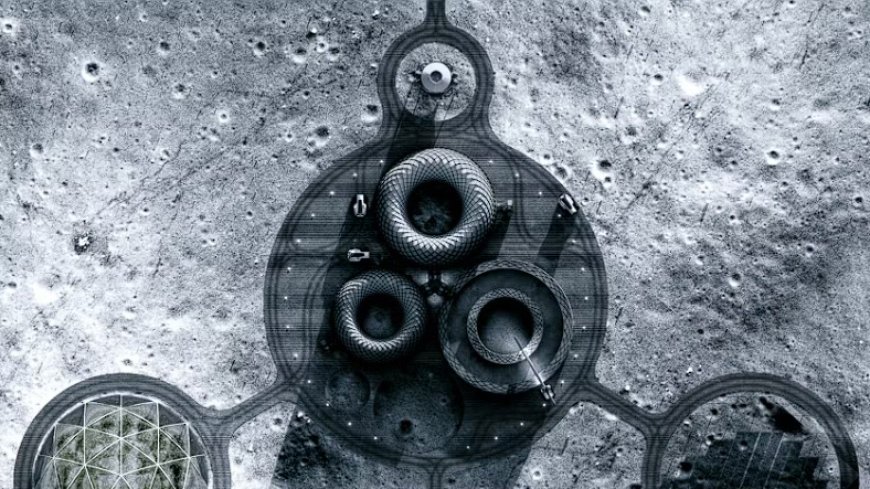
Robot Builders of Artemis: How the First Real Moon Base Gets Built
The next permanent “neighborhood” for humanity won’t be framed by human carpenters in spacesuits. It will be poured, printed, and bolted together by an autonomous construction stack – robots, 3D printers, and modular machines designed to work in vacuum, dust, and two weeks of darkness.
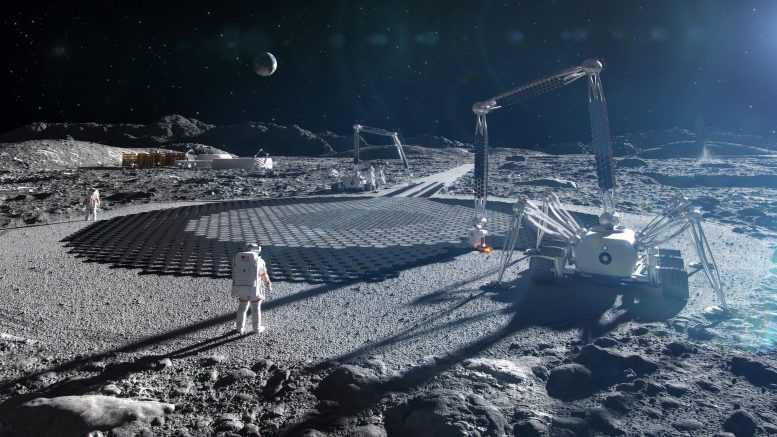
Why Robots Build the Moon Base First
NASA’s Artemis roadmap isn’t “flags and footprints 2.0.” The long game is a permanent base camp – a south-pole outpost with a surface habitat, unpressurized lunar trucks, and pressurized rover “RVs” able to support crews for weeks at a time. But the rough work of making that possible – landing pads, berms, roads, radiation shielding, and power infrastructure – is being designed for robotics from the start.
There are three hard constraints that push NASA toward a robotic construction stack:
- The environment is lethal and weird. The Moon has no atmosphere, brutal temperature swings (roughly –170°C to +120°C), and a 14-day night that would strand human crews in darkness and cold. Lunar dust is abrasive, electrostatically sticky, and dangerous to lungs and hardware. A robot doesn’t care.
- Every kilogram launched is insanely expensive. Shipping concrete and steel from Earth is a non-starter. The only scalable path is in situ resource utilization – turning local materials into infrastructure. That’s why NASA is funding 3D-printing systems that can transform lunar regolith into ceramic-like structures for pads and habitats.
- Communication delay kills real-time piloting. Earth–Moon latency is “only” a few seconds, but that’s enough to make direct teleoperation clumsy and risky for heavy construction work. The solution is supervised autonomy: robots that can execute complex tasks on their own, with humans supervising at a higher level.
In other words, Artemis is the first real test of a principle that will define the rest of this century: machines go first, humans follow the infrastructure trail.
ICON & 3D Printing With Moon Dust
On Earth, ICON is known for 3D-printed houses in places like Austin. In space, they’re the lead commercial partner on Project Olympus – a NASA-backed effort to 3D-print lunar infrastructure out of regolith.
The idea is simple, but the engineering isn’t: use robotic systems and high-powered lasers to melt local soil into strong, ceramic-like structures that can withstand dust, radiation, micrometeorites, and temperature extremes. NASA describes ICON’s process as a Laser Vitreous Multi-material Transformation technique – effectively turning Moon rock into glassy building blocks for pads, berms, and walls.

A few key implications:
- Landing pads first. Unprepared lunar soil turns into a high-velocity sandblaster when a lander fires its engines. 3D-printed pads and berms reduce the ejecta that could sandblast nearby habitats, rovers, or future landers.
- Radiation shielding at scale. Studies suggest several feet of lunar material may be needed to cut down deep-space radiation to safer levels. A regolith printer can bury habitats and vehicles under mounds of fused dust – something impractical to move by hand.
- Habitats that are mostly “local.” Instead of launching massive pressure vessels, NASA can send compact inflatable or metallic cores and let regolith printers pour protective shells around them.
This is the beginning of a pattern you see all over late-2020s infrastructure: software-defined hardware riding local materials. On Earth, it’s AI-optimized data centers and prefab construction; on the Moon, it’s regolith printers following digital blueprints.
The Emerging Robotic Construction Crew
The “robot army” isn’t one monolithic machine. It’s a layered ecosystem of specialized robots, modular actuators, and software that can be recombined into different tools as mission needs evolve.
GITAI: Multi-Tool Lunar Rovers
Japanese startup GITAI has been quietly pressure-testing the lunar job description in mock surface environments. Their rovers and robotic arms have demonstrated:
- Installing solar panels
- Placing and deploying communication antennas
- Excavating regolith and moving payloads
- Performing maintenance tasks like tire replacement
– all with tool-changing arms that can swap from construction to maintenance without sending a new robot.
GITAI has already flown robotic systems inside the ISS, and their goal is explicit: create general-purpose work robots that can handle over 80% of standard EVA-type tasks in space and on planetary surfaces.
HEBI Robotics: Modular “Robot Lego” for the Moon
In 2024–2025, HEBI Robotics was awarded NASA funding and a Space Act Agreement to develop modular robotic actuation hardware and “building blocks” that can be assembled into different construction robots for lunar use.
Instead of designing a new robot from scratch for every task, HEBI’s platform focuses on:
- Modular joints and actuators that can be snapped together into arms, walkers, gantries, or cranes
- Reusable control software and path-planning algorithms that can be applied to new configurations
- Self-assembling structures that adapt to different mission profiles – from erecting antenna masts to building truss frameworks for solar arrays
The company’s CEO describes it as a “versatile, configurable solution for building self-assembling structures capable of adapting to various mission requirements” – exactly what you want when your job site is 400,000 km away.
Autonomous Control Stack
Underneath all of this is the software layer:
- Navigation & mobility. NASA-funded efforts like the M-SAFE architecture are developing path-planning and autonomy algorithms specifically tailored for fast, reliable lunar mobility over rough terrain.
- Simulation before deployment. Most of these systems are tested in analog sites, regolith simulant yards, or digital twins before they ever touch space hardware. ICON, for example, is testing how lunar soil behaves in simulated lunar gravity and vacuum as part of Project Olympus.
- Supervised autonomy. The goal isn’t to cut humans out, but to move them up the stack – from joystick operators to mission supervisors directing fleets of semi-autonomous construction bots.
This is where Artemis quietly becomes an AI-systems story: you’re training machine fleets to coordinate, build, and maintain physical infrastructure in places humans cannot easily reach.
Inside the Artemis Base Camp Architecture
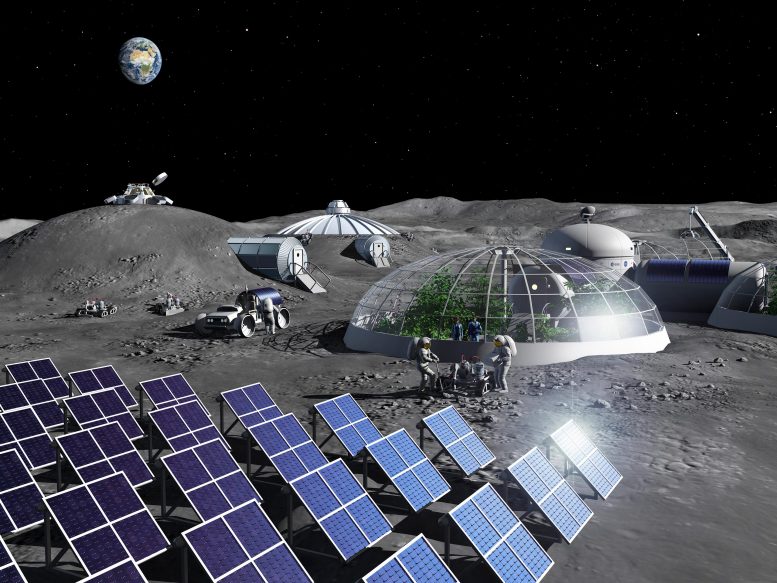
NASA’s Artemis Base Camp concept isn’t a single building; it’s a systems diagram laid down on the south polar rim. Core elements include:
- Surface Habitat. The “Foundation Surface Habitat” – a multi-story structure combining inflatable and metallic elements – is designed to house up to four crew members for extended stays, with life support, workspaces, and radiation protection enhanced by surrounding regolith shells.
- Lunar Terrain Vehicle (LTV). An unpressurized rover for local runs around the base, hauling cargo and crew in suits.
- Pressurized Rover / Habitable Mobility Platform. Think of this as a mobile mini-habitat – an RV for the Moon – allowing multi-week excursions tens of kilometers away while still providing safe life support.
- Power systems. Solar arrays and eventually nuclear power modules positioned to maximize near-continuous sunlight on polar peaks, with cable runs feeding down into permanently shadowed craters rich in water ice.
- In situ resource utilization nodes. Facilities to mine, process, and use local water, oxygen, and metals – not just for life support, but as feedstock for fuel and metal parts.
The key detail: almost all of this is robot-extendable. Once you have a base layer of landing pads, access roads, solar farms, and bermed habitats, you can keep sending robotic construction modules to add more pads, more storage, more tanks, more shielding – without scaling human crew in lockstep.
Spin-Offs Back on Earth: Lunar Tech as a Construction Laboratory
NASA doesn’t fund this because it’s “cool sci-fi.” The agency is explicit: lunar construction technologies are expected to feed directly back into Earth industries – especially in extreme or hazardous environments.
The same toolchain that lets an ICON printer sinter regolith in vacuum can:
- Print durable structures in deserts or remote locations with limited materials
- Support rapid deployment shelters for disaster zones
- Automate heavy, repetitive tasks on hazardous construction sites
GITAI-style general-purpose work robots and HEBI modular systems already have obvious terrestrial use cases:
- Disaster response. Robots that can navigate rubble, handle debris, and assemble temporary infrastructure without putting humans at risk.
- Remote industrial sites. Mining, polar research stations, offshore platforms – any place where sending a full-time crew is expensive or unsafe.
- High-risk maintenance. Power plants, refineries, and grid infrastructure that benefit from robots able to inspect, repair, and upgrade without shutdowns.
NASA’s own framing is that pushing construction technology for Moon and Mars “can help solve vexing problems we face on Earth” – the classic dual-use pattern: space as an extreme sandbox for next-generation automation.
Moon Bases, Asteroids & Humanity’s Next Operating System
From a Pattern Nexus lens, the robotized Moon base is not an isolated space project. It’s a visible node in a bigger transition: AI-guided, robot-built infrastructure as the default mode of civilization expansion.
We’re already watching the AI industrial backbone rewire power demand, grid design, and industrial footprints on Earth. The lunar construction stack is the same story, pushed into vacuum and regolith instead of Texas and Virginia.
Link this forward:
- Cislunar logistics. A robot-built Artemis Base Camp is effectively a forward operating base for cislunar traffic – tankers, depots, and tugs shuttling propellant, materials, and components between Earth orbit, the Moon, and Lagrange points.
- Asteroid and resource infrastructure. The same systems that handle regolith on the Moon can, with tuning, handle rubble piles and rocky asteroids. Long-term, the industrial “value” of the solar system is in metals and volatiles beyond Earth – but you need autonomous construction to tap it.
- Digital civilization. Everything here is software-defined: CAD models, autonomy stacks, AI planners, digital twins. Humanity’s physical expansion is increasingly gated by how fast our digital systems can reason about, coordinate, and build in new environments – not by how many humans we can stuff into a rocket.
In that sense, the “robot army” headlines aren’t exaggerating – they’re just early. We are training the first generation of machine crews that will:
- Build our first permanent home off-world
- Extend the AI-industrial flywheel beyond Earth’s gravity well
- Lay foundations for a tokenized, resource-anchored space economy that later plugs directly into the Tokenized Reserve Era we’ve already mapped for terrestrial finance
The Moon base isn’t just a science outpost. It’s the first test deployment of humanity’s next operating system: AI-coordinated, robot-built, resource-localized, and capable of scaling into places where humans can’t live yet – but will.
Sources & Further Reading
- NASA — Construction Technology for Moon and Mars Exploration (ICON & regolith 3D printing)
- ICON — Project Olympus: Lunar Construction System
- GITAI — Demonstration of Lunar Base Construction in Mock Lunar Environment
- HEBI Robotics — NASA Ames Partnership & Modular Construction Systems
- NASA — Lunar Surface Sustainability & Artemis Base Camp
- AmericaSpace — Living on the Moon: Inside Artemis’ Foundation Habitat
- SciTechDaily — Artemis Base Camp Will Need Light, Water & Elevation
- Smithsonian — Four Things We’ve Learned About NASA’s Planned Base Camp on the Moon
- Yahoo / GadgetReview — NASA’s Robot Army Is Building Our First Real Moon Base
Care este reacția ta?
 Îmi place
0
Îmi place
0
 Dezaprobat
0
Dezaprobat
0
 Iubire
0
Iubire
0
 Amuzant
0
Amuzant
0
 Wow
0
Wow
0
 Tristețe
0
Tristețe
0
 Înfuriați
0
Înfuriați
0

Founder of Pattern Nexus. I research markets, macro, geopolitics, AI, history, ancient systems, and the patterns most people overlook. I’m also building Market Radar, a trading scanner designed to read pressure, risk, confirmation, and setup quality before chasing a move. Pattern Nexus is where I connect the dots between data, history, technology, and the bigger system playing out around us.



















Comentarii (0)