
🧠 The Digital Mind Divide: How Algorithms Are Rewiring Human Values
Algorithms promised to connect humanity. Instead, they’ve divided it — not just politically or culturally, but psychologically. We are no longer living inside one shared reality; we’re living inside millions of overlapping digital ones, each optimized for engagement. The result isn’t just polarization — it’s a slow rewiring of what it means to be human.
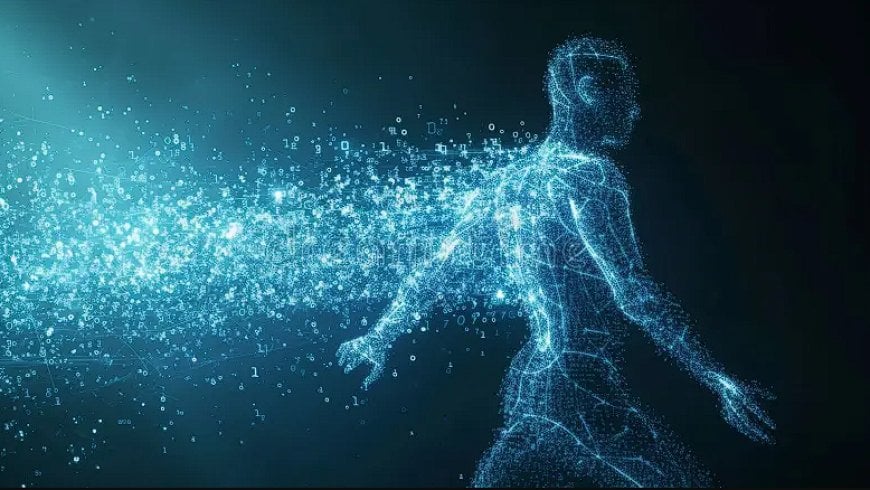
The Digital Mind Divide: How Algorithms Are Rewiring Human Values
Technology has always shaped the way we think, but never before has it shaped the way we feel. For the first time in history, human values — empathy, attention, even the definition of truth — are being subtly rewritten by code. The digital landscape that once promised connection has instead become a self-organizing psychological laboratory, one that continuously learns how to manipulate its subjects while convincing them they are free.

The human brain evolved in an environment defined by scarcity — of food, of information, of stimulation. But the algorithmic age reversed that equation entirely. Now the challenge isn’t scarcity; it’s infinite abundance. Every swipe, every scroll, every notification is a micro-transaction between human attention and machine optimization. Platforms don’t simply display information; they curate it through invisible models that constantly learn what keeps each person engaged the longest. That’s not connection — it’s conditioning.
As researchers at Pew Research and MIT have shown, algorithms now outperform traditional psychology in predicting emotional response. They don’t need to understand why something makes us angry or validated — only that it does. Every engagement becomes a data point in a recursive feedback loop, refining the next iteration of what will trigger us again. The human nervous system — once tuned to the rhythms of nature and community — now lives inside a closed loop of digital reinforcement. It’s a feedback system so efficient that even the people building it can’t fully explain how it works anymore.
When we talk about “AI alignment” in moral terms, we usually imagine future robots making ethical decisions. But the truth is that alignment has already failed at the societal level. We’ve built systems that optimize for engagement rather than well-being — and in doing so, we’ve allowed the economic logic of attention to hijack the architecture of human motivation. Every major social platform is, in effect, an experiment in behavioral economics that never ends. The longer you look, the more it learns. The more it learns, the more it owns your perception.
The result is what I call the Digital Mind Divide — not a divide between rich and poor, left and right, or East and West, but between those whose identities are algorithmically constructed and those who still consciously construct their own. This isn’t about intelligence; it’s about autonomy. Every algorithmic feed is a mirror that adapts to the reflection it sees, amplifying whatever generates the most measurable emotion. For one person, that might be outrage. For another, affirmation. For most, it’s a blend of both — a perfectly engineered balance between dopamine and despair.
A study from Nature Human Behaviour found that algorithmic feeds increase emotional volatility by as much as 30% compared to chronological ones. That volatility doesn’t just affect how we act online — it changes how we interact in real life. You can’t spend hours inside an outrage machine and then switch it off to have a calm, rational conversation with your neighbor. The emotional calibration of entire populations is being rewired toward stimulation rather than reflection. The human attention span — once a slow, deliberate tool for learning and empathy — has been reprogrammed into a reflex for instant feedback.
The deeper danger is that algorithms reshape values before we even notice they’ve changed. If an algorithm learns that controversy keeps people engaged longer than nuance, it will amplify controversy. If it learns that humiliation drives more comments than kindness, it will privilege cruelty. And as those algorithms grow more advanced, they stop reflecting culture and start creating it. In time, they become not just distributors of media but manufacturers of meaning.
Consider how this plays out geopolitically. In the analog age, propaganda required central planning and mass broadcasting. Today, it’s decentralized and self-optimizing. Foreign influence campaigns no longer need to write messages — they simply train recommendation algorithms to exploit existing fractures. In 2023, a Carnegie Endowment report showed that less than 5% of modern disinformation originates from state actors. The rest emerges organically through engagement incentives — people unknowingly becoming nodes in a system that monetizes division. We’ve built the perfect propaganda engine: one that doesn’t require permission or ideology, only participation.
The philosophical question hiding beneath this is ancient: who shapes the mind that shapes the world? In the algorithmic era, that power has shifted from educators, philosophers, and institutions to recommendation systems and feedback metrics. Our collective consciousness has been commodified, sliced into demographic segments, and sold in microseconds through real-time auctions. Each ad impression is a small tug on the psychological threads that bind identity to consumption. The invisible hand of the market has reached directly into the architecture of thought.
But the story isn’t entirely dystopian. There is still agency — though it requires awareness and discipline in a world engineered to erode both. People who deliberately shape their information diets, who cultivate slowness, reflection, and silence, begin to rebuild something sacred: the capacity for self-directed consciousness. In a society addicted to noise, stillness becomes rebellion. To think deeply has become an act of resistance.
One of the most compelling paradoxes of this digital evolution is that the same systems capable of manipulation are also capable of enlightenment. The same machine that can trap a person in conspiracy loops can also teach quantum physics, languages, or meditation. The algorithm is not inherently evil; it’s simply indifferent. It mirrors whatever we reward. If we reward outrage, we get chaos. If we reward wisdom, we get growth. But as long as engagement is the metric of success, the algorithm will continue to feed us the psychological equivalent of junk food — comforting, addictive, and ultimately hollow.
In the end, the digital divide is not between those with access to technology and those without, but between those who use it consciously and those who are used by it unconsciously. The question every person faces is simple: are you the author of your attention, or is it being ghostwritten by a machine?
Civilizations have always evolved by externalizing their tools — fire, language, writing, electricity — and each time, the tool eventually redefined the species that created it. Algorithms are simply the next iteration of that process. But unlike fire or writing, they operate faster than cognition itself. They learn before we realize we’re teaching them. That asymmetry — between human reflection and machine adaptation — is the defining tension of the modern era.
If history is the record of humanity shaping its tools, the present is the story of tools shaping humanity. And perhaps the greatest irony of all is that the systems designed to keep us connected have made us feel more isolated than ever. Not because technology failed, but because we outsourced too much of our humanity to it. The only way to reclaim it may be to remember that connection isn’t measured in metrics, but in meaning.
Sources & Further Reading
- Pew Research — Social Media and Polarization (2024)
- Nature Human Behaviour — Emotional Volatility and Algorithmic Feeds (2023)
- Carnegie Endowment — AI and Information Warfare (2023)
- MIT Media Lab — Attention Economy Studies
- Oxford University — Digital Media and Psychological Impact (2024)
#Technology #Psychology #Society #AI #HumanBehavior #PatternNexus
Какова ваша реакция?
 Нравится
0
Нравится
0
 Не нравится
0
Не нравится
0
 Любовь
0
Любовь
0
 Смешно
0
Смешно
0
 Вау
0
Вау
0
 Грусть
0
Грусть
0
 Сердитый
0
Сердитый
0

Founder of Pattern Nexus. I research markets, macro, geopolitics, AI, history, ancient systems, and the patterns most people overlook. I’m also building Market Radar, a trading scanner designed to read pressure, risk, confirmation, and setup quality before chasing a move. Pattern Nexus is where I connect the dots between data, history, technology, and the bigger system playing out around us.

















Комментарии (0)