
The Venezuela Flashpoint: Why the U.S. Just Locked Down Airspace and Shifted the Caribbean Chessboard
The most in-depth analysis of the 2025 Venezuela escalation: FAA NOTAMs, airspace closure, U.S. naval buildup, covert operations, cartel-state networks, GPS interference, and the strategic implications heading into 2026.
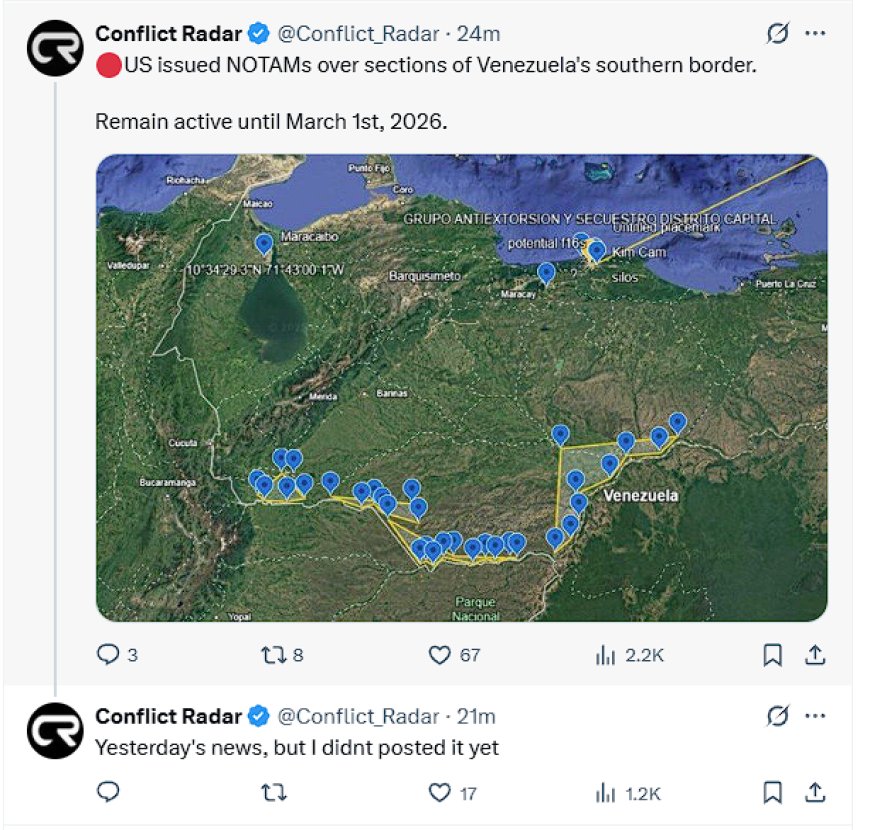
Flashpoint Update – December 10, 2025
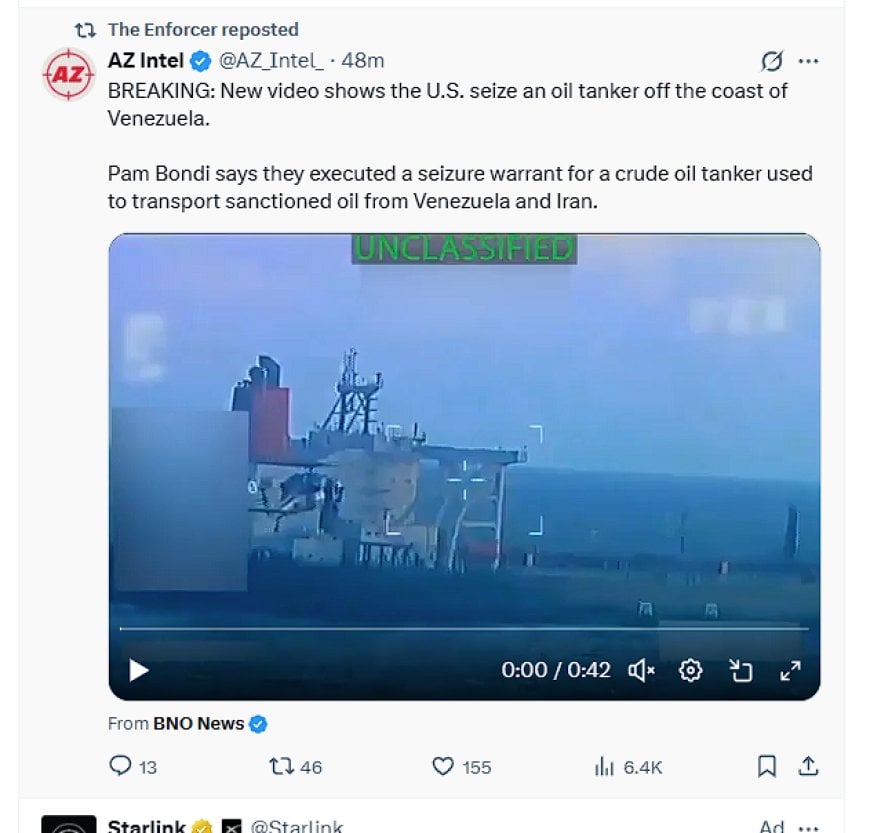
Welcome to the United States of Pirates. When we first published this piece, Washington had just slammed the door on Venezuelan airspace and repositioned assets around the Caribbean chessboard. That was the “warning shot” phase. As of today, we have crossed into something else entirely.
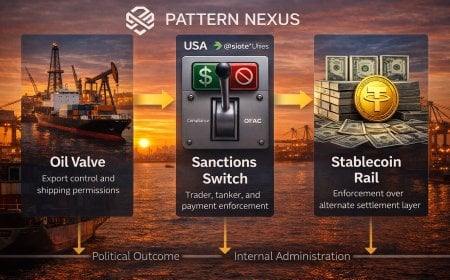
The White House is now openly boasting about seizing a “very large” oil tanker off the coast of Venezuela – described on camera as the largest tanker ever taken. No resistance, no casualties, carefully planned, clean op. In other words: a made-for-TV demonstration that the United States is willing to reach into Venezuela’s maritime perimeter and physically intercept the regime’s energy lifeline.
What Just Happened
- Maritime interdiction goes live. The tanker seizure is not a one-off stunt; it is a proof-of-concept for a repeatable playbook: identify sanctioned cargo, execute a precision grab, and parade the success in front of cameras as both domestic theater and foreign deterrent.
- Airspace lockdown + tanker grab = coherent strategy. The earlier move to effectively “close” Venezuelan airspace looked, at first, like signaling. In hindsight, it was Step One of a broader coercive framework. Step Two is interdiction of shipping. Step Three is whatever follows when a cornered regime decides it has nothing left to lose.
- Rules-based order, selectively applied. By framing this as law-enforcement against illicit oil flows, Washington wraps a hard-power maneuver in legal language. But from Caracas, Moscow, Tehran, and Beijing, the signal is much simpler: the U.S. is willing to treat your tankers as fair game if you cross its red lines.
- Risk premia are migrating to the Caribbean Basin. Every seized vessel, every additional patrol, and every new insurance exclusion zone slowly rewrites the risk map for global energy flows. The market has not fully priced this yet.
How This Changes the Flashpoint
When this article first went live, the base case was a prolonged standoff: NOTAMs, saber-rattling, and signaling flights over the Gulf of Venezuela. The tanker seizure changes the regime from posturing to operational pressure. We are no longer in the realm of “what if.” The United States has now demonstrated that it will physically interdict assets tied to the Venezuelan state and its partners.
- Short-term (next 2–4 weeks): Expect more aggressive maritime inspections, expanded patrol patterns, and a steady drip of “successful operations” pushed into the news cycle. Each one normalizes the idea that U.S. forces can operate in and around Venezuelan waters with minimal pushback.
- Medium-term (next 1–3 months): The probability of a de facto naval cordon or limited blockade rises sharply. Even without a formal declaration, you can recreate most of the economic effect simply by making shipping insurers and captains too nervous to touch Venezuelan barrels.
- Structural risk: Once a great power starts seizing tankers under the banner of sanctions enforcement, other actors take notes. The precedents set here do not stay in the Caribbean; they bleed into the Persian Gulf, the South China Sea, and any other contested corridor where energy, sanctions, and power projection intersect.
Pattern Nexus Lens
This is why I keep saying the odds of a Venezuela operation are spiking. You do not build an airspace lockdown, surge ISR assets, posture naval forces, and then start grabbing tankers if your plan is to quietly back down. You do that when you are preparing markets, allies, and domestic audiences for a long campaign of pressure that may or may not stop short of direct kinetic conflict.
Think of this tanker as the first visible move in a much longer script. The Caribbean has shifted from a background theater to a front-line testbed for how Washington intends to manage hostile petro-regimes in an era of tight energy balances, AI-driven logistics, and increasingly fragile global supply chains.
This article below walks through how we got here: the airspace lockdown, the repositioning of assets, and the structural incentives pushing the United States toward confrontation in Venezuela. Today’s events are not a surprise; they are the next chapter.
Scroll down for the full original analysis. The situation is no longer hypothetical. It is now playing out in real time.
Update – December 5, 2025: Carrier Group Positioning Confirms the U.S. Is Building a Three-Layer Strike Box Around Venezuela
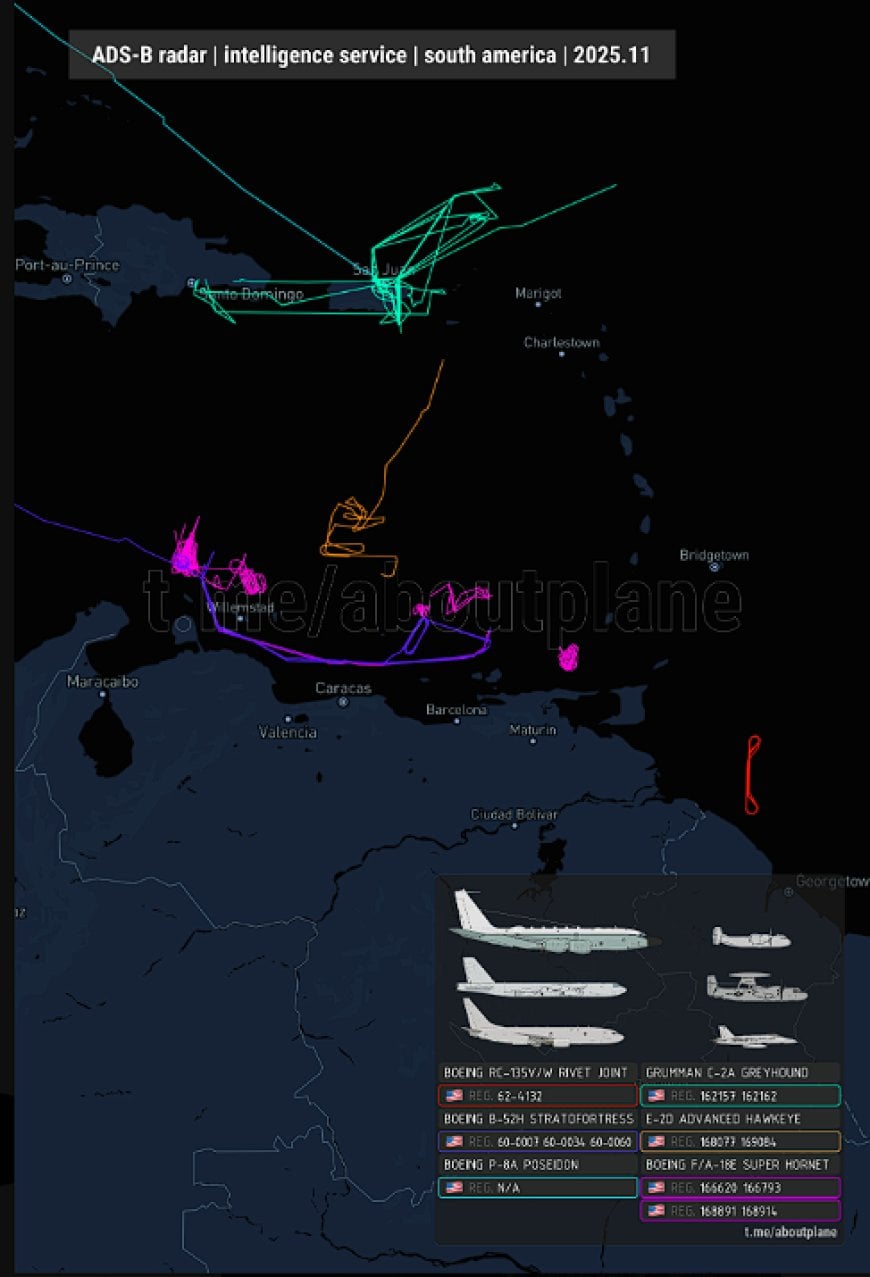
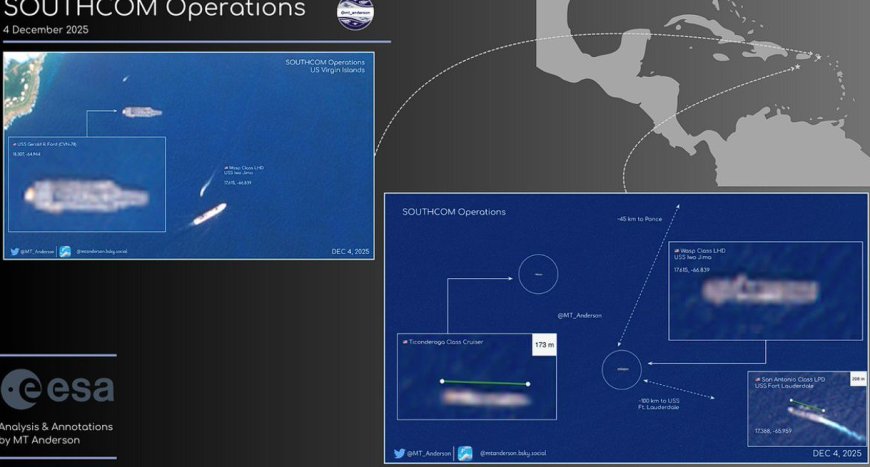
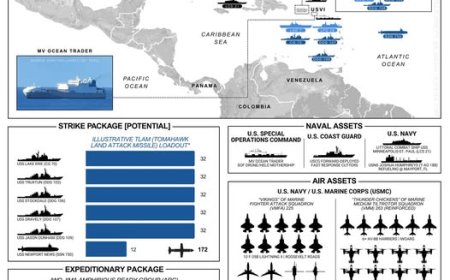
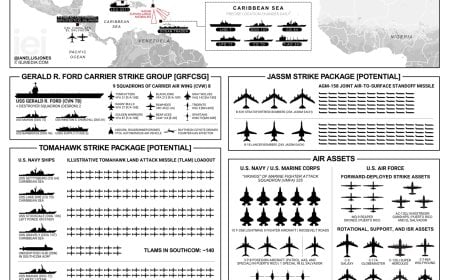
The second image — new ESA satellite captures from December 4 — shows something far more strategically decisive than the ADS-B radar picture alone: a dispersed, multi-vector naval posture consistent with a pre-decisional strike window.
What the new satellite imagery reveals
Three things stand out immediately:
- USS Gerald R. Ford (CVN-78) operating unusually far south for a carrier of its class — close to the U.S. Virgin Islands, inside rapid-response range of Venezuela’s northern coast.
- USS Iwo Jima (Wasp-class LHD) — an amphibious assault ship — positioned in tandem with Ford, suggesting a combined aviation / landing force package.
- San Antonio-class LPD (USS Fort Lauderdale) and a Ticonderoga cruiser operating on offset vectors, forming the classic “triangulated envelope” used before a strike or insertion event.
This is not posturing. It is not symbolic. This is a combat geometry — a deliberate spacing of assets to maximize strike options while minimizing vulnerability.
The pattern is unmistakable: ISR mesh + naval envelope = pre-action shaping
The ADS-B maps already showed dense ISR orbits probing Venezuelan air-defense behavior. Now the naval picture completes it. When you overlay the two images, what emerges is a three-layer U.S. escalation system:
- ISR Saturation Layer – Rivet Joint, P-8, AWACS mapping every radar cycle, comms hop, and mobile launcher movement.
- Maritime Pressure Layer – amphibious ships and cruisers positioned to blockade, strike, or launch covert teams.
- Carrier Aviation Layer – deep strike and air superiority coverage inside a 20–40 minute flight window.
This is how you “lock” a regime into a cage without formally declaring anything. Washington is building a conditional kill box — a geometry that stays dormant until triggered.
Is the U.S. trying to bait Maduro?
More than before, the answer now leans toward yes — decisively. The ISR flights are flying deliberately provocative orbits. The carrier and amphibious groups are positioned specifically to capitalize on any Venezuelan misstep.
The Pentagon is giving Maduro two choices:
- React — and give Washington a legal pretext.
- Don’t react — and allow the U.S. to continue reconnaissance and shaping operations unchecked.
Either option weakens him. This is textbook coercive pressure doctrine.
This is how you prepare for rapid ground insertion without massing troops
People think “ground operations” means Iraq 2003. What this picture shows is different: a small-footprint, high-precision, amphibious-supported insertion capability with:
- Marine recon units
- MARSOC and JSOC teams
- Carrier aviation in overwatch
- ISR feeding real-time targeting
Think Panama 1989 meets Syria 2018, not Iraq.
Conclusion: The U.S. isn’t preparing for a war — it’s preparing for a moment
Everything now points toward a strategy built around a catalytic event — a radar lock, a missile launch, a boat confrontation, a shootdown — something the U.S. can classify as “hostile action.”
And once that moment comes, this naval configuration will activate instantly.
Sources
- ESA Satellite Imagery – SOUTHCOM Operations (Dec 4, 2025)
- ADS-B Intelligence Aggregation – Caribbean Theater
- Publicly Confirmed SOUTHCOM Vessel Movements (Nov–Dec 2025)
Soon... https://t.co/IZT6NhTugB
— Conflict Radar (@Conflict_Radar) December 3, 2025
Update – December 3, 2025: The Flashpoint Has Shifted Into a New Phase
The geopolitical temperature in the Caribbean basin has risen sharply in less than 24 hours. President Trump’s new statement — “We’re going to start very soon on land” — is not just rhetoric. It is a strategic confirmation of what signals intelligence, flight data, naval movement, and airspace behavior have been telegraphing for weeks: the U.S. is preparing to transition from offshore pressure to on-the-ground operations aimed at destabilizing or dismantling the Maduro regime’s external networks.
This shift represents the third stage of the escalating pattern already visible: (1) Long-duration NOTAMs restricting Venezuelan airspace. (2) Constriction of commercial flight routes and GPS anomalies across the southern Caribbean. (3) Now, verbal confirmation that kinetic ground activity is approaching.
New FAA bulletins issued in the last 48 hours point to a classified threat profile that is more severe than previously acknowledged. Wording around “increased military activity, degraded navigation reliability, and elevated operational unpredictability” aligns with situations where radar systems are being actively repositioned or where air-defense assets are on standby for engagement. This type of environment historically precedes either covert U.S. insertion or a direct strike window.
Airlines across the hemisphere are responding accordingly. Major carriers have now suspended or rerouted traffic not only over Venezuela but also along approach corridors to its southwestern border — the precise region where the U.S. issued long-duration NOTAMs several days earlier. That zone, bordering Brazil and Colombia, is part of the suspected trafficking network Washington has publicly tied to the Maduro regime. The timing is too synchronized to be coincidence.
On the maritime side, multiple open-source naval tracking platforms have flagged unusual patterns in U.S. vessel movement. Logistics and support ships — the kind that often accompany special operations deployments — have shifted into a holding posture south and southeast of Puerto Rico. Meanwhile, ISR aircraft have been orbiting consistent patterns off Venezuela’s northern coastline, suggesting active target mapping or communications interception. This is strongly indicative of pre-operational shaping.
Satellite thermal data has also revealed intermittent hotspots near known air-defense sites, suggesting generator activity or system cycling. These are the behaviors of a regime preparing for the possibility of incoming strikes. The U.S. appears to be monitoring these fluctuations closely.
Trump’s interview adds the political layer to a military reality that was already in motion. His wording indicates that the White House now views the operational threshold as crossed — a signal to allies, intelligence partners, and domestic agencies to align with a high-readiness posture. The message is not merely aimed at Venezuela; it is aimed at the Western Hemisphere as a whole, clarifying that the era of strategic patience is over.
Internally, the Maduro government has begun emergency troop repositioning, massing units around key installations in Caracas, Maracaibo, Puerto Cabello, and the Orinoco Belt. These are classic defensive countermeasures taken when a regime expects either targeted raids or broad-spectrum disruption operations.
Soon... https://t.co/IZT6NhTugB
— Conflict Radar (@Conflict_Radar) December 3, 2025
This reinforces what Pattern Nexus readers have already seen emerging: the Caribbean is becoming the forward operating theater for a multi-domain confrontation. What started as airspace lockdowns has now matured into an operational architecture with three pillars: intelligence saturation, naval staging, and imminent land deployment.
Tonight, the strategic landscape is no longer defined by warnings or signals. It is defined by sequences. The sequence now points toward a U.S. action window that is opening — not in an abstract future, but imminently.
Soon... https://t.co/IZT6NhTugB
— Conflict Radar (@Conflict_Radar) December 3, 2025
The Signal People Missed: NOTAMs That Run Into 2026
The United States doesn’t issue long-term flight advisories over foreign territory unless it expects the operational environment to stay unstable for a while. The new security NOTAMs covering the Maiquetía Flight Information Region (SVZM FIR) — essentially Venezuelan airspace plus a big chunk of surrounding Caribbean sky — are written to run well into 2026.
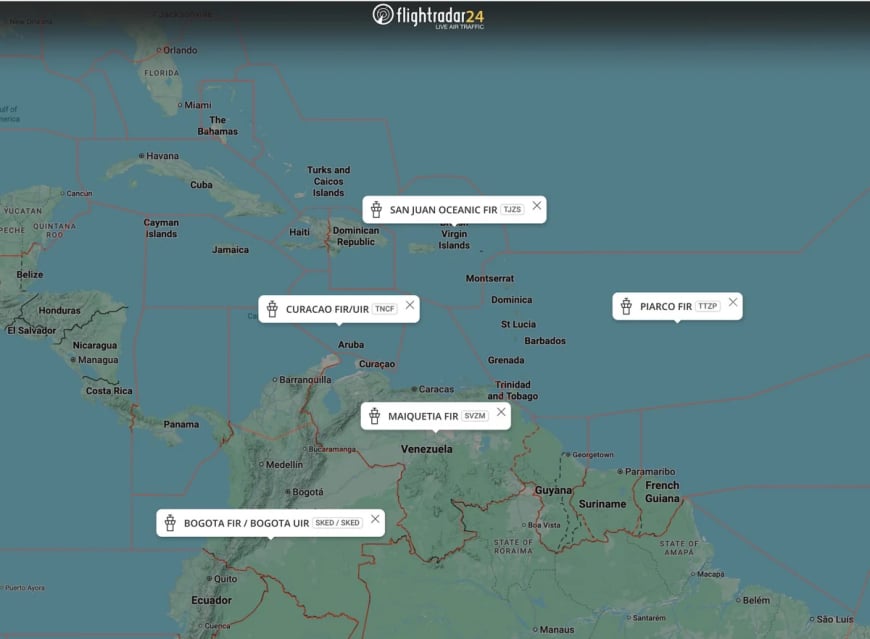
The warning language is blunt by bureaucratic standards: worsening security, heightened military activity, potential threats to aircraft at all altitudes, and explicit mention of navigation and GPS unreliability. That’s the FAA’s way of saying:
- There is more metal in this sky than there used to be.
- Some of it can shoot back.
- You can no longer trust the electromagnetic environment to behave.
Functionally, the NOTAM creates a standing air-caution zone for the entire region. You don’t need a formal “no-fly zone” when insurers, flight ops chiefs, and regulators all quietly come to the same conclusion: this sky is now contested. This is the first move on the chessboard — sterilize the air domain for civilians so the military and intel community have room to maneuver.
The Airline Exodus: When Carriers Pull Out, It’s Never Random
Within days of the security advisory, international carriers started to disappear from Venezuela. Routes were “suspended,” schedules “adjusted,” and flight plans re-drawn to avoid the SVZM FIR altogether. On paper, these are business decisions. In practice, they’re a referendum on risk.
- Flag carriers in Europe and Latin America halted or paused Caracas routes and began filing routings that bend around Venezuelan airspace like it’s a thunderstorm you don’t want to test.
- Some airline groups extended suspensions into late 2025 and 2026, making it clear they do not expect a quick normalization.
- War-risk insurers re-priced the corridor as a near-conflict zone, pushing premiums high enough that a marginal route instantly becomes a bad business decision.
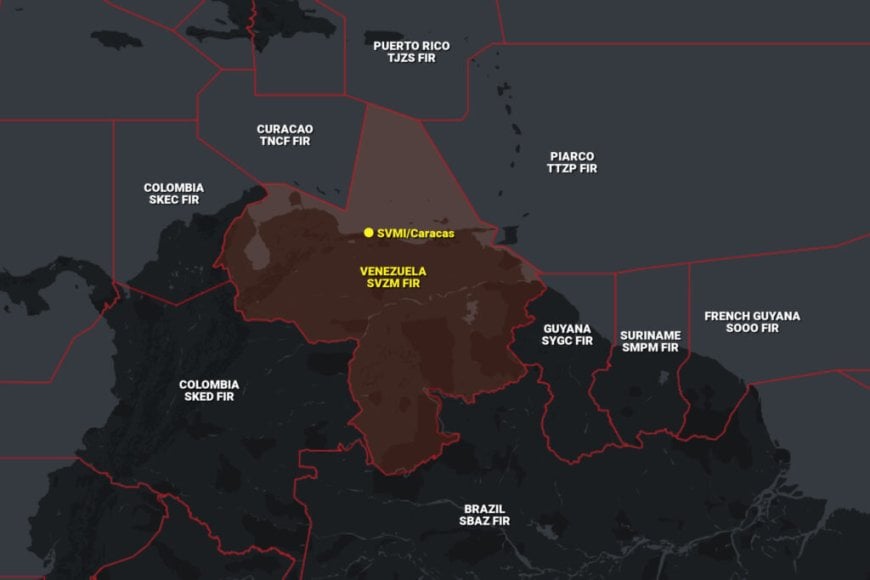
When commercial aviation abandons a country en masse, that absence is a hard data point. Airlines are ruthlessly apolitical when it comes to risk. They don’t care about talking points; they care about loss probabilities, legal exposure, and balance sheets. If they’re gone, it’s because every important model in the background lit up red at the same time.
This is the part almost nobody prices in: once airspace becomes “toxic” in the models, it doesn’t flip back to normal overnight. It lingers. That tells you how long the system expects this tension to last.
Official Airspace Shutdown: From Warning to Command
The technical language from the FAA was one signal. The political language from the White House was another.
On November 29, 2025, President Donald J. Trump announced that “THE AIRSPACE ABOVE AND SURROUNDING VENEZUELA” should be considered “CLOSED IN ITS ENTIRETY.” The message was addressed not just to airlines and pilots, but explicitly to “Drug Dealers and Human Traffickers.” It’s pure Trump: caps, theatrical framing, no legal footnotes.
Strip out the showmanship and you’re left with a clear intent:
- Tell every commercial operator that, in Washington’s view, flying there is now on them.
- Tell adversaries and intermediaries that any aircraft in that box can be interpreted as fair game if things escalate.
- Tell the world that the United States is willing to treat Venezuelan airspace as a quasi-blockaded zone without going through the motions of declaring one.
Caracas called it a “colonial threat” and a violation of sovereignty. Iran and other allies echoed the language, framing it as unilateral aggression and a hazard to global aviation. But from the administration’s perspective, that reaction is a feature, not a bug: the louder the outrage, the more Washington can argue it is standing up to a narco-state that doesn’t like being exposed.
Naval Build-up and ISR Expansion: The Caribbean as Forward Theater
The air moves only make sense when you overlay them on the water. Since late summer 2025, the United States has shifted from treating the Caribbean as a transit basin to treating it as a forward security theater.
Stack the deployments together and the picture looks like this:
- A carrier strike group and accompanying surface combatants repositioned to dominate the approaches to Venezuela and key trafficking routes.
- Attack submarines and special operations platforms forward-positioned for covert interdiction and intelligence-gathering.
- P-8 maritime patrol, AWACS-type command-and-control aircraft, and signals-intelligence platforms running persistent orbits along the Venezuelan periphery.
- Expanded use of Caribbean bases and revived infrastructure as logistics hubs, maintenance nodes, and potential launch pads for more aggressive options.
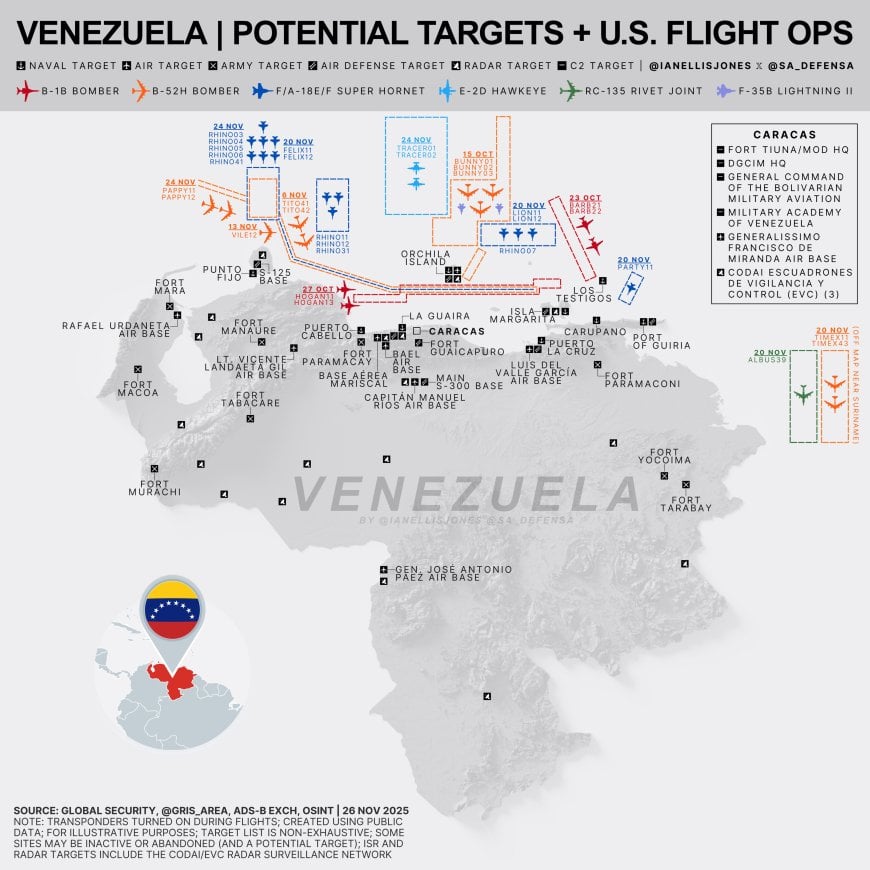
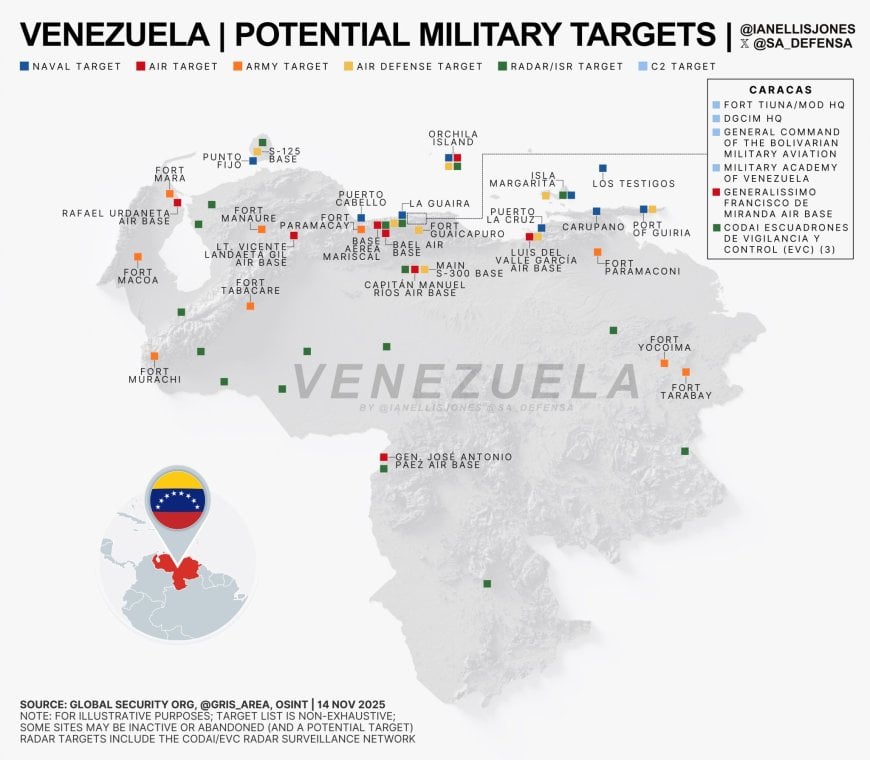
This isn’t a “show the flag” port visit cycle. It’s a tightly coupled ISR–strike–logistics architecture closing a box around Venezuela. If you’ve read my earlier pieces on “Caribbean standoff” and the quiet re-militarization of the hemisphere, this is exactly how a modern great power sets conditions: deny ambiguity, dominate the commons, and keep escalation ladders within arm’s reach.
Covert Phase and Cartel Pressure: What the Administration Says It’s Doing
Publicly, the Trump administration insists this is not about “war with Venezuela”; it’s about “war with narco-terrorists.” The internal talking points are built around a few core themes:
- The overdose crisis at home — more Americans dying each year from synthetic opioids and cocaine mixtures than fell in major twentieth-century wars.
- The portrayal of Venezuelan state actors, particularly the so-called Cartel de los Soles, as a fused narco–intelligence–military apparatus, not just corrupt individuals.
- The argument that allowing these networks to operate freely is indistinguishable from tolerating a hostile irregular force on the U.S. doorstep.
That framing matters because it unlocks a different toolkit. Once you treat traffickers as terrorists, you can:
- Use military force and intelligence capabilities well beyond traditional counternarcotics authorities.
- Invoke terrorism-related sanctions and financial designations to choke off funding and enablers.
- Frame operations — including lethal strikes on boats and infrastructure — as self-defense in a non-traditional conflict, rather than as acts of war on a sovereign state.
Under the surface, reporting points to a concerted covert phase: fusing maritime radar, satellite, and signals data into targeting packages; deploying special operations teams for interdictions and recoveries; and authorizing more aggressive rules of engagement on vessels believed to be moving drugs or serving as logistics nodes for cartel-state networks.
This is how you slowly convert a “drug war” into a quasi-military campaign without ever holding a formal “we are at war” press conference.
What Washington Is Saying: White House, Pentagon, and Congress
The White House: “Closed Airspace” and a “War on the Dealers”
From the Resolute Desk outward, the message is simple and brutal: the United States is done tolerating drug traffickers, and anyone standing between U.S. forces and those traffickers should rethink their life choices.
The President’s airspace post is the clearest version of this: no nuance, no legalese — just a blanket warning that the sky above and around Venezuela is now effectively off-limits. In speeches and interviews, senior officials have leaned hard on overdose numbers, repeatedly asserting that “more Americans are dying every year from poison pushed by these cartels than died in many of our major wars.” The subtext is obvious: if you accept those numbers, then kinetic action against the networks supplying that poison becomes easier to sell to the public.
The Pentagon: Lawful Orders and “Narco-terrorist” Framing
At the Pentagon podium, the language is more careful but points in the same direction. Defense officials describe current actions as “limited, lawful operations against narco-trafficking networks” in international waters and near Venezuela, conducted under existing legal authorities and the law of armed conflict.
When reporting emerged that Defense Secretary Pete Hegseth allegedly ordered a follow-up strike on a drug-smuggling boat to kill survivors, the Department of Defense denied wrongdoing and labeled the story “false” and “misleading.” But they did not deny the basic pattern: U.S. forces have carried out dozens of lethal boat strikes in the Caribbean and eastern Pacific since September, killing scores of people identified as traffickers.
In other words: the Pentagon insists the campaign is legal and disciplined — but the volume of strikes, and the allegations about second-strike behavior, are forcing the rest of Washington to treat this as something much bigger than routine counternarcotics.
Congress: War Powers, War Crimes, and a Split Legislature
On Capitol Hill, you can feel two different instincts colliding.
On one side, a cluster of lawmakers — especially on the Democratic foreign affairs and armed services benches — are sounding the alarm on war powers. They’ve introduced War Powers Resolutions in both chambers to block unauthorized boat strikes and prevent the administration from escalating toward attacks on Venezuelan territory without explicit congressional authorization. Some bills have been blocked by narrow party-line votes in the Senate, but the message is clear: “You don’t get a blank check to turn a drug war into a shooting war with a sovereign state.”
On the other side, there is a bipartisan group — including some Republicans — who are less focused on war powers in the abstract and more focused on alleged conduct in the field. After the Washington Post reported that Hegseth verbally ordered “kill them all” on a September operation and authorized a second strike to hit survivors, lawmakers from both parties began talking openly about potential war crimes, violations of the laws of armed conflict, and the need for urgent investigations.
Senators on the floor have used language that, a few years ago, would have been unthinkable about a sitting defense secretary: calling such a directive, if true, “a clear war crime” and “an unacceptable abuse of power.” House and Senate Armed Services leaders have promised full hearings. Progressive members are pushing to reclaim the war powers role that Congress has gradually ceded since 2001. More traditional institutionalists worry not just about this administration, but about what happens if this pattern becomes the new normal.
Fold all of that together and you get a Washington consensus that is anything but. The executive branch is leaning into a hard-power campaign against a narco-state. Congress is split between those who want to cheer it on, those who want to slow it down, and those who want to drag it back under constitutional control before it locks into a new forever-conflict.
Why Now? The Deep Pattern Behind the Escalation
Energy chokepoints and resource flows
Venezuela is not just a broken petrostate with bad politics. It sits at the intersection of Caribbean shipping lanes, offshore resource basins, and future energy infrastructure pathways. In a decade where AI build-out is sucking in electricity, gas, and liquids like a black hole, the United States cannot ignore a chokepoint zone that is simultaneously unstable, criminalized, and aligned with rival powers.
In earlier Pattern Nexus pieces, we mapped how LNG terminals, refinery networks, and future undersea cable routes create a ring around the Caribbean. Put a cartel-state with external patrons inside that ring, and you’ve created a structural vulnerability in the very decade when you most need resilience. What’s happening now is the “security layer” catching up to the “energy layer.”
Monetary plumbing, sanctions leakage, and illicit capital
The dollar system is entering its most fragile stretch in a generation: massive debt, political gridlock, and an eventual need for renewed liquidity injections later this decade. In that world, the United States cannot afford too many pressure-relief valves where sanctions evasion, narco-dollars, and gray-market flows quietly leak around formal controls.
A cartel-infused state network with oil, gold, and access to friendly foreign banks becomes more than a nuisance — it becomes a live bypass route around the world’s main financial pipe. Smashing or constricting that bypass is as much about protecting the future of U.S. monetary hegemony as it is about drugs on the street.
Hemispheric security and the “near abroad” doctrine
For decades, the U.S. national security establishment has quietly treated the Western Hemisphere as a near abroad that must not host serious threats. That doctrine went semi-dormant while Washington was consumed by the Middle East and Asia. It’s back.
From this lens, Venezuela is not just “a problem in South America.” It’s a test case for whether the U.S. still has the will and capacity to sterilize its neighborhood when a regime fuses with organized crime, partners with hostile powers, and sits on top of critical routes and resources. The moves we’re seeing now — NOTAMs, naval build-up, sanctions, war powers fights — are the point where that doctrine reconverges with reality.
How Venezuela Might Respond: Guerrilla Strategy and Asymmetric Resistance
Venezuela’s conventional military cannot win a straight-up fight with the United States. Everyone in Caracas and Washington knows that. So the planning on the Venezuelan side is drifting in a different direction: protracted resistance, not decisive battle.
In practical terms, that likely means:
- Decentralized guerrilla tactics aimed at U.S. assets, proxies, and local partners if operations cross into Venezuelan territory.
- Sabotage against coastal infrastructure, radar sites, port facilities, and possibly energy installations to raise the operational cost of any sustained campaign.
- Leveraging dense urban terrain and loyalist strongholds to make any ground incursion — even small raids — politically toxic and tactically messy.
- Maximizing information warfare and diplomatic outreach, framing every U.S. strike as neo-colonial aggression designed to seize oil and crush sovereignty.
Caracas can’t stop a carrier group. It can, however, bleed time, create headlines, and erode the domestic and international political support Washington needs to keep a high-tempo campaign running. That asymmetry is the only real card Maduro’s system still holds — which means you should assume they intend to play it.
What This Means for 2026: Scenarios and Risk Profiles
Scenario 1: Sustained Gray-Zone Pressure (Baseline, High Probability)
The status quo stretches out. U.S. naval and air presence remains heavy. Boat strikes and interdictions continue against traffickers and suspected cartel assets. Airspace stays effectively closed to commercial carriers. Sanctions and financial pressure tighten further. Venezuela is slowly squeezed but not broken; the regime survives in a weaker, more paranoid, and more externally dependent form.
Scenario 2: Targeted Strikes and Infrastructure Degradation
In a step up the ladder, Washington opts for more frequent, more visible, and more strategic strikes — not just on boats in international waters, but on shore-based infrastructure linked to trafficking networks and state-backed militias. Oil-adjacent facilities, clandestine airstrips, depots, and communications nodes become targets. Officially, it’s still a narco-terrorism campaign. In reality, it starts to look and feel like a limited air and maritime war.
Scenario 3: Limited Decapitation or Deep Strike Attempt (Low Probability, High Impact)
The highest rung — and the riskiest — is a direct attempt to kill or capture key regime or cartel leaders inside Venezuela. That could be a stand-off strike, a special operations raid, or some combination of both. A “successful” operation might shock the system into a new equilibrium. It might also kick off a long, ugly phase of retaliation, insurgency, and regional ripple effects. It is the scenario everyone in Washington claims they don’t want — but the force array now on the board is exactly the kind you build if you want the option available.
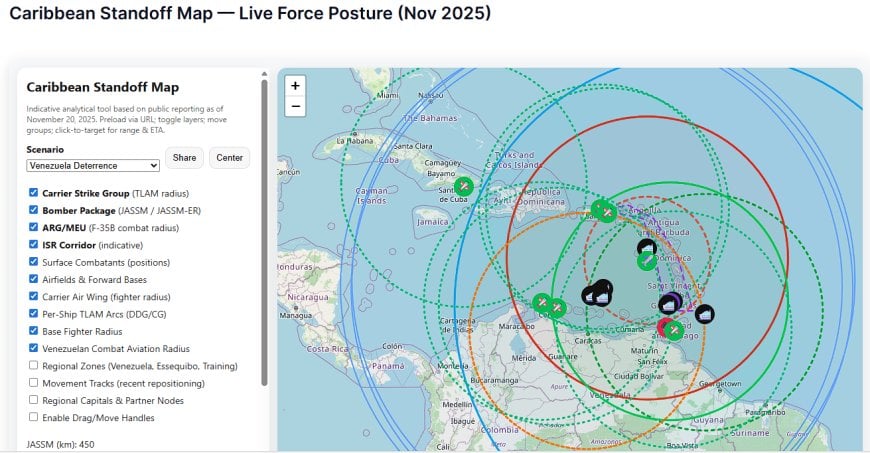
The Chessboard in One Picture: The Caribbean Standoff Map
The easiest way to see how all of this fits together — the airspace warnings, naval arcs, trafficking routes, energy flows, and political spheres — is to lay them on the same canvas. That’s what the Caribbean Standoff Map does: it overlays ships, bases, chokepoints, and probable covert corridors into a single operational picture.
FAQ
Q: Is the U.S. preparing for a full-scale invasion of Venezuela?
A: The force mix doesn’t look like Iraq 2003. It looks like a long, grinding air–sea–covert campaign aimed at cartel-state networks and strategic infrastructure, with ground troops kept offshore or in the shadows. That doesn’t rule out raids or deep strikes, but it does suggest Washington wants to avoid owning Venezuelan terrain.
Q: Could this destabilize global energy markets?
A: Yes, but mostly through risk premia and logistics frictions. Insurance costs for shipping, rerouting of tankers, and the perception that a key energy-adjacent zone is now a live theater all add volatility to an already fragile late-decade energy and macro backdrop.
Q: Why did airlines move so quickly to suspend flights?
A: Because their models told them to. FAA warnings, presidential “closed airspace” language, GPS interference reports, and heightened military activity all feed into the same risk engines. Once war-risk insurance and liability calculations cross a certain line, the route dies. No ideology required.
Q: Is Venezuela capable of meaningful military resistance?
A: In a conventional sense against U.S. naval and air power, no. In an asymmetric sense — guerrilla tactics, sabotage, proxy operations, cyber and information warfare — yes. The goal wouldn’t be victory on the battlefield; it would be to raise costs, create political blowback, and outlast Washington’s attention span.
Sources & Further Reading
• Reuters — U.S. warns airlines of potential hazards flying over Venezuela
• Reuters — Trump: Airspace above & around Venezuela should be considered closed
• AP News — FAA warns pilots about Venezuela due to worsening security situation
• Flightradar24 — U.S. issues security NOTAM for Venezuelan airspace
• The Guardian — Venezuela denounces U.S. airspace closure as ‘colonialist threat’
• Politico — Trump orders closure of Venezuelan airspace
• TIME — Trump says Venezuelan airspace is closed after strike threats
• Washington Post — U.S. sends 8 warships south on anti-cartel mission
• Al Jazeera — US warns civilian flights as military activity around Venezuela increases
• Pattern Nexus — Caribbean Standoff Interactive Map
Какова ваша реакция?
 Нравится
0
Нравится
0
 Не нравится
0
Не нравится
0
 Любовь
0
Любовь
0
 Смешно
0
Смешно
0
 Вау
0
Вау
0
 Грусть
0
Грусть
0
 Сердитый
0
Сердитый
0

Founder of Pattern Nexus. I research markets, macro, geopolitics, AI, history, ancient systems, and the patterns most people overlook. I’m also building Market Radar, a trading scanner designed to read pressure, risk, confirmation, and setup quality before chasing a move. Pattern Nexus is where I connect the dots between data, history, technology, and the bigger system playing out around us.












Комментарии (0)