

Analysis
Automatically indexed from the existing article tag.
Theses, forecasts, models, and paths
No published research objects yet
This topic is ready for editors to connect a thesis, forecast, model, or research path.
Latest articles
 Article · related
The Real Reason They Are Building Humanoid Robots: The End of Human Labor as the Foundation of the Economy
Humanoid robotics is not simply about building machines that walk, talk, and perform household chores. It is about creating a scalable physical labor force that can operate alongside artificial intelligence, transforming production, ownership, wages, consumer demand, and the monetary system. This analysis connects the robotics revolution to the wider Pattern Nexus framework: structural deflation, expanding liquidity, concentrated ownership, universal intelligence, programmable money, and the transition toward a post-labor economy.
Published Sep 21, 2026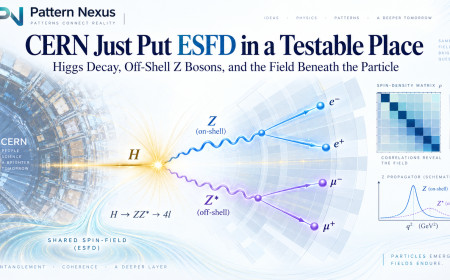 Article · related
CERN Just Put ESFD in a Testable Place: Higgs Decay, Off-Shell Z Bosons, and the Field Beneath the Particle
CERN’s ATLAS and CMS experiments have found strong evidence for entanglement in the spin structure of Higgs → ZZ* → 4ℓ decays. The result is real, but the off-shell Z* changes the way the process should be understood: the detectors measure four leptons and reconstruct the intermediate quantum-field state rather than directly watching two ordinary Z particles become entangled. This article converts the 6-3 Electromagnetic Spin-Field Dynamics framework into a Pattern Nexus analysis, separates established collider physics from ESFD hypotheses, corrects the Bell-locality overclaim, and defines the measurement ESFD now needs to calculate: the q²-dependent ZZ* spin-density matrix.
Published Sep 17, 2026 Article · related
Washington Turns the Hormuz Deadline Into an Oman Strike Threat
AP reported on August 17, 2026, that Trump again threatened Oman while Iran said it had reached an understanding with Muscat over a Strait of Hormuz transit route. A separate AP analysis said the 60-day U.S.-Iran deadline expired the same day with the sides still far apart over reopening Hormuz, lifting the U.S. blockade and defining Iran’s role. Reuters reported that Iran was threatening a more offensive posture in the strait if diplomacy failed, making the escalation a live maritime-control crisis rather than a routine diplomatic delay.
Published Aug 17, 2026 Article · relatedThe Sun, Liquidity, and Financial Turning Points: The Regression Missed the Regime
A corrected Pattern Nexus analysis of solar cycles, liquidity, recessions, and financial tops from January 1987 through July 2026. The first monthly regression rejected a short-horizon trading signal. The properly specified regime test found that all four U.S. recession onsets in the sample occurred within twelve months of an official solar maximum or minimum, recession months were sharply concentrated around those extrema, and M2 growth was faster on official solar rising legs.
Published Aug 10, 2026 Article · related
Iran Turns America’s Missile Stockpile Into a Two-Theater Deterrence Gap
Fresh reporting and defense analysis point to a widening U.S. magazine-depth problem. The Iran war has drawn heavily on long-range strike weapons and missile-defense interceptors, while replacement timelines for Tomahawk, THAAD and Patriot stocks are measured in years, not weeks. The strategic risk is that Russia and China do not need classified inventory data if they can observe which theaters are being stripped and how slowly the U.S. reloads.
Published Aug 8, 2026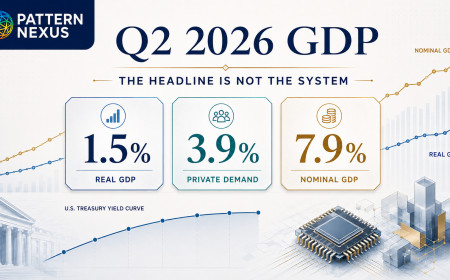 Article · related
GDP Slowed to 1.5%—But the U.S. Economy Did Not Weaken the Way the Headline Implies
Real GDP slowed to a 1.5% annual rate in Q2 2026, but the private domestic economy accelerated to 3.9% while nominal GDP grew 7.9%. This Pattern Nexus analysis separates the headline from the internal economy and explains what consumer spending, business investment, capital-goods imports, inflation, government accounting, Federal Reserve policy, and the 10-year Treasury signal actually mean.
Published Aug 4, 2026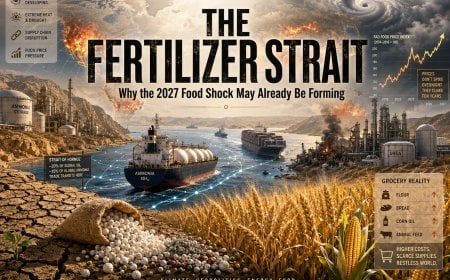 Article · related
The Fertilizer Strait: Why the 2027 Food Shock May Already Be Forming
Fertilizer prices, Persian Gulf disruption, a potentially historic El Niño, expanding drought risks, weak currencies, and fragile food-import systems are converging ahead of the 2027 growing cycle. This extended Pattern Nexus analysis examines more than 50 years of population, grain production, fertilizer, energy, climate, inventory, and food-price data to determine whether the world is approaching another major food-inflation and political-instability cycle.
Published Jul 24, 2026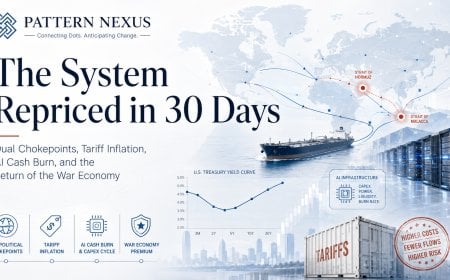 Article · related
The System Repriced in 30 Days: Dual Chokepoints, Tariff Inflation, AI Cash Burn, and the Return of the War Economy
In thirty days, the operating assumptions underneath the global system changed. Two maritime chokepoints came under pressure, the United States expanded war financing and rebuilt its tariff architecture, inflation moved back upstream, long-term yields repriced, AI infrastructure crossed into cash-burn territory, strategic minerals became permissioned leverage, and political command structures began cracking. This Pattern Nexus analysis maps those events as one connected system rather than separate headlines.
Published Jul 24, 2026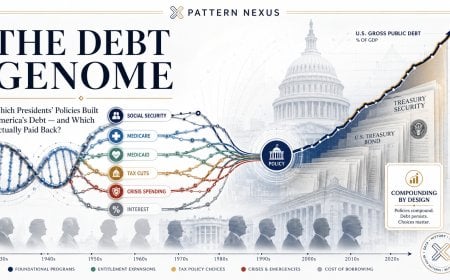 Article · related
The Debt Genome: Which Presidents’ Policies Built America’s Debt—and Which Actually Paid Back?
A 70-year counterfactual audit of presidential policy, inherited law, tax cuts, entitlements, crisis packages, and the compounding interest tail. The analysis separates who originated a policy from who expanded, extended, financed, or weakened it—and distinguishes Treasury cost from social return.
Published Jul 19, 2026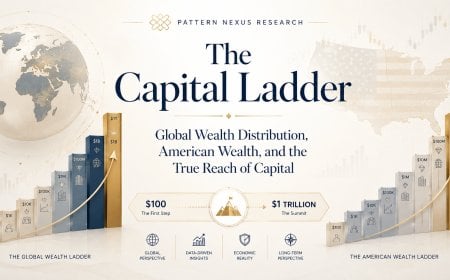 Article · related
The Capital Ladder: Where $100 to $1 Trillion Places You in the Global and American Wealth System
A deep Pattern Nexus regression and data analysis mapping where net worth levels from $100 to $1 trillion place an individual within the global and American wealth distributions. The research separates actual net worth from liquidity, accessible credit, gross capital control, leverage, and daily capital-producing capacity. Where do you actually sit within the global wealth system—and how does that position change when we measure not only what you own, but how much capital you can access? This research maps wealth levels from $100, $500, and $1,000 through $1 million, $1 billion, $100 billion, and the theoretical $1 trillion threshold. Global and American wealth distributions are analyzed separately using regression models, percentile estimates, Federal Reserve household data, international wealth-distribution research, and 17 original charts and visualizations. The analysis distinguishes net worth from liquid wealth, available credit, collateral-backed borrowing capacity, and gross capital controlled. It then models how productive leverage can accelerate wealth growth, how destructive leverage can erase equity, and how much daily capital output different levels of wealth may generate. Net worth measures ownership. Liquidity measures deployability. Credit measures reach. Leverage amplifies the result. Capital efficiency determines whether that amplification creates wealth or debt.
Published Jul 10, 2026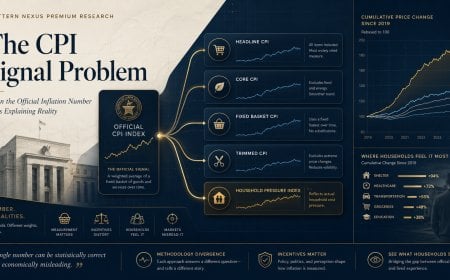 Article · related
The CPI Signal Problem: When the Official Inflation Number Stops Explaining Reality
A Pattern Nexus data analysis audit using official BLS CPI data from 1960 through April 2026 to compare headline inflation against fixed-basket, current-method, and trimmed-basket frameworks.
Published Jun 10, 2026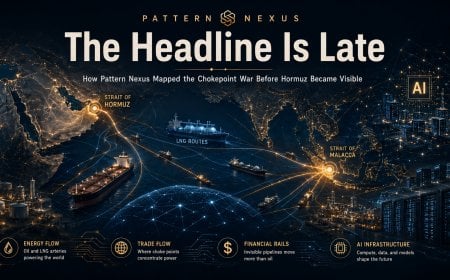 Article · related
The Headline Is Late: How Pattern Nexus Mapped the Chokepoint War Before Hormuz Became Visible
The Iran-Hormuz crisis did not create the Pattern Nexus framework. It exposed it. For months, Pattern Nexus had already been mapping the deeper system beneath the headlines: liquidity plumbing, QT, reverse repo, QE 2026, AI power demand, stablecoin rails, Treasury collateral, Western Hemisphere force posture, energy chokepoints, China’s routing vulnerability, and the shift from globalization to permission. This long-form analysis uses the video transcript as an alignment test, then ties it back into the Pattern Nexus archive to show the real timeline: the headline arrived late because the structure moved first.
Published May 7, 2026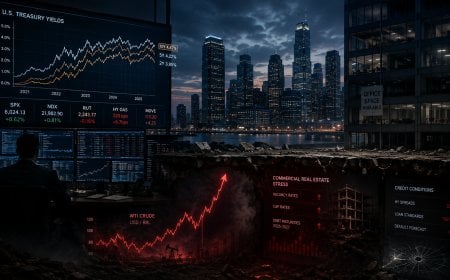 Article · related
Interest Rates, Recession, and the Current Environment
A Pattern Nexus deep research analysis on interest rates, recession risk, energy-led inflation, commercial real estate stress, private credit, AI labor pressure, and why the current environment feels like 2006 without being a direct replay of 2008.
Published May 5, 2026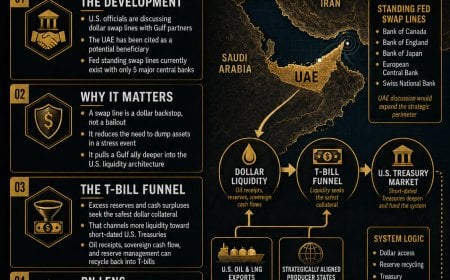 Article · related
UAE, Swap Lines, and the T-Bill Funnel: The New Oil Order Is Being Built Through Liquidity Rails
A Pattern Nexus analysis on the UAE leaving OPEC/OPEC+, U.S. dollar swap-line discussions, the T-bill funnel, and how oil, LNG, reserves, security, and Treasury demand are becoming one U.S.-anchored system chain.
Published May 1, 2026 Article · related
The Knowledge Layer Is Starting to Look Fragile
A Pattern Nexus research-level analysis of missing scientists, dead researchers, sensitive research nodes, aerospace and nuclear-adjacent disappearances, and the 6/6/2026 Green Jar cipher as symptoms of a fragile knowledge layer.
Published Apr 28, 2026 Article · related
Why I’ve Been Quiet
A Pattern Nexus analysis of Iran, markets, inflation, control structures, labor softness, AI disruption, and the broader geopolitical and economic pressure building beneath the surface.
Published Apr 11, 2026 Article · related
McDonald’s Did Not Bring Back Value Because It Felt Nostalgic. It Did It Because the System Sees Demand Breaking.
A Pattern Nexus analysis of McDonald’s new under-$3 menu as a signal on consumer stress, franchise economics, real-estate control, fast-casual pressure, and the broader architecture of demand destruction.
Published Apr 4, 2026 Article · related
Artemis II Launches: Reopening the Deep-Space Stack
Artemis II has launched, but the real story is bigger than a lunar flyby. This Pattern Nexus analysis breaks down why the first crewed SLS-Orion mission matters as a systems return, a transport-layer test, and the opening move in the long view on space.
Published Apr 1, 2026 Article · related
March Ends With the System Showing Its Seams
A Pattern Nexus end-of-March 2026 master analysis on Hormuz, oil repricing, liquidity stress, inflation pressure, AI infrastructure, Moon Base acceleration, sovereignty, domestic pass-through, and why the system is showing its architecture again.
Published Mar 31, 2026 Article · related
NASA’s Moon Base, MoonFall, Nuclear Missions, and the Drone Layer of Mars
A Pattern Nexus analysis of NASA’s 2026 surface-first lunar architecture, MoonFall hopper drones, lunar nuclear power, nuclear-electric Mars plans, and the next rotorcraft layer after Ingenuity.
Published Mar 26, 2026 Article · related
The Hormuz Theory: Could a Coastal Safe Zone Become the Front Edge of a Long War in Iran? -->
A Pattern Nexus scenario analysis on whether a fight to reopen the Strait of Hormuz could expand into a coastal safe-zone strategy, proxy warfare, and a much longer regime-pressure campaign inside Iran.
Published Mar 26, 2026 Article · related
Living Under the Shadow of Collapse
Why collapse narratives spread faster than serious analysis, how fear reshapes behavior long before systems break, and how liquidity, incentives, and control systems quietly decide who freezes and who moves.
Published Feb 4, 2026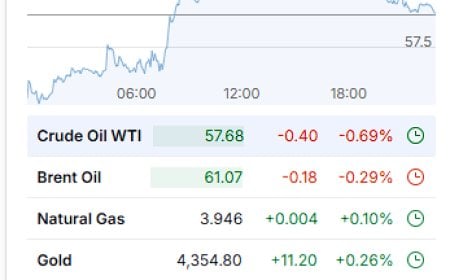 Article · related
Market Wrap-Up 12/29/2025: Commodity Unwind, Yield Signals, and Year-End Rotation
A holiday-shortened week saw stocks slip while commodities faced intense volatility, metals plunged, and crypto fell. This is the full Pattern Nexus market wrap-up with charts, news, and liquidity analysis.
Published Dec 29, 2025 Article · related
Pending Home Sales Confirm the Hard-Asset Rotation — Not a Housing “Surprise”
November pending home sales rose 3.3% month over month and 2.6% year over year, confirming a liquidity-driven rotation within hard assets. This analysis explains why housing strength can coincide with gold and silver weakness, and why “housing is overvalued” misunderstands credit, currency, and easing dynamics.
Published Dec 29, 2025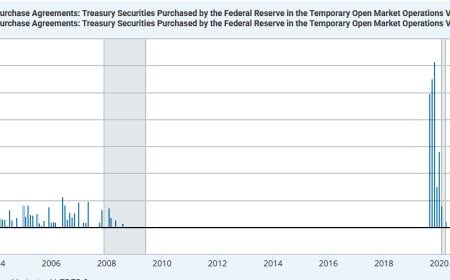 Article · related
The 10-Year Treasury Pattern and the Return of Repo Operations
The 10-Year Treasury has repeatedly stalled near long-cycle resistance while overnight repo operations have quietly returned after QT. This analysis examines how funding markets, balance-sheet capacity, and rate control interact beneath headline narratives.
Published Dec 29, 2025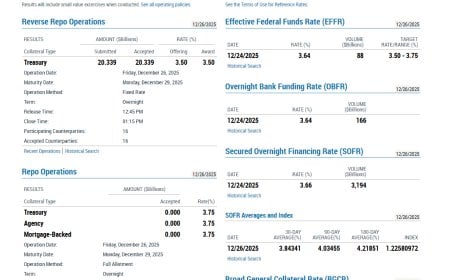 Article · related
Orderly Stress: Why Repo Stability Is Masking Deeper Collateral Strain
Repo markets remain orderly even as settlement fails and benchmark collateral strain emerge. This analysis explains why stable SOFR, modest ON RRP and MBS repo usage, and limited Fed operations can coexist with deeper stress in collateral mobility and dealer balance sheets.
Published Dec 26, 2025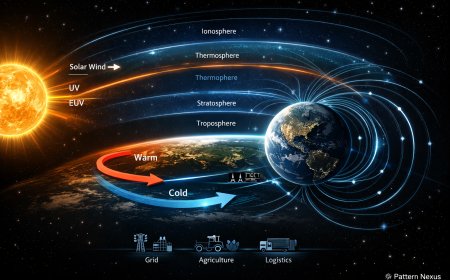 Article · related
Earth’s Climate Is a Control System, Not a Thermostat
Climate risk is dominated by circulation stability, not surface averages. This analysis maps solar spectral variability, geomagnetic forcing, stratosphere–troposphere coupling, and AMOC heat transport into a single control-system model that explains why volatility and regional cold shocks can rise even in a warming mean.
Published Dec 20, 2025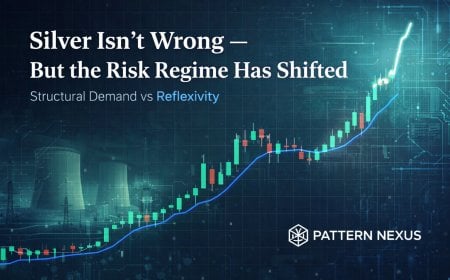 Article · related
Silver Isn’t Wrong — But the Risk Regime Has Shifted
Silver can be structurally bullish while becoming tactically dangerous. This Pattern Nexus analysis breaks down four historical and modern silver charts to explain why vertical moves change risk, even when the long-term thesis remains intact.
Published Dec 19, 2025 Article · related
The Thailand–Cambodia Flashpoint: Managed Instability Comes to Southeast Asia
The Thailand–Cambodia border conflict is not a local anomaly. It is a repeatable flashpoint where alliance hedging, great-power leverage, and managed instability intersect. A Pattern Nexus systems-level analysis.
Published Dec 16, 2025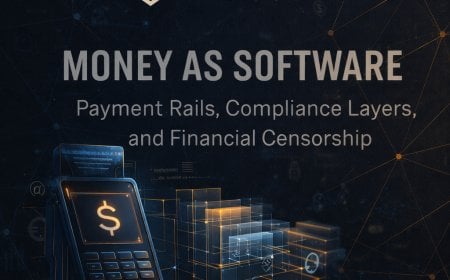 Article · related
Money as Software
An in-depth systems analysis of how money evolved from a sovereign instrument into programmable infrastructure, where payment rails, compliance stacks, and settlement systems now function as primary mechanisms of power and enforcement. Modern money is no longer neutral currency—it is software. Payment rails, compliance layers, settlement systems, and financial risk controls now function as invisible governance, enforcing outcomes without legislation.
Published Dec 16, 2025