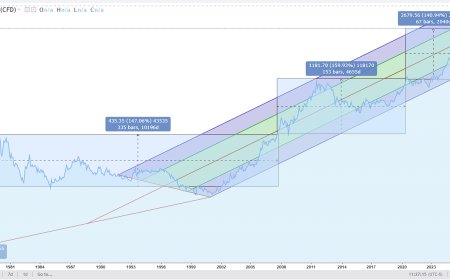
 Editor-written summary
Gold’s long-term rise is not a speculative breakout or inflation panic. It reflects repeated policy constraint, failed normalization, and the permanent reintroduction of liquidity to preserve funding stability. This report explains why gold has become system infrastructure inside the modern liquidity regime.
Inside this report
- Executive Summary
- What the Chart Is Actually Measuring
- The Channel Is the Regime
 Editor-written summary
A systems-level framework for understanding modern economies beyond narratives. Pattern Nexus examines liquidity, assets, production, technology, and human behavior through structure, scale, and constraints rather than ideology or belief.
Inside this report
- Summary
- How This Framework Is Oriented
- First Principles
 Editor-written summary
The tax system taxes transactions, not wealth. Learn how borrowing against appreciated assets allows individuals to legally fund their lives without triggering income or capital gains taxes—and why this is a structural feature of modern finance, not a loophole.
Inside this report
- Executive Summary
- The Income Illusion
- Why Taxes Follow Events, Not Wealth
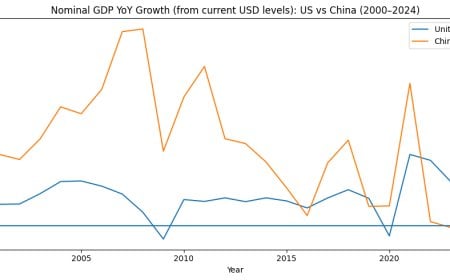 Editor-written summary
A data-driven breakdown of U.S. versus China economic growth from 2000–2024, showing why China failed to overtake the United States despite years of projections. Using GDP levels, growth rates, and scale mathematics, this report explains how demographics, housing collapse, trade regimes, and financial infrastructure reshaped the outcome — and why marginal U.S. growth now moves the global system.
Inside this report
- Summary
- The First Trick: What “Largest Economy” Even Means
- Currency Translation: Why Nominal USD Is a Different Game
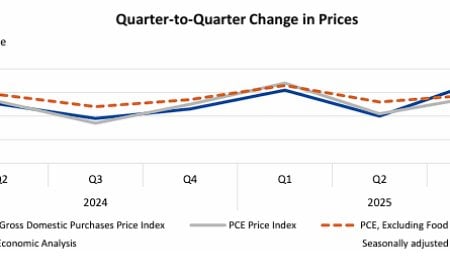 Editor-written summary
Q3 GDP says the economy is strong. The data says households stopped fixing cars, homes, and appliances to survive. This is the household maintenance recession — and it’s invisible in GDP.
Inside this report
- The Household Maintenance Recession
- Executive Summary
- The Headline vs the System
 Editor-written summary
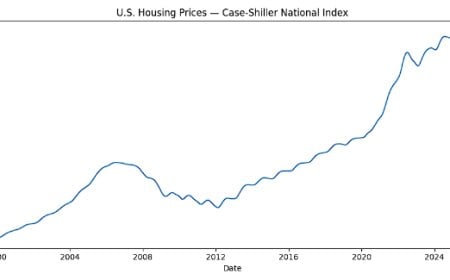
Gold’s 2025 repricing didn’t happen in isolation. Measured in gold, U.S. housing has quietly lost 40–50% of its value without a nominal crash. This article breaks down the hard-asset divergence, why it can’t persist, and how housing may reprice despite poor affordability.
Inside this report
- Gold Didn’t Just Reprice — It Forced a Housing Reckoning
- PN Executive Study
- Executive Summary
 Editor-written summary
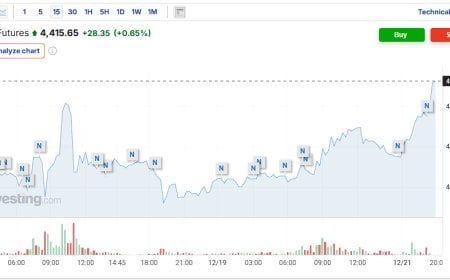
Gold didn’t fail or stall after QT ended — it repriced early and is now consolidating at a higher structural level. An updated Pattern Nexus breakdown on gold’s role in the current liquidity regime.
Inside this report
- Executive Summary
- Recap: The Original Thesis
- Phase Dynamics: Why QT Ending and QE-lite Don’t Produce Moonshots
 Editor-written summary
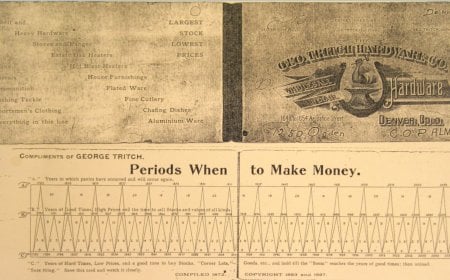
A deep Pattern Nexus breakdown of Samuel Benner’s 19th-century market cycle chart and why it still aligns with modern financial stress windows. This article explains the mechanics behind the “2026 crash chart,” why it appears accurate, what it gets wrong, and how to use it correctly as a risk-regime lens rather than a prediction tool.
Inside this report
- The “150-Year-Old Chart” That “Predicts” 2026
- Executive Summary
- What You’re Looking At
 Editor-written summary
The coming AI wars will not be machines versus humans. They will be humans versus humans—futurists who adapt and integrate AI versus pastists who resist and demand reversal. This Pattern Nexus framework maps the fault lines, escalation pathways, and why a future “shooting war” is plausible, fast, and structurally asymmetric.
Inside this report
- The AI Wars Are Human Wars
- Executive Summary
- What “AI War” Actually Means
 Editor-written summary
Energy is the original control system. Grid synchronization, fuel corridors, dispatch priority, and failure modes now function as continuous enforcement mechanisms, determining what stays online, what shuts down, and where sovereignty becomes conditional.
Inside this report
- Energy Control
- Executive Summary
- Energy as the Foundational Control Layer
 Editor-written summary
A systems-level geopolitical breakdown of Dec 10–21, 2025, as sanctions hardened into blockades, deterrence shifted toward modular escalation, and multiple theaters—from Venezuela to Taiwan to Southeast Asia—quietly reset global risk baselines.
Inside this report
- Executive Summary
- Timeline (Dec 10–21)
- Venezuela: Blockade Logic Goes Operational
 Editor-written summary
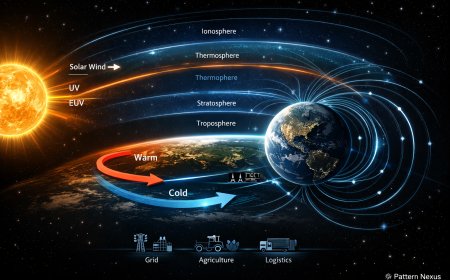
Climate risk is dominated by circulation stability, not surface averages. This analysis maps solar spectral variability, geomagnetic forcing, stratosphere–troposphere coupling, and AMOC heat transport into a single control-system model that explains why volatility and regional cold shocks can rise even in a warming mean.
Inside this report
- Climate Is a Circulation System
- Executive Summary
- The Frame: Flow Regimes and Control Surfaces

