

grid
Automatically indexed from the existing article tag.
Theses, forecasts, models, and paths
No published research objects yet
This topic is ready for editors to connect a thesis, forecast, model, or research path.
Latest articles
 Article · related
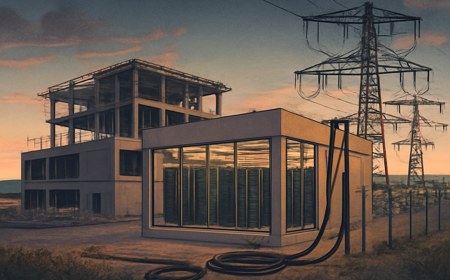
Microsoft Turns Nscale’s Essex AI Campus Into a Grid-Delay Stress Test
Microsoft has pulled out of its planned role at Nscale’s Loughton, Essex AI data-center project, according to Reuters, the Guardian and BBC-backed reporting. The project had been announced in 2025 as a major UK AI supercomputer site for Azure services, with 50MW of initial AI capacity, scalability to 90MW and 23,040 Nvidia GB300 GPUs. Reports tie the reversal to power-supply delays that could push adequate grid connection into the 2030s, while Nscale says it remains committed to the site and that other Microsoft work is unaffected.
Published Oct 19, 2026 Article · related
Google Turns PJM Nuclear Uprates Into a 3.6-Gigawatt AI-Grid Power Rail
Google and Constellation announced a long-term PJM power package on October 6, 2026, centered on 890 MW of new nuclear capacity from uprates at existing reactors and 2,700 MW of additional supply. The structure matters because it links AI data-center growth to new firm capacity, demand flexibility, and AI-assisted grid operations rather than treating clean power as a certificate-only procurement exercise.
Published Oct 7, 2026 Article · related
Senate Turns Permitting Reform Into an AI-Grid Cost Allocation Deal
Senate energy and environment leaders introduced the Bipartisan American Affordability and Jobs Act on September 30, 2026, a permitting package aimed at faster federal reviews for energy, transmission, and infrastructure projects. The bill would strengthen FERC transmission-siting authority and require data centers to pay associated transmission costs instead of shifting those costs to households and smaller businesses. A Senate vote is not expected until after the November 3 midterm elections.
Published Oct 1, 2026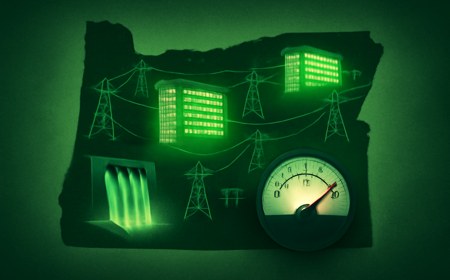 Article · related
Oregon Turns Data Centers Into a Quarter-Grid AI Infrastructure Test
A new ECOnorthwest and University of Virginia assessment, reported by Oregon outlets and presented to state advisers, puts Oregon data centers at about 23% of statewide retail electricity sales in 2025. The state is now treating the sector as a systemic planning challenge, with a Data Center Advisory Committee taking public comment through October 24, 2026 and POWER Act implementation shifting large-load grid costs toward data centers.
Published Sep 20, 2026 Article · related
Google and Nvidia Turn Flexible Load Into an AI-Data-Center Fast Lane
Google, Nvidia and Emerald AI have launched the AI Energy Management Alliance to promote flexible AI data centers that can adjust electricity demand in response to grid conditions. The coalition is pushing utilities, grid operators and regulators to treat verifiable flexibility as a reason to accelerate large-load interconnection. The Pattern Nexus read: AI compute demand is being converted from a fixed grid burden into a dispatchable power-market asset.
Published Sep 16, 2026 Article · related
OpenAI Turns Effingham County Into a 3.2-Gigawatt Ratepayer-Firewall Test
Residents protested outside an August 29 Effingham County work session as officials fielded questions about OpenAI’s Project Camellia. The dispute now centers on whether Georgia’s large-load framework can truly keep AI megacampus costs off ordinary ratepayers while managing water, grid-reliability and public-transparency concerns.
Published Aug 30, 2026 Article · related
Virginia Turns AI Data-Center Power Lines Into a User-Pays Tariff
Virginia’s State Corporation Commission ordered Dominion Energy to develop a tariff framework that assigns more transmission costs directly to data centers and other large-load customers when upgrades are built for them. The move follows Gov. Abigail Spanberger’s push for a cost-causation, or “but-for,” approach and is being framed by state officials as a ratepayer-protection measure. The deeper signal is that AI infrastructure is entering a new regulated-cost phase, where grid access, tariff design, and political tolerance may matter as much as GPUs and land.
Published Aug 7, 2026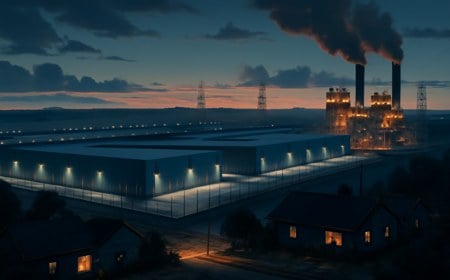 Article · related
AI Data Centers Move the Power Plant Behind the Fence
Reuters reported that at least 57 off-grid U.S. power plants are proposed or under construction to serve individual data centers, totaling about 73,000 MW. Cleanview, The Washington Post and industry reporting show the same direction of travel: AI data-center developers are increasingly using behind-the-meter power to bypass grid queues. The result is a new fight over siting, emissions, reliability, public notice and who controls the next layer of AI infrastructure.
Published Jun 17, 2026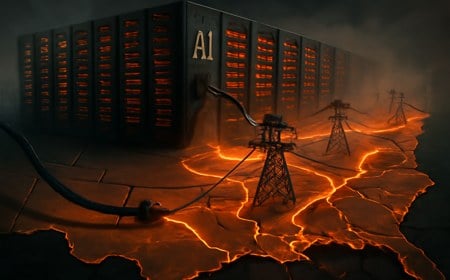 Article · related
AI Load Starts Breaking the Grid Operator, Not Just the Grid
Surging data-center demand is pushing PJM from a reliability problem into a governance problem. Bloomberg reporting carried by the Los Angeles Times says American Electric Power has threatened to leave PJM and federal officials are discussing structural changes, while Reuters reports PJM is weighing market reforms as data centers outstrip available energy supplies. FERC filings and market-monitor materials show data-center load has already added billions of dollars to PJM capacity-market costs.
Published Jun 7, 2026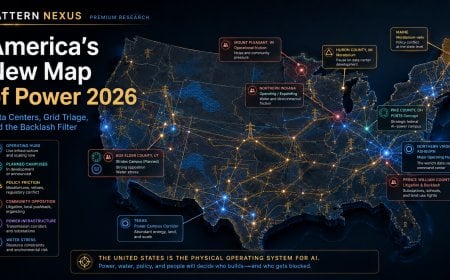 Article · related
America’s New Map of Power 2026: Data Centers, Grid Triage, and the Backlash That Will Not Stop the AI Buildout
The AI data center boom has moved from abstract tech hype into physical infrastructure conflict. The map now runs through substations, water tables, transmission corridors, tax incentives, state permits, private power campuses, local lawsuits, and public backlash. By May 2026, Americans are angry, communities are fighting back, projects are being blocked or downsized, and regulators are openly trying to separate real load from speculative grid requests. But the deeper Pattern Nexus read is that backlash does not stop the buildout. It filters it, reroutes it, and forces the system to move toward places with power, land, political permission, and private energy control.
Published May 30, 2026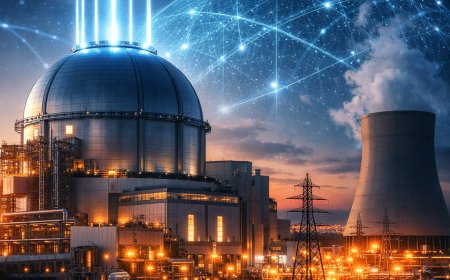 Article · related
The Nuclear Renaissance: 2026’s Drive for a 400 GW Grid and the Control Layers of Energy
In 2026 the United States announced plans to quadruple its nuclear power capacity to 400 GW by 2050, investing billions in domestic enrichment and small modular reactors. This article explores how the nuclear renaissance reshapes energy, geopolitics and control systems.
Published Mar 3, 2026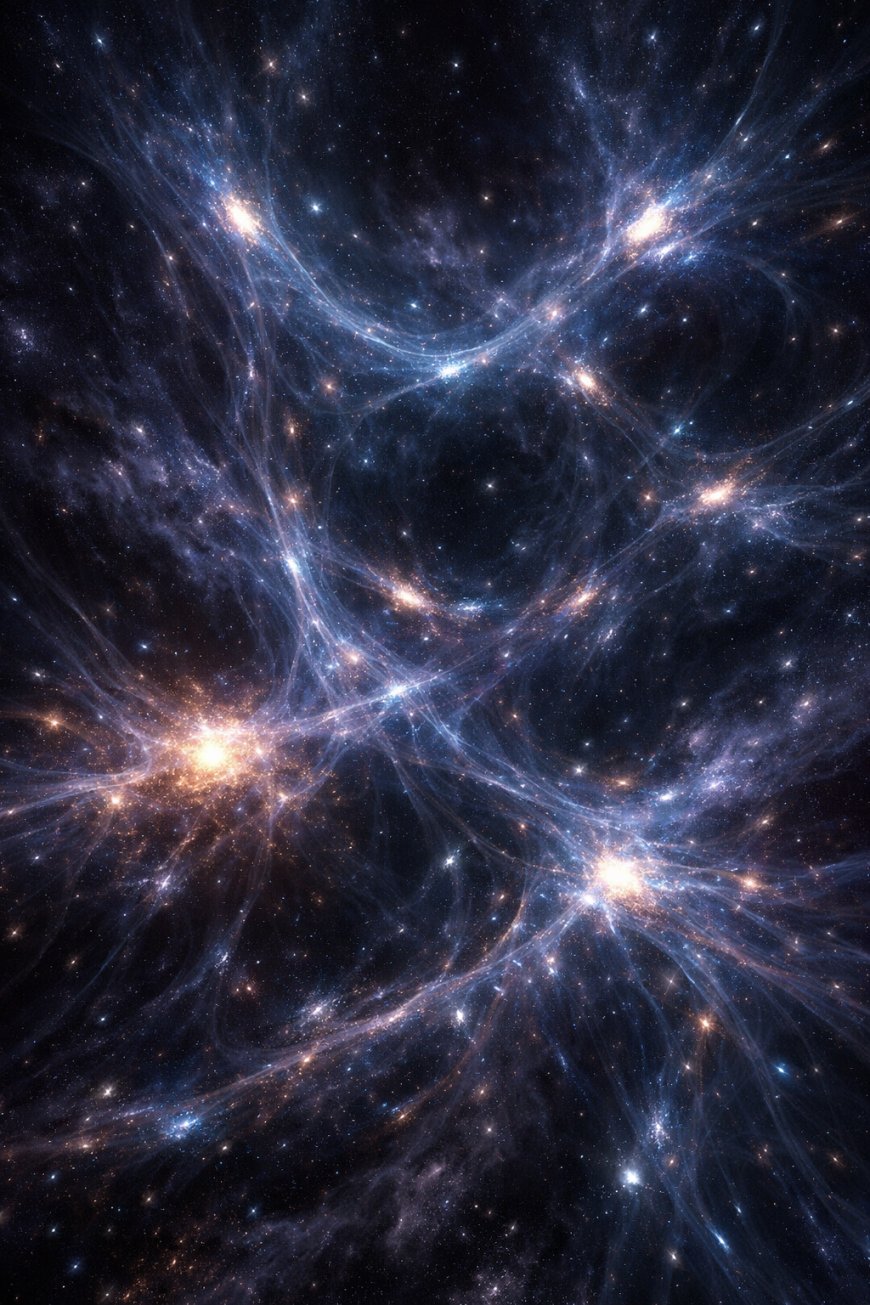 Article · related
Mapping the Invisible: JWST’s Cosmic Web Shows Dark Matter as the Universe’s Control Grid
A January 2026 JWST survey mapped more than 800,000 galaxies and revealed dark matter filaments twice as sharply as before, showing how the invisible framework of the cosmos shapes visible structure.
Published Mar 3, 2026 Article · related
AI Data Centers Are an Inflation Engine: The Race to Build a Private Grid
AI isn’t just a software story anymore. It’s a power story—capacity, interconnect queues, local resistance, and a new wave of private generation that quietly rewires inflation and industrial policy.
Published Feb 17, 2026 Article · related
GW Ranch: Texas Builds Private Grids for the AI Flywheel
Pacifico Energy’s 7.65 GW permitted GW Ranch marks the shift to off-grid hyperscale power islands in West Texas. In the Pattern Nexus framework, this is permission-stack infrastructure: fuel optionality → electrons → compute → governance leverage. A deep dive into ERCOT’s large-load queue, emissions politics, and what to watch through 2031.
Published Jan 31, 2026 Article · related
Energy Isn’t Spiking, Utilities Are: AI Baseload, Gas Turbines, and the Reprice of Energy Services
CPI “energy” is splitting into two stories: gasoline is deflating while electricity and utility gas inflate. This is a structural load + grid constraint regime, increasingly driven by data centers/AI and met by gas turbines, capex pass-through, and delivered-fuel premia.
Published Jan 14, 2026 Article · related
Google’s CO2 Battery Bet: Why AI Data Centers Are Pulling Long-Duration Storage Out of the Lab and Onto the Grid
Google and Energy Dome are scaling 10-hour CO2-based long-duration energy storage (20MW/200MWh-class) to close the renewables-to-AI reliability gap. Here’s the thermodynamics, the grid role, the economics, and what “LDES as infrastructure” really means.
Published Dec 31, 2025 Article · related
Energy Control- Grid Interdependence, Fuel Corridors, and Blackout Leverage
Energy is the original control system. Grid synchronization, fuel corridors, dispatch priority, and failure modes now function as continuous enforcement mechanisms, determining what stays online, what shuts down, and where sovereignty becomes conditional.
Published Dec 21, 2025