

Power
Automatically indexed from the existing article tag.
Theses, forecasts, models, and paths
No published research objects yet
This topic is ready for editors to connect a thesis, forecast, model, or research path.
Latest articles
Ankara Turns Renewable Finance Into an AI Data-Center Sovereignty Rail
The Asian Development Bank said on October 22, 2026 that it signed a $75 million loan with Rönesans Holding to support renewable energy, battery storage by 2029 and a hybrid-renewable hyperscale data center in Türkiye. The financing follows Rönesans and Digital Realty’s Ankara data-center push, with the first phase planned for more than 22 MW of IT capacity by 2028. The pattern is larger than one campus: Türkiye is trying to convert geography, clean power and state incentives into sovereign AI and cloud infrastructure.
Published Oct 24, 2026 Article · related
The Diesel Trap: Why the Oil War Is Bending Sanctions Before Winter
The October Russia-sanctions waiver adds a new policy chapter to the Pattern Nexus oil-war thesis. I connect the diesel bottleneck to emergency fuel commitments, uneven winter heating costs, the original Iran escalation window, household purchasing power and the next Fed financing test. Includes four dated figures and reproducible data.
Published Oct 20, 2026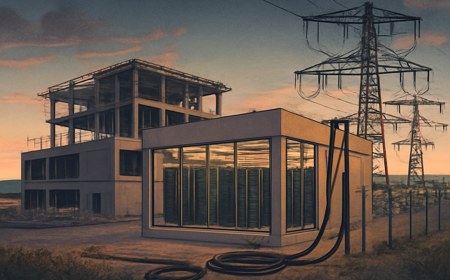 Article · related
Microsoft Turns Nscale’s Essex AI Campus Into a Grid-Delay Stress Test
Microsoft has pulled out of its planned role at Nscale’s Loughton, Essex AI data-center project, according to Reuters, the Guardian and BBC-backed reporting. The project had been announced in 2025 as a major UK AI supercomputer site for Azure services, with 50MW of initial AI capacity, scalability to 90MW and 23,040 Nvidia GB300 GPUs. Reports tie the reversal to power-supply delays that could push adequate grid connection into the 2030s, while Nscale says it remains committed to the site and that other Microsoft work is unaffected.
Published Oct 19, 2026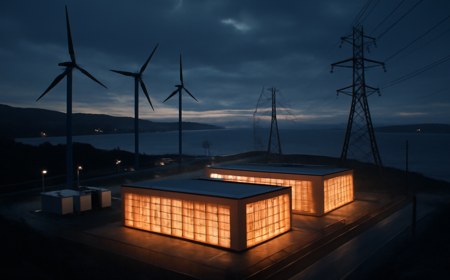 Article · related
Anthropic Turns Nova Scotia Wind Into a 420-Megawatt Claude Compute Rail
EverWind announced more than C$10 billion in planned private investment for a Point Tupper data-centre campus and Nova Scotia wind projects on October 16, 2026. Reuters identified the frontier AI tenant as Anthropic, while Canadian Press and Global News reported a long-term lease, a 95-megawatt first phase in late 2027, a 325-megawatt expansion, and 420 megawatts at full buildout. The project ties Claude-scale compute demand to local power, water, ratepayer, and data-sovereignty politics.
Published Oct 18, 2026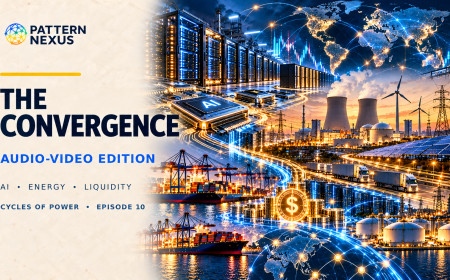 Video · related
The Convergence — Audio-Video Edition
The finale of the Pattern Nexus Cycles of Power audio-video series connects 150 years of industrial, monetary, computing, energy, and liquidity history to the emerging convergence of AI infrastructure, fiscal dominance, programmable dollars, hard-asset politics, and competing paths from 2030 to 2045.
Published Oct 12, 2026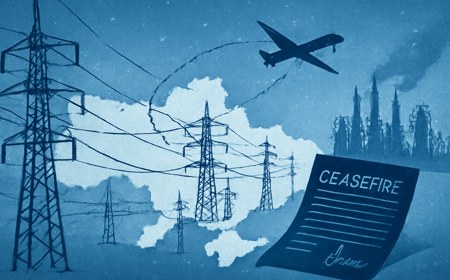 Article · related
Trump Turns a Claimed Russia-Ukraine Energy Ceasefire Into a Winter-Power Verification Test
Trump announced on October 11, 2026, that Russia and Ukraine had agreed to an immediate “energy ceasefire,” but AP and Reuters reported that he gave no operational details and that there was no immediate confirmation from Moscow. Ukraine’s presidency said Kyiv supports the step but needs Russia’s response, while also reporting Russian strikes on Ukrainian energy facilities after Trump’s statement. The signal now becomes a verification test for winter power security, Russian refining pressure, and U.S. fuel-market politics.
Published Oct 11, 2026 Article · related
Google Turns PJM Nuclear Uprates Into a 3.6-Gigawatt AI-Grid Power Rail
Google and Constellation announced a long-term PJM power package on October 6, 2026, centered on 890 MW of new nuclear capacity from uprates at existing reactors and 2,700 MW of additional supply. The structure matters because it links AI data-center growth to new firm capacity, demand flexibility, and AI-assisted grid operations rather than treating clean power as a certificate-only procurement exercise.
Published Oct 7, 2026 Video · related
The Fiscal-Monetary Fusion — Audio-Video Edition
Episode 9 of the weekly Pattern Nexus audio-video series turns Part 9 of Cycles of Power into a shorter story about how pandemic stimulus fused fiscal and monetary policy, inflation forced a violent rate reversal, bank stress produced a new collateral-protection template, and sanctions, AI infrastructure, stablecoins, and tokenized Treasuries transformed liquidity into both operating system and geopolitical weapon between 2020 and 2025.
Published Oct 5, 2026 Article · related
Google Turns Orbital TPUs Into an AI-Infrastructure Escape Hatch
SpaceX is targeting October 1, 2026, for the Transporter-18 rideshare from Vandenberg, with Project Suncatcher M1 listed in the deployment sequence as a Planet Labs-manifested payload. Google says the mission will gather in-orbit data on TPU behavior under launch stress, radiation, and thermal extremes. The larger signal is that AI infrastructure bottlenecks are beginning to push hyperscalers beyond terrestrial data-center assumptions and into space-power, launch-cadence, and orbital-network experiments.
Published Oct 1, 2026 Article · related
Seoul Turns Texas Gas Power Into an AI-Compute Alliance Rail
South Korea has identified a Texas gas-fired power project as the first investment under its $350 billion U.S. package, according to Yonhap, KBS, Kyunghyang and Reuters reporting. The project is tied to rising Texas electricity demand from AI data centers and semiconductor facilities, while Seoul is also discussing U.S. nuclear and Alaska LNG follow-ons. The system read: tariff diplomacy is being converted into firm-power infrastructure for the AI industrial stack.
Published Sep 23, 2026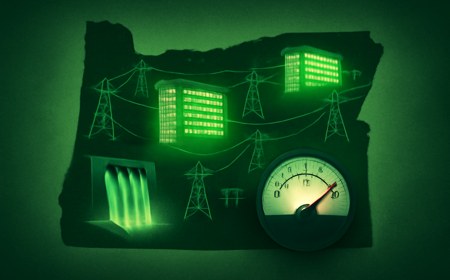 Article · related
Oregon Turns Data Centers Into a Quarter-Grid AI Infrastructure Test
A new ECOnorthwest and University of Virginia assessment, reported by Oregon outlets and presented to state advisers, puts Oregon data centers at about 23% of statewide retail electricity sales in 2025. The state is now treating the sector as a systemic planning challenge, with a Data Center Advisory Committee taking public comment through October 24, 2026 and POWER Act implementation shifting large-load grid costs toward data centers.
Published Sep 20, 2026 Article · related
Google and Nvidia Turn Flexible Load Into an AI-Data-Center Fast Lane
Google, Nvidia and Emerald AI have launched the AI Energy Management Alliance to promote flexible AI data centers that can adjust electricity demand in response to grid conditions. The coalition is pushing utilities, grid operators and regulators to treat verifiable flexibility as a reason to accelerate large-load interconnection. The Pattern Nexus read: AI compute demand is being converted from a fixed grid burden into a dispatchable power-market asset.
Published Sep 16, 2026 Article · related
EPA Turns AI Power Demand Into a Fossil-Baseload Deregulation Test
EPA Administrator Lee Zeldin signed a final partial repeal of the 2024 Carbon Pollution Standards for fossil-fuel power plants and paired it with a proposal to rescind remaining greenhouse-gas standards for the sector under Clean Air Act Section 111. EPA frames the action as an energy-abundance and cost-saving measure worth more than $300 billion, while major news reports say environmental groups expect legal challenges. The AI angle is not that EPA regulated AI directly, but that rising data-center and industrial load is becoming a justification for fossil-basaload deregulation.
Published Sep 15, 2026 Video · related
The Leverage Machine — Audio-Video Edition
Episode 5 of the weekly Pattern Nexus audio-video series turns Part 5 of Cycles of Power into a shorter story about how the Volcker shock, Reagan–Thatcher deregulation, market-based credit, junk bonds, leveraged buyouts, securitization, derivatives, and electronic finance made leverage the central growth engine between 1979 and 1994.
Published Sep 7, 2026 Article · related
Washington Turns AI Data-Center Air Permits Into a Disclosure-Off Switch
EPA has proposed removing minimum federal public-participation requirements for minor New Source Review permits and leaving those choices to state and local air agencies. Advocates are now framing the rule as an AI data-center transparency fight because backup generators and onsite power sources can be permitted as minor or synthetic-minor sources. The policy question is no longer only how fast AI infrastructure can get power, but who gets to see and contest the air permits attached to that buildout.
Published Aug 26, 2026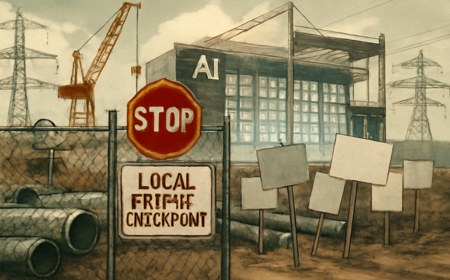 Article · related
AI Data Centers Hit the Consent Bottleneck
AI data-center buildout is moving from a power-and-capex story into a political-consent story. Local opposition has delayed or blocked projects, New York has imposed a statewide pause on large facilities, and developers now face a fourth bottleneck: permission to operate. The Pattern Nexus read is that ratepayer protection, water use, zoning legitimacy and community benefits are becoming financial variables in the AI industrial flywheel.
Published Aug 9, 2026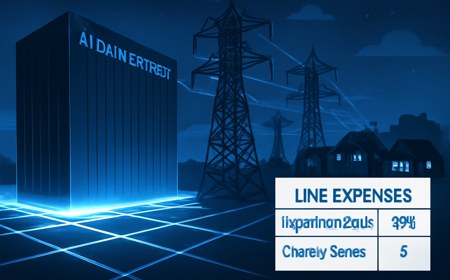 Article · related
Virginia Turns AI Data-Center Power Lines Into a User-Pays Tariff
Virginia’s State Corporation Commission ordered Dominion Energy to develop a tariff framework that assigns more transmission costs directly to data centers and other large-load customers when upgrades are built for them. The move follows Gov. Abigail Spanberger’s push for a cost-causation, or “but-for,” approach and is being framed by state officials as a ratepayer-protection measure. The deeper signal is that AI infrastructure is entering a new regulated-cost phase, where grid access, tariff design, and political tolerance may matter as much as GPUs and land.
Published Aug 7, 2026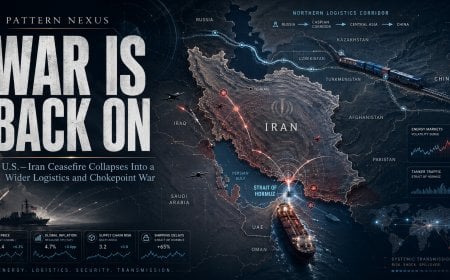 Article · related
War Is Back On: The U.S.–Iran Ceasefire Has Collapsed Into a Wider Logistics and Chokepoint War
The United States is striking Iranian military, port, power, transportation, and logistics infrastructure. Iran is retaliating against the American Gulf basing network. Israel is ready to reenter. The conflict is evolving from a Hormuz chokepoint war into a wider campaign over Iran’s maritime and Eurasian connections.
Published Jul 9, 2026 Article · related
The Female Logic Gate: How Coherent Societies Checked Male Power
A Pattern Nexus research article on the forgotten civilizational structure behind stable societies: male executive power often existed beside a female legitimacy layer. Across Haudenosaunee, Palau, Asante, Igbo, Yoruba, Cherokee, Chaco, Minangkabau, Kush, Egypt, Rome, Sparta, Neolithic China, and Iron Age Britain, the pattern repeats. Men often held the public office, but women frequently controlled the deeper gate: clan, land, succession, property, market, ritual, household, and generational continuity.
Published Jul 3, 2026 Article · related
Fragmented Society: The Elites Don’t Think Like You, and the Elites of the Elites Don’t Think Like Them
Society is not one shared reality. It is a stack of disconnected mindsets layered by survival, class, power, wealth, ideology, and future access. The average person thinks about kids, bills, work, retirement, and survival. The elite think in systems, leverage, insulation, manipulation, and continuity of power. The elites above them think past humanity entirely. That fracture explains why the modern world feels insane: most people are arguing from human-centered values while the people shaping the system are not operating from the same mental map.
Published Jun 27, 2026 Article · related
Washington Turns xAI’s Gas Turbines Into a National-Security Compute Shield
The Justice Department moved to intervene in and dismiss an NAACP Clean Air Act citizen suit targeting gas turbines used to support xAI-linked AI data center operations in Mississippi. DOJ argues the facility’s power supply supports AI models important to the economy and military operations, while the NAACP and environmental counsel frame the case as a local air-pollution and accountability fight. The result is a larger precedent battle over whether AI compute infrastructure can be treated as strategic capacity that limits local and citizen enforcement.
Published Jun 17, 2026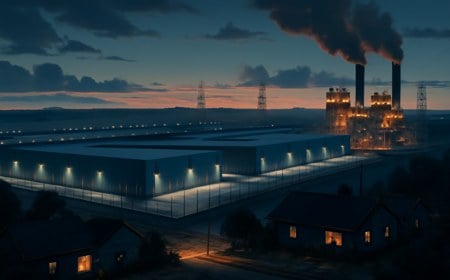 Article · related
AI Data Centers Move the Power Plant Behind the Fence
Reuters reported that at least 57 off-grid U.S. power plants are proposed or under construction to serve individual data centers, totaling about 73,000 MW. Cleanview, The Washington Post and industry reporting show the same direction of travel: AI data-center developers are increasingly using behind-the-meter power to bypass grid queues. The result is a new fight over siting, emissions, reliability, public notice and who controls the next layer of AI infrastructure.
Published Jun 17, 2026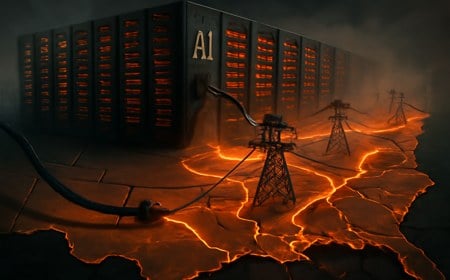 Article · related
AI Load Starts Breaking the Grid Operator, Not Just the Grid
Surging data-center demand is pushing PJM from a reliability problem into a governance problem. Bloomberg reporting carried by the Los Angeles Times says American Electric Power has threatened to leave PJM and federal officials are discussing structural changes, while Reuters reports PJM is weighing market reforms as data centers outstrip available energy supplies. FERC filings and market-monitor materials show data-center load has already added billions of dollars to PJM capacity-market costs.
Published Jun 7, 2026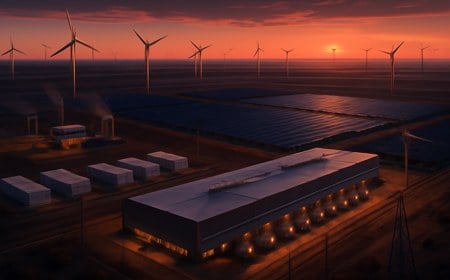 Article · related
Google Builds the Power Plant Into the AI Factory
Google and Intersect Power announced construction of the Meitner Energy Center in Gray and Roberts Counties, Texas, pairing a new Google data center with dedicated new energy generation. Independent reporting says the project includes more than 1 gigawatt of wind, solar, and battery storage, with some on-site gas for firming and air cooling to limit water use. The strategic read: the AI bottleneck is shifting from chips alone to controllable energy access.
Published Jun 7, 2026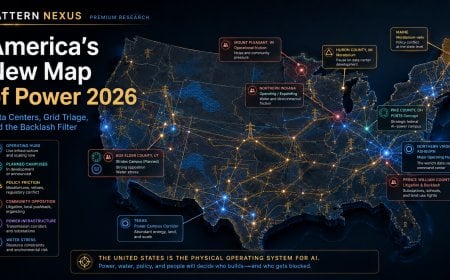 Article · related
America’s New Map of Power 2026: Data Centers, Grid Triage, and the Backlash That Will Not Stop the AI Buildout
The AI data center boom has moved from abstract tech hype into physical infrastructure conflict. The map now runs through substations, water tables, transmission corridors, tax incentives, state permits, private power campuses, local lawsuits, and public backlash. By May 2026, Americans are angry, communities are fighting back, projects are being blocked or downsized, and regulators are openly trying to separate real load from speculative grid requests. But the deeper Pattern Nexus read is that backlash does not stop the buildout. It filters it, reroutes it, and forces the system to move toward places with power, land, political permission, and private energy control.
Published May 30, 2026 Article · related
The Scientist Layer Is Getting Fragile: Amy Eskridge, Missing Researchers, China’s Strategic Death Cluster, and the Knowledge Bottleneck Beneath Modern Power
A growing list of dead and missing scientists, aerospace personnel, nuclear-linked workers, military AI researchers, hypersonic specialists, and exotic propulsion figures has forced a darker question into public view: what happens when civilization’s most sensitive knowledge is concentrated inside a thin layer of human nodes? This is not only a UFO story. It is a knowledge-continuity story, a national-security story, and a Pattern Nexus control-stack story.
Published May 17, 2026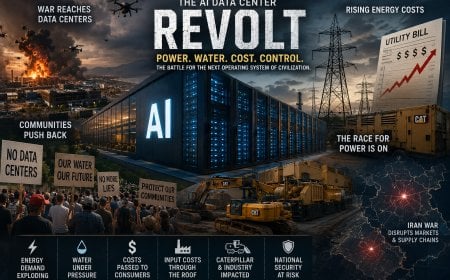 Article · related
War, Backlash and Build‑Out: The 2026 AI Data Center Report
The year 2026 has been unprecedented for AI infrastructure. A global conflict disrupted supply chains and even targeted data centers; nearly 40 % of U.S. projects faced delays. Communities across America escalated their pushback with ballot measures, moratoria and protests. Tech firms responded with new power strategies, cooling innovations, community agreements and even nuclear plans. This report synthesizes the year’s events, from war‑zone drone strikes to closed‑loop cooling, large‑load tariffs, behind‑the‑meter power and the economic ripple effects on suppliers like Caterpillar.
Published May 11, 2026 Article · related
The Headline Is Late: How Pattern Nexus Mapped the Chokepoint War Before Hormuz Became Visible
The Iran-Hormuz crisis did not create the Pattern Nexus framework. It exposed it. For months, Pattern Nexus had already been mapping the deeper system beneath the headlines: liquidity plumbing, QT, reverse repo, QE 2026, AI power demand, stablecoin rails, Treasury collateral, Western Hemisphere force posture, energy chokepoints, China’s routing vulnerability, and the shift from globalization to permission. This long-form analysis uses the video transcript as an alignment test, then ties it back into the Pattern Nexus archive to show the real timeline: the headline arrived late because the structure moved first.
Published May 7, 2026 Article · related
NASA’s Moon Base, MoonFall, Nuclear Missions, and the Drone Layer of Mars
A Pattern Nexus analysis of NASA’s 2026 surface-first lunar architecture, MoonFall hopper drones, lunar nuclear power, nuclear-electric Mars plans, and the next rotorcraft layer after Ingenuity.
Published Mar 26, 2026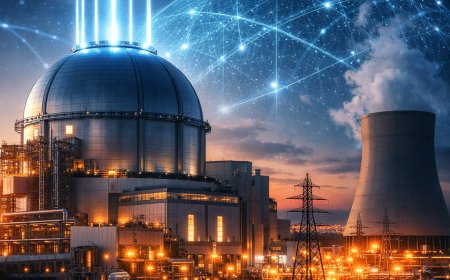 Article · related
The Nuclear Renaissance: 2026’s Drive for a 400 GW Grid and the Control Layers of Energy
In 2026 the United States announced plans to quadruple its nuclear power capacity to 400 GW by 2050, investing billions in domestic enrichment and small modular reactors. This article explores how the nuclear renaissance reshapes energy, geopolitics and control systems.
Published Mar 3, 2026