

science
Automatically indexed from the existing article tag.
Theses, forecasts, models, and paths
No published research objects yet
This topic is ready for editors to connect a thesis, forecast, model, or research path.
Latest articles
 Article · related
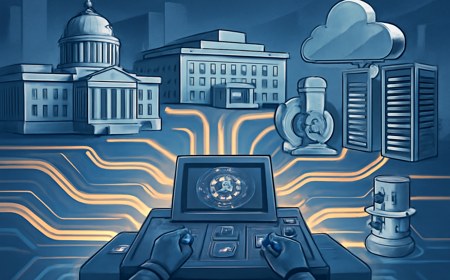
Washington Turns Tech Compute Credits Into a Federal AI-Science Operating System
On October 8, 2026, the White House announced $2.4 billion in super-intelligence science tools and compute credits from 11 industry partners for the Genesis Mission Consortium. Nvidia, Anthropic and AWS separately detailed commitments that turn private AI infrastructure into usable research capacity for federal agencies, national laboratories and partner institutions. The system read: Washington is not merely buying compute; it is organizing a quasi-public AI-science operating layer around private infrastructure.
Published Oct 9, 2026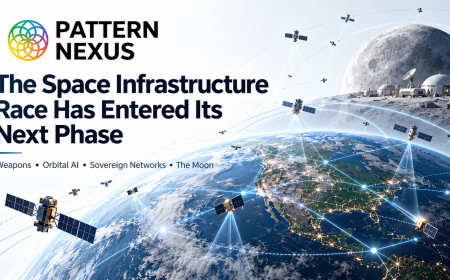 Article · related
The Space Infrastructure Race Has Entered Its Next Phase: Weapons, Orbital AI, Sovereign Networks, and the Moon
From September 4–23, space infrastructure accelerated on almost every front. Isar Aerospace reached orbit from continental Europe. India positioned EOS-05 for geosynchronous imaging. Stoke raised $1 billion toward fully reusable launch. China launched four rockets in roughly 45 hours and put a spacecraft with 5G, AI, and planned 100-Gbps optical communications into orbit. Europe allocated major IRIS² and OneWeb production contracts while Planet expanded satellite manufacturing in Germany. The U.S. acknowledged on-orbit space-control weapons, practiced multi-orbit maneuver operations, and funded new target-tracking architectures; Britain created a space-effects squadron. NASA and ESA delivered new lunar, planetary, and Earth-observation science while commercial downmass and crew-transport contracts extended the orbital logistics chain. The Pattern Nexus conclusion: space is becoming an industrial, computational, and contested operating system, and continuity is its critical threshold.
Published Sep 23, 2026 Article · relatedDid Life on Earth Begin on Mars? Sample 25, Viking, and the Evidence We Left Behind
Perseverance sealed the strongest potential Martian biosignature yet inside Sample 25. Viking's 1976 results are being re-litigated. NASA's return architecture lost funding as the evidence strengthened. This report reconstructs the science, the institutional bottleneck, the 2028 propulsion test, and the larger possibility that Mars sits upstream of Earth's biology.
Published Aug 9, 2026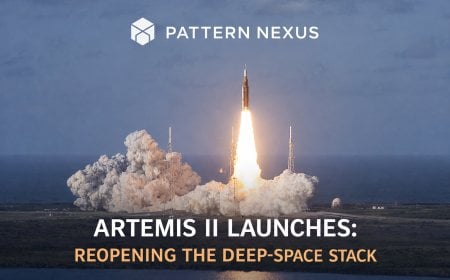 Article · related
Artemis II Launches: Reopening the Deep-Space Stack
Artemis II has launched, but the real story is bigger than a lunar flyby. This Pattern Nexus analysis breaks down why the first crewed SLS-Orion mission matters as a systems return, a transport-layer test, and the opening move in the long view on space.
Published Apr 1, 2026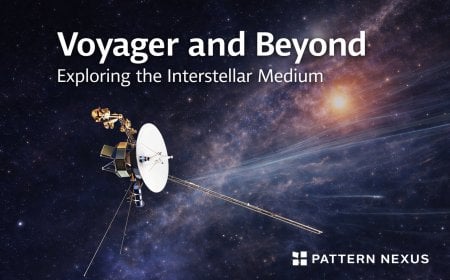 Article · related
Voyager at the Helopause: Mapping the True Edge of the Solar System
Voyager 1 and 2 did more than visit the outer planets. By crossing the heliopause, they turned the edge of the solar system from a theoretical line into a measured magnetic boundary, revealing how our Sun’s protective bubble interacts with the Milky Way.
Published Jan 14, 2026 Article · related
The Weight of Time: On Building Something That Lasts
Legacy isn’t about memory — it’s about momentum. In an age obsessed with immediacy, this essay explores the deeper architecture of endurance: how systems, people, and civilizations preserve meaning through adaptability. Drawing from philosophy, science, and lived experience, it examines how we build for permanence in a world designed for change.
Published Oct 18, 2025