
Weeks Where Decades Happen: January 2026 Acceleration Log
January 2026 did not ease into the decade; it detonated into it. From Venezuela’s regime shock and the Greenland tariff crisis to Iran’s crackdown, Syria’s realignment, the UN High Seas Treaty, demographic shifts, IMF revisions, and industrial pivots, this is a log of weeks where decades happen.
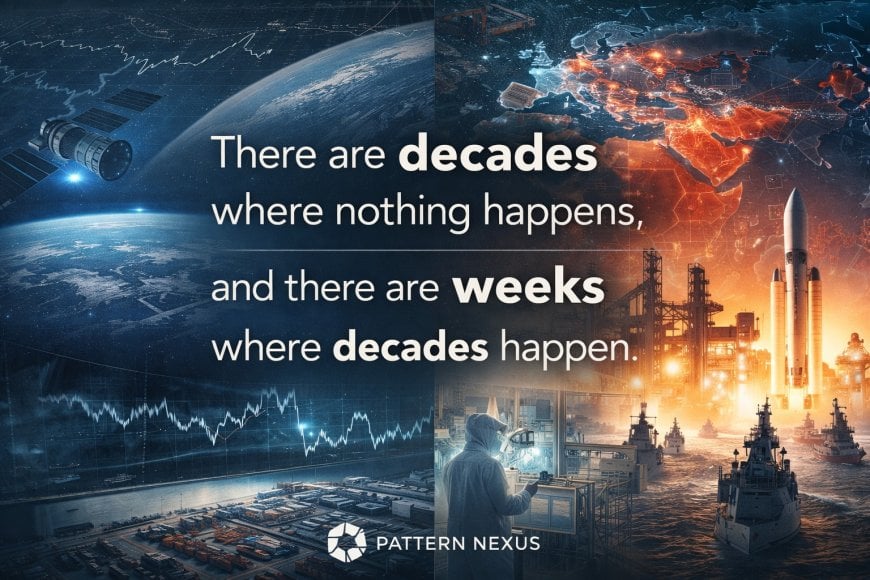
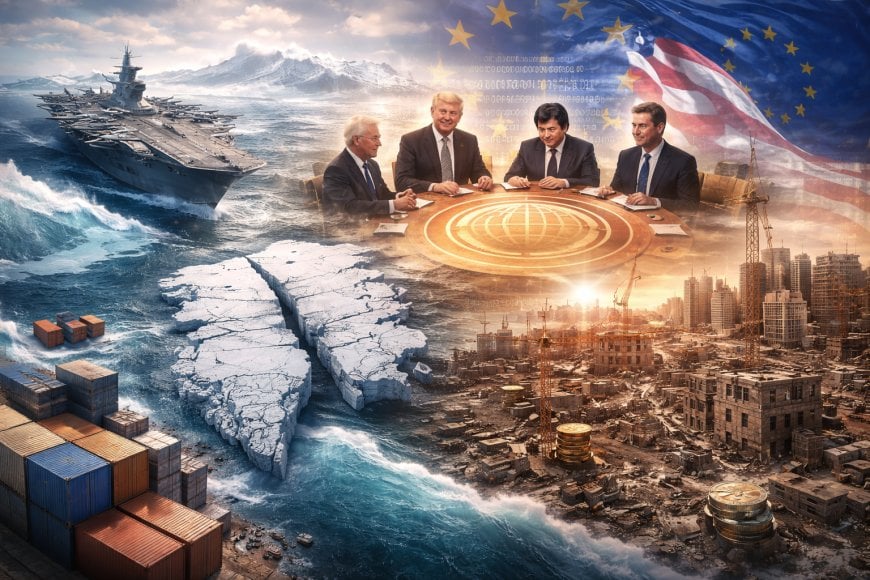

2026 is opening like a control-systems stress test: regime change, tariff threats, protests, territorial adjustments, industrial pivots, and macro revisions landing on the board almost simultaneously instead of in neat, sequential blocks.
When multiple sovereigns are firing tariffs, alliance moves, territorial operations, monetary changes, and industrial policies at once, coordination risk becomes a primary driver of outcomes, not background noise.
This log is not about prediction; it is about structure. Once you see how these events cluster into arcs, you can anchor any new headline into a larger pattern instead of treating it like isolated noise.
Dominant Arcs: 2026 Year-to-Date (Jan 1–Jan 19)
You’re right. What most people are seeing is a narrow slice. To step back, this is a wide-aperture, year-to-date event ledger from January 1, 2026 through Monday, January 19, 2026, built off the day-by-day compendium and cross-checked against major wire and official reporting on the biggest arcs: Venezuela, Greenland and tariffs, Iran, Syria, the UN oceans treaty, and the IMF’s early-year macro reset.
2026 Year-to-Date: the dominant arcs (Jan 1–Jan 19)
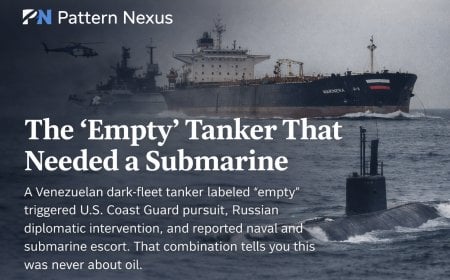
- Venezuela shock event: U.S. strikes around Caracas trigger a regime shock, followed by the capture of Nicolás Maduro and Cilia Flores, installation of Delcy Rodríguez as acting president, and U.S. legal process for Maduro under drug/weapons charges. The operation extends into blockade enforcement and tanker seizures.
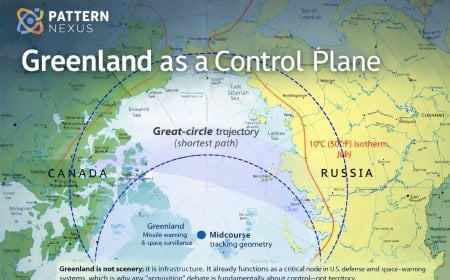
- Greenland crisis → tariffs vector: A Greenland-centered crisis escalates through diplomatic and military signaling. France steps in, protests erupt, and the situation migrates into the trade domain as Trump threatens tariffs on multiple European nations and the EU prepares retaliation.
- Iran protests/crackdown: Protest-driven unrest inside Iran generates rapidly rising casualty claims, blackout and communications pressure, and growing international spillover, including concern over satellite connectivity and external narratives.
- Syria escalations (SDF vs transitional government): What begins as fighting around Aleppo evolves into a broader northeastern offensive dynamic: Raqqa and Deir ez-Zor oil-field positioning, Kobani fighting, prison-control failures, tribal alignments, and a later ceasefire gesture.
- Oceans governance regime shift: The UN High Seas Treaty enters into force, moving oceans governance from abstract negotiation into an implementation and enforcement problem, with obvious knock-on effects for fisheries, seabed resources, and freedom-of-navigation politics.
- Macro / markets / industry: Bulgaria adopts the euro as the 21st eurozone member; BYD surpasses Tesla in 2025 EV unit sales; South Korea posts record 2025 exports tied to semiconductors and AI; and the IMF issues its January update, reframing global growth and risk.
Everything else in this piece—every incident, every casualty figure, every tanker seizure and parliamentary vote—is nested somewhere inside these arcs. They are the scaffolding for the ledger that follows.
A compressed month like this tempts people into hot takes and “this changes everything” posts. The value of a ledger is that it preserves sequence, shows clustering, and exposes how much is actually happening at once. It gives you a control-panel view of the system instead of a single flashing light.
Day-by-Day Ledger: January 1–19, 2026
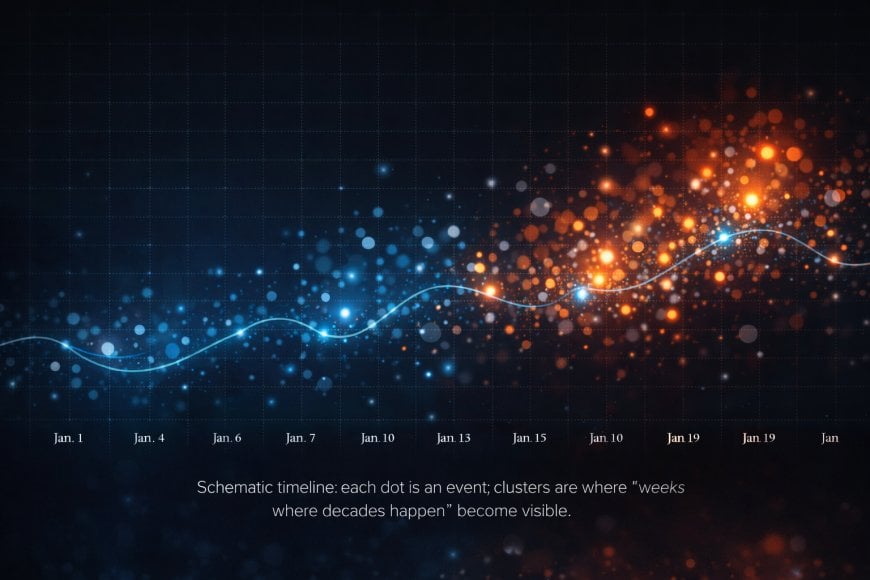
Below is the raw ledger, preserved as-is but grouped under calendar days. If you want the narrative, you read the arcs. If you want to understand density, you read this.
Jan 1 (Thu)
- DRC: Allied Democratic Forces attacks kill at least 15.
- Israel/West Bank: Palestinian killed during clash near Nablus.
- Ukraine: Russian drone strikes reported with casualties in the Kherson area.
- Bulgaria adopts the euro, becoming the 21st eurozone member.
- South Korea posts record 2025 exports tied to semiconductors and AI demand.
- Switzerland: Crans-Montana bar explosion/fire kills 40+, injures 100+.
- Afghanistan floods kill 17; migrant boat tragedies and a major church fire are also reported.
Jan 2 (Fri)
- Yemen: Saudi-led coalition airstrikes kill 20 STC fighters; the STC signals a referendum plan.
- China ends VAT exemption on birth-control products, signaling demographic-policy adjustments.
- BYD surpasses Tesla in 2025 EV unit sales, reframing parts of the EV industry race.
- Mexico: Mw 6.5 quake off Guerrero kills 2; multiple transport and structural incidents are logged globally.
- Sahel Alliance bans U.S. citizens in a reciprocal restriction framing; a Pakistan court issues life sentences in absentia for pro-Imran-Khan commentators.
- Iran protest-related fatalities continue to be recorded in the compendium as unrest spreads.
Jan 3 (Sat)
- Operation Southern Spear / Venezuela: U.S. airstrikes around Caracas kill dozens, trigger a state of emergency, and precede the capture of Nicolás Maduro and his wife. Delcy Rodríguez becomes acting president; U.S. DOJ posture and logistics are detailed.
- Additional international political shifts logged, including Equatorial Guinea formalizing a new capital decree and multiple security incidents across regions.
Jan 4 (Sun)
- Venezuela: reported death toll rises; Cuba confirms fatalities among its personnel.
- Flight disruption: FAA routing restrictions are lifted after earlier disruption tied to the Venezuela operation.
- Yemen: coalition forces seize additional territory in the southern campaign context.
- Myanmar releases thousands of prisoners for Independence Day; a Pakistan roof collapse kills six.
Jan 5 (Mon)
- Gaza: Israeli strike kills displaced people in a tent sheltering refugees; Israel cites a Hamas target.
- Pakistan: authorities seize two tons of explosives and make arrests tied to planned attacks.
- Japan: a record-priced bluefin tuna is auctioned at Toyosu; Indonesia flash floods kill 14.
Jan 6 (Tue)
- Venezuela: Delcy Rodríguez is sworn in as acting president.
- Venezuela confirms military fatalities from earlier strikes.
- Syria: clashes in and around Aleppo kill civilians as the situation shifts toward a wider campaign.
- Uganda announces restrictions on live broadcasting and streaming of protests ahead of an election.
Jan 7 (Wed)
- Venezuela blockade: the U.S. boards and seizes tankers (including Russia-flagged and Panama-flagged) under blockade enforcement.
- Yemen: further airstrikes are reported; internal STC political consequences are logged.
- U.S. domestic: an ICE agent killing in Minneapolis triggers protests and a Guard readiness order.
- Cambodia extradites suspects tied to transnational scam networks.
Jan 8 (Thu)
- Venezuela: death toll from earlier Caracas strikes is reported as rising further.
- Syria: an evacuation corridor opens; Syrian Army captures an Aleppo neighborhood after fighting.
Jan 9 (Fri)
- Syria: the defense ministry declares a ceasefire in parts of Aleppo after deadly fighting.
- Venezuela blockade: another tanker seizure is reported.
- EU: 21 of 27 EU states approve the EU-Mercosur trade deal, a major trade-bloc step.
- Multiple lethal transport incidents are logged, including in India and Nigeria.
Jan 10 (Sat)
- Syria: a kamikaze drone hits an Aleppo government building; U.S. strikes ISIS targets in Syria.
- Venezuela: the U.S. State Department urges Americans to leave, citing risk levels.
- Egypt elections: authorities finalize remaining parliamentary seats.
- Nicaragua releases prisoners after U.S. demand.
- U.S.: a Mississippi spree shooting kills at least six; Honduras recount decisions advance.
Jan 11 (Sun)
- Syria: SDF withdraws from parts of Aleppo after negotiations.
- Russia/Ukraine: a Ukrainian drone attack damages buildings in Voronezh; Russian drone attacks across Ukraine are reported with casualties.
- Iran: verified death counts and communications-suppression measures, including Starlink disruption, are recorded in the compendium.
Jan 12 (Mon)
- Gaza: an Israel-backed militant group claims assassination of a Hamas-run police unit leader.
- Pakistan: a roadside bomb kills police near the Afghan border.
- Bangladesh detains ARSA members crossing amid fighting.
- Mali: a ferry sinks after striking rocks; 38 are killed.
- Philippines and UAE sign a free-trade agreement.
- Mexico arrests alleged Tren de Aragua members in Mexico City.
Jan 13 (Tue)
- Iran: the compendium records sharply higher fatality claims (HRAI and other sources) during protests and crackdown.
- UK regulator opens an investigation into X over deepfake sexual imagery concerns tied to Grok.
- Meta reports shutting down 544k under-16 accounts across platforms in response to Australian age-restriction pressure.
Jan 14 (Wed)
- Cameroon: a mass shooting kills 15, including 8 children.
- Brazil: a police raid kills four gang members.
- Thailand: a crane disaster on a passing train produces a high fatality count.
- Climate: Copernicus reports 2025 as the third-warmest year and notes a three-year period averaging ≥1.5°C over pre-industrial levels.
- Armenia/Azerbaijan: prisoner release steps are noted.
- Greenland: France signals a consulate move as political signaling continues.
- U.S. announces suspension of immigrant-visa processing for 75 countries; tourist and business visas are reported as unaffected in the compendium framing.
Jan 15 (Thu)
- Singapore: parliament removes Workers’ Party leader Pritam Singh as Leader of the Opposition after a conviction.
- Venezuela blockade: U.S. Coast Guard seizes a Guyanese-flagged tanker.
- Product safety: Frigidaire recalls mini-fridges.
- Netherlands: an explosion in Utrecht injures people and collapses buildings, suspected gas-related.
- Greenland: Macron announces additional French forces.
- Japan and the Philippines sign a defense logistics pact.
Jan 16 (Fri)
- Space / ISS: NASA Crew-11 lands early after the first-ever ISS medical evacuation.
- Pakistan: the army kills 12 BLA gunmen during an attempted hostage-taking.
Jan 17 (Sat)
- Syria: government forces capture multiple towns in Aleppo Governorate.
- U.S. formally withdraws from Iraq’s Al-Asad Airbase in a handover move.
- Oceans governance: the High Seas Treaty enters into force in 60 UN member states.
- Greenland: protests draw thousands in Copenhagen and Nuuk.
Jan 18 (Sun)
- Syria: tribal forces allied with the Syrian Army take territory in Raqqa; government forces seize control of the Al-Omar oil field; a ceasefire is announced with the SDF.
- Portugal holds the first round of its presidential election.
- Libya: more than 200 migrants are freed from an underground “secret prison.”
- Iran: Reuters reports an official saying confirmed deaths reach at least 5,000, with other organizations citing different figures.
Jan 19 (Mon, today)
- Syria: heavy fighting around Kobani; government captures Ayn Issa and Sarrin; the SDF says it lost control of a prison holding ISIS fighters after an attack.
- Disasters: Kashmir quake fatalities are reported; Kabul explosion at a hotel is noted.
- China: record-low birth-rate reporting continues to drive the demographic narrative.
- Greenland crisis escalates into a trade threat: the EU prepares retaliation as Trump’s tariff posture sharpens; Reuters and others highlight broader market implications.
- IMF publishes its January World Economic Outlook Update, setting global growth projections and flagging headwinds.
- Davos / WEF: Breakingviews and other analysis describe the forum as adapting to Trump-centric realpolitik priorities.
Taken together, this is the “raw tape” for the first nineteen days. The point is not that every event is equal in weight. The point is that the density is real.
“Weeks Where Decades Happen”: What Compression Signals
The line that sits over this piece is simple: “There are decades where nothing happens, and there are weeks where decades happen.” The world is not literally cramming thirty years of structural change into January, but it is behaving like multiple partial “decades” are trying to resolve at the same time.
You see a governance decade in miniature in Venezuela and Iran. You see a trade and alliance decade compressing around Greenland and the tariff vector. You see an oceans-law decade beginning as the UN High Seas Treaty moves from text to enforcement. You see a demographic and industrial decade in China’s birth numbers, in Bulgaria’s euro adoption, in South Korea’s export mix, in BYD vs Tesla, in the IMF’s early-year macro frame.
When that many arcs start moving at once, the question stops being “what is the single most important thing?” and becomes “how are these subsystems wired together, and where are the control surfaces?” That is where the Pattern Nexus lens lives.
Pattern Nexus Lens
From a control-systems standpoint, January 2026 is not random. It looks like multiple feedback loops entering new operating ranges. Regime stability loops (Venezuela, Iran), territorial-security loops (Syria, Greenland posture), trade and tariff loops (U.S.–EU, EU–Mercosur), industrial loops (EVs, semis, export mixes), and governance-of-commons loops (High Seas Treaty) are all being nudged or jolted at the same time.
This is what “weeks where decades happen” actually looks like in practice. Not one cinematic event, but a dense cluster of medium-sized moves that change baselines. Tariffs get easier to reach for. Regime change feels more thinkable. Protests feel more survivable or more fatal, depending on which side you are on. Oceans and space and data and energy assets become contested by default instead of by exception.
The value is not in predicting the next headline. It is in recognizing that the system has shifted into a higher-frequency regime where governance, trade, conflict, and industrial policy moves will be closer together in time, more tightly coupled, and harder to treat as “one-offs.” This ledger is a baseline for that new regime.
FAQ
Is this supposed to be a complete list of everything that happened?
No. It is a structured ledger of high-salience events across conflict, trade, governance, macro, and major disasters. Local incidents, niche stories, and smaller moves are under-represented by design. The point is to capture the shape of the month, not every data point.
How should I use this as an investor, analyst, or operator?
Treat the arcs as your mental map and the day-by-day ledger as the raw tape. When a new headline hits, ask which arc it belongs to and which feedback loop it touches: governance, trade, energy, industrial capacity, demographics, or commons-governance. That keeps you from overreacting to single events and underreacting to clusters.
Does this mean 2026 will be a “crisis year”?
It means 2026 is already a high-frequency year. That can manifest as crisis, but it can also manifest as accelerated build-out, faster policy learning, and rapid repricing. The important thing is to recognize that the system is not in a slow, linear mode; it is in a compressed, coupled mode where weeks really can feel like decades.
Sources
This ledger is built from aggregated day-by-day current-events compendia, major international wire services, and official government or institutional releases cross-referenced for the Venezuela operation, Greenland/tariff posture, Iran protests, Syria campaign updates, the UN High Seas Treaty, IMF January outlook, and macro/industrial markers (Bulgaria, BYD/Tesla, South Korea exports).
- Current events compendium – January 2026 (politics, conflicts, disasters)
- Major wire coverage – Venezuela, Iran, Syria, Greenland, IMF, High Seas Treaty
- Macro and industrial data – IMF WEO update, euro adoption, EV and export statistics
Vad är din reaktion?
 Gilla
0
Gilla
0
 Ogilla
0
Ogilla
0
 Kärlek
0
Kärlek
0
 Rolig
0
Rolig
0
 Wow
0
Wow
0
 Ledsen
0
Ledsen
0
 Arg
0
Arg
0

Founder of Pattern Nexus. I research markets, macro, geopolitics, AI, history, ancient systems, and the patterns most people overlook. I’m also building Market Radar, a trading scanner designed to read pressure, risk, confirmation, and setup quality before chasing a move. Pattern Nexus is where I connect the dots between data, history, technology, and the bigger system playing out around us.






Kommentarer (0)