

Taiwan
Automatically classified from article content.
Theses, forecasts, models, and paths
No published research objects yet
This topic is ready for editors to connect a thesis, forecast, model, or research path.
Latest articles
 Article · related
Taiwan Turns Texas Supplier Parks Into an AI-Hardware Onshoring Rail
Taiwan’s Ministry of Economic Affairs says it is working on U.S. industrial parks funded by private companies with government assistance, with each park estimated at about $2 billion to $4 billion. Reporting from Bloomberg, Focus Taiwan, UDN and DigiTimes points to Texas as the first site, designed to help smaller suppliers tied to Nvidia, TSMC and Foxconn establish U.S. operations. The system read is that AI onshoring is widening from chips and servers into the dense supplier base underneath them.
Published Oct 18, 2026 Article · related
Bessent Turns AI Safety Into a U.S.-China Summit Control Channel
Treasury Secretary Scott Bessent told Axios that the U.S. is open to discussing shared AI risks with China ahead of the planned September 24 Trump-Xi summit. AP, Reuters, the Los Angeles Times, and Semafor all report that AI governance and safety are now expected to sit inside a broader U.S.-China negotiation frame that also includes trade, rare earths, advanced technology access, Taiwan, Iran, and defense ties. The likely outcome is not a binding AI treaty, but a new control channel for managing frontier-model risk inside strategic competition.
Published Sep 18, 2026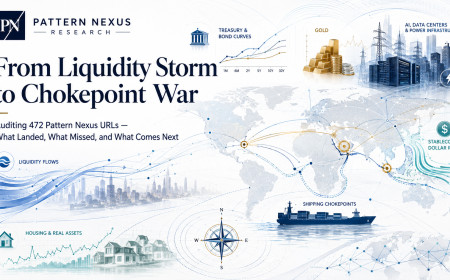 Article · related
From Liquidity Storm to Chokepoint War: Auditing 472 Pattern Nexus URLs — What Landed, What Missed, and What Comes Next
I audited the public Pattern Nexus record across 472 unique URLs and the saved full-text article export, then rebuilt the major calls from the original wording. This long-form report scores the liquidity/QT pivot, gold, the sub-3% 10-year miss, housing, stablecoin/Treasury rails, Venezuela, Iran/Hormuz, China/Taiwan, Greenland, AI power, robotics and the war economy, and finishes with a falsifiable map of what comes next.
Published Aug 20, 2026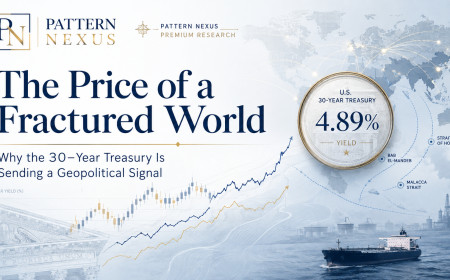 Article · related
The Price of a Fractured World: Why the 30-Year Treasury Is Sending a Geopolitical Signal
Something about the global system feels uncomfortable, and the last month of data suggests that feeling has a measurable foundation. The U.S. 30-year Treasury has pushed above 5.3%, real long-term yields are above 3%, the Strait of Hormuz remains severely constrained, U.S. missile inventories are being consumed across multiple theaters, Russia and Ukraine are attacking the commercial infrastructure of the Black Sea, China continues pressure around Taiwan and the South China Sea, new regional defense blocs are forming, tariffs are fragmenting trade, and governments and AI companies are simultaneously competing for enormous amounts of capital. This Pattern Nexus investigation asks whether the long end of the Treasury market is becoming one of the cleanest aggregate prices of a more fragmented world—and separates that thesis from the much weaker claim that the Treasury market itself is failing.
Published Aug 18, 2026 Poll · related
Geopolitics Pulse Poll (Jan 7, 2026 — 6:00 PM CT)
As of 6:00 PM CT on Jan 7, 2026, the risk tape is being shaped by Venezuela/Caribbean control claims, Middle East fragmentation and Iran stress, Arctic basing and Greenland leverage, and the China–Taiwan drill spiral. This poll captures where readers think escalation risk is concentrating, how it impacts markets and energy routes, and what signals matter next.
Published Jan 7, 2026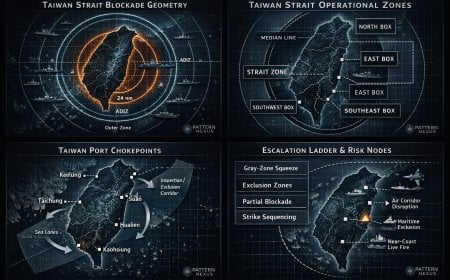 Article · related
Taiwan–China Drill Spiral (Dec 2025): “Justice Mission 2025,” Taiwan’s Rapid-Response Posture, and the Blockade Geometry
China’s largest-to-date live-fire exercise around Taiwan (“Justice Mission 2025”) rehearsed blockade and strike sequencing. Taiwan answered with rapid-response readiness and whole-of-society posture. This Pattern Nexus framework breaks down the operational geometry, map logic, escalation ladders, and what to watch next.
Published Dec 30, 2025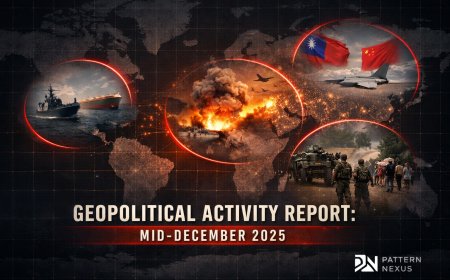 Article · related
Geopolitical Activity Report: Mid-December 2025
A systems-level geopolitical breakdown of Dec 10–21, 2025, as sanctions hardened into blockades, deterrence shifted toward modular escalation, and multiple theaters—from Venezuela to Taiwan to Southeast Asia—quietly reset global risk baselines.
Published Dec 21, 2025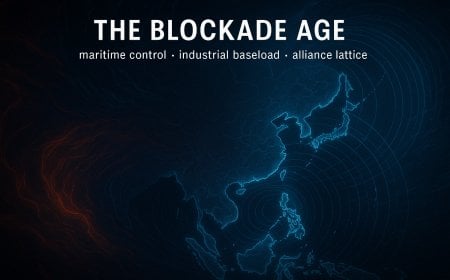 Article · related
Blockade Age: Why U.S.–China “Trade Deals” Are Just Tempo Management in a Maritime Power War
The U.S.–China relationship isn’t thawing — it’s entering the Blockade Age. Rare-earth deals, naval posture, island-chain strategy, and Arctic corridors signal permanent parallel supply chains, maritime chokepoints, and regional security blocs shaping the next decade. Taiwan becomes a fortified node. China remains boxed by geography. The U.S. builds a perimeter of sensors, subs, and allies.
Published Nov 2, 2025