

Project Suncatcher
Automatically indexed from the existing article tag.
Theses, forecasts, models, and paths
No published research objects yet
This topic is ready for editors to connect a thesis, forecast, model, or research path.
Latest articles
 Article · related
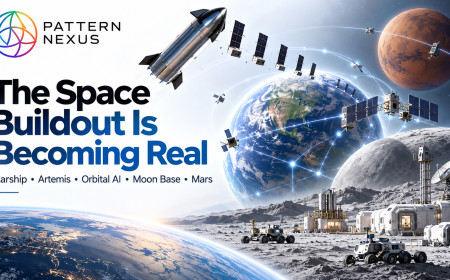
The Space Buildout Is Becoming Real: Starship Reaches Orbit, Artemis Rewrites the Moon Plan, Orbital AI Goes Live, and Mars Infrastructure Expands
Since the September 23 Pattern Nexus space update, several themes that were still forecasts have crossed into hardware and operations. Starship reached Earth orbit for the first time and deployed 26 Starlink V3 satellites. NASA rewrote Artemis III into a 2027 low-Earth-orbit systems test and shifted the first Artemis surface landing to Artemis IV in 2028, while revealing much more explicit Starship and Blue Moon lunar logistics architectures. NASA also moved Moon Base utilities into contracted development: 5G/Wi-Fi surface communications, lunar terrain vehicles, new science payloads, resource extraction, manufacturing, and nuclear power. Google launched the first Project Suncatcher orbital TPU prototype and confirmed it is operating, while larger orbital-data-center concepts are moving from theory toward hardware tests but remain economically unproven. Japan launched MMX to Phobos, NASA advanced the fission-powered SR-1 Freedom/SkyFall Mars architecture, commercial downmass and satellite servicing continued to mature, sovereign networks expanded, and military proliferated LEO added another 21 transport satellites. The Pattern Nexus update is no longer merely that space is becoming infrastructure. The infrastructure is beginning to acquire utilities: power, bandwidth, mobility, compute, maintenance, return logistics, resource processing, and strategic control.
Published Oct 28, 2026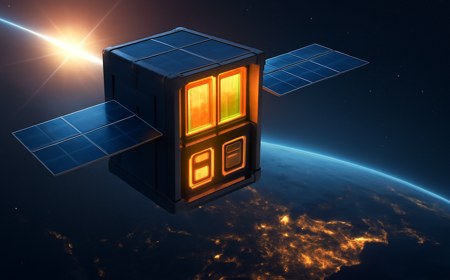 Article · related
Google перетворює орбітальні TPU на вихід для інфраструктури ШІ
SpaceX планує 1 жовтня 2026 року провести Transporter-18 rideshare з Ванденберга, з проектом Suncatcher M1, зазначеним у послідовності розгортання як вантаж Planet Labs. Google повідомляє, що місія збиратиме дані в орбіті про поведінку TPU під час стресу при запуску, радіації та термічних екстремумів. Більший сигнал полягає в тому, що вузькі місця в інфраструктурі ШІ починають штовхати гіпермасштабні компанії за межі припущень про наземні дата-центри і в експерименти з космічною енергією, частотою запусків і орбітальними мережами.
Published Oct 1, 2026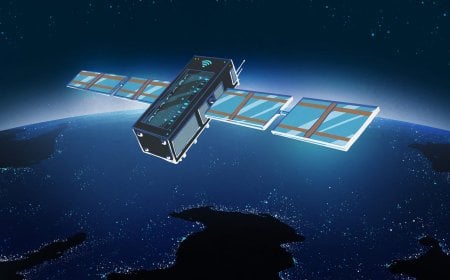 Article · related
Гамбіт Google щодо космічного AI-центру даних: Проект Suncatcher та новий обчислювальний фронт
Google тільки що оголосила про плани побудувати першу констеляцію AI-центрів даних на орбіті — сонячно живлений обчислювальний кластер, розроблений для того, щоб уникнути обмежень енергетики Землі. Цей аналіз досліджує інженерію, фізику, наслідки для мережі та те, як це безпосередньо вписується в AI-індустріальний маховик.
Published Nov 16, 2025