
The ISS Is Leaking Again: Aging Hardware, Russian Segment Cracks, and the Closing Window Before Commercial Space Stations
The International Space Station air leak is not just a scary headline about astronauts in danger. It is a systems warning. The leak sits in the Russian PrK transfer tunnel attached to Zvezda, a small but strategically important passage tied to docking, pressure control, hatch isolation, and the larger countdown toward ISS retirement. NASA and Roscosmos can manage the immediate risk, but the deeper problem is structural: aging orbital infrastructure now has to survive long enough for commercial replacements, deorbit planning, crew rotation, cargo logistics, and international coordination to line up before 2030.
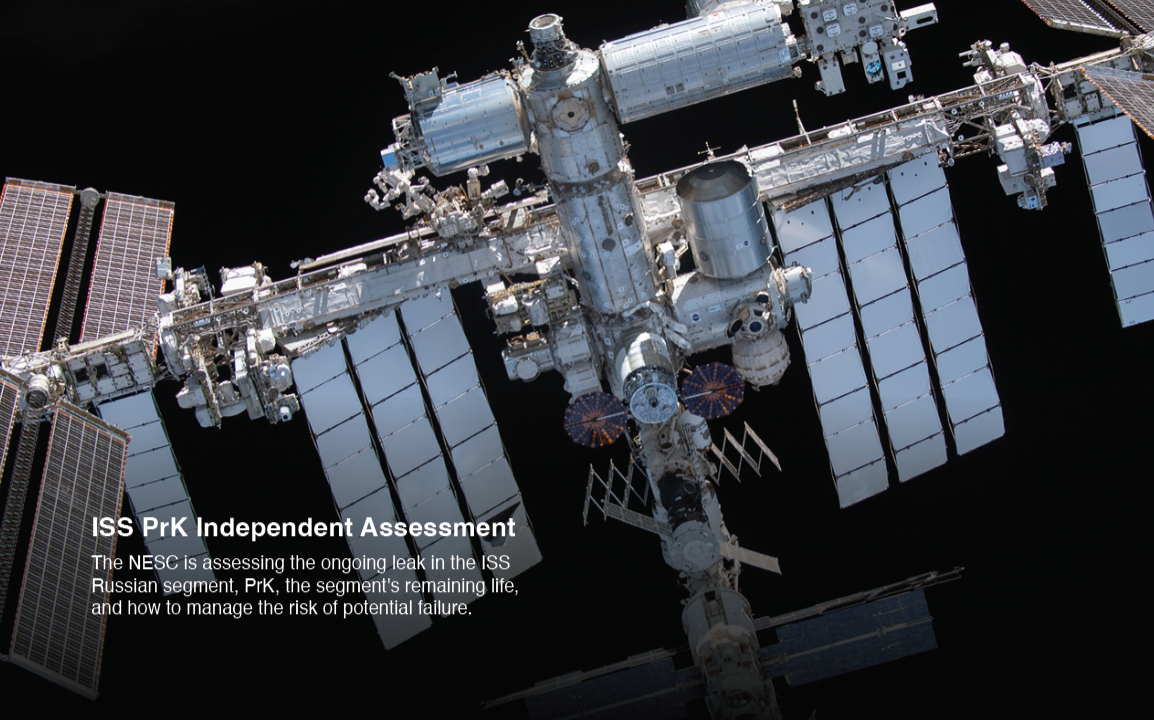
The scary version of this story is simple: the International Space Station is leaking again, and emergency plans are standing by for seven astronauts.
The more accurate version is more important. The leak is not a Hollywood-style rupture through the entire station. It is a recurring pressure-loss problem in the Russian PrK transfer tunnel connected to the Zvezda service module. That area has been watched, patched, isolated, repressurized, debated, and risk-modeled for years.
NASA is not presenting this as an immediate evacuation event. The station has isolation procedures, hatches, pressure monitoring, crew-return vehicles, and contingency planning. The deeper Pattern Nexus issue is not panic. It is timing.
The ISS has to survive long enough for commercial low-Earth-orbit replacements to become operational. The leak is a visible warning light on that transition layer. Old state infrastructure is aging while the replacement system is still being built.
This is not just a space-news article. It is an infrastructure article. The ISS leak exposes how old systems are kept alive through procedures, patches, cooperation, and risk tolerance while the next system is still under construction.
That is the same pattern seen in energy grids, financial rails, military stockpiles, supply chains, telecom infrastructure, AI data centers, and commercial space. The official story is usually about continuity. The real story is the stress inside the transition window.
Pattern Nexus is interested in the gap between what the public sees and what the system has to manage. The public sees a leak. The system sees pressure boundaries, hatch rules, diplomatic dependency, mission schedules, retirement planning, and the commercial replacement timeline.
The ISS leak matters because it shows a mature system entering its bridge phase. That is the phase where the old platform cannot be retired yet, the new platform is not ready yet, and every defect becomes more strategically important because there is less margin left.
The PrK leak is a local problem physically, but a system-level problem structurally. It touches crew safety, Russian-segment reliability, NASA-Roscosmos coordination, commercial mission timing, cargo access, deorbit planning, and the larger transfer from government-led orbital infrastructure to commercial low-Earth-orbit stations.
Pattern Nexus read: the leak is not the whole story. The handoff window is.
Pick the version that matches how deep you want to go.
This article is built in three versions. Start with the version that fits how deep you want to go, then move down if you want the full systems-level breakdown.
Reader-Friendly Version
The International Space Station is leaking again, but the first thing to understand is that this does not mean the whole station is ripping open. The leak is tied to a small Russian transfer tunnel called the PrK, which is connected to the Zvezda service module.
That distinction matters because a leak in space sounds like instant catastrophe. In reality, space stations are designed around compartmentalization. Hatches can close. Sections can be isolated. Pressure can be monitored. Air can be added back in controlled amounts. The system does not depend on one giant open interior with no way to separate the problem.
The reason this story still matters is because this leak has been around for years. NASA and Roscosmos have tracked pressure issues in this area since 2019. It has been patched. It has slowed. It has come back. At different points, officials thought repairs had stabilized the issue. Then the pressure data changed again.
The latest reporting says the leak rate is around one pound of air per day from the affected Russian transfer tunnel. That is not the same thing as sudden explosive decompression. It is a slow loss inside a known problem area. NASA and Roscosmos are managing it by keeping that area at lower pressure and adding small repressurizations when needed.
The important question is not only, “Are the astronauts safe today?” Based on public information, NASA is not describing this as an immediate evacuation event. The bigger question is, “How much longer can this aging system keep functioning before the replacement system is ready?”
That is where this turns into a Pattern Nexus story.
The ISS is not just a science lab. It is a geopolitical platform, a commercial test bed, a human-spaceflight bridge, a technology development zone, a diplomatic object, and a symbol of the old international space order. It has to last long enough for commercial stations to take over. If it fails too early, the United States and its partners risk a gap in low-Earth-orbit presence.
So the leak is not just a leak. It is a countdown signal. It tells us that the old platform is aging while the new platform is not fully online yet.
The Main Point
The ISS leak should not be read as panic porn. It should be read as infrastructure truth. Every old system eventually reaches the point where maintenance, politics, replacement timing, and risk tolerance all converge.
The station can be operational today and still be flashing a warning light about the future. Those two things are not contradictory. That is how mature infrastructure works. It continues functioning while engineers manage more and more risk behind the scenes.
What Is Actually Leaking
The leak is associated with the Russian PrK transfer tunnel attached to the Zvezda service module. That area connects part of the Russian segment to a docking pathway used for spacecraft access.
This is not the same thing as saying the entire ISS is leaking evenly. It is a known area, inside a known segment, with known operational mitigations. That is why the station can continue operating while NASA and Roscosmos keep monitoring and managing the pressure behavior.
Why It Matters
Air leaks on a crewed orbital platform are serious because the station is a pressure vessel sitting in vacuum. A small leak is manageable only if the system knows where it is, can isolate it, can monitor it, and can keep it from becoming a wider station problem.
The deeper issue is not only the current leak rate. The deeper issue is what the leak says about age. The ISS has been in orbit for decades. It has been assembled, docked to, undocked from, heated, cooled, vibrated, repaired, reboosted, and occupied nonstop. Every year adds more maintenance demand.
The Replacement Problem
NASA wants the next era of low Earth orbit to be commercial. Instead of owning one government-led station forever, NASA wants to become one customer among many on privately operated orbital platforms.
That sounds clean on paper. In practice, it creates a timing trap. The old system has to last until the new system is ready. The new system has to become real before the old system loses too much margin. The leak is one of the signals inside that transition window.
Pattern Nexus Read
The public sees a leak. The system sees a countdown.
The leak is the visible symptom. The real story is the overlap between aging state infrastructure and not-yet-ready commercial infrastructure. That is the bridge window. That is where the risk lives.
Pattern Nexus translation: the ISS leak is the visible crack in a larger transition system. The hardware is old, the replacement layer is unfinished, and the entire low-Earth-orbit strategy depends on those two timelines not separating too far.
The Leak Is the Warning Light, Not the Engine
The ISS leak matters because it shows a system in its final bridge phase.
That is the phase where institutions keep telling the public the transition is planned, controlled, funded, and on schedule. But underneath that narrative, engineers are managing old hardware, budgets are tightening, commercial replacements are unfinished, and risk margins are narrowing.
The PrK leak is the visible symptom. The real issue is the overlap between aging state infrastructure and not-yet-ready commercial infrastructure.
In a stable system, the old platform hands off to the new platform cleanly. In an unstable system, the old platform starts producing failures before the new one is fully ready. That is the risk window NASA is walking through.
The public sees a leak. The system sees a countdown.
Sources
- NASA, Expedition 74 mission page — Supports the active ISS mission and crew context.
- NASA Engineering and Safety Center, ISS PrK Independent Assessment — Supports the PrK transfer-tunnel assessment and engineering-risk framing.
- NASA Office of Inspector General, NASA’s Management of Risks to Sustaining ISS Operations Through 2030 — Supports the Service Module Transfer Tunnel risk, highest leak-rate discussion, and 5-by-5 risk classification.
- NASA ISS Blog, Ax-4 launch delay — Supports the connection between the Zvezda pressure signature and commercial mission timing.
- Gizmodo / Ars Technica reporting on May 2026 ISS leak recurrence — Supports the latest public reporting on the pressure drop after Progress 95 unloading and the lower-pressure management strategy.
- NASA, U.S. Deorbit Vehicle contract announcement — Supports the controlled-deorbit planning and transition context.
- NASA, Commercial Low Earth Orbit Development Program — Supports the commercial-station transition framework.
Methodology Note
This article separates the immediate operational question from the systems-level transition question. The immediate question is whether the leak is being managed safely today. The systems-level question is whether an aging orbital platform can retain enough margin until commercial low-Earth-orbit replacements are ready to absorb the mission load.
Pattern Nexus Note: The ISS leak should not be read as panic porn. It should be read as infrastructure truth. Every legacy system eventually reaches the point where maintenance, politics, replacement timing, and risk tolerance converge. The PrK leak is not just air escaping a Russian tunnel. It is time escaping the transition plan.
Frequently Asked Questions
Каква е вашата реакция?
 Харесай
0
Харесай
0
 Не ми харесва
0
Не ми харесва
0
 Любов
0
Любов
0
 Смешно
0
Смешно
0
 Уау
0
Уау
0
 Тъжен
0
Тъжен
0
 Ядосан
0
Ядосан
0

Founder of Pattern Nexus. I research markets, macro, geopolitics, AI, history, ancient systems, and the patterns most people overlook. I’m also building Market Radar, a trading scanner designed to read pressure, risk, confirmation, and setup quality before chasing a move. Pattern Nexus is where I connect the dots between data, history, technology, and the bigger system playing out around us.





Коментари (0)