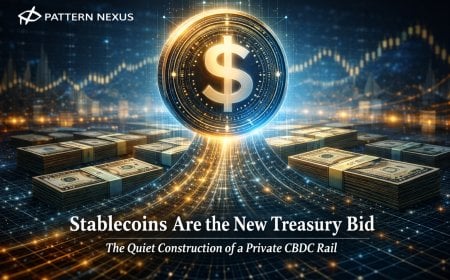
Stablecoins are not a crypto sideshow. They are being shaped into regulated dollar settlement instruments backed by U.S. Treasuries, creating a private-sector CBDC rail without calling it a CBDC. This Pattern Nexus fram…
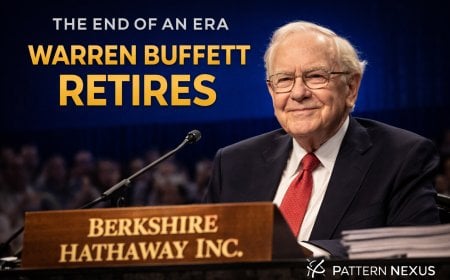
Warren Buffett’s retirement marks the end of the capital allocation era. This is not just a leadership change at Berkshire Hathaway, but the closing of a postwar investing regime built on patience, permanent capital, an…
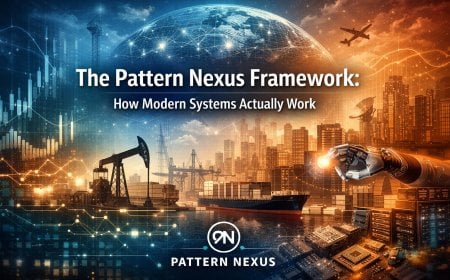
A structural framework explaining modern economies as liquidity-gated systems where central banks regulate monetary flow between upstream credit creation and downstream prices, assets, and inflation.
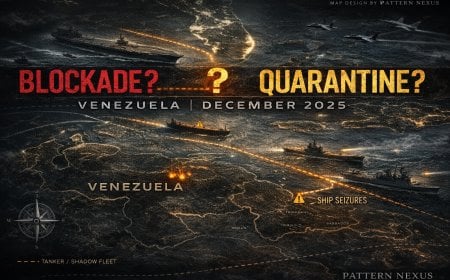
The U.S. escalation around Venezuela in December 2025 is not a single event. It is a coercion stack: maritime interdictions, sanctions enforcement by force, airspace signaling, Congressional war-powers friction, interna…
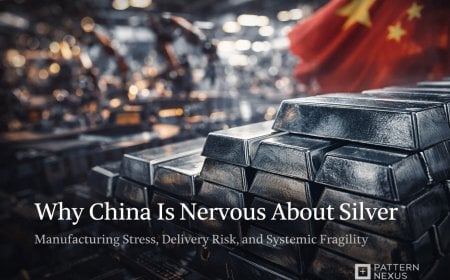
Silver’s rapid rise threatens China’s manufacturing model, export margins, and capital controls. Unlike gold, silver is an embedded industrial input—making volatility, not price level, the real danger.
Compute is a controllable chokepoint. Advanced chips require rare tools, rare know-how, and permissioned supply chains. Export controls, fab constraints, and cloud gates now throttle AI capabilities as a new layer of mo…
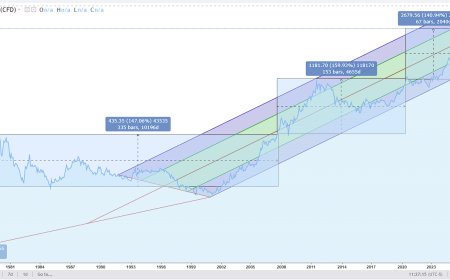
Gold’s long-term rise is not a speculative breakout or inflation panic. It reflects repeated policy constraint, failed normalization, and the permanent reintroduction of liquidity to preserve funding stability. This rep…
A systems-level framework for understanding modern economies beyond narratives. Pattern Nexus examines liquidity, assets, production, technology, and human behavior through structure, scale, and constraints rather than …
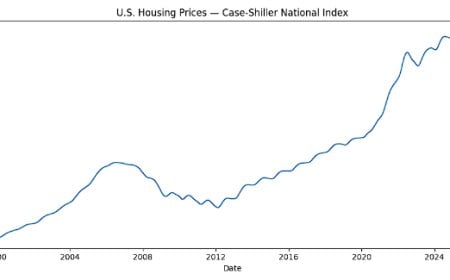
Gold’s 2025 repricing didn’t happen in isolation. Measured in gold, U.S. housing has quietly lost 40–50% of its value without a nominal crash. This article breaks down the hard-asset divergence, why it can’t persist, an…
If Pattern Nexus has been useful to you, help keep it growing.
Pattern Nexus is independently built and operated.
Most of the research remains publicly available,
but the data, servers, tools, research and time behind it all
have real costs.
Books, memberships and direct support help fund the next stage
without putting everything behind a paywall.