
The Command Line — Audio-Video Edition
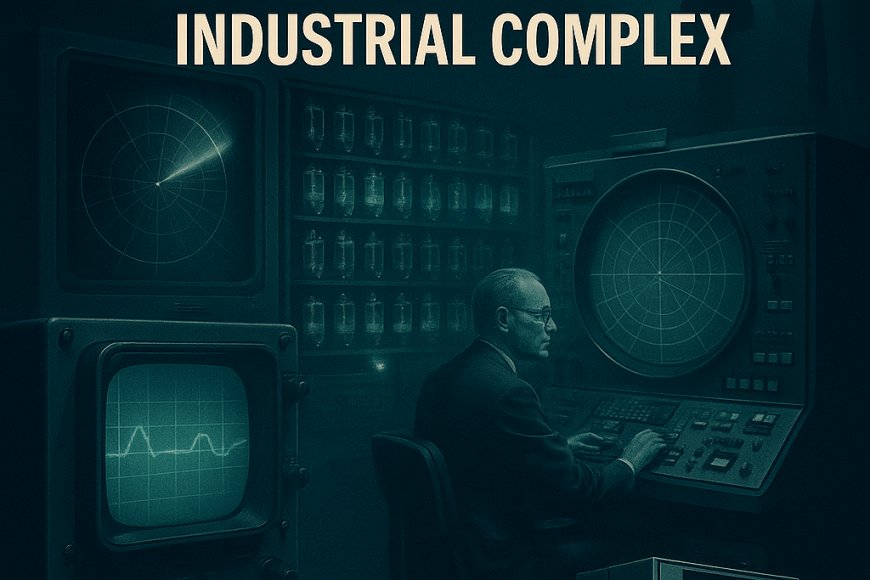
Episode 3 of the weekly Pattern Nexus audio-video series turns Part 3 of Cycles of Power into a shorter story about how Dartmouth, integrated circuits, ARPA, SAGE, Fairchild Semiconductor, Silicon Valley, and IBM built the first compute–defense–industrial command layer—and why today's AI–defense–cloud complex is its direct descendant.
About this episode
- Dartmouth gave artificial intelligence a name and an institutional agenda. The 1956 workshop framed learning, language, reasoning, and intelligence as processes a machine might simulate.
- Integrated circuits made computation scalable. The transistor, planar manufacturing, the integrated circuit, and the MOSFET began turning room-sized machines into an industrial platform.
- ARPA and SAGE converted research into command infrastructure. Frontier funding, real-time radar processing, long-distance digital communications, and interactive terminals shortened the loop between detection and response.
- Fairchild and IBM built the industrial and corporate layers. Silicon Valley multiplied semiconductor talent while mainframes made centralized data processing essential to large organizations.
Episode 1 built the industrial hardware. Episode 2 built the dollar fortress around it. Episode 3 follows the compute, defense, and information networks that became the machine's command layer.
Start with Episode 1: Watch or listen to “The First AI Age — Audio-Video Edition” →
Continue with Episode 2: Watch or listen to “The Dollar Fortress — Audio-Video Edition” →
The audio-video is the condensed narrative. The original article contains the complete Pattern Nexus framework, historical detail, and sources.
Information became infrastructure—and infrastructure became power
Between 1956 and 1969, early AI research, semiconductors, defense funding, real-time networks, mainframes, and the Silicon Valley cluster fused into the first compute–military–industry complex.
The modern parallel is the AI–defense–cloud stack built from advanced chips, data centers, power systems, fiber routes, model laboratories, sovereign funding, and real-time operational data.
Read the full original article
The audio-video is the condensed narrative. The original article contains the full Pattern Nexus framework, historical detail, and sources.
Preview, subscribe, or get the book
The book expands the framework behind this story. Start with the free preview, unlock the complete digital edition directly from Pattern Nexus, choose a subscription, or buy the ebook or hardcover from Lulu.
Free Preview
Direct Digital Edition
Direct Hardcover
Subscriptions
Lulu Ebook
Lulu Hardcover
Pattern Nexus publishes independent research and commentary for informational and educational purposes.
Qual è la tua reazione?
 Mi piace
0
Mi piace
0
 Non mi piace
0
Non mi piace
0
 Amore
0
Amore
0
 Divertente
0
Divertente
0
 Wow
0
Wow
0
 Triste
0
Triste
0
 Arrabbiato
0
Arrabbiato
0

Founder of Pattern Nexus. I research markets, macro, geopolitics, AI, history, ancient systems, and the patterns most people overlook. I’m also building Market Radar, a trading scanner designed to read pressure, risk, confirmation, and setup quality before chasing a move. Pattern Nexus is where I connect the dots between data, history, technology, and the bigger system playing out around us.



Commenti (0)