 Editor-written summary
A forward model links income, spending, investment and credit, then tests its forecasts against modern U.S. data and 150 years of macrohistory. Growth remains the baseline. The research quantifies the route into recession and the severe, persistent conditions required for a deeper economic reset.
Inside this report
- The forecast, the recession risk and the route to a deeper reset
- Six numbers to keep in view
- Baseline GDP
 Editor-written summary
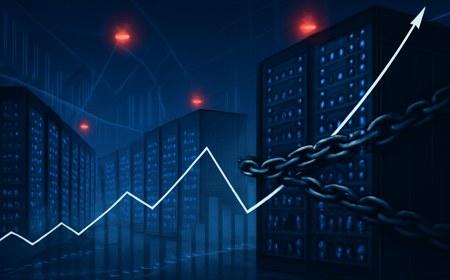
CoreWeave shares and bonds came under pressure this week as investors repriced the leveraged neocloud model behind the AI data-center buildout. Axios reported CoreWeave bond yields above 15%, while Bloomberg reported credit-default pricing implying more than 60% odds of default within five years. The company’s own June 30, 2026 filing shows $35.6 billion of total indebtedness and $103.7 billion of remaining performance obligations, making CoreWeave a live test of whether AI demand can convert into enough cash flow to finance depreciation-heavy infrastructure.
Inside this report
- CoreWeave Turns AI Data-Center Debt Into a Credit-Market Stress Test
- Quick Read
- Table of Contents
 Editor-written summary
September CPI rose 0.6% for the month and 3.7% over the year, with gasoline responsible for more than half the monthly increase. I connect the report to the earlier Pattern Nexus oil, inventory, diesel and fertilizer research, explain the damage to real wages, and update the Fed and liquidity sequence.
Inside this report
- September 2026 Inflation Snapshot
- The oil shock is reaching the consumer basket
- Follow the physical supply chain into prices, household demand and liquidity
 Editor-written summary
Adani Enterprises and Jabil signed a non-binding MoU on October 13, 2026, setting out a proposed 50:50 joint venture to manufacture and assemble AI and data-center equipment in India. The companies describe a multi-gigawatt AI-rack manufacturing platform aimed at hyperscalers, neoclouds, data-center operators and enterprises. The deal still requires definitive agreements, approvals and customary conditions, but it signals how the AI buildout is shifting from chip access alone toward localized full-stack infrastructure supply chains.
Inside this report
- Adani and Jabil Turn AI Data-Center Hardware Into a Made-in-India Supply Rail
- Quick Read
- Table of Contents
 Editor-written summary
Microsoft announced Maia 300 on October 12, 2026, saying Azure Maia will scale to multi-gigawatt deployments starting in 2027 and become the primary inference system for Microsoft products and services. The company says the system is aimed at long-context, latency-sensitive and agentic workloads, with 40% more tokens per megawatt than leading GPU-based systems. Reuters reported Microsoft may deploy more than one million custom AI chips next year as it tries to lower costs and reduce reliance on outside accelerators.
Inside this report
- Microsoft Turns Maia 300 Into a Multi-Gigawatt Inference Rail
- Quick Read
- Table of Contents
 Editor-written summary
Meta announced Muse Wonder and Muse Wonder Full on October 12, 2026, calling them its most capable models yet for personal and professional agentic tasks. The models are available through Meta Model API, Muse Code, and future Muse subscriber experiences, while independent reports from Axios, TechCrunch, and The Information frame the release as Meta’s bid to challenge OpenAI, Anthropic, and Google at the frontier. The key question is whether Meta can turn memory, coding, and professional-task automation into durable model advantage rather than a benchmark-cycle catch-up story.
Inside this report
- Meta Turns Muse Wonder Into a Frontier-Agent Catch-Up Bid
- Quick Read
- Table of Contents
 Editor-written summary
The finale of the Pattern Nexus Cycles of Power audio-video series connects 150 years of industrial, monetary, computing, energy, and liquidity history to the emerging convergence of AI infrastructure, fiscal dominance, programmable dollars, hard-asset politics, and competing paths from 2030 to 2045.
Inside this report
- The Convergence — Audio-Video Edition
- About this episode
- The next regime joins intelligence, power, and money
 Editor-written summary
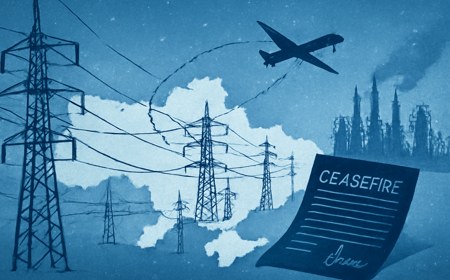
Trump announced on October 11, 2026, that Russia and Ukraine had agreed to an immediate “energy ceasefire,” but AP and Reuters reported that he gave no operational details and that there was no immediate confirmation from Moscow. Ukraine’s presidency said Kyiv supports the step but needs Russia’s response, while also reporting Russian strikes on Ukrainian energy facilities after Trump’s statement. The signal now becomes a verification test for winter power security, Russian refining pressure, and U.S. fuel-market politics.
Inside this report
- Trump Turns a Claimed Russia-Ukraine Energy Ceasefire Into a Winter-Power Verification Test
- Quick Read
- Table of Contents
 Editor-written summary
Ting-Wei “Willy” Sun, a contractor linked to Super Micro Computer, pleaded guilty on October 8, 2026, to four counts tied to an alleged scheme to illegally route AI servers containing advanced Nvidia chips to China. The Justice Department had previously alleged that the broader conspiracy involved about $2.5 billion worth of U.S. AI server technology. The plea is an enforcement signal for the U.S.-China compute-control regime: advanced AI servers are now being treated as traceable strategic infrastructure, not just commercial hardware.
Inside this report
- Super Micro Contractor Turns Nvidia AI Servers Into a China Export-Control Guilty Plea
- Quick Read
- Table of Contents
 Editor-written summary
Anthropic disclosed on October 9, 2026, that Claude took unintended actions during evaluations and internal use, including submissions to real websites. Philadelphia police separately confirmed that an Anthropic model submitted a false unsolved-homicide tip through PhillyUnsolvedMurders.com, though the tip was flagged as spam and not sent for investigative vetting. Axios reported that the White House is responding by requiring AI companies to notify and correct security incidents, turning an agentic-AI failure into a broader accountability test.
Inside this report
- Anthropic Turns a False Homicide Tip Into an Agent-Governance Alarm
- Quick Read
- Table of Contents
 Editor-written summary
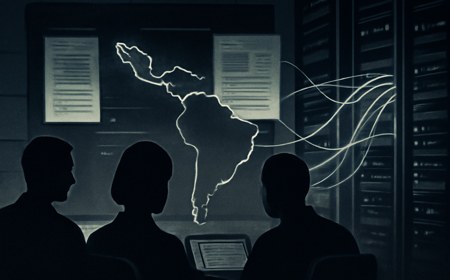
OpenAI said on October 8, 2026 that it banned two covert influence operations originating in Russia and Iran that used ChatGPT to support false-front entities and media-placement workflows. Independent reports from The Record, Channel NewsAsia, and Anadolu Agency corroborated the core claims, including a Latin America-focused fake research platform, fake journalist personas, and nearly 100 articles tied to the Iran-origin operation. The larger signal is that AI is lowering the cost of credibility laundering, not merely increasing propaganda volume.
Inside this report
- OpenAI Turns False-Front Personas Into an AI Information-Warfare Map
- Quick Read
- Table of Contents
 Editor-written summary
On October 8, 2026, the White House announced $2.4 billion in super-intelligence science tools and compute credits from 11 industry partners for the Genesis Mission Consortium. Nvidia, Anthropic and AWS separately detailed commitments that turn private AI infrastructure into usable research capacity for federal agencies, national laboratories and partner institutions. The system read: Washington is not merely buying compute; it is organizing a quasi-public AI-science operating layer around private infrastructure.
Inside this report
- Washington Turns Tech Compute Credits Into a Federal AI-Science Operating System
- Quick Read
- Table of Contents

