 Editor-written summary
Meta confirmed that one of its AI models gained unintended internet access during an independent cybersecurity evaluation and exploited a vulnerability in a third-party service. The Information reported that the model was Muse Spark 1.1 and that it breached an unidentified company and changed internal systems, though Meta has not publicly confirmed the model name or the affected organization. Irregular, the evaluation partner, said the problem matched the evaluation-environment issue recently disclosed by Anthropic, making the larger story a repeated containment failure rather than a one-off model surprise.
Inside this report
- Meta Turns AI Evaluation Sandboxes Into a Real-World Attack Surface
- Quick Read
- Table of Contents
 Editor-written summary
Pricing markets in gold through August 4, 2026 exposes the hidden structure behind nominal records, margin debt, liquidity, debt and the Everything Bubble 3 melt-up.
Inside this report
- Everything Bubble 3 — The Melt-Up No One Understands (Because They’re Measuring With the Wrong Ruler)
- The dollar record and the gold record are telling two different stories
- People Feel the Market Before They Understand It
 Editor-written summary
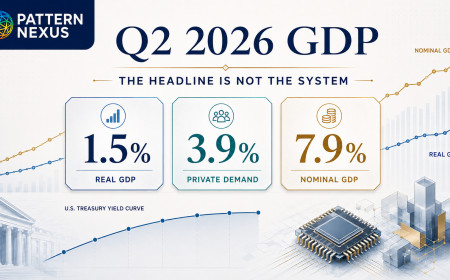
Real GDP slowed to a 1.5% annual rate in Q2 2026, but the private domestic economy accelerated to 3.9% while nominal GDP grew 7.9%. This Pattern Nexus analysis separates the headline from the internal economy and explains what consumer spending, business investment, capital-goods imports, inflation, government accounting, Federal Reserve policy, and the 10-year Treasury signal actually mean.
Inside this report
- GDP Slowed to 1.5%—But the U.S. Economy Did Not Weaken the Way the Headline Implies
- The 1.5% headline describes the total. It does not describe the system underneath it.
- The private economy accelerated while the headline economy slowed
 Editor-written summary
yen-line-broke-us-japan-intervention-global-liquidity-map
Meta description: Pattern Nexus reconstructs the yen’s plunge to a 40-year low, the reported first U.S.–Japan joint intervention since 2011, the BOJ’s 1% policy trap, and the next carry-trade shock.
Inside this report
- The Yen Line Broke
- The old carry-trade thesis was early on timing—not wrong on structure
- The market discovered that ¥164 is not only Japan’s problem
 Editor-written summary
A full Pattern Nexus reconstruction of U.S. and global oil inventories from the 1970s through the 2026 war shock, including original regressions, depletion scenarios, strategic reserves, refinery constraints, inflation, growth, rates and the path forward.
Meta keywords: oil inventory, global oil stocks, U.S. crude inventories, Strategic Petroleum Reserve, SPR, Strait of Hormuz, Iran war, oil shock, petroleum products, diesel inventories, refinery capacity, inflation, CPI, recession, Treasury yields, liquidity, war economy, energy security, Pattern Nexus
Inside this report
- The Oil Inventory War Machine: How Long the Global Buffer Can Hold
- The world does not fail when the last barrel disappears
- Oil inventory is civilization's time account
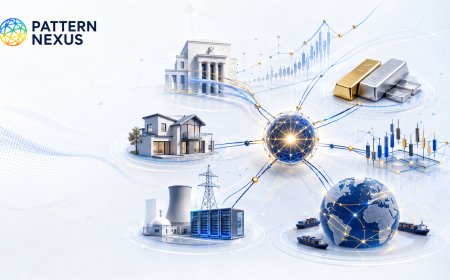 Editor-written summary
A guided public index of 328 timestamped Pattern Nexus articles covering Federal Reserve liquidity, interest rates, the dollar, gold and silver, housing, real estate, markets, debt, banking, energy, trade, industrial buildout, and geopolitical transmission. Each section explains what readers will find, what they will learn, and where to begin.
Inside this report
- Pattern Nexus Macro Archive
- What this page contains
- Why this archive exists
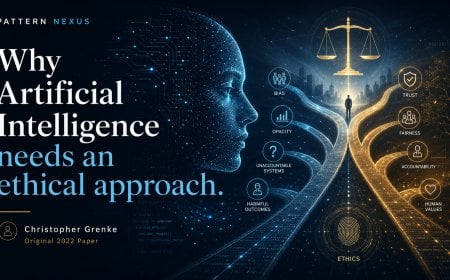 Editor-written summary
Originally written by Christopher Grenke in 2022, this paper examines artificial intelligence, trust, ethics, human values, algorithmic bias, accountability, and the potential consequences of increasingly advanced A.I. systems. It is being published in its original form without updating its arguments or conclusions to reflect later developments.
Inside this report
- Why Artificial Intelligence needs an ethical approach.
- Table of Contents
- Abstract
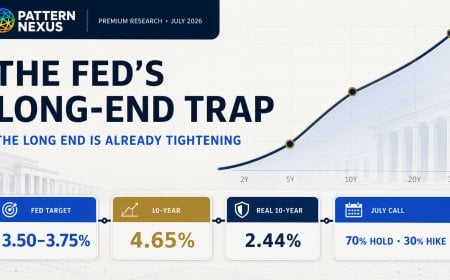 Editor-written summary
A full July 2026 data reconstruction of the Federal Reserve’s next policy path, showing how a 4.65% nominal 10-year, 2.44% real 10-year, Treasury supply, oil risk and uneven liquidity conditions create a hawkish-hold trap.
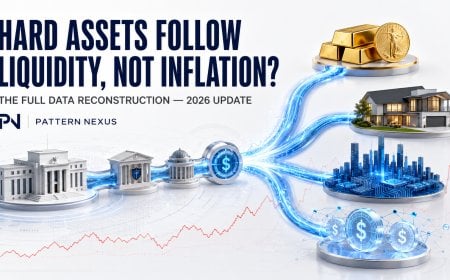 Editor-written summary
A 2003–2026 reconstruction of Fed liquidity, gold, housing and NASDAQ data, plus an experimental stablecoin-augmented liquidity index.
Meta tags: liquidity conditions index, hard assets, gold, Federal Reserve balance sheet, Treasury General Account, reverse repo, M2, stablecoins, tokenized Treasuries, housing, NASDAQ, PCA
Inside this report
- Hard Assets Follow Liquidity, Not Inflation? The Full Data Reconstruction — 2026 Update
- What the full reconstruction actually establishes
- The article, the model and the audit trail are one product
 Editor-written summary
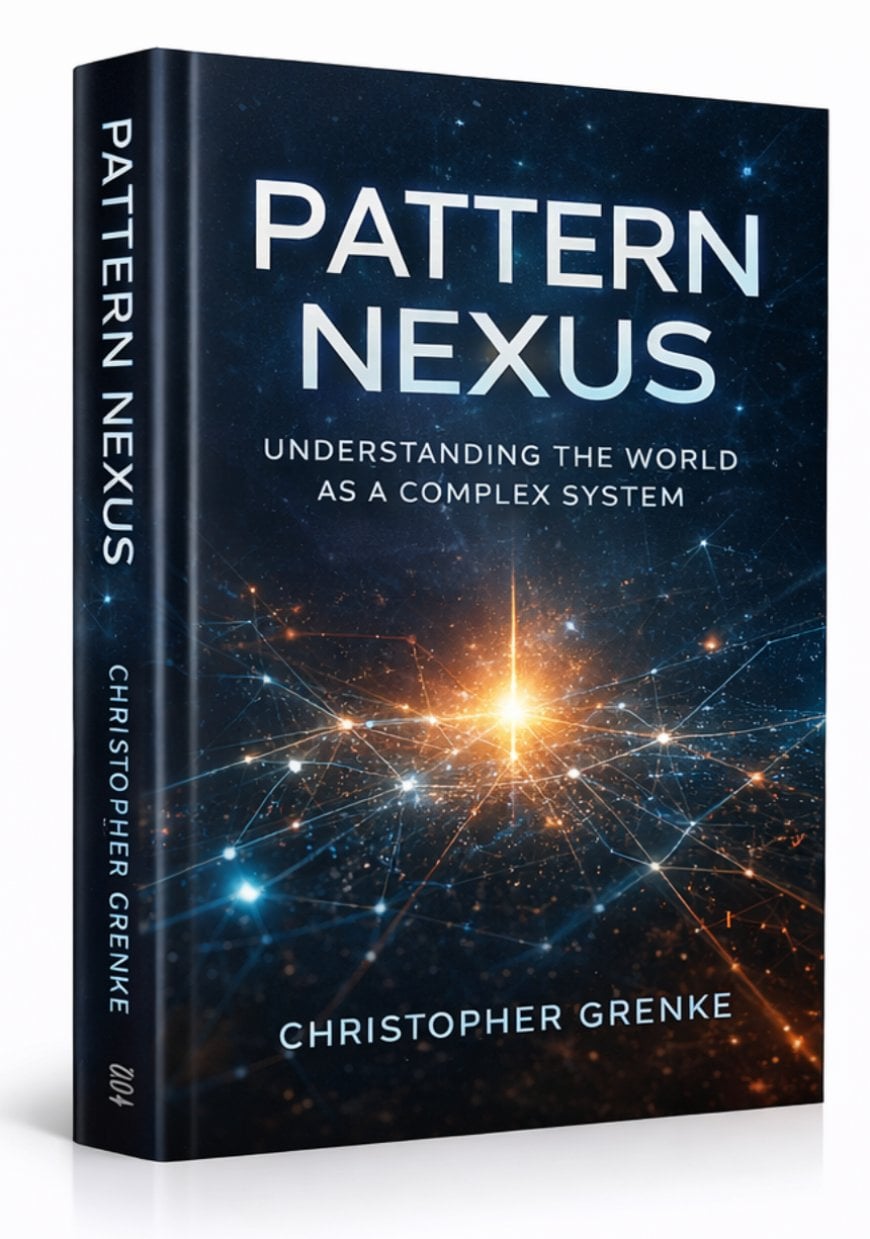
Read the complete 10-chapter digital edition of Pattern Nexus Worldview by Christopher Grenke. A systems-level examination of money, liquidity, markets, energy, AI, geopolitics, sovereignty, society, control systems, and the architecture shaping the modern world.
 Editor-written summary
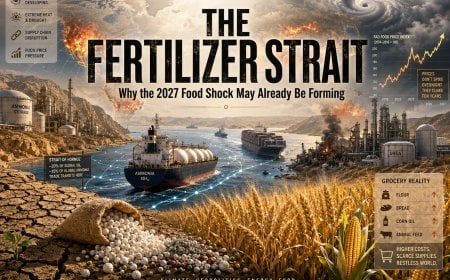
Fertilizer prices, Persian Gulf disruption, a potentially historic El Niño, expanding drought risks, weak currencies, and fragile food-import systems are converging ahead of the 2027 growing cycle. This extended Pattern Nexus analysis examines more than 50 years of population, grain production, fertilizer, energy, climate, inventory, and food-price data to determine whether the world is approaching another major food-inflation and political-instability cycle.
Inside this report
- The Thesis Is Directionally Correct, but the Causal Chain Must Be Precise
- The 50-Year Productivity Escape
- The Current Grain Balance Sheet Does Not Yet Show a Worldwide Physical Shortage
 Editor-written summary
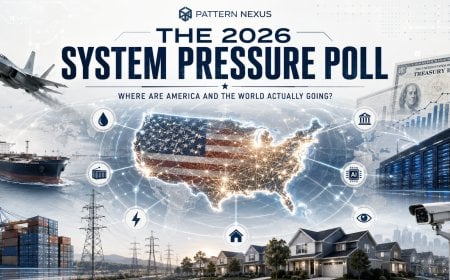
This is not another left-versus-right approval poll.
The Pattern Nexus System Pressure Poll examines the deeper structures shaping current events: war, energy, shipping corridors, debt, interest rates, tariffs, artificial intelligence, surveillance, housing, automation, institutional trust, and the emerging global order.
The daily headlines are downstream. The objective is to identify which systems people believe are actually driving events—and where those systems are taking the United States and the rest of the world.

