 Editor-written summary
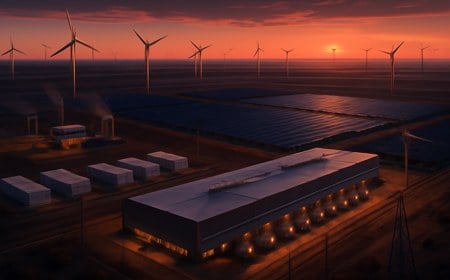
Google and Intersect Power announced construction of the Meitner Energy Center in Gray and Roberts Counties, Texas, pairing a new Google data center with dedicated new energy generation. Independent reporting says the project includes more than 1 gigawatt of wind, solar, and battery storage, with some on-site gas for firming and air cooling to limit water use. The strategic read: the AI bottleneck is shifting from chips alone to controllable energy access.
Inside this report
- Google Builds the Power Plant Into the AI Factory
- Quick Read
- Table of Contents
 Editor-written summary
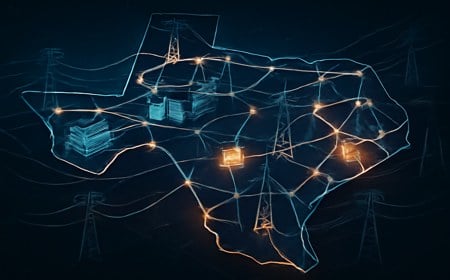
Reuters reported on June 5, 2026 that several large data centers and crypto facilities seeking to connect to the Texas grid failed key voltage reliability tests. ERCOT’s May 21 assessment found eight planned large loads totaling about 3.9 GW, modeled within roughly 20 GW of large-load representation, and identified four trip groups that could exceed the 3,200 MW threshold while not meeting NOGRR282 voltage ride-through requirements. The signal is that AI-era power risk is no longer only about finding enough megawatts; it is also about whether those megawatts stay connected through ordinary grid faults.
Inside this report
- AI Loads Fail the Texas Grid’s Ride-Through Test
- Quick Read
- Table of Contents
 Editor-written summary
The Hong Kong Monetary Authority announced on June 5, 2026 that it has convened a Tokenised Bond Expert Group to support wider adoption and scalability of tokenized bonds. The group’s membership spans banks, law firms, industry associations, market infrastructure and technology providers, with first discussions focused on how Hong Kong’s legal and regulatory regime applies to tokenized bond issuance and transactions. The system signal is that Hong Kong is treating tokenized bonds as future fixed-income plumbing, not a crypto side project.
Inside this report
- Hong Kong Starts Building the Tokenized Bond Rulebook
- Quick Read
- Table of Contents
 Editor-written summary
SpaceX disclosed a Google cloud service agreement covering approximately 110,000 Nvidia GPUs, CPUs, memory, and related components. Google is set to pay $920 million per month from October 2026 through June 2029, after a reduced-fee ramp period. The deal shows how scarce AI compute is being packaged as infrastructure revenue and valuation support as SpaceX advances its IPO process.
Inside this report
- Google Rents the AI Factory: SpaceX Turns GPU Capacity Into IPO-Ready Infrastructure Revenue
- Quick Read
- Table of Contents
 Editor-written summary
President Trump said on June 5, 2026, that his team would look into the idea of AI companies giving the American public a stake in their firms. NOTUS, Reuters, AP, Axios and The Washington Post all reported versions of the emerging debate, including Sam Altman’s outreach to Bernie Sanders and Washington’s broader interest in public participation in AI upside. The Pattern Nexus read: frontier AI is being reframed as strategic infrastructure that may sit on the national balance sheet, not just inside private cap tables.
Inside this report
- The State Wants a Piece of AI
- Quick Read
- Table of Contents
 Editor-written summary
U.S. forces shot down two Iranian drones near the Strait of Hormuz after CENTCOM said they threatened international maritime traffic, according to EFE, AFP via Arab News, AP and Xinhua. The incident followed a prior exchange in which U.S. forces downed Iranian drones, intercepted missiles aimed toward Gulf allies and struck Iranian coastal surveillance radar sites. The pattern keeps the world’s most important oil-shipping chokepoint under active military stress even if cargoes continue moving.
Inside this report
- Hormuz Ceasefire Frays Again as U.S. Downs Iranian Drones Near Shipping Lanes
- Quick Read
- Table of Contents
 Editor-written summary
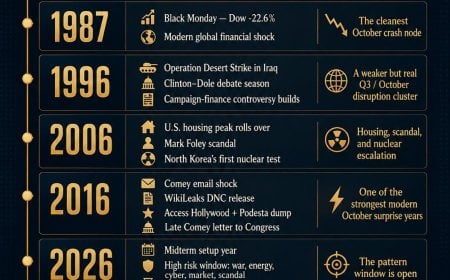
The number is not the mechanism. The window is. Across 1976, 1987, 1996, 2006, and 2016, major shocks kept clustering around Q3 and October: currency pressure, regime transition, market crashes, military strikes, housing rollover, political scandal, nuclear escalation, cyber leaks, and election-season institutional stress. This Pattern Nexus research piece maps the “sixes are never good” pattern as a late-cycle stress window, then applies the same framework to the open 2026 midterm year.
Inside this report
- The Sixes Are Never Good
- Q3 / October Shock Stack
- Choose Your Reading Level
 Editor-written summary
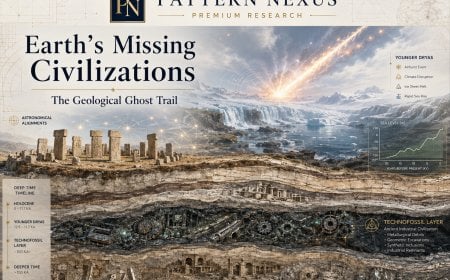
A deep Pattern Nexus investigation into the possibility of earlier civilizations on Earth, using the Silurian Hypothesis, the Younger Dryas climate reversal, impact-marker research, Göbekli Tepe interpretations, sea-level rise, submerged landscapes, and the limits of geological evidence. The real question is not whether ancient humans had modern technology. The deeper question is whether Earth’s surface is capable of preserving the kind of civilization we would expect to find.
Inside this report
- Earth’s Missing Civilizations
- Deep-Time Industry
- Ice Age Coastlines
 Editor-written summary
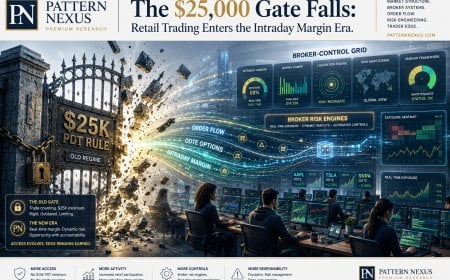
The Pattern Day Trader rule is being replaced across brokers, removing the old $25,000 account minimum and day-trade counting system. But the real story is not simply “more freedom.” The old hard gate is being replaced by a live broker-controlled intraday margin system that changes who can trade, how small accounts behave, how brokers manage risk, and how retail order flow may move through the market.
Inside this report
- The $25,000 Gate Falls
- Choose Your Reading Level
- Reader-Friendly Version: What Actually Changed?
 Editor-written summary
Oil Crisis, Strait of Hormuz, Hormuz, Energy Shock, Inflation, Brent Crude, WTI Crude, Strategic Petroleum Reserve, SPR, Oil Inventories, Global Oil Supply, Gasoline Prices, Diesel Prices, Refining, Crack Spreads, Federal Reserve, Liquidity, Recession Risk, Macro, Geopolitics, Pattern Nexus
Inside this report
- The Oil Cushion Is Breaking
- The oil market is no longer trading only barrels. It is trading time.
- This is not an oil-price story. It is a buffer-stack failure story.
 Editor-written summary
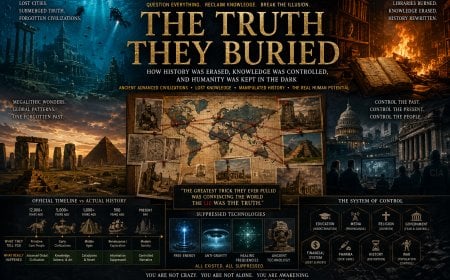
History is not the past. History is the surviving record after water, fire, conquest, empire, religion, language loss, academic filtering, political control, and time itself got done with it. This Pattern Nexus article argues that the official timeline is not useless because every event is fake; it is useless when treated as complete. The underwater record, overbuilt sacred sites, burned libraries, mythic memory, and modern AI all point to the same deeper human condition: humanity lives inside symbolic memory systems, and whoever controls memory controls the boundary of what people think is possible.
Inside this report
- The Permitted Memory of the Past
- History is not the past
- The underwater record changes everything
 Editor-written summary
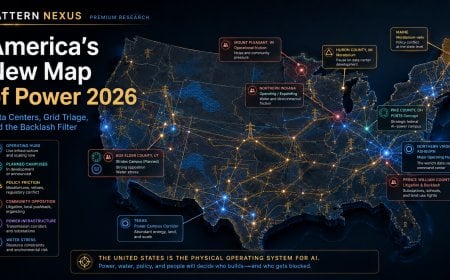
The AI data center boom has moved from abstract tech hype into physical infrastructure conflict. The map now runs through substations, water tables, transmission corridors, tax incentives, state permits, private power campuses, local lawsuits, and public backlash. By May 2026, Americans are angry, communities are fighting back, projects are being blocked or downsized, and regulators are openly trying to separate real load from speculative grid requests. But the deeper Pattern Nexus read is that backlash does not stop the buildout. It filters it, reroutes it, and forces the system to move toward places with power, land, political permission, and private energy control.
Inside this report
- America’s New Map of Power 2026
- The New AI Infrastructure Stack
- Reader-Friendly Version

