 Editor-written summary
The Iran escalation ladder is active again. I examine the October strike risk, the infrastructure-war danger, rising tanker attacks alongside recovering exports, the Gulf defense response, financial isolation, current oil inventories and the Federal Reserve’s position. My working window is October 22–November 5. The article connects the latest evidence to the Pattern Nexus research trail from January through October.
Inside this report
- Iran: Escalation Ladder — Reactivation Enabled
- The next decision window is opening
- How we got here: January’s decision window became a systems war
 Editor-written summary
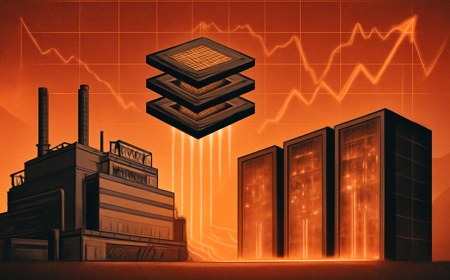
Samsung Electronics said it expects about 195 trillion won in consolidated third-quarter sales and 107.4 trillion won in consolidated operating profit, up sharply from 86.06 trillion won in sales and 12.17 trillion won in operating profit a year earlier. Independent coverage from Reuters, Bloomberg-linked reporting and Korean market media tied the surge to AI-driven demand for memory, including high-bandwidth memory, DRAM and NAND. The muted share reaction shows the other side of the AI memory boom: expectations are already high, and investors are watching whether scarcity economics can last.
Inside this report
- Samsung Turns AI Memory Scarcity Into a 107.4-Trillion-Won Profit Signal
- Quick Read
- Table of Contents
 Editor-written summary
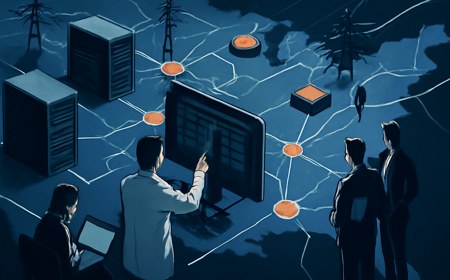
National Compute launched the National Compute Grid on October 7, 2026, with a plan to pool AI compute across clouds, labs, providers and chip architectures through a shared scheduler. Vultr says it has joined as a founding consortium member and will contribute capacity to the Grid Exchange, while the network is targeting 2 GW of pooled capacity by 2030. The key caveat: early capacity figures mix resources already connected with capacity still only “in sight,” so the operational scale remains to be proven.
Inside this report
- National Compute Turns Idle GPUs Into an AI-Access Grid
- Quick Read
- Table of Contents
 Editor-written summary
Google and Constellation announced a long-term PJM power package on October 6, 2026, centered on 890 MW of new nuclear capacity from uprates at existing reactors and 2,700 MW of additional supply. The structure matters because it links AI data-center growth to new firm capacity, demand flexibility, and AI-assisted grid operations rather than treating clean power as a certificate-only procurement exercise.
Inside this report
- Google Turns PJM Nuclear Uprates Into a 3.6-Gigawatt AI-Grid Power Rail
- Quick Read
- Table of Contents
 Editor-written summary
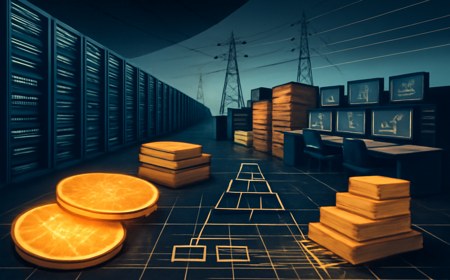
Bank of America, Citigroup and Morgan Stanley have begun syndicating a record-sized financing package tied to Anthropic’s Broadcom-Google compute stack, according to multiple reports. The structure is reported to include roughly $42 billion of senior secured debt and $18 billion of junior financing, with Blackstone committing to a large part of the riskier tranche. The deal turns AI chips, leases, vendor support and future model revenue into a live credit-market test.
Inside this report
- Wall Street Turns Broadcom-Anthropic Chips Into a $60B AI-Credit Test
- Quick Read
- Table of Contents
 Editor-written summary
The UK government said on October 6, 2026 that it will accept all 44 recommendations from the National Commission into the Regulation of AI in Healthcare and move toward lifecycle-based oversight for AI-enabled medical devices. The MHRA is also opening the third phase of its AI Airlock sandbox, focused on post-market surveillance and lifecycle regulation. Reuters separately reported that AI-based medical devices will require continual monitoring after approval, with a full implementation plan expected by spring 2027.
Inside this report
- London Turns AI Medical Devices Into a Lifecycle-Regulation Rail
- Quick Read
- Table of Contents
 Editor-written summary
I connect the developments now taking shape across AI infrastructure, private power, critical minerals, the Iran energy shock, digital dollars, machine commerce, robotics and productive ownership. The article explains the mechanisms for readers joining the discussion now, carries the research into September and October, and connects the later housing, Greenland, space, neural-computing and polar-vortex work. Includes links to 46 earlier Pattern Nexus articles, 53 numbered external sources, a practical watch list and six reader questions.
Inside this report
- Start with the dependencies
- AI is becoming an industrial power system
- Private power is becoming a competitive asset
 Editor-written summary
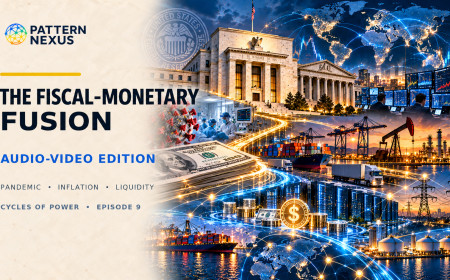
Episode 9 of the weekly Pattern Nexus audio-video series turns Part 9 of Cycles of Power into a shorter story about how pandemic stimulus fused fiscal and monetary policy, inflation forced a violent rate reversal, bank stress produced a new collateral-protection template, and sanctions, AI infrastructure, stablecoins, and tokenized Treasuries transformed liquidity into both operating system and geopolitical weapon between 2020 and 2025.
Inside this report
- The Fiscal-Monetary Fusion — Audio-Video Edition
- About this episode
- The emergency state became the permanent operating layer
 Editor-written summary
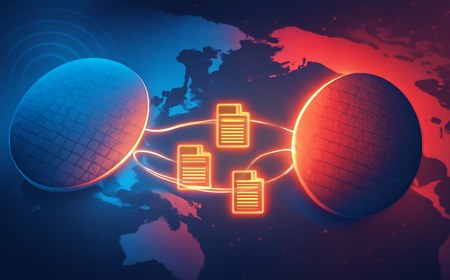
Huawei and Qualcomm announced a broad multi-year patent license agreement on October 5, 2026, covering 5G, compute, AI and networking technologies. The deal includes cross-licenses and Qualcomm’s planned purchase of certain Huawei U.S. patents, subject to regulatory approvals. The bigger signal is that technology control is shifting from devices and chips toward standards-essential patents, licensing flows and ownership of foundational AI-era infrastructure IP.
Inside this report
- Huawei Turns Qualcomm Patents Into a Sanctions-Resilient AI-IP Rail
- Quick Read
- Table of Contents
 Editor-written summary
German Chancellor Friedrich Merz used an Oct. 4, 2026 visit to Kyiv to announce more than €1.3 billion in new support for Ukraine. The package includes roughly €1 billion in military aid and about €350 million for energy-sector repairs ahead of winter, while German and Ukrainian actors expand cooperation on drones, interceptors, air defense, radar and weapons production. The strategic read is that Berlin is shifting from episodic aid toward a combined military-industrial and infrastructure-resilience stack.
Inside this report
- Berlin Turns €1.3B Ukraine Aid Into a Drone-and-Winter-Energy Deterrence Stack
- Quick Read
- Table of Contents
 Editor-written summary
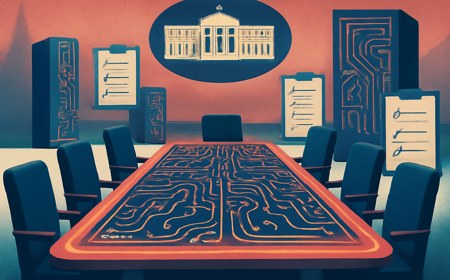
Reuters reported on October 3 that the Trump administration is emphasizing voluntary AI safeguards as public concern grows, and that the agreement with major AI firms includes no stated consequences for noncompliance. The published White House Accord on Super Intelligence commits signatories to internal controls, external review and board-level oversight, making the pact a live test of whether U.S. AI governance is becoming an industry-managed safety layer instead of a statutory regime.
Inside this report
- White House Turns AI Safety Panic Into a Self-Regulation Accord
- Quick Read
- Table of Contents
 Editor-written summary
G7 leaders agreed on October 2, 2026 to coordinate an IEA-linked release of 100 million barrels of diesel and crude over four months, with a substantial diesel release in the first 20 days. The package followed U.S. pressure on Europe over emergency diesel inventories and included a pledge not to impose energy-export restrictions among G7 members. The move turns strategic stocks into a market-stabilization tool and an alliance-management mechanism.
Inside this report
- G7 Turns Emergency Diesel Stocks Into a No-Export-Ban Bargain
- Quick Read
- Table of Contents

