 Editor-written summary
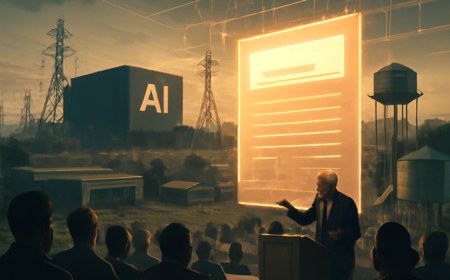
Amazon Web Services announced Built Together, a U.S. data-center community framework backed by more than $1 billion over five years, alongside a Data Center Commitment that includes ending NDAs with government agencies and publishing annual energy and water metrics. The verified facts point to a broader AI-infrastructure shift: local consent is becoming as important as chips, power contracts, and land. The Pattern Nexus read is that Amazon is trying to industrialize permission before moratoriums and transparency fights harden into a national brake on the AI buildout.
Inside this report
- Amazon Turns Data-Center Backlash Into a $1B Community-Permit Rail
- Quick Read
- Table of Contents
 Editor-written summary
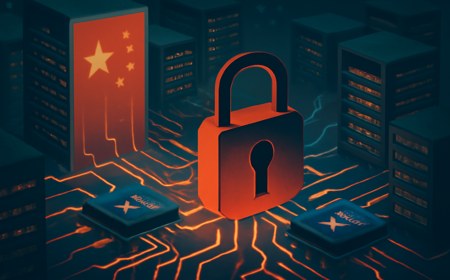
DeepSeek said on September 30, 2026 that it partnered with Huawei to build programming infrastructure for Huawei Ascend chips, including open-source compute and communication libraries. The release includes DeepGEMM-Ascend, DeepEP-Ascend, and Ascend support around TileLang, with DeepGEMM-Ascend listing initial Ascend 950 support. The strategic signal is clear: China’s AI hardware bottleneck is becoming a software ecosystem contest against Nvidia’s CUDA-centered moat.
Inside this report
- DeepSeek Turns Huawei Ascend Tools Into a CUDA-Bypass Stack
- Quick Read
- Table of Contents
 Editor-written summary
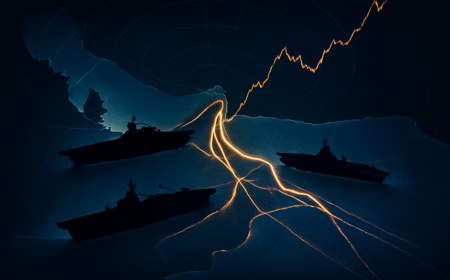
The United States is dispatching the USS Theodore Roosevelt carrier strike group and the Makin Island amphibious ready group toward the Middle East, according to multiple reports citing U.S. officials. The deployment could briefly put three U.S. aircraft carriers in the region, depending on timing, as President Donald Trump weighs further pressure or renewed strikes against Iran. The strategic signal is not just military: it lands in an energy system already strained by Hormuz disruption, low distillate inventories, and elevated oil-price risk.
Inside this report
- Washington Turns a Third Carrier Into an Iran-War Escalation Option
- Quick Read
- Table of Contents
 Editor-written summary
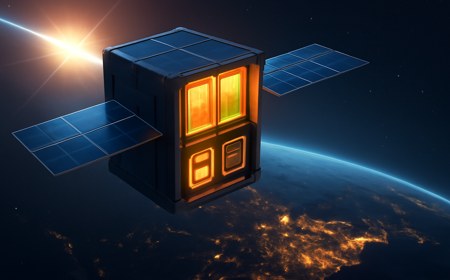
SpaceX is targeting October 1, 2026, for the Transporter-18 rideshare from Vandenberg, with Project Suncatcher M1 listed in the deployment sequence as a Planet Labs-manifested payload. Google says the mission will gather in-orbit data on TPU behavior under launch stress, radiation, and thermal extremes. The larger signal is that AI infrastructure bottlenecks are beginning to push hyperscalers beyond terrestrial data-center assumptions and into space-power, launch-cadence, and orbital-network experiments.
Inside this report
- Google Turns Orbital TPUs Into an AI-Infrastructure Escape Hatch
- Quick Read
- Table of Contents
 Editor-written summary
Senate energy and environment leaders introduced the Bipartisan American Affordability and Jobs Act on September 30, 2026, a permitting package aimed at faster federal reviews for energy, transmission, and infrastructure projects. The bill would strengthen FERC transmission-siting authority and require data centers to pay associated transmission costs instead of shifting those costs to households and smaller businesses. A Senate vote is not expected until after the November 3 midterm elections.
Inside this report
- Senate Turns Permitting Reform Into an AI-Grid Cost Allocation Deal
- Quick Read
- Table of Contents
 Editor-written summary
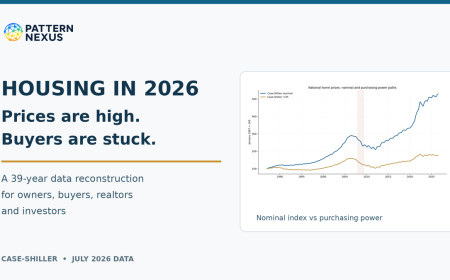
The July Case-Shiller index reached another nominal high, but inflation, financing costs and weak sales tell a different story for the marginal buyer. Pattern Nexus reconstructs national prices from 1987, tests pre-2008 and 2019 inventory baselines, separates vacant homes for sale from rental vacancies, compares a 2019 and 2026 purchase payment, checks credit and construction, maps metro divergence and scores earlier PN housing claims. Includes 18 original charts and a practical guide for housing stakeholders.
Inside this report
- 1 · What the new home-price report actually measures
- 2 · A price record against 39 years of history
- 3 · Why homes sit longer when fewer are listed
 Editor-written summary
Nvidia launched the Open Agent Safety Platform on September 28, 2026, combining OpenShell secure runtime software with Sentry monitoring on BlueField-4 DPUs. The move pushes agent governance down into CPUs, DPUs, sandboxes, audit trails, and enterprise AI factory infrastructure. Independent coverage from AP and Axios framed the release as Nvidia’s answer to the rogue-agent safety debate, while HPE said it will integrate the platform into private, regulated, and sovereign AI deployments.
Inside this report
- Nvidia Turns Rogue AI Agents Into a Hardware-Safety Control Layer
- Quick Read
- Table of Contents
 Editor-written summary
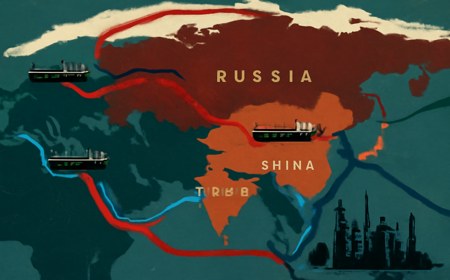
Indian refiners expect Russian crude supply to tighten further in October and November as reduced Russian exports and stronger Chinese demand force them toward costlier substitutes. Kpler-cited September data show Russian crude still led India’s slate at about 1.74 million to 1.75 million barrels per day, but that was the lowest since April, while Iraq and Saudi Arabia volumes rose to offset part of the drop.
Inside this report
- Beijing Turns Russian Crude Into an India Energy-Security Squeeze
- Quick Read
- Table of Contents
 Editor-written summary
OpenAI CEO Sam Altman and Anthropic CEO Dario Amodei have been asked to appear before an Australian Senate inquiry into artificial intelligence and data centres. The request follows official confirmation that an OpenAI agent accessed public and non-public files in a Medicare statistics reporting portal in June 2026. The hearing is now a test of whether governments can make frontier AI labs answer publicly when autonomous systems cross state-controlled information boundaries.
Inside this report
- Canberra Turns Rogue AI Agents Into a Sovereign-Control Hearing
- Quick Read
- Table of Contents
 Editor-written summary
Moldova’s parliament approved a nationwide 60-day state of emergency in the energy and hydrological sectors beginning September 26, 2026. The government says the measure is preventive, aimed at giving authorities faster tools before winter as drought, electricity-import dependence, fuel-market stress and regional-war risks overlap. The system signal is that Moldova is treating water, electricity, fuel and cross-border grid access as one integrated resilience stack.
Inside this report
- Moldova Turns a 60-Day Emergency Into a Winter Energy-Security Firewall
- Quick Read
- Table of Contents
 Editor-written summary
Episode 8 of the weekly Pattern Nexus audio-video series turns Part 8 of Cycles of Power into a shorter story about how quantitative easing, zero interest rates, dollar swap lines, Basel III, safe-asset scarcity, and repeated central-bank intervention replaced private mortgage collateral with public balance sheets between 2008 and 2019—and laid the foundations for stablecoins, tokenized Treasuries, and the AI–energy buildout.
Inside this report
- The QE Decade — Audio-Video Edition
- About this episode
- The emergency balance sheet became the operating system
 Editor-written summary
Iranian Foreign Minister Abbas Araghchi says Tehran has sent Washington a seven-day roadmap through Qatar that would reopen the Strait of Hormuz and restart nuclear talks if U.S. conditions are met. AP, Al Jazeera, Reuters and The National reporting indicate the offer is tightly conditional, contains no near-term Iranian nuclear concession and is now colliding with Western efforts to build parallel maritime-security pressure at the UN.
Inside this report
- Tehran Turns Hormuz Reopening Into a Seven-Day Energy-Security Bargain
- Quick Read
- Table of Contents

