 Editor-written summary
Between 1994 and 2001, the world entered a new liquidity regime driven by capital account liberalization, dollar-denominated borrowing, export surpluses, and the explosive rise of technology markets. From the Tequila Crisis and Asian Financial Crisis to the dot-com bubble, this era created the modern global liquidity supercycle — and exposed its fault lines.
Inside this report
- In This Article
- The Setup: From Leverage Machine to Global Liquidity Wave
- The Tequila Crisis: First Warning Shot
 Editor-written summary
As of December 4, 2025, subprime auto borrowers and Buy-Now-Pay-Later users are showing rising strain. This Pattern Nexus deep dive maps where the real risk sits, how much of it flows back into banks, and whether these “buy more, pay more later” rails are the real source of bank stress.
Inside this report
- Executive overview
- How the subprime auto market is actually structured
- Delinquencies, repossessions, and who is breaking first
 Editor-written summary
Black Friday and Cyber Week 2025 set new spending records, but the November ADP report showing a surprise 32,000-job loss reveals a fragile labor market underneath. Pattern Nexus connects the consumer sugar high to the small-business labor squeeze.
Inside this report
- Black Friday and Cyber Week 2025: What Actually Happened
- Traffic vs. Sales: The Brick-and-Mortar Drag
- How Consumers Are Spending: Discounts, BNPL, and Intentional Buying
 Editor-written summary
After the 1970s inflation and the end of Bretton Woods, the global system didn’t normalize — it hardened and then financialized. Between 1979 and 1994, Volcker’s shock therapy, Reagan–Thatcher deregulation, junk bonds, LBOs, and market-based credit built a new regime where leverage, not wages, became the main growth engine.
Inside this report
- In This Article
- The Setup: From Monetary Break to Discipline by Pain
- Volcker’s Shock: Killing Inflation, Pricing Everything
 Editor-written summary
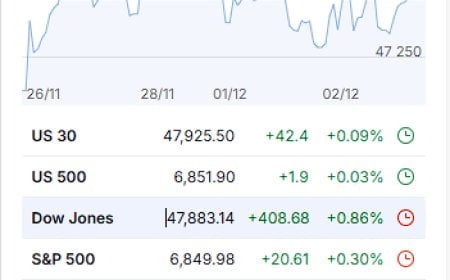
Markets rallied on December 3, 2025 as yields softened and risk sentiment returned. Equities rose, crypto surged, commodities stayed mixed, and the dollar weakened. Here is the full Pattern Nexus breakdown with charts, news, and deep liquidity analysis.
Inside this report
 Editor-written summary
Copper has entered a new macro-industrial regime. AI data centers, global grid expansion, renewable infrastructure, collapsing ore grades, and a decade of underinvestment have fused into a structural deficit that will define the next decade. This is the deep technical and strategic picture as of November 2025.
Inside this report
- Copper in the AI-Industrial Era: Why the World Is Running Out of the Metal That Powers Everything
- The 2025 Shift: Copper Snaps Into a New Regime
- The Demand Stack: Energy, Grids, AI, and Legacy Construction
 Editor-written summary
The U.S. Navy is collapsing under delays, cost overruns, and a shrinking shipbuilding workforce. Programs slip years, budgets balloon, and the fleet flatlines while China’s shipyards pump out steel like an industrial firehose. Into that mess steps Saronic, a 2022 startup backed by hundreds of millions in venture capital, promising to build autonomous warships faster and cheaper from a new complex called Port Alpha. This isn’t just a cool drone story. It’s a quiet attempt to reboot American sea power through a startup shipyard.
Inside this report
- The Shipyard Crisis Beneath the Surface
- Inside the Industrial Breakdown
- China’s Shipyard Firehose vs America’s Trickle
 Editor-written summary
Between 1968 and 1979, the collapse of the gold window, the rise of the Eurodollar, and the Petrodollar shift transformed the global monetary system. Nixon’s 1971 shock, oil crises, offshore dollar expansion, and financial deregulation rewired the world’s liquidity architecture and created the modern dollar empire.
Inside this report
- In This Article
- The Late-1960s Stress: Triffin’s Dilemma Goes Live
- The Nixon Shock: Closing the Gold Window
 Editor-written summary
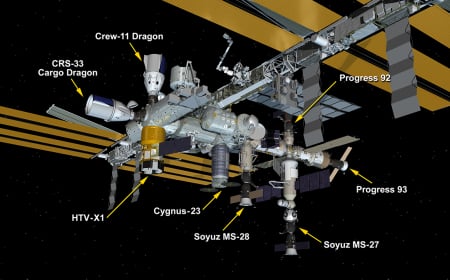
For the first time in history, the International Space Station reached full capacity with eight spacecraft docked simultaneously. A milestone in orbital logistics that signals the next era of human spaceflight."
Inside this report
- The Day the ISS Filled Every Port
- Who’s Parked at the Station?
- Why This Configuration Matters
 Editor-written summary
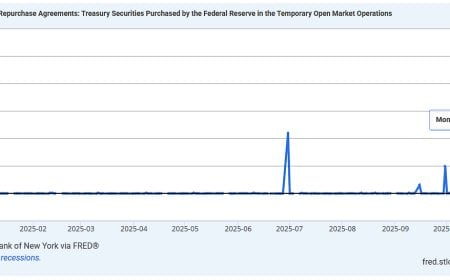
QT officially ended on December 1, 2025 — but the real story happened in the plumbing. With the RRP buffer nearly gone, SOFR volumes exploding, and the Standing Repo Facility pulling in Treasuries, agencies, and MBS, the Fed quietly shifted from balance-sheet tightening to balance-sheet backfilling. This was the moment the liquidity regime flipped.
Inside this report
- The Critical Pattern: QT Ends and the Fed Backfills the System
- Why the MBS Repo Prints Matter So Much
- What Actually Changed on December 1
 Editor-written summary
The United States has quietly shifted from restricting crypto to absorbing it. Trump’s Strategic Bitcoin Reserve, the Digital Asset Stockpile, the GENIUS Act, Treasury acquisition strategies, and Federal Reserve integration signal the construction of a sovereign digital asset regime designed to reinforce the Dollar Superstructure.
Inside this report
- Trump’s Executive Orders and the Strategic Reserve Shift
- The Exact Language: What the Orders Actually Say
- What the Language Enables
 Editor-written summary
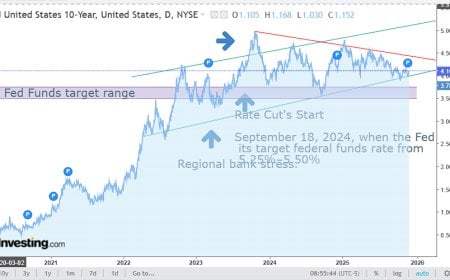
The U.S. 10-year yield is rising into rate cuts — not because the market is irrational, but because the financial system is operating on the liquidity floor. This article explains how regional bank failures, QT exhaustion, and the September 18, 2024 rate-cut pivot created the wedge pattern now signaling the next major regime shift.
Inside this report
- Introduction: The Chart That Changes the Narrative
- The Two Anchors: Bank Stress and Rate Cuts
- The Wedge Is Not Technical — It’s Liquidity

