 Editor-written summary
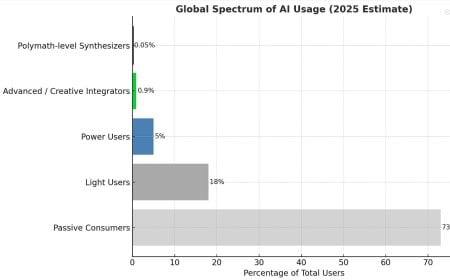
AI isn’t replacing people — it’s revealing them. Most fear it because it mirrors back their own cognitive limits. The few who thrive are polymathic thinkers — those who treat AI as a cognitive amplifier rather than a threat. This long-form essay explores the psychology, neurology, and societal divergence AI is accelerating — and why integration, not resistance, defines the next evolutionary step in human intelligence.
Inside this report
- Why Most People Won’t Adapt to AI — and Why Polymaths Will
- Part I — The Mirror and the Divide
- Part II — Fear, Ego, and the Cognitive Prison
 Editor-written summary
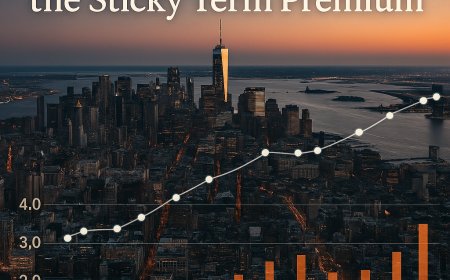
Everyone is waiting for rate cuts to bring relief to mortgages, cap rates, and risk assets. But the long end of the curve doesn’t care what the policy rate does when fiscal dominance takes hold. This long-form explainer maps the mechanics behind sticky long rates: net Treasury supply, buyer base rotation, term premium re-pricing, and degraded market depth. If you want to understand why “cuts” may not mean “cheaper money” anymore, start here.
Inside this report
- Fiscal Dominance and the Sticky Term Premium
- Sources & References
 Editor-written summary
The next great battles won’t be fought over oil fields — they’ll be fought over rocks. As the energy transition accelerates and technology demands expand, critical minerals (lithium, cobalt, rare earths) have become the hidden strategic battlegrounds of global power. This long-form piece unpacks how control of supply chains has shifted from geopolitics of territory to geopolitics of elements — and why that matters for business, nation states, and you.
Inside this report
- The Quiet War for Critical Minerals: How Resource Control Defines the Next Century
- Sources and References
 Editor-written summary
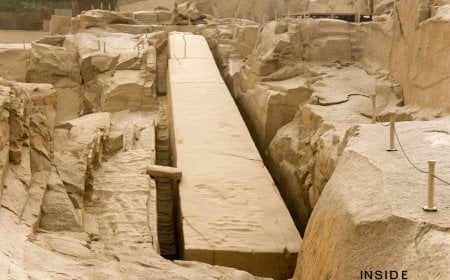
This piece explores the architecture of legacy — not as wealth or fame, but as continuity of thought, creation, and impact. It examines how every system we build, from homes to ideas to businesses, becomes a mirror of our values and a container for future lives. It ties construction, resilience, and philosophy into one continuum — how a person’s blueprint extends beyond their lifetime through what they shape and the principles they leave embedded in their work.
Inside this report
- Echoes of the Builder: What We Leave Behind
 Editor-written summary
Humanity built algorithms to understand itself — and ended up building systems that define it instead. This essay explores how digital feedback loops, social media architectures, and machine-curated experience have fragmented human identity, reprogramming culture from the inside out. It’s about control, imitation, and the invisible hand guiding the modern self.
Inside this report
- The Fractured Mirror: Humanity in the Age of Algorithmic Identity
 Editor-written summary
In an era that rewards motion, stillness has become rebellion. This essay explores the forgotten discipline of reflection — how silence strengthens decision-making, why boredom breeds genius, and how slowing down restores the depth modern society erases. It’s about recalibrating the mind in a world addicted to velocity.
Inside this report
- The Value of Stillness in an Accelerated World
 Editor-written summary
True legacy isn’t built from success — it’s built from reconstruction. This essay explores what happens when life dismantles everything you thought was secure, and how rebuilding from the ground up creates not just wealth, but internal architecture. It’s about the psychology of endurance, the discipline behind creation, and the systems that transform pain into permanence.
Inside this report
- The Architecture of Resilience
- The Rebuilding Phase
- The System Within
 Editor-written summary
War has evolved. It’s no longer fought over borders but over information, algorithms, and infrastructure. From digital surveillance to AI-driven propaganda, the world’s most powerful actors are now competing to control the flow of truth itself. This long-form analysis dissects how nations weaponize data, energy, and perception in the modern geopolitical battlefield — and why narrative has become the new form of territory.
Inside this report
- Shadows of Influence
- From Hard Power to Cognitive Power
- The Hidden Architecture of Influence
 Editor-written summary
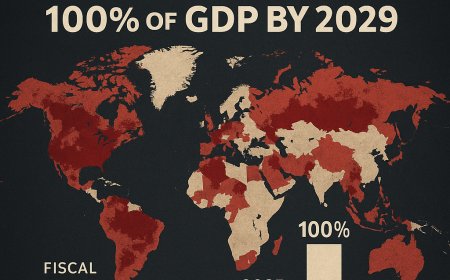
The IMF’s latest Fiscal Monitor warns that world public debt could climb beyond 100 percent of GDP by 2029 — a threshold unseen since the aftermath of World War II. Behind the numbers lies a structural problem: modern economies are addicted to debt-funded growth, and the world’s fiscal architecture is entering a critical phase.
Inside this report
- IMF Warns Global Debt Could Exceed 100% of GDP by 2029
- Sources & Further Reading
 Editor-written summary
The post–Cold War world promised stability through American dominance. Instead, it produced dependency through debt and energy control. Three decades later, that system is cracking — replaced by a network of regional powers, resource alliances, and digital financial blocs. This analysis examines how power is fragmenting, why liquidity defines modern empire, and what the next monetary architecture may look like.
Inside this report
- The Fracturing World Order
- The Dollar’s Empire of Debt
- BRICS and the Birth of Parallel Systems
 Editor-written summary
For decades, the idea of homeownership was synonymous with security. But after 2008, that dream quietly shifted from ownership to leverage — from building roots to building returns. This analysis explores how central banks, institutional capital, and modern lending turned the middle class from owners into participants in a liquidity machine, and what that means for those still trying to build lasting wealth.
Inside this report
- The Illusion of Ownership: How Leverage and Liquidity Redefined the Middle Class
 Editor-written summary
Algorithms no longer just deliver content—they shape human behavior, attention, and even identity. In this long analysis, we explore how the digital architecture of the modern world has rewired the human mind, redefined truth, and created a civilization built on data-driven persuasion.
Inside this report
- The Age of Algorithmic Influence
- The Invisible Feedback Loop
- The Economics of Attention

