
Google’s Space-Based AI Data Center Gambit: Project Suncatcher and the New Compute Frontier
Google just revealed plans to build the first space-based AI data-center constellation — a solar-powered orbital compute cluster designed to escape Earth’s power limits. This breakdown explores the engineering, physics, grid implications, and how this fits directly into the AI-Industrial Flywheel.
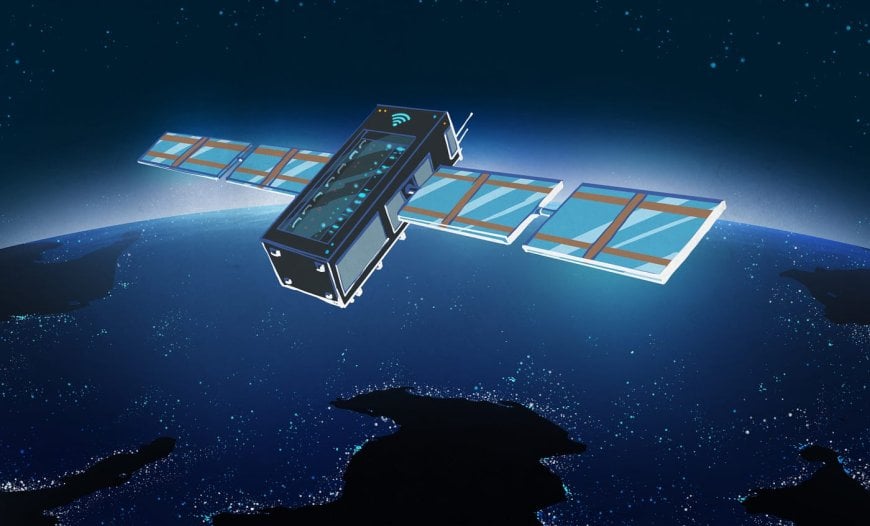
Google’s Space-Based AI Data Center Gambit
Project Suncatcher and the next frontier of compute, power, and control
By Chris Grenke · Pattern Nexus
Setting the stage: why put AI in orbit?
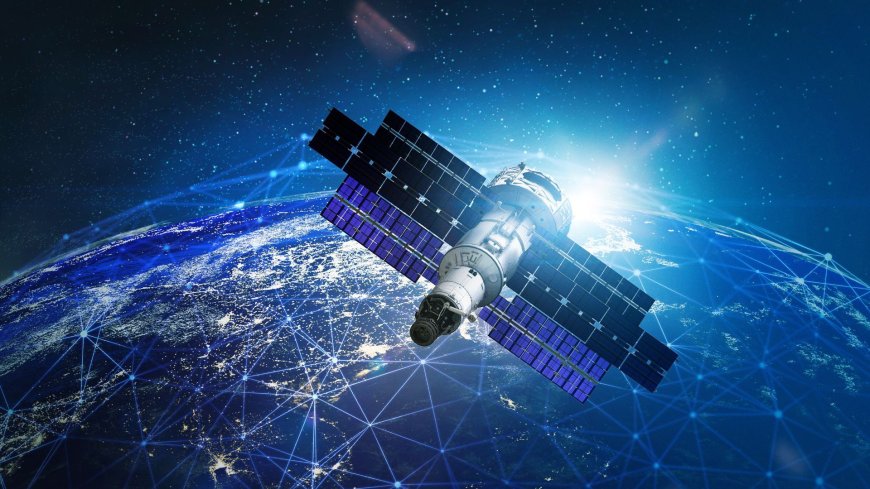
For the last two years, the bottleneck in AI hasn’t been ideas — it’s been compute, power, and physical space. We are slamming into hard limits on land, water, transformers, transmission, and local political patience for what look like giant concrete boxes that eat cities’ power budgets.
Google’s new concept, often referred to as Project Suncatcher, is what happens when a hyperscaler admits the obvious: if you can’t expand “sideways” on Earth without breaking the grid, you look “up.” Instead of fighting over the same substations and river basins, you try to move part of the AI stack out of the atmosphere entirely.
This isn’t science fiction. It’s the early sketch of a real strategy: space-based AI data centers.
What Google is actually proposing
In a research post titled “Exploring a space-based, scalable AI infrastructure system design”, Google lays out the basic idea:
- Build a constellation of satellites in low Earth orbit, likely sun-synchronous, flying in tight formation.
- Each satellite carries AI accelerators (Google TPUs or successors), large solar arrays, and the supporting power and thermal systems.
- Link those satellites together with high-bandwidth free-space optical (laser) interconnects so the cluster behaves like a distributed data center.
- Use ground stations and optical links back to Earth to send workloads up and receive results back.
Google isn’t promising a production system tomorrow. Right now, this is a design study plus a planned test launch:
- Around 2027, they plan to launch an initial pair of satellites to validate the core concepts: TPUs in orbit, power and thermal behavior, formation flying, and optical links.
- The long-term vision is a formation of many satellites (think 10s+ nodes) in a cluster, separated by hundreds of meters to about a kilometer, acting as a single AI compute fabric.
On paper, it’s a “data center in space.” In practice, it’s a new layer in the AI stack: off-planet compute that still serves on-planet demand.
Why “space compute” makes sense on paper
The pitch rests on a few key advantages that only orbit can give you:
Solar energy with no night and no clouds
In the right orbit — especially a sun-synchronous dawn–dusk orbit — satellites can ride the terminator line, staying in near-constant sunlight. That means:
- Much higher solar productivity per square meter of panel than on Earth (no atmosphere, minimal night).
- A cleaner power profile for compute: fewer deep dips, less dependence on volatile terrestrial grids.
For an AI cluster that cares about terawatt-hours over years, that matters.
The vacuum as a “heat sink” (with caveats)
Space doesn’t give you free cooling — there’s no air to convect heat away — but the ability to radiate directly into 3 K background is powerful if you can build enough radiator area. Google’s framing is simple: the heat management problem becomes a radiation-engineering problem, not a battle for scarce river water and cooling permits.
Offloading terrestrial constraints
Today, every new hyperscale AI complex has to negotiate:
- Transformers and high-voltage interconnects
- Local water rights or alternative cooling
- Zoning, NIMBY politics, land use, environmental impact
A space-based cluster doesn’t remove those problems entirely — you still need launch sites, ground stations, and a terrestrial backbone — but it changes the geometry. You’re importing clean power and compute from orbit instead of fighting over every substation on the ground.
Space Compute Is Already a Race: Nvidia’s H100 GPUs Are Going Orbital
Google isn’t the only hyperscaler trying to escape Earth’s power ceilings. The industry is already moving. In fact, the first Nvidia H100 GPUs are going into space next month, courtesy of Crusoe and Starcloud — two companies building what they openly describe as “AI factories” in orbit.
Crusoe + Starcloud: The First Real Orbital GPU Cluster
The partnership works like this: Crusoe provides the cloud layer, Starcloud provides the satellites. Together, they are constructing solar-powered AI compute nodes in space, using a simple logic:
- Sunlight in orbit is constant and energy-rich — no night, no clouds, no atmospheric loss.
- Solar is ~10× cheaper per useful watt in orbit than on Earth (even after launch cost).
- No land use, no NIMBYs, no grid bottlenecks — pure energy directly into compute.
Their own marketing line says it best: orbital compute is “almost unlimited, low-cost renewable energy.” When you’re running high-intensity AI workloads, cheap energy is not a feature — it’s the whole business model.
Cooling GPUs in Space
There’s no air in space, so traditional cooling is impossible. Nvidia and Starcloud claim that they will use the vacuum of space as an ‘infinite heat sink’. That means large radiator panels that dump heat through thermal radiation alone. It’s not trivial — but it’s physically sound, and the vacuum is incredibly efficient at absorbing radiated thermal energy if you engineer the surfaces right.
Why This Matters
Crusoe has a history of placing compute directly next to novel energy sources — flare gas, stranded renewables, geothermal. Space is just the next step: find the cheapest watt and put compute on top of it. Starcloud, backed by Nvidia’s Inception program, wants to scale this into gigawatt-class orbital clusters. That wording is not accidental — it’s the same scale as modern terrestrial hyperscale campuses.
Timeline
- November 2025: Starcloud launches the first H100 GPUs into orbit.
- Late 2026: Crusoe Cloud begins deployment on a dedicated Starcloud satellite.
- Early 2027: Limited orbital GPU capacity becomes commercially available.
In other words, the era of space-based cloud compute isn’t coming — it’s already begun. Google’s initiative is a response to a trend that was already forming: AI workloads are outgrowing Earth’s grid.
Engineering and physics constraints
All of this only matters if the physics and engineering are tractable. Google’s own write-up spends a lot of time on the “hard parts”:
Inter-satellite bandwidth and formation flying
For a space data center to behave like a real cluster, the satellites need to talk to each other at tens of terabits per second with tight latency bounds. That’s why they’re proposing:
- Free-space optical links (lasers) between satellites — higher bandwidth than RF, but more sensitive to alignment and pointing.
- Tight formations (hundreds of meters to ~1 km separation), which is a very different orbital control problem than loosely spaced broadband constellations.
That implies constant station-keeping, collision avoidance, and precise orbital control. The cluster is basically a flying phased array of compute nodes.
Radiation and hardware reliability
Space is a radiation environment: total ionizing dose and single-event upsets can flip bits or fry components. Google has already tested its Trillium-generation TPUs under proton beams that mimic orbital conditions, and the early results say “it’s possible, but not free”:
- Logic can often be hardened or corrected with redundancy and error-correction techniques.
- Memory (HBM, DRAM) is more sensitive; large AI training workloads are especially vulnerable to bit-flip cascades.
That means extra cost in shielding, ECC, checkpointing, and error-aware algorithms. It’s solvable, but it’s not trivial.
Launch mass, cost, and replacement cycles
Even with falling launch costs, putting heavy compute plus solar plus radiators into orbit is expensive. To make this competitive with a terrestrial AI campus, several curves have to move at once:
- Launch cost per kilogram continues to fall.
- Compute density per kilogram continues to rise.
- Satellite lifetimes extend enough to amortize the capex.
Google’s own modeling suggests economic parity with some terrestrial data center configurations is plausible in the 2030s, not this decade. That’s still aggressive, but it’s not crazy if you expect AI demand to keep compounding.
Debris, astronomy, and regulation
Add another cluster of bright, tightly packed satellites to LEO and you get more:
- Orbital congestion and debris risk
- Interference with ground-based astronomy
- Regulatory and geopolitical headaches over orbital slots and spectrum
Astronomers and regulators are already raising concerns about existing constellations. A glowing AI compute swarm in orbit will not go unnoticed.
Timeline and competitive landscape
Google is not alone in thinking this way.
- Google’s plan: a two-satellite prototype around 2027 to test TPUs in orbit and validate the constellation concept.
- Starcloud, Crusoe, and others are already talking about space-based, solar-powered AI clouds and are sending GPUs into orbit.
- China has announced plans for space-based AI supercomputers as part of its broader space program.
In other words, “AI in space” isn’t just a PR stunt — it’s becoming a strategic race layered on top of the terrestrial AI-industrial build-out.
How it fits into the AI-Industrial Flywheel
On Pattern Nexus, I’ve argued that we’re building an AI-Industrial Flywheel: a feedback loop where:
- AI demand drives data center and power investment.
- That investment drives new industrial projects, grid upgrades, and policy shifts.
- Those upgrades then enable more AI, more automation, and more demand for compute, which feeds back into the loop.
Google’s space data center concept is that logic pushed to its extreme: if you can’t easily keep spinning the flywheel on the ground, you extend it into orbit.
A few implications:
- Power diversification: instead of only competing for terrestrial power (natural gas, nuclear, solar, wind, transmission lines), hyperscalers start to build a second power surface in orbit.
- Resilience and control: off-planet compute is harder to physically attack, easier to isolate, and potentially central to national security architectures.
- Monetization of orbits: orbital shells become not just telecom real estate, but computing and energy real estate. That has long-tail consequences for geopolitics and regulation.
If AI becomes the operating system for finance, logistics, defense, and governance, then controlling where that AI physically runs becomes a power lever. Space is the logical next layer of that stack.
The questions that actually matter
The interesting part isn’t “will Google put some chips in orbit?” They will. The hardware demo is the easy part. The real questions look more like this:
- Cost curve: Does the cost per kW-year of space compute fall fast enough to be competitive with terrestrial nuclear-backed AI campuses?
- Policy and security: How quickly do governments decide that space-based AI clusters are critical infrastructure, and what treaties, protections, or restrictions follow?
- Grid dynamics: If even a small fraction of future AI workloads move to orbit, what pressure does that relieve (or shift) from terrestrial grids?
- Data and sovereignty: Who owns data processed off-planet? How do jurisdiction and compliance work when compute runs in international space?
- Failure modes: What happens when a high-density AI cluster in orbit fails, collides, or fragments? How do we manage the debris and systemic risk?
We’re watching the early stages of a new pattern: the vertical expansion of the AI-industrial stack — from trenches and substations on Earth to arrays of compute nodes in orbit.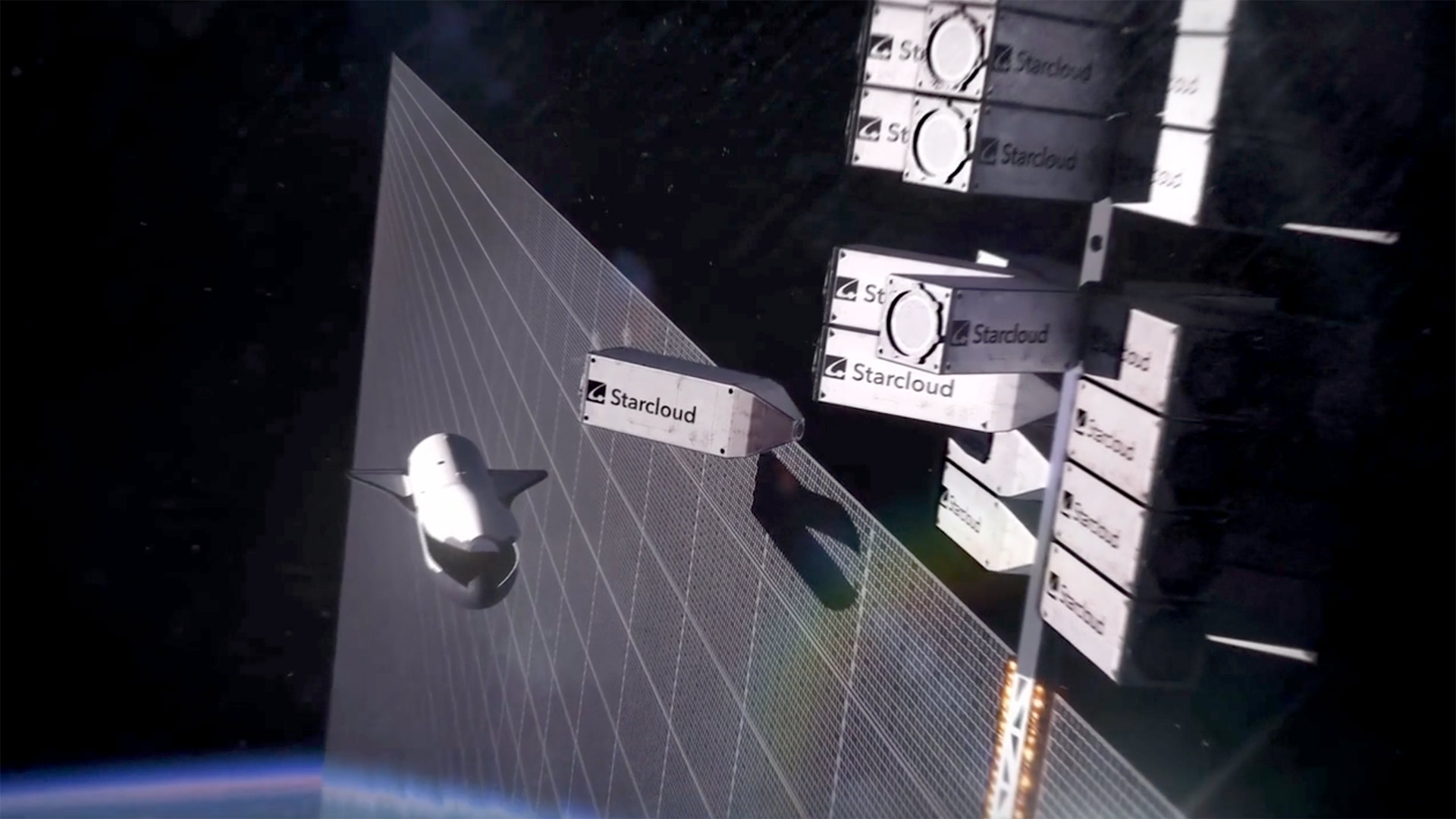
Space Compute and the AI-Industrial Flywheel: The Strategic Layer Nobody Is Talking About
When Crusoe, Starcloud, and Google all start pointing compute toward orbit, this isn’t coincidence. This is a pattern. The same pattern I’ve been writing about on Pattern Nexus for months: the AI-Industrial Flywheel.
Once compute becomes the limiting reagent of civilization — powering finance, defense, automation, logistics, manufacturing, everything — the system starts looking for new surfaces to build compute on. Earth’s grid is one such surface. But it’s not the only one.
Why the System Expands Upward
- Grid saturation: The U.S. faces a 40–50 GW data-center shortfall by 2028.
- Transformer scarcity: Wait times stretch into 2030.
- Cooling limits: Many regions no longer allow water-cooled hyperscale campuses.
- Geopolitical risk: On-Earth compute is vulnerable to physical, cyber, and supply-chain threats.
Once you hit systemic constraints on land, water, and power, orbit becomes the next industrial zone.
The Real Strategic Shift
Space-based compute is about more than energy or engineering. It’s about control. The nation or corporation that controls orbital compute controls:
- Uninterruptible AI capability (sunlight doesn’t go offline).
- Compute that can’t be sanctioned or shut down by local jurisdictions.
- A global monopoly on off-planet power feeding AI workloads.
- A new layer of defense infrastructure that’s physically unreachable.
This is the birth of Orbital Industrial Policy — a concept nobody is discussing but everyone will very soon, because hyperscalers are already building it.
What Comes Next
By 2027, we’ll have:
- Nvidia GPUs running real workloads in orbit
- Solar-powered AI nodes with 24/7 sunlight
- Early orbital clusters acting like micro–hyperscale campuses
- Multiple nations launching “AI satellites” as sovereign infrastructure
By the early 2030s, this evolves into gigawatt-scale compute surfaces in orbit. Not just satellites — clusters, rings, and eventually large solar-compute platforms.
The future of compute isn’t horizontal. It’s vertical. The sky isn’t the limit — it’s the next industrial layer.
Sources
- Google Research – Exploring a space-based, scalable AI infrastructure system design
- The Guardian – Google plans to put datacentres in space to meet demand for AI
- Economic Times – Google to test building AI data centres in space
- DatacenterDynamics – Project Suncatcher: Google to launch TPUs into orbit with Planet Labs
- Tom’s Hardware – First Nvidia H100 GPUs will reach orbit next month
- LiveScience – China is building a constellation of AI supercomputers in space
మీ ప్రతిస్పందన ఏమిటి?
 ఇష్టం
0
ఇష్టం
0
 ప్రతికూలం
0
ప్రతికూలం
0
 ప్రేమ
0
ప్రేమ
0
 కలుకలు
0
కలుకలు
0
 అబ్బా
0
అబ్బా
0
 దురద
0
దురద
0
 కోపంగా
0
కోపంగా
0

Founder of Pattern Nexus. I research markets, macro, geopolitics, AI, history, ancient systems, and the patterns most people overlook. I’m also building Market Radar, a trading scanner designed to read pressure, risk, confirmation, and setup quality before chasing a move. Pattern Nexus is where I connect the dots between data, history, technology, and the bigger system playing out around us.
















కామెంట్లు (0)