
⚛️ Big Tech’s Fusion Bet: How AI’s Energy Demand Is Rewriting Physics
The AI revolution isn’t just changing software — it’s rewriting the energy equation of civilization. As machine intelligence accelerates, Big Tech’s investment in nuclear fusion reveals an unspoken truth: the race for artificial intelligence is ultimately a race for power — in the most literal sense.
Big Tech’s Fusion Bet: How AI’s Energy Demand Is Rewriting Physics
Every technological leap in history has come with a hidden cost in energy. Fire gave us civilization, steam gave us industry, and electricity gave us the digital world. Now, artificial intelligence is demanding something more — an energy supply so vast and stable that even the existing grid can no longer sustain it. That’s why the biggest players in technology — Google, Microsoft, Amazon, and even oil giants like Chevron — are quietly investing in nuclear fusion. Because the future of computation isn’t just about processing power. It’s about the energy that feeds it.

Over the past two years, private fusion startups have raised more than $7 billion, according to Fusion Industry Association data. Roughly half of that has come directly or indirectly from technology corporations whose business models depend on energy-intensive computation. The connection isn’t coincidental. The explosion of generative AI, from large language models to video synthesis, has multiplied power consumption across global data centers by a factor few policymakers anticipated. A 2025 IEA report estimates that global AI workloads could consume as much electricity by 2030 as the entire nation of Japan. In other words, intelligence — at least in its digital form — has become thermodynamic.
The problem isn’t just about more power plants. AI’s appetite for energy scales differently than past technologies. Unlike manufacturing or transportation, where energy output produces tangible goods, AI’s energy use is recursive: it fuels computation that trains more systems to optimize further computation. Each model feeds the next. Each training cycle expands exponentially in cost. The entire AI ecosystem is caught in a feedback loop where energy becomes both the input and the output — the heartbeat of machine cognition itself.
That’s why Silicon Valley is suddenly talking about fusion — a technology that’s been “thirty years away” for seventy years. What changed isn’t physics; it’s necessity. Companies like Commonwealth Fusion Systems, backed by Microsoft and Bill Gates’s Breakthrough Energy Ventures, have signed multi-decade power purchase agreements to feed data centers that don’t even exist yet. Helion Energy, a Washington-based fusion startup, signed a contract to supply electricity to Microsoft by 2028 — a world first. Google, meanwhile, is contributing AI-driven plasma modeling to help optimize confinement geometry inside tokamak reactors. The message is clear: the tech industry is no longer waiting for governments to solve the energy problem; it’s trying to rewrite the laws of scalability itself.
Fusion represents more than a scientific milestone — it’s the philosophical endpoint of humanity’s energy narrative. It’s the process that powers the stars, brought under human control. The challenge lies in containing a plasma hotter than the sun long enough for atomic nuclei to merge, releasing energy without tearing the machine apart. If successful, it offers a near-limitless, carbon-free source of power using common isotopes of hydrogen. But the deeper story here is psychological: humanity’s pursuit of control over entropy itself. Fusion is not just a scientific ambition — it’s a metaphor for civilization’s tendency to centralize energy, information, and power until the system reaches a breaking point.
The irony is that Big Tech’s investment in fusion mirrors the same logic that created the need for it. As algorithms consume more power, we build reactors to sustain them. As data centers grow, we engineer new physics to feed their expansion. The entire technological stack — from AI chips to quantum processors — assumes infinite energy availability. In that sense, fusion isn’t just an engineering problem; it’s an existential adaptation. Without it, the digital world as we know it cannot scale much further.
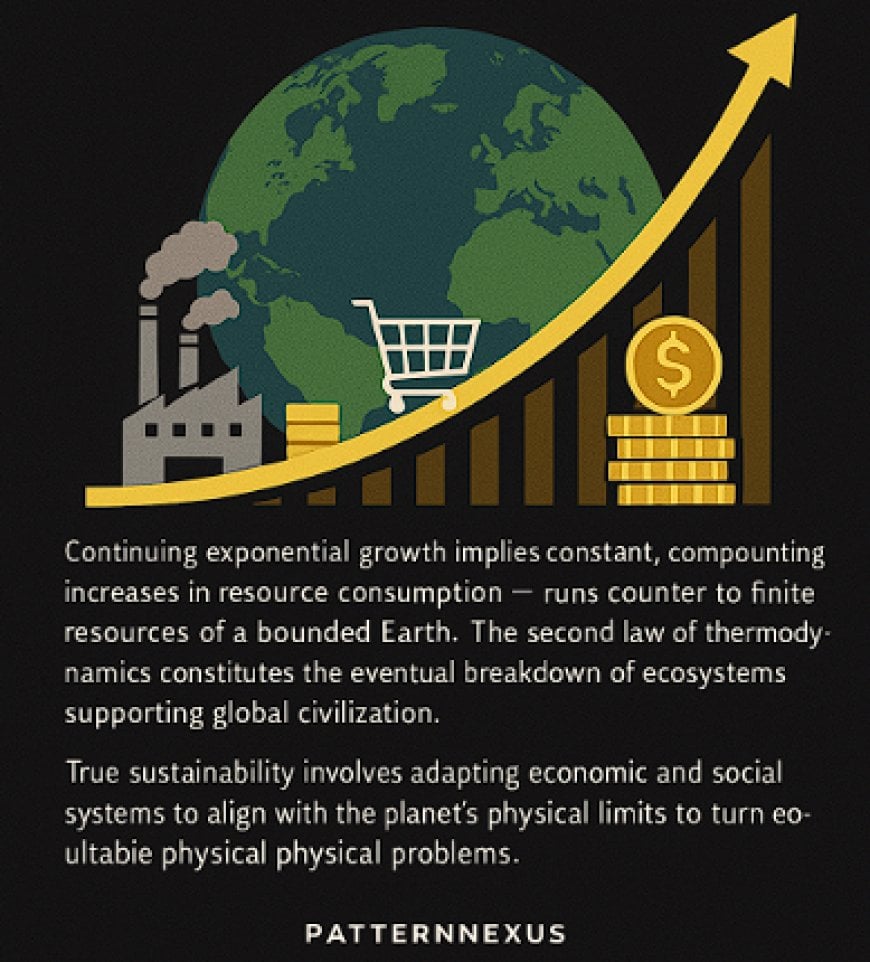
The U.S. Department of Energy has set a target for a pilot fusion plant in the early 2030s, but the private sector may get there first. Commonwealth Fusion Systems claims its SPARC tokamak could demonstrate net-positive output within this decade. If that happens, the implications extend far beyond the power grid. It would reshape geopolitics, energy markets, and even monetary policy — because energy is the ultimate denominator of value. When energy abundance becomes real, the economic logic of scarcity begins to break down. Prices, productivity, and even the meaning of “growth” start to lose their conventional definitions.
This transition forces a profound question: If AI becomes self-improving and fusion becomes self-sustaining, what happens to the human role in the feedback loop? Historically, every major energy shift — from fire to oil to nuclear — has redefined the boundaries of human labor, hierarchy, and control. Fusion’s potential is so vast that it could decentralize power generation globally or, conversely, consolidate it into the hands of those who own the reactors and the algorithms they feed. That outcome will depend less on physics and more on governance — who controls the switch.
For decades, physicists have pursued fusion for scientific glory; now, capital is pursuing it for computational survival. The pressure isn’t just coming from tech firms. National security agencies are warning that AI models trained on classified data could soon require dedicated, sovereign energy sources to ensure continuity during grid stress. Energy resilience has become a digital defense strategy. Fusion isn’t just about climate anymore — it’s about control of the digital future.
But beneath all the economic narratives, there’s something more poetic at work. The same plasma that could power our machines is the same process that illuminates every star in the night sky. It’s the ultimate act of mimicry — humanity learning to replicate the cosmos in miniature. When we finally master fusion, we won’t just light our cities; we’ll be igniting a mirror of the universe itself. And in that light, we may be forced to confront a truth that’s both humbling and profound: the line between intelligence and energy has never really existed. They are two sides of the same phenomenon — one computational, one thermodynamic — both seeking order in a sea of chaos.
The race for fusion is therefore not just about escaping energy scarcity. It’s about extending the boundary of what civilization believes is possible. If AI is humanity’s attempt to externalize thought, fusion is our attempt to externalize creation. The two are converging faster than most realize. By the time the first commercial fusion reactor comes online, artificial intelligence will likely have reached the point where it is co-designing, optimizing, and managing that very reactor — a closed circuit of intelligence feeding energy feeding intelligence.
When future historians look back at the 2020s, they may not see a decade defined by inflation or politics. They’ll see the decade when humanity made a choice: to sustain digital consciousness by bending the laws of energy. If that experiment succeeds, it could mark the dawn of a new kind of civilization — one where the boundary between thought and power is erased, and light itself becomes the medium of intelligence.
Sources & Further Reading
- International Energy Agency — Data Centre and AI Energy Forecast (2025)
- Fusion Industry Association — Private Investment Report (2025)
- Commonwealth Fusion Systems — SPARC Project Overview
- Helion Energy — Microsoft Fusion Power Agreement
- U.S. Department of Energy — Fusion Energy Program
- Nature — The Physics and Economics of Fusion Energy (2024)
#Fusion #AI #Energy #BigTech #Science #Innovation #PatternNexus
Ano ang Iyong Reaksyon?
 Gusto
0
Gusto
0
 Hindi Gusto
0
Hindi Gusto
0
 Pag-ibig
0
Pag-ibig
0
 Nakakatawa
0
Nakakatawa
0
 Wow
0
Wow
0
 Malungkot
0
Malungkot
0
 Galit
0
Galit
0

Founder of Pattern Nexus. I research markets, macro, geopolitics, AI, history, ancient systems, and the patterns most people overlook. I’m also building Market Radar, a trading scanner designed to read pressure, risk, confirmation, and setup quality before chasing a move. Pattern Nexus is where I connect the dots between data, history, technology, and the bigger system playing out around us.











Mga Komento (0)