 Editor-written summary
Marvell disclosed that it entered a July 29, 2026 commercial agreement with Google to develop custom semiconductor products tied to the TPU ecosystem. The August 19 filing also says Marvell issued Google a warrant for up to 58,970,907 shares at $206.58 per share, with most vesting tied to Custom Products revenue through Marvell’s fiscal 2033. The structure turns Google’s AI chip demand into a potential equity position while giving Marvell a long runway into TPU-adjacent infrastructure.
Inside this report
- Google Turns Custom AI Chips Into a Marvell Equity-Control Deal
- Quick Read
- Table of Contents
 Editor-written summary
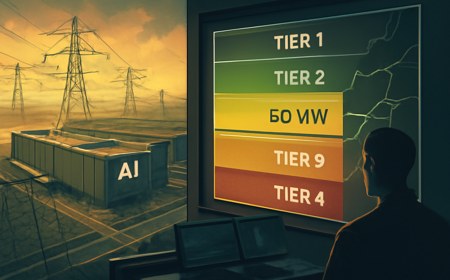
PJM’s proposed Interim Resource Adequacy Service framework would treat some new 50 MW-plus data centers and other large loads as curtailable unless they secure qualifying capacity. The move follows a 6,831 MW capacity shortfall for the 2028/2029 delivery year and rising forecasts for large-load demand across PJM’s footprint. The system read: AI compute is being recast from passive load growth into a reliability obligation.
Inside this report
- PJM Turns AI Data Centers Into Interruptible Grid Load
- Quick Read
- Table of Contents
 Editor-written summary
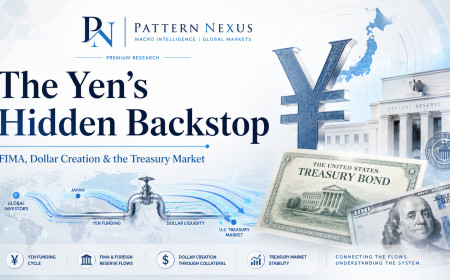
Japan's 2026 yen intervention was enormous, but Federal Reserve balance-sheet data show FIMA was not used to fund it. That may be the more important finding. FIMA sits behind the global dollar system as a mechanism allowing approved foreign monetary authorities to temporarily turn U.S. Treasury collateral into newly supplied dollars instead of selling those Treasuries into the market. This report examines what FIMA actually does, why it is a form of temporary central-bank dollar creation rather than QE, what Japan's reserve structure looks like, and why another serious yen crisis could migrate directly into U.S. Treasury-market plumbing.
Inside this report
- The Yen's Hidden Backstop: FIMA, Dollar Creation and the Treasury Market
- FIMA Does Not Fix the Yen. It Changes What Japan—or Another Reserve Holder—May Have to Sell to Obtain Dollars.
- The Yen Problem Becomes Much More Important Once It Touches the Treasury Market
 Editor-written summary
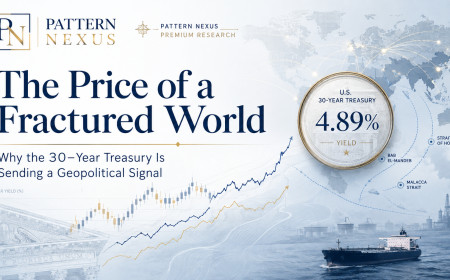
Something about the global system feels uncomfortable, and the last month of data suggests that feeling has a measurable foundation. The U.S. 30-year Treasury has pushed above 5.3%, real long-term yields are above 3%, the Strait of Hormuz remains severely constrained, U.S. missile inventories are being consumed across multiple theaters, Russia and Ukraine are attacking the commercial infrastructure of the Black Sea, China continues pressure around Taiwan and the South China Sea, new regional defense blocs are forming, tariffs are fragmenting trade, and governments and AI companies are simultaneously competing for enormous amounts of capital. This Pattern Nexus investigation asks whether the long end of the Treasury market is becoming one of the cleanest aggregate prices of a more fragmented world—and separates that thesis from the much weaker claim that the Treasury market itself is failing.
 Editor-written summary
AP reported on August 17, 2026, that Trump again threatened Oman while Iran said it had reached an understanding with Muscat over a Strait of Hormuz transit route. A separate AP analysis said the 60-day U.S.-Iran deadline expired the same day with the sides still far apart over reopening Hormuz, lifting the U.S. blockade and defining Iran’s role. Reuters reported that Iran was threatening a more offensive posture in the strait if diplomacy failed, making the escalation a live maritime-control crisis rather than a routine diplomatic delay.
Inside this report
- Washington Turns the Hormuz Deadline Into an Oman Strike Threat
- Quick Read
- Table of Contents
 Editor-written summary
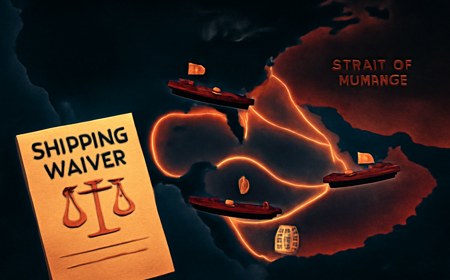
President Trump extended a Jones Act waiver for another 90 days, with the new window taking effect on August 17, 2026, after the prior waiver period expired on August 16. The waiver allows foreign-flagged vessels to move covered energy and agricultural commodities between U.S. ports as the Iran war and Strait of Hormuz disruption keep pressure on fuel logistics. The policy is now a live energy-security workaround, but maritime-state lawmakers and domestic shipping advocates warn it could weaken the U.S.-flag fleet and shipbuilding base.
Inside this report
- Washington Turns the Jones Act Waiver Into an Iran-War Fuel Bypass
- Quick Read
- Table of Contents
 Editor-written summary
Episode 2 of the Pattern Nexus Audio-Video series explains how Bretton Woods, the Marshall Plan, capital controls, the IMF, the World Bank, and the 1951 Treasury–Federal Reserve Accord forged the first dollar-liquidity regime between 1947 and 1953.
Inside this report
- The Dollar Fortress — Audio-Video Edition
- About this episode
- The postwar dollar system was built, not discovered
 Editor-written summary
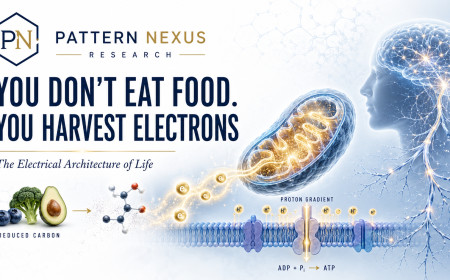
Food looks like matter, but the energy side of metabolism is a controlled redox system. Cells extract reducing power from carbon-rich molecules, route it through the mitochondrial respiratory chain, convert electron flow into proton motive force and ATP, then spend ATP rebuilding the ion gradients that make nerves, muscles and cognition possible.
Inside this report
- You Don't Eat Food. You Harvest Electrons: The Electrical Architecture of Life
- At the Energy Level, Eating Is Controlled Electron Harvesting
- The Human Body Is a Redox Machine That Converts Electron Flow Into Organized Electrical Work
 Editor-written summary
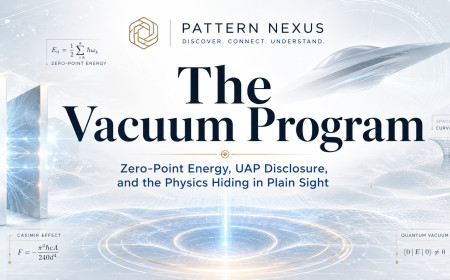
NASA studied quantum-vacuum propulsion. DIA commissioned papers on vacuum-energy extraction, negative energy, wormholes, and spacetime engineering. DARPA explicitly asked whether vacuum energy or momentum could be transduced into usable form. Congress then entered a DIA vacuum-propulsion paper into the UAP hearing record. This Pattern Nexus investigation separates established physics from government research, current engineering claims, and speculation—then asks whether the UAP disclosure story and the vacuum-engineering story may be two views of the same technological frontier.
Inside this report
- The Vacuum Program: Zero-Point Energy, UAP Disclosure, and the Physics Hiding in Plain Sight
- The Documents Are Real. The Connection Is the Question.
- The Real Story May Be the Convergence, Not Any Single Claim
 Editor-written summary
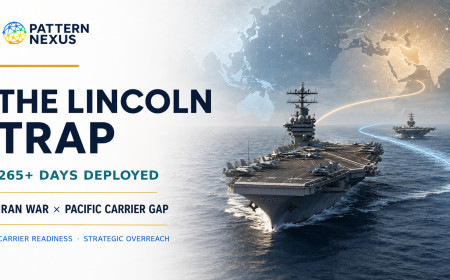
USS Abraham Lincoln was supposed to return home in May. More than 265 deployment days later, the Navy is pulling USS George Washington—the only forward-deployed U.S. carrier in the Pacific—west to relieve it. The rotation exposes the real limit of American carrier readiness: eleven hulls do not equal eleven available carriers, and an open-ended Iran mission is transferring the readiness gap from the Middle East to the Pacific.
Inside this report
- The Lincoln Trap: 265+ Days Deployed, an Indefinite Iran War, and a Carrier Gap in the Pacific
- The Relief Plan Does Not Create Capacity. It Moves the Shortage.
- Washington is not filling an empty slot. It is moving the empty slot.
 Editor-written summary
Pattern Nexus is researched, written, coded, and operated by one person for more than 80,000 monthly readers. This guide explains free registration, Premium access, the Pattern Nexus Worldview book, direct donations, and where to begin with the strongest public and Premium research.
Inside this report
- How to Support Pattern Nexus—and Keep the Public Research Record Growing
- Pattern Nexus is not a faceless media company
- There is no single “right” way to support Pattern Nexus
 Editor-written summary
Jury selection began on August 12, 2026, in federal court in Oakland for a Meta youth-harms trial involving claims that Facebook and Instagram damaged youth mental health and unlawfully collected data from children under 13. Court records had scheduled jury selection for August 12, with openings and evidence no earlier than August 18. The case matters beyond Meta because it frames algorithmic feeds as engineered control systems that states may try to regulate through consumer-protection, privacy, and product-safety logic.
Inside this report
- Meta Youth Trial Turns Social Feeds Into a Product-Liability Test
- Quick Read
- Table of Contents

